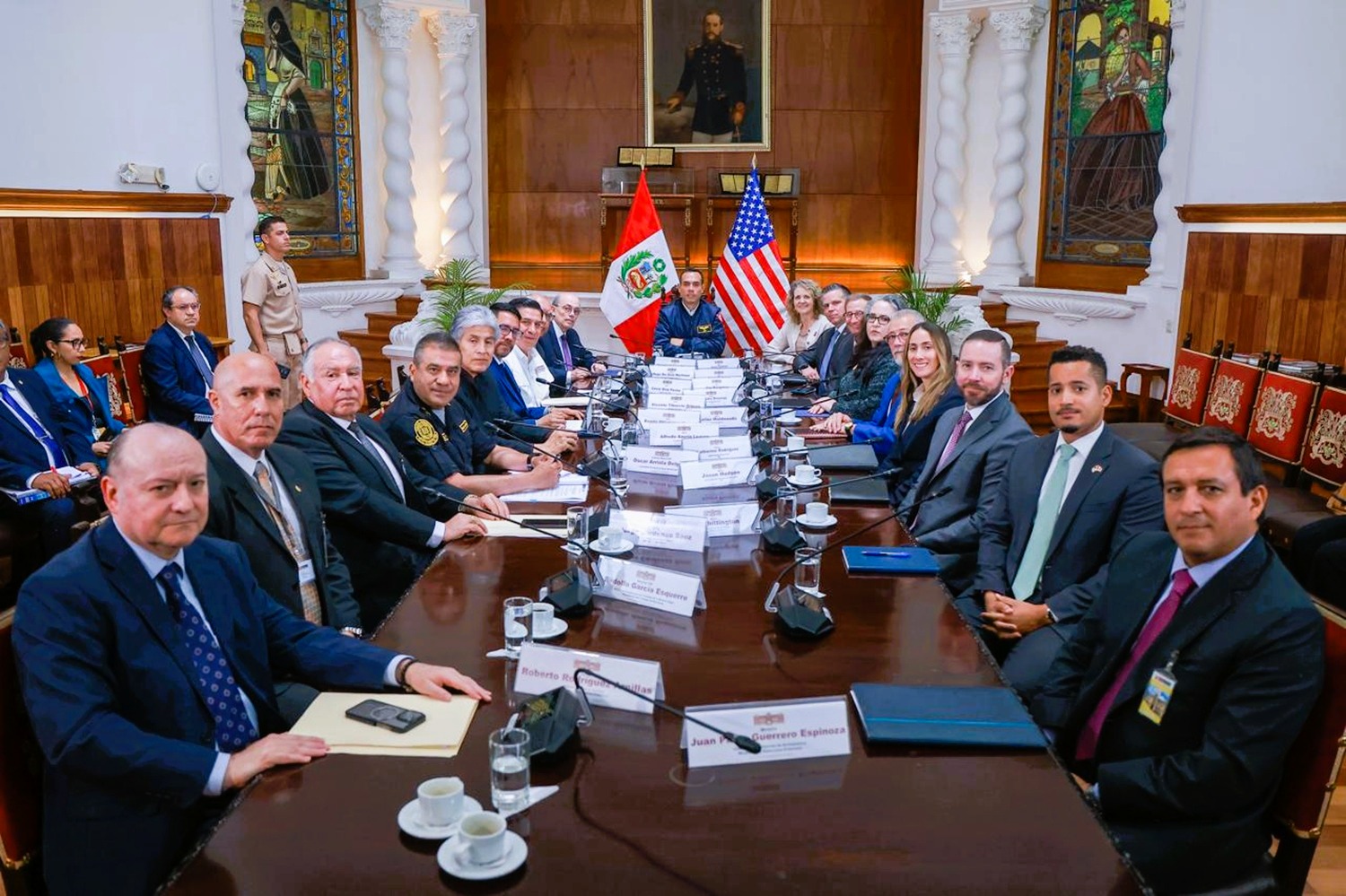
Agencia Peruana de Noticias PRENSAPERU.PE https://www.prensaperu.pe Twitter: @prensaperupe En el marco de la cooperación bilateral en materia de seguridad, este miércoles se celebró en el Palacio de Gobierno la primera reunión consultiva entre el Poder Ejecutivo peruano y una delegación interagencial estadounidense, convocada por el presidente de la República, José Jerí. El propósito central de la jornada fue la recepción de aportes técnicos y estrategias para la formulación de un plan de seguridad ciudadana contundente, fiscalizable y adaptado a la realidad nacional, que sirva como hoja de ruta para el presente y próximo Gobierno.
COMPOSICIÓN Y CAPACIDADES DE LA DELEGACIÓN ESTADOUNIDENSE
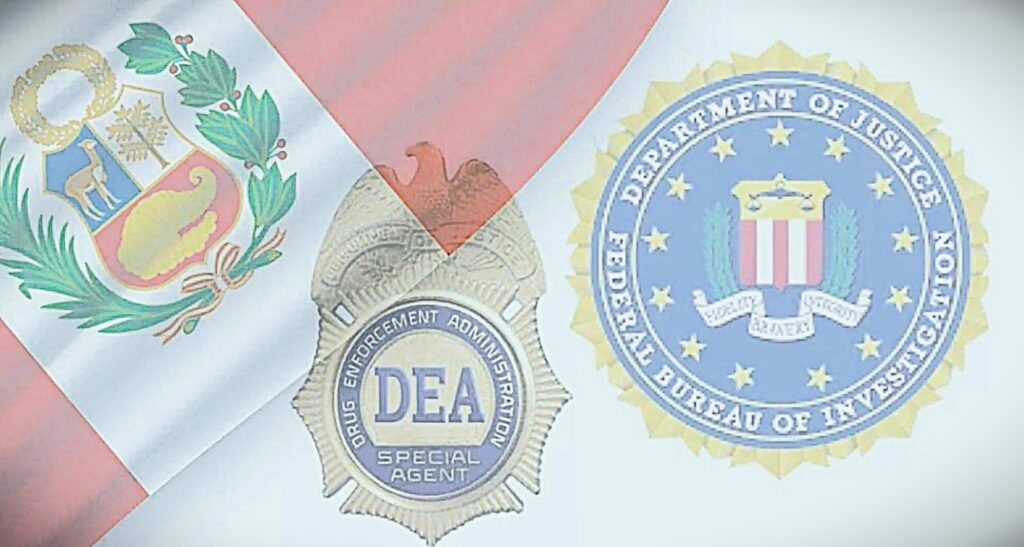
La comitiva estadounidense, integrada por seis funcionarios y encabezada por José A. Pérez, director de Operaciones del Buró Federal de Investigaciones (FBI), cuenta con expertise multidisciplinaria en aplicación del derecho penal, inteligencia operativa y gestión de riesgos transnacionales. Sus miembros proceden de instituciones de referencia:
FBI: Con experiencia en disolución de estructuras criminales organizadas, cibercrimen, contrainteligencia y protección de derechos civiles, así como en mecanismos de intercambio de información clasificada con fuerzas del orden subnacionales (a través de iniciativas como el Programa de Autorizaciones de Seguridad para Ejecutivos Policiales).
Administración para el Control de Drogas (DEA): Especializada en combate al tráfico de estupefacientes, mediante programas como las Áreas de Alto Intensidad de Tráfico de Drogas (HIDTA) y la Iniciativa de la Frontera Suroeste, que promueven la coordinación interinstitucional y el uso de tecnología para monitoreo y interdicción.
Programas de Policía Estatales Estadounidenses: Con conocimientos en patrullaje estratégico, prevención comunitaria y gestión de recursos en contextos locales diversos.
Los representantes estadounidenses aseguraron plena disposición para adaptar sus conocimientos al escenario peruano en plazos reducidos, en línea con la cooperación diaria que mantienen con las autoridades nacionales.
DIÁLOGO TÉCNICO Y RECONOCIMIENTO DE FALLOS ESTATALES
Durante la jornada, el presidente Jerí hizo un análisis crítico del mal funcionamiento estatal que ha llevado a una situación de inseguridad ciudadana crítica. Destacó tres factores estructurales:
1.- Control fronterizo deficiente: Consecuencias en la contención del tráfico de drogas, armas y migración irregular, que alimentan la actividad criminal transnacional.
2.-Bajos recursos tecnológicos: Falta de herramientas de monitoreo, reconocimiento facial, comunicación interinstitucional y análisis de datos que limitan la respuesta operativa de las fuerzas del orden.
3.- Marco normativo poco eficiente: Disposiciones legales que no se adaptan a las nuevas formas de criminalidad y que obstaculizan la velocidad y efectividad de las investigaciones y juicios.
La reunión contó con la participación de figuras clave del Poder Ejecutivo y el Congreso: el presidente del Consejo de Ministros, Ernesto Álvarez; los ministros de Relaciones Exteriores (Hugo de Zela), Defensa (César Díaz) e Interior (Vicente Tiburcio); el comandante general de la Policía Nacional del Perú (PNP), Óscar Arriola; y el presidente de la Comisión Especial Multipartidaria de Seguridad Ciudadana del Congreso, Alfredo Azurín.
Se estableció que se llevarán a cabo varias reuniones consultivas adicionales durante diciembre, en las que se profundizarán los temas de coordinación interinstitucional, fiscalización del plan y alineación con políticas regionales de seguridad.
CONTEXTO DE LA COOPERACIÓN BILATERAL
La visita de alto nivel complementa la larga asociación entre Perú y EE.UU. en materia de seguridad, que data de 1989 y se ha fortalecido en los últimos años. Entre las acciones recientes se destacan:
1.- Un paquete de asistencia antidrogas de 65 millones de dólares, que incluye la transferencia de nueve helicópteros Black Hawk a lo largo de cinco años.
2.- Reactivación del acuerdo de interceptación aérea no letal después de 10 años.
3.-Asistencia técnica para el fortalecimiento de la seguridad en el puerto de Chancay, con la instalación de escáneres de carga y vehículos valorados en más de 8,5 millones de dólares.
4.- Capacitación en defensa cibernética por parte del Comando Sur estadounidense.
Esta cooperación se enmarca en el contexto de los 200 años de relaciones diplomáticas que ambos países celebrarán en 2026, con un enfoque en la democracia, el comercio y la estabilidad regional.
CONCLUSIONES
1.- El diálogo técnico inicia un proceso de reforma estructural: La reunión representa el primer paso para abordar fallos estatales fundamentales en control fronterizo, tecnología y normativa, con el apoyo de expertise internacional adaptada a la realidad peruana.
2.- La cooperación bilateral se consolida como herramienta estratégica: La participación de instituciones estadounidenses de referencia y las acciones recientes de asistencia confirman que la asociación entre Perú y EE.UU. en seguridad es un pilar para combatir la criminalidad transnacional y fortalecer las capacidades de las fuerzas del orden.
3.- El plan de seguridad tendrá un enfoque práctico y fiscalizable: El objetivo de diseñar un plan con acciones concretas, fácil de monitorear y válido para el próximo Gobierno refuerza el compromiso con la continuidad y la efectividad en la reducción de la criminalidad.
DATO
En un comunicado de prensa de la Embajada de los Estados Unidos en Lima Perú indicó que esta visita está patrocinada en gran parte por la Oficina de Asuntos Internacionales de Narcóticos y Aplicación de la Ley (INL) del Departamento de Estado de los Estados Unidos, y que la misma tiene un alto nivel de carácter consultivo y complementa la cooperación diaria que se lleva a cabo entre el equipo interagencial de aplicación de la ley de nuestra Embajada y las autoridades peruanas. Este esfuerzo refleja la larga asociación entre nuestros dos países en materia de colaboración en seguridad.
Fuente: Agencia Peruana de Noticias PRENSAPERU.PE https://www.prensaperu.pe Twitter: @prensaperupe
English Translation
Peru, FBI, DEA, and US State Police Programs: “High-Level Technical Dialogue Begins to Design Comprehensive Citizen Security Plan”.
Peruvian News Agency PRENSAPERU.PE https://www.prensaperu.pe Twitter: @prensaperupe Within the framework of bilateral cooperation on security matters, the first consultative meeting between the Peruvian Executive Branch and a US interagency delegation was held this Wednesday at the Government Palace. The meeting was convened by President José Jerí. The central purpose of the meeting was to gather technical input and strategies for the formulation of a robust, enforceable citizen security plan adapted to the national context, which will serve as a roadmap for the current and next administrations.
COMPOSITION AND CAPABILITIES OF THE US DELEGATION
The U.S. delegation, comprised of six officials and headed by José A. Pérez, Director of Operations for the Federal Bureau of Investigation (FBI), possesses multidisciplinary expertise in criminal law enforcement, operational intelligence, and transnational risk management. Its members come from leading institutions:
FBI: Experienced in dismantling organized crime structures, combating cybercrime, counterintelligence, and protecting civil rights, as well as in mechanisms for exchanging classified information with subnational law enforcement agencies (through initiatives such as the Security Clearance Program for Law Enforcement Executives).
Drug Enforcement Administration (DEA): Specialized in combating drug trafficking through programs such as High Intensity Drug Trafficking Areas (HIDTA) and the Southwest Border Initiative, which promote interagency coordination and the use of technology for monitoring and interdiction.
US State Police Programs: With expertise in strategic patrolling, community prevention, and resource management in diverse local contexts.
The U.S. representatives assured their full willingness to adapt their expertise to the Peruvian context within a short timeframe, in line with their ongoing cooperation with national authorities.
TECHNICAL DIALOGUE AND ACKNOWLEDGMENT OF STATE FAILURES
During the meeting, President Jerí offered a critical analysis of the state dysfunction that has led to a critical situation of citizen insecurity. He highlighted three structural factors:
1.- Deficient border control: This has consequences for containing drug and arms trafficking, as well as irregular migration, which fuel transnational criminal activity.
2.- Limited technological resources: A lack of monitoring tools, facial recognition capabilities, inter-institutional communication, and data analysis limits the operational response of law enforcement.
3.- Inefficient Regulatory Framework: Legal provisions that are not adapted to new forms of crime and that hinder the speed and effectiveness of investigations and trials.
The meeting included the participation of key figures from the Executive Branch and Congress: the President of the Council of Ministers, Ernesto Álvarez; the Ministers of Foreign Affairs (Hugo de Zela), Defense (César Díaz), and the Interior (Vicente Tiburcio); the Commander General of the Peruvian National Police (PNP), Óscar Arriola; and the President of the Congressional Multiparty Special Commission on Citizen Security, Alfredo Azurín.
It was established that several additional consultative meetings will be held during December, in which the issues of inter-institutional coordination, oversight of the plan, and alignment with regional security policies will be explored in greater depth.
CONTEXT OF BILATERAL COOPERATION
The high-level visit complements the long-standing security partnership between Peru and the United States, which dates back to 1989 and has strengthened in recent years. Recent actions include:
1.- A $65 million counternarcotics assistance package, including the transfer of nine Black Hawk helicopters over five years.
2.- Reactivation of the non-lethal air interception agreement after a 10-year hiatus.
3.- Technical assistance to strengthen security at the port of Chancay, with the installation of cargo scanners and vehicles valued at over $8.5 million.
4.- Cybersecurity training provided by the U.S. Southern Command.
This cooperation is framed within the context of the 200th anniversary of diplomatic relations that both countries will celebrate in 2026, with a focus on democracy, trade, and regional stability.
CONCLUSIONS
1.- The technical dialogue initiates a process of structural reform: The meeting represents the first step in addressing fundamental state shortcomings in border control, technology, and regulations, with the support of international expertise adapted to the Peruvian context.
2.- Bilateral cooperation is consolidated as a strategic tool: The participation of leading U.S. institutions and recent assistance efforts confirm that the partnership between Peru and the U.S. on security is a cornerstone for combating transnational crime and strengthening law enforcement capabilities.
3.- The security plan will have a practical and accountable approach: The objective of designing a plan with concrete actions, easy to monitor, and valid for the next administration reinforces the commitment to continuity and effectiveness in reducing crime.
FACT
In a press release, the U.S. Embassy in Lima, Peru, indicated that this visit is largely sponsored by the Bureau of International Narcotics and Law Enforcement Affairs (INL) of the U.S. Department of State, and that it is highly consultative in nature and complements the daily cooperation between the Embassy’s interagency law enforcement team and Peruvian authorities. This effort reflects the long-standing partnership between our two countries in security cooperation.
Source: Peruvian News Agency PRENSAPERU.PE https://www.prensaperu.pe Twitter: @prensaperupe