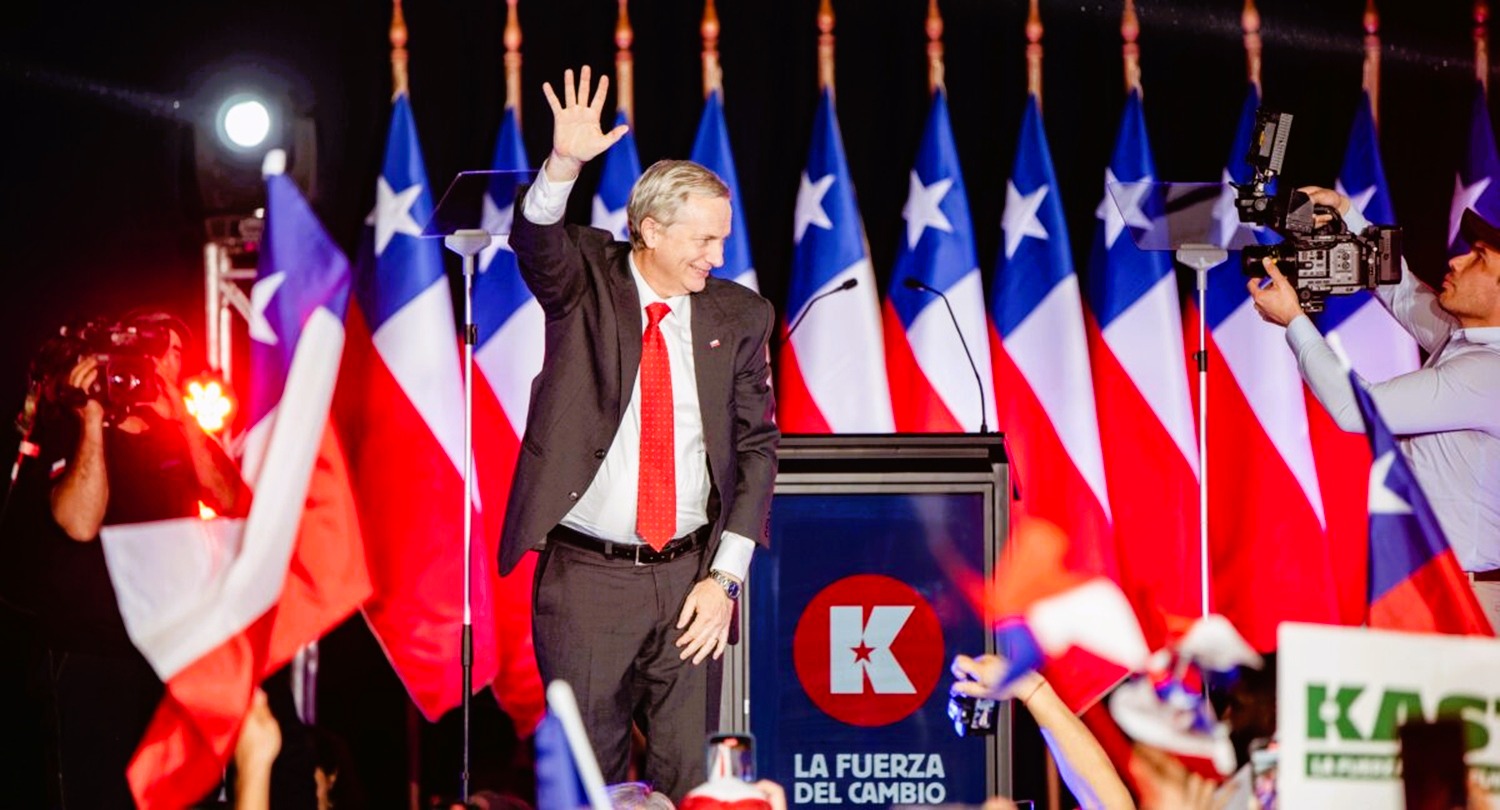
Agencia Peruana de Noticias PRENSAPERU.PE https://www.prensaperu.pe Twitter: @prensaperupe El candidato del Partido Republicano, José Antonio Kast, fue declarado ganador de la segunda vuelta de las elecciones presidenciales de Chile para el período 2026-2030, según el recuento oficial del Servicio Electoral de Chile (Servel) con el 99,33% de las mesas escrutadas.
Kast obtuvo el 58,18% de los votos válidos, superando con amplitud a Jeannette Jara, candidata de la coalición oficialista “Unidad por Chile”, quien recibió el 41,82%. Jara reconoció su derrota en redes sociales en la tarde del domingo, y el presidente actual, Gabriel Boric, también felicitó al ganador, manifestando su compromiso con una transición ordenada.
La segunda vuelta se celebró después de que ningún candidato alcanzó el 50% de los votos en la primera ronda del 16 de noviembre: Jara quedó primera con el 26,85%, mientras que Kast obtuvo el 23,92%, lo que les permitió avanzar a la definición final. Los sondeos preelectorales de agosto de 2025 ya habían señalado un escenario favorable para Kast en un balotaje, con un 50% de apoyo frente al 32% de Jara.
Kast, de 59 años, es un abogado y político conservador que formó el Partido Republicano en 2019, después de abandonar la Unión Demócrata Independiente (UDI) en 2016. Ya participó en las elecciones presidenciales de 2017 (donde perdió con Sebastián Piñera) y 2021 (vencido por Gabriel Boric). En esta campaña, mantuvo posturas de derecha en temas como la seguridad, la economía y la familia, aunque ha moderado algunas de sus posiciones más polémicas de años anteriores.
Entre sus principales propuestas de gobierno figuran un ajuste fiscal de 6.000 millones de dólares en 18 meses, la reducción de impuestos y regulaciones para fomentar la inversión, un combate frontal al crimen organizado con penas más duras y cárceles de máxima seguridad, el fortalecimiento de las fronteras y un foco en la familia, incluyendo apoyos económicos para la natalidad.
Las reacciones a su triunfo han sido mixtas: sectores de la derecha y la economía han expresado optimismo por su plan de crecimiento, mientras que sectores de la izquierda han manifestado preocupación por sus posiciones en temas sociales. En el ámbito internacional, líderes de países como Estados Unidos, Brasil y Argentina han enviado sus felicitaciones, mientras que algunos gobiernos de izquierda latinoamericana han mantenido una postura más reservada.
Kast asumirá el cargo el 11 de marzo de 2026, y enfrentará el reto de gobernar en un contexto de polarización política y demandas de cambio social en el país.
RELACIONES CON PERÚ: VÍNCULOS DE AMISTAD Y COINCIDENCIAS POLÍTICAS
El presidente peruano, José Jerí, fue uno de los primeros líderes en felicitar a Kast por teléfono este domingo, destacando los lazos de amistad entre ambos países y la importancia de fortalecer la cooperación bilateral en temas económicos y de seguridad.
Esta cercanía no es nueva: en octubre de 2023, Kast visitó Lima como presidente de la organización “Political Network for Values”, donde se reunió con líderes de partidos de derecha peruanos y fue nombrado ciudadano ilustre de la capital de la nación Inca. Del mismo modo también dio una conferencia en el Congreso peruano sobre el proceso constitucional chileno y valores fundamentales, mostrando coincidencias en temas como la defensa de la vida y la familia.
RELACIONES CON LA REGIÓN: ALIANZAS DE DERECHA Y POLÉMICA EN FRONTERA CON BOLIVIA
En el ámbito regional, Kast ha encontrado un aliado cercano en el presidente argentino Javier Milei, quien fue el primero en celebrar su triunfo en redes sociales, llamándolo “amigo” y anunciando que trabajarán juntos para “liberarse del socialismo” y defender la vida, la libertad y la propiedad privada. Esta relación sugiere la formación de un bloque de derecha visible en Sudamérica.
Por el contrario, los gobiernos de izquierda de la región han mantenido una postura reservada. Aunque no se han emitido declaraciones oficiales después de su victoria, en 2021 líderes como el venezolano Nicolás Maduro y el cubano Miguel Díaz-Canel habían tildado a Kast de “fascista” al perderle a Gabriel Boric, lo que augura posibles tensiones en el futuro.
DISCURSO POLÉMICO DEL PRESIDENTE ELECTO DE CHILE
Una de las propuestas más polémicas de Kast en materia regional es la instalación de un muro o valla en la frontera con Bolivia para detener la migración irregular. En mayo de 2024, durante una visita a Hungría, el líder republicano tomó como ejemplo la valla que ese país construyó en la frontera con Serbia, afirmando que la zanja actualmente existente en Chile es “insuficiente” y que trabajará en un plan integral para fortalecer el cierre fronterizo. Esta idea ha generado críticas en Bolivia y entre sectores progresistas de la región, que la consideran una medida discriminatoria.
PERSPECTIVAS
Kast ha expresado en entrevistas previas su compromiso con el fortalecimiento de las relaciones internacionales, aunque reconoce que estas pueden ser un desafío. Su gobierno, que asumirá el 11 de marzo de 2026, se enfrentará al reto de equilibrar sus alianzas de derecha con la necesidad de mantener cooperación con países de diferentes ideologías en temas como el comercio y la seguridad regional.
CONCLUSIONES
1.- Vínculos cercanos con Perú, centrado en seguridad y valores comunes: El presidente electo mantiene una relación preexistente y amistosa con el gobierno peruano, con acuerdos en temas de crimen transnacional y coincidencias en valores sociales, lo que se refleja en la invitación a organizar el gabinete binacional en 2026.
2.- Bloque de derecha en formación en la región: Kast ha encontrado aliados clave en líderes como Javier Milei (Argentina), Daniel Noboa (Ecuador) y Nayib Bukele (El Salvador), sugiriendo la creación de un frente político de derecha con prioridades en seguridad, economía liberal y rechazo al socialismo.
3.- Polémicas en la agenda regional: Su propuesta de muro en la frontera con Bolivia y su postura frontal sobre la migración irregular han generado críticas en sectores progresistas y en algunos países, lo que representa un reto para mantener cooperación con gobiernos de diferentes ideologías.
Fuente: Agencia Peruana de Noticias PRENSAPERU.PE https://www.prensaperu.pe Twitter: @prensaperupe
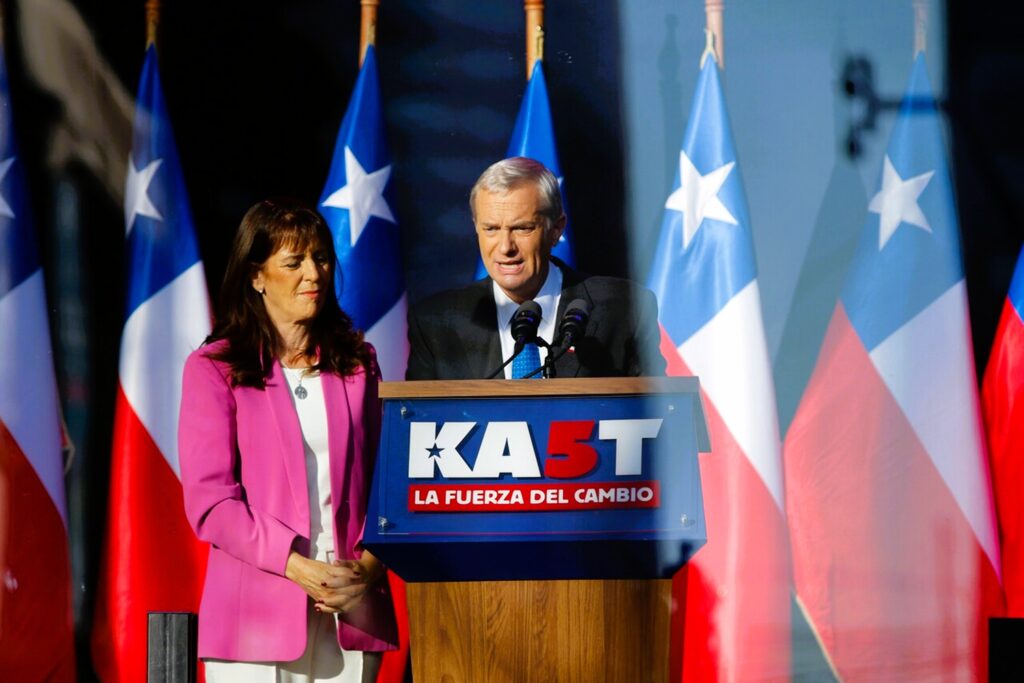
English Translation
José Antonio Kast Wins Chilean Presidential Election: “The new right-wing bloc that is reshaping South America, Chile, Argentina, and El Salvador.”
Peruvian News Agency PRENSAPERU.PE https://www.prensaperu.pe Twitter: @prensaperupe Republican Party candidate José Antonio Kast was declared the winner of the second round of Chile’s presidential elections for the 2026-2030 term, according to the official count by the Chilean Electoral Service (Servel) with 99.33% of the polling stations reporting.
Kast obtained 58.18% of the valid votes, easily surpassing Jeannette Jara, candidate of the ruling coalition “Unity for Chile,” who received 41.82%. Jara conceded defeat on social media Sunday afternoon, and current President Gabriel Boric also congratulated the winner, expressing his commitment to an orderly transition.
The runoff election was held after no candidate reached 50% of the vote in the first round on November 16. Jara came in first with 26.85%, while Kast obtained 23.92%, allowing them to advance to the final round. Pre-election polls from August 2025 had already indicated a favorable scenario for Kast in a runoff, with 50% support compared to Jara’s 32%.
Kast, 59, is a lawyer and conservative politician who formed the Republican Party in 2019, after leaving the Independent Democratic Union (UDI) in 2016. He previously participated in the 2017 presidential election (where he lost to Sebastián Piñera) and the 2021 election (where he was defeated by Gabriel Boric). In this campaign, he maintained right-wing positions on issues such as security, the economy, and family, although he has moderated some of his more controversial stances from previous years.
Among his main policy proposals are a $6 billion fiscal adjustment over 18 months, tax and regulatory cuts to encourage investment, a frontal assault on organized crime with harsher penalties and maximum-security prisons, border security, and a focus on the family, including financial support for families.
Reactions to his victory have been mixed: sectors on the right and in the business world have expressed optimism about his growth plan, while sectors on the left have voiced concern about his positions on social issues. Internationally, leaders of countries such as the United States, Brazil, and Argentina have sent their congratulations, while some left-leaning Latin American governments have maintained a more reserved stance.
Kast will assume office on March 11, 2026, and will face the challenge of governing in a context of political polarization and demands for social change in the country.
RELATIONS WITH PERU: TIES OF FRIENDSHIP AND POLITICAL SIMILARITIES
Peruvian President José Jerí was one of the first leaders to congratulate Kast by phone this Sunday, highlighting the bonds of friendship between the two countries and the importance of strengthening bilateral cooperation on economic and security issues.
This close relationship is not new: in October 2023, Kast visited Lima as president of the “Political Network for Values” organization, where he met with leaders of Peruvian right-wing parties and was named an illustrious citizen of the capital of the Inca nation. He also gave a lecture at the Peruvian Congress on the Chilean constitutional process and fundamental values, demonstrating shared views on issues such as the defense of life and family.
RELATIONS WITH THE REGION: RIGHT-WING ALLIANCES AND CONTROVERSY ON THE BORDER WITH BOLIVIA
In the regional arena, Kast has found a close ally in Argentine President Javier Milei, who was the first to celebrate his victory on social media, calling him a “friend” and announcing that they will work together to “liberate themselves from socialism” and defend life, liberty, and private property. This relationship suggests the formation of a visible right-wing bloc in South America.
Conversely, the region’s left-wing governments have maintained a reserved stance. Although no official statements have been issued since his victory, in 2021 leaders such as Venezuela’s Nicolás Maduro and Cuba’s Miguel Díaz-Canel labeled Kast a “fascist” after he lost to Gabriel Boric, foreshadowing potential future tensions.
CONTROVERSIAL SPEECH BY CHILE’S PRESIDENT-ELECT
One of Kast’s most controversial proposals regarding regional issues is the construction of a wall or fence on the border with Bolivia to stop irregular migration. In May 2024, during a visit to Hungary, the Republican leader cited the fence that country built on its border with Serbia as an example, stating that the existing trench in Chile is “insufficient” and that he would work on a comprehensive plan to strengthen border security. This idea has generated criticism in Bolivia and among progressive sectors in the region, who consider it a discriminatory measure.
PERSPECTIVES
Kast has expressed in previous interviews his commitment to strengthening international relations, although he acknowledges that these can be challenging. His government, which will take office on March 11, 2026, will face the challenge of balancing its right-wing alliances with the need to maintain cooperation with countries of different ideologies on issues such as trade and regional security.
CONCLUSIONS
1.- Close ties with Peru, focused on security and shared values: The president-elect maintains a pre-existing and friendly relationship with the Peruvian government, with agreements on transnational crime and shared social values, which is reflected in the invitation to organize a binational cabinet meeting in 2026.
2.- A Right-Wing Bloc Forming in the Region: Kast has found key allies in leaders such as Javier Milei (Argentina), Daniel Noboa (Ecuador), and Nayib Bukele (El Salvador), suggesting the creation of a right-wing political front with priorities in security, a liberal economy, and a rejection of socialism.
3.- Controversies on the Regional Agenda: His proposed wall on the border with Bolivia and his confrontational stance on irregular migration have generated criticism from progressive sectors and in some countries, posing a challenge to maintaining cooperation with governments of different ideologies.
Source: Peruvian News Agency PRENSAPERU.PE https://www.prensaperu.pe Twitter: @prensaperupe