
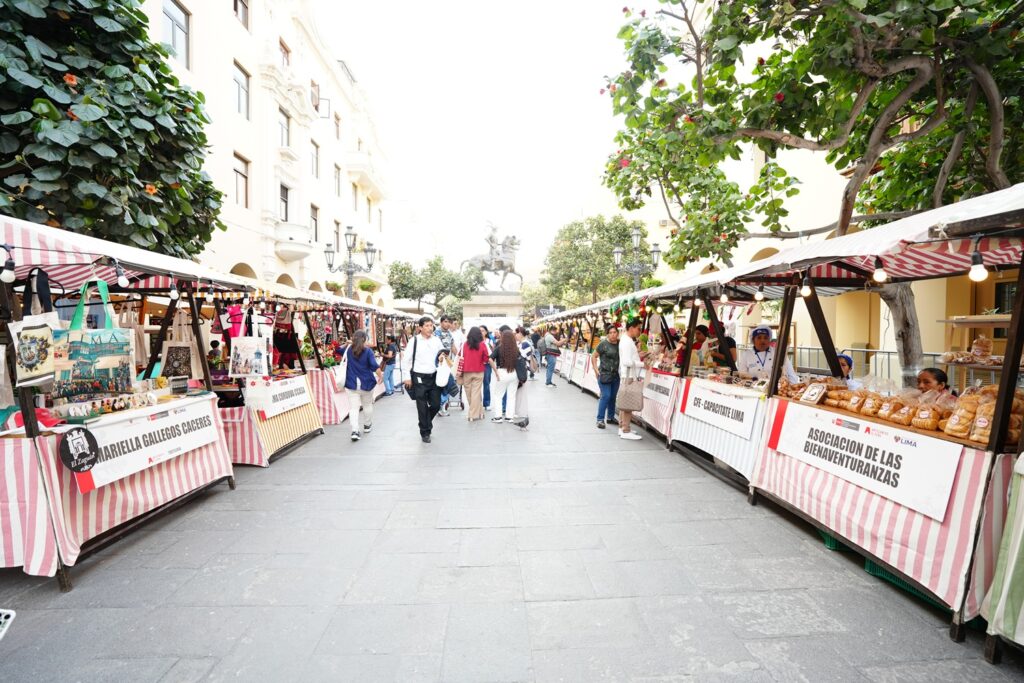
Agencia Peruana de Noticias PRENSAPERU.PE https://www.prensaperu.pe Twitter: @prensaperupe Con el firme propósito de acercar la exquisita labor de los artesanos peruanos a los hogares nacionales y a los visitantes extranjeros que deleitan con la riqueza del país, el Ministerio de Comercio Exterior y Turismo (Mincetur) ha dado inicio a la feria Navidad Peruana – “Artesanías del Perú”, en el histórico Cercado de Lima. Este evento, que convoca a creadores de los más remotos y variopintos rincones del territorio nacional, se abre al público desde las 10:00 de la mañana hasta las 21:00 horas, manteniéndose activa hasta el próximo 22 de diciembre, en el emblemático Pasaje Santa Rosa —un espacio de gran arraigo histórico, situado a pocos pasos de la icónica Plaza de Armas de la capital limeña.
“A todos los invito a recorrer estos puestos con la sensibilidad que merecen, a adquirir con el corazón y a celebrar una Navidad peruana impregnada de lo nuestro. En un Perú de múltiples rostros y tradiciones, cada pieza artesanal es un relato viviente de resiliencia y creatividad”, manifestó la viceministra de Turismo, Aracelly Laca, en su intervención inaugural. Esta declaración se alinea con el espíritu de la feria: convertir cada objeto en un embajador de la identidad peruana, donde la mano humana transmite siglos de sabiduría ancestral.
Durante la ceremonia inaugural, la funcionaria del Mincetur detalló que, en consonancia con este objetivo, se han llevado a cabo otras muestras similares en Moquegua, Loreto y Ucayali, además de haber organizado una en Ayacucho. Para la materialización de todas estas iniciativas, se ha logrado articular la participación de 140 artesanos, quienes han trasladado su talento a diferentes puntos del país para acercar su producción a mercados diversos y dinámicos.
“Estas ferias constituyen una plataforma viva y dinámica para exponer y promover la invaluable herencia cultural del Perú. Además, estimulan la resurgencia de la actividad artesanal y representan una oportunidad singular para vender directamente a los consumidores, generando ingresos fundamentales y contribuyendo al desarrollo económico de comunidades enteras”, destacó la viceministra. Este punto es crucial: al eliminar intermediarios, las ferias permiten que los creadores reciban el máximo beneficio económico de su trabajo, mientras que los compradores acceden a piezas auténticas y con historia.
Cabe resaltar que las ferias “Artesanías del Perú” forman parte integral de la estrategia nacional de promoción artesanal impulsada por el Mincetur, a través de su Dirección General de Artesanía, con el fin de fortalecer la articulación comercial de los artesanos de todo el territorio nacional. Esta estrategia no se limita a la organización de eventos, sino que busca construir un ecosistema favorable para que la artesanía se convierta en un motor de desarrollo inclusivo.
“Durante el 2025, hemos realizado 95 ferias que han generado un volumen de ventas de S/ 6.4 millones, con la participación de 7,580 unidades económicas artesanales —empresas, organizaciones y personas naturales— en 14 destinos turísticos del país”, resaltó la funcionaria. Este dato demuestra la escala y el impacto de la iniciativa: cada feria es un punto de encuentro donde la cultura se convierte en economía, y donde los turistas se convierten en testigos y difusores de la artesanía peruana.
A esta acción nacional se suma la presencia de artesanos, gestionada conjuntamente por el Mincetur y la Comisión de Promoción del Perú para la Exportación y el Turismo (Promperú), en destacadas exhibiciones y vitrinas de promoción en países como Alemania, Francia, México, Arabia Saudita e Italia. Esta incursión internacional ha logrado superar el millón de soles en ventas, posicionando a la artesanía peruanas como un producto de calidad y valor mundial.
La ceremonia de inauguración, celebrada en el Pasaje Santa Rosa —un rincón del Centro Histórico de Lima que respira historia y tradición—, contó con la presencia de la teniente alcaldesa de la Municipalidad Metropolitana de Lima, Fabiola Morales, lo que reafirma el compromiso interinstitucional para el fomento de la cultura y el desarrollo local.
FORTALECIMIENTO DE LA CADENA ARTESANAL: INNOVACIÓN Y APOYO ECONÓMICO
En otro momento de su intervención, la viceministra Aracelly Laca informó que este año se ha consolidado la red de Centros de Innovación Tecnológica (CITE) de Artesanía y Turismo del Mincetur —compuesta por cinco instituciones privadas y tres públicas— con un presupuesto de S/ 4 millones, que ha beneficiado a 7,249 unidades artesanales. Estos centros son fundamentales, ya que permiten a los artesanos incorporar nuevas técnicas, mejorar la calidad de sus productos y adaptarse a las tendencias del mercado sin perder la autenticidad de su trabajo.
Además, indicó que mediante la estrategia “Somos Artesanía” se han otorgado subvenciones económicas por un monto total de S/ 5.2 millones a 1,042 artesanos. Estas ayudas financieras son un respaldo directo a la producción, permitiendo a los creadores adquirir materiales, mejorar sus instalaciones o capacitarse en nuevas áreas.
DATO RELEVANTE: EL REGISTRO NACIONAL DE ARTESANO (RNA)
Hasta la fecha, el Mincetur cuenta con un Registro Nacional de Artesano (RNA) en el que están inscritos 87,070 empresas, organizaciones y personas naturales. Aquellos artesanos que forman parte de este registro acceden a una gama de beneficios, entre los que se incluyen la posibilidad de postular a convocatorias de subvenciones económicas, participar en ferias nacionales e internacionales, y recibir capacitaciones y asistencias técnicas gratuitas, entre otras ventajas que fortalecen su trabajo y su inserción en el mercado.
CONCLUSIONES
1.- La artesanía peruanas es un pilar de la identidad cultural y el desarrollo económico inclusivo: Las ferias y estrategias del Mincetur convierten la creatividad ancestral en ingresos para comunidades enteras, demostrando que la cultura y la economía pueden ir de la mano.
2.- La promoción nacional e internacional amplía el alcance del talento artesanal: Al llevar la producción peruanas a destinos turísticos nacionales y a mercados extranjeros, se fortalece la posición de la artesanía como un producto de valor mundial, generando oportunidades de crecimiento para los creadores.
3.- El apoyo institucional es fundamental para la sostenibilidad de la cadena artesanal: El RNA, los CITE y las subvenciones del Mincetur construyen un ecosistema favorable que permite a los artesanos innovar, mejorar su producción y acceder a beneficios que aseguran la continuidad de su trabajo.
Fuente: Agencia Peruana de Noticias PRENSAPERU.PE https://www.prensaperu.pe Twitter: @prensaperupe
English Translation
Peruvian Christmas: “Until Monday the 22nd, the Santa Rosa Passage becomes home to the country’s most authentic handicrafts”.
Peruvian News Agency PRENSAPERU.PE https://www.prensaperu.pe Twitter: @prensaperupe With the firm purpose of bringing the exquisite work of Peruvian artisans closer to national homes and to foreign visitors who delight in the country’s richness, the Ministry of Foreign Trade and Tourism (Mincetur) has launched the Peruvian Christmas fair – “Handicrafts of Peru,” in the historic Cercado de Lima. This event, which brings together creators from the most remote and diverse corners of the national territory, is open to the public from 10:00 a.m. to 9:00 p.m., remaining active until December 22, in the emblematic Pasaje Santa Rosa —a space with great historical roots, located a few steps from the iconic Plaza de Armas of the capital of Lima.
“I invite everyone to explore these stalls with the sensitivity they deserve, to buy with your heart, and to celebrate a Peruvian Christmas steeped in our traditions. In a Peru of many faces and traditions, each handcrafted piece is a living testament to resilience and creativity,” stated the Vice Minister of Tourism, Aracelly Laca, in her opening remarks. This statement aligns with the spirit of the fair: to transform each object into an ambassador of Peruvian identity, where the human hand transmits centuries of ancestral wisdom.
During the opening ceremony, the official from the Ministry of Foreign Trade and Tourism (MINCETUR) explained that, in line with this objective, similar events have been held in Moquegua, Loreto, and Ucayali, in addition to one organized in Ayacucho. To bring all these initiatives to fruition, the participation of 140 artisans has been coordinated, who have taken their talent to different parts of the country to bring their products to diverse and dynamic markets.
“These fairs constitute a vibrant and dynamic platform for showcasing and promoting Peru’s invaluable cultural heritage. Furthermore, they stimulate the resurgence of artisanal activity and represent a unique opportunity to sell directly to consumers, generating essential income and contributing to the economic development of entire communities,” the Vice Minister emphasized. This point is crucial: by eliminating intermediaries, the fairs allow creators to receive the maximum economic benefit from their work, while buyers gain access to authentic pieces with a story.
It is worth noting that the “Artesanías del Perú” fairs are an integral part of the national artisanal promotion strategy driven by the Ministry of Foreign Trade and Tourism (MINCETUR), through its General Directorate of Handicrafts, with the aim of strengthening the commercial connections of artisans throughout the country. This strategy is not limited to organizing events; rather, it seeks to build a favorable ecosystem so that handicrafts become an engine of inclusive development.
“During 2025, we held 95 fairs that generated S/ 6.4 million in sales, with the participation of 7,580 artisan businesses—companies, organizations, and individuals—in 14 tourist destinations across the country,” the official highlighted. This data demonstrates the scale and impact of the initiative: each fair is a meeting point where culture becomes economic activity, and where tourists become witnesses and promoters of Peruvian handicrafts.
This national initiative is complemented by the participation of artisans, jointly managed by the Ministry of Foreign Trade and Tourism (Mincetur) and the Peruvian Export and Tourism Promotion Commission (Promperú), in prominent exhibitions and promotional showcases in countries such as Germany, France, Mexico, Saudi Arabia, and Italy. This international outreach has generated over one million soles in sales, positioning Peruvian handicrafts as a product of global quality and value.
The inauguration ceremony, held in the Pasaje Santa Rosa—a corner of Lima’s Historic Center steeped in history and tradition—was attended by the Deputy Mayor of the Metropolitan Municipality of Lima, Fabiola Morales, reaffirming the inter-institutional commitment to promoting culture and local development.
STRENGTHENING THE CRAFT SUPPLY CHAIN: INNOVATION AND ECONOMIC SUPPORT
Later in her remarks, Vice Minister Aracelly Laca reported that this year the Mincetur network of Technological Innovation Centers (CITEs) for Crafts and Tourism—comprised of five private and three public institutions—has been consolidated with a budget of S/ 4 million, benefiting 7,249 artisan units. These centers are fundamental, as they allow artisans to incorporate new techniques, improve the quality of their products, and adapt to market trends without losing the authenticity of their work.
Furthermore, he indicated that through the “We Are Crafts” strategy, economic subsidies totaling S/ 5.2 million have been granted to 1,042 artisans. This financial aid directly supports production, allowing artisans to acquire materials, improve their facilities, or receive training in new areas.
KEY FACT: THE NATIONAL ARTISAN REGISTRY (RNA)
To date, the Ministry of Foreign Trade and Tourism (MINCETUR) maintains a National Artisan Registry (RNA) with 87,070 registered businesses, organizations, and individuals. Artisans registered in this registry have access to a range of benefits, including the opportunity to apply for grants, participate in national and international fairs, and receive free training and technical assistance, among other advantages that strengthen their work and their market access.
CONCLUSIONS
1.- Peruvian handicrafts are a pillar of cultural identity and inclusive economic development: Fairs and strategies implemented by the Ministry of Foreign Trade and Tourism (MINCETUR) transform ancestral creativity into income for entire communities, demonstrating that culture and the economy can go hand in hand.
2.- National and international promotion expands the reach of artisanal talent: By bringing Peruvian production to national tourist destinations and foreign markets, the position of handicrafts as a globally valuable product is strengthened, generating growth opportunities for artisans.
3.- Institutional support is fundamental for the sustainability of the handicraft value chain: The National Registry of Artisanal Crafts (RNA), the Centers for Technological Innovation (CITEs), and MINCETUR subsidies create a favorable ecosystem that allows artisans to innovate, improve their production, and access benefits that ensure the continuity of their work.
Source: Peruvian News Agency PRENSAPERU.PE https://www.prensaperu.pe Twitter: @prensaperupe