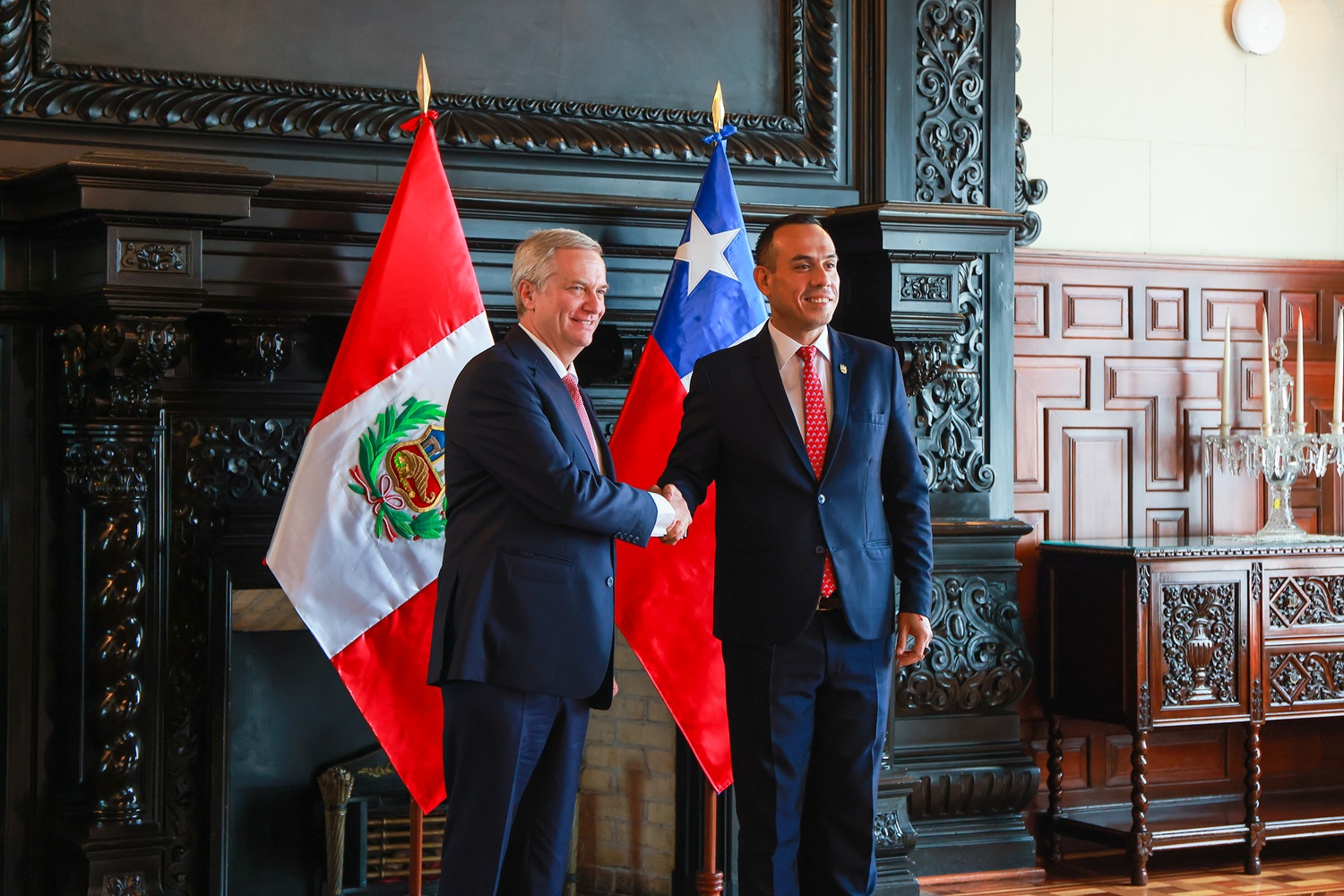
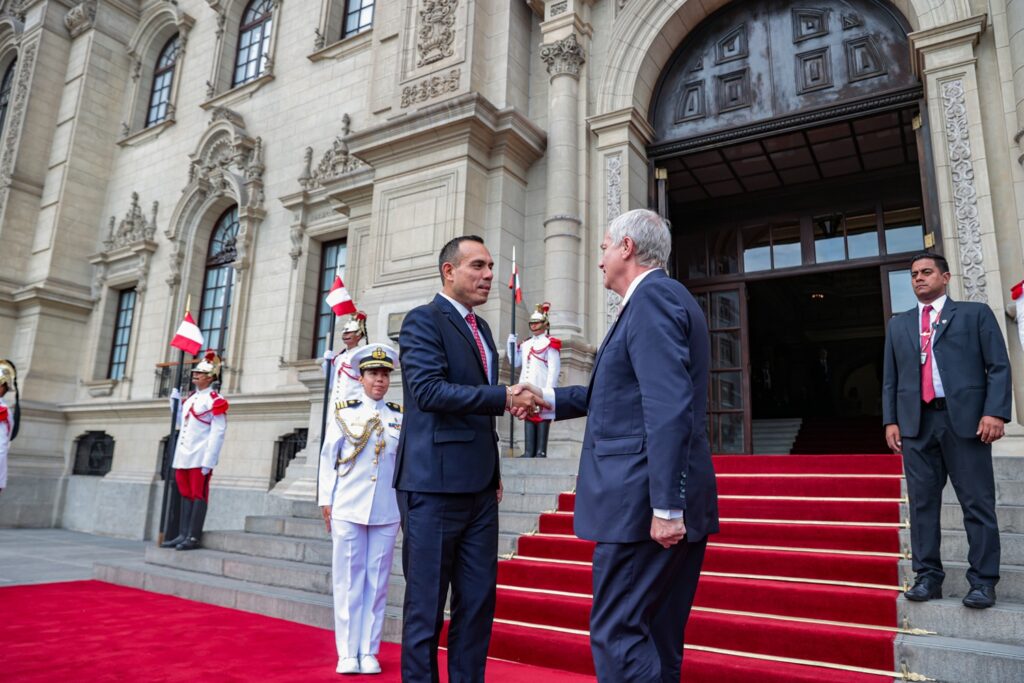
Agencia Peruana de Noticias PRENSAPERU.PE https://www.prensaperu.pe Twitter: @prensaperupe El presidente del Perú, José Jerí, destacó este jueves en la sede del Palacio de Gobierno de Lima que el primer encuentro con el mandatario electo de Chile, José Antonio Kast, representa un hito fundamental para la relación bilateral, al permitir sentar las bases sólidas que consolidarán los vínculos de amistad e integración entre ambos países andinos. Este diálogo, que se enmarca en la tradición de los encuentros entre líderes de naciones hermanas, tiene como trasfondo una trayectoria de intercambios que se remonta a décadas atrás, y que hoy busca adaptarse a los nuevos desafíos y oportunidades del siglo XXI.
La recepción oficial a Kast en el corazón del poder peruano no fue un simple gesto protocolar: respondió a una larga tradición de consideración mutua, donde la relación bilateral ha sido concebida como una política de Estado en Perú desde hace varias administraciones. Esta visión de Estado se sustenta en la convicción de que la cercanía entre ambos países va más allá de los cambios políticos, arraigándose en profundos lazos históricos que han sido forjados por generaciones, así como en intercambios económicos que han dinamizado las economías de ambas naciones y en programas de cooperación que han beneficiado a comunidades en ambos lados de la frontera.
LA RELACIÓN BILATERAL COMO POLÍTICA DE ESTADO: LAZOS QUE UNEN A PERÚ Y CHILE
El jefe de Estado peruano enfatizó que la relación con Chile constituye una piedra angular de la política exterior nacional, ya que se conduce bajo el amparo de lazos históricos de amistad que han superado momentos de tensión y se han fortalecido con el tiempo. Estos vínculos históricos incluyen no solo episodios de cooperación en contextos regionales y mundiales, sino también intercambios culturales, académicos y sociales que han construido una identidad compartida entre poblaciones fronterizas y comunidades urbanas de ambos países.
En el ámbito económico, la relación entre Perú y Chile es una de las más dinámicas de la región. Los flujos comerciales entre ambos países han mostrado un crecimiento sostenido en los últimos años, con intercambios que abarcan desde productos primarios como minerales, agropecuarios y pesqueros, hasta bienes manufacturados y servicios especializados. Asimismo, la cooperación bilateral ha tenido presencia en múltiples áreas: desde programas de salud pública y educación, hasta iniciativas de protección ambiental y gestión de recursos hídricos compartidos, demostrando que la colaboración mutua genera impactos tangibles en la calidad de vida de sus ciudadanos.
LUCHA CONTRA LA DELINCUENCIA ORGANIZADA TRANSNACIONAL Y MIGRACIÓN IRREGULAR: RETOS COMPARTIDOS
Durante el encuentro, el presidente Jerí y el mandatario electo Kast coincidieron plenamente en la necesidad de intensificar la cooperación en la lucha contra la delincuencia organizada transnacional, un fenómeno que no reconoce fronteras y que afecta de manera creciente a los países de América Latina. Ambas naciones han enfrentado en los últimos tiempos desafíos como el tráfico de drogas, el contrabando de bienes y personas, y la cibercriminalidad, que requieren respuestas coordinadas y estrategias conjuntas para ser abordados de manera efectiva.
Por otra parte, ambos líderes acordaron trabajar en conjunto para frenar la migración irregular que afecta a ambos países. Este fenómeno, que ha cobrado relevancia en el contexto regional, genera desafíos en materia de seguridad, salud, educación y protección de derechos humanos. La convergencia de criterios entre Jerí y Kast se basa en la convicción de que la migración debe ser gestionada de manera ordenada, segura y humana, promoviendo al mismo tiempo las vías legales de movilidad y abordando las causas estructurales que impulsan los flujos migratorios. La cooperación en este ámbito podría incluir la mejora de los sistemas de control fronterizo, la implementación de programas de regularización y la creación de mecanismos de información compartida para prevenir y combatir la trata de personas y otros delitos asociados a la migración irregular.
COMERCIO, INVERSIÓN, TURISMO Y PROYECCIÓN CONJUNTA EN FOROS REGIONALES Y MUNDIALES
El presidente peruano subrayó que otro de los grandes retos que enfrentan Perú y Chile es seguir promoviendo el comercio, la inversión y el turismo, sectores que son motores clave del desarrollo económico y la generación de empleo en ambas naciones. En materia de comercio, ambos países buscan profundizar la integración mediante la eliminación de barreras no arancelarias, la simplificación de trámites aduaneros y la promoción de cadenas de valor regionales que permitan aumentar la competitividad de sus productos en mercados globales.
La inversión mutua también es un eje central de la relación: empresas peruanas y chilenas han realizado importantes inversiones en sectores como la minería, la energía, la construcción, el retail y las telecomunicaciones, generando sinergias que benefician a ambas economías. En el ámbito turístico, Perú y Chile cuentan con atractivos únicos en el mundo –como las maravillas del Cusco y Machu Picchu en Perú, y los parques nacionales de Patagonia y los viñedos del Valle Central en Chile– que pueden ser promocionados de manera conjunta para atraer a turistas internacionales y fomentar el intercambio turístico entre ambos países.
Asimismo, los líderes coincidieron en la importancia de fortalecer la proyección conjunta en el marco de la Alianza del Pacífico y el Foro de Cooperación Económica Asia Pacífico (APEC). La Alianza del Pacífico, integrada por Perú, Chile, México y Colombia, representa una plataforma clave para la integración económica y la cooperación en temas como la innovación, la educación y la inclusión social. Por su parte, la participación en APEC permite a ambos países fortalecer sus lazos con las economías más dinámicas del mundo, promover el comercio y la inversión con la región Asia-Pacífico, y contribuir a la definición de políticas económicas globales que favorezcan el desarrollo sostenible.
DECLARACIONES DE LOS LÍDERES: CONVICCIÓN EN UN FUTURO COMÚN
“Estoy convencido de que este primer encuentro permitirá sentar las bases para los retos que tenemos en conjunto y continuar fortaleciendo los vínculos e integración, teniendo como horizonte el desarrollo y bienestar de nuestros países”, afirmó el presidente Jerí tras el diálogo, expresándose además a favor de darle continuidad a la realización de los gabinetes binacionales entre Perú y Chile. Estos gabinetes, que reúnen a ministros y autoridades de ambos países para abordar temas específicos de la relación bilateral, han demostrado ser un mecanismo efectivo para la coordinación política y la implementación de acciones conjuntas.
En otro momento de la reunión, el mandatario peruano deseó éxitos y una buena gestión a José Antonio Kast, manifestando su convicción de que se está ante una oportunidad clave para que Perú y Chile lleven a otro nivel la relación bilateral. “Tenemos la plena disposición de trabajar en conjunto (…) Nos une la apuesta por el desarrollo”, puntualizó Jerí, en un mensaje que refleja la voluntad política de ambos países de construir un futuro más próspero y cohesionado para sus pueblos.
Por su parte, el mandatario electo Kast destacó la importancia de la relación con Perú, enfatizando que ambos países comparten valores y objetivos comunes, y que la cooperación mutua es fundamental para enfrentar los desafíos regionales y globales.
CONCLUSIONES
1.- La relación bilateral es una prioridad estratégica: El encuentro confirma que Perú considera la relación con Chile como una política de Estado, arraigada en lazos históricos, económicos y sociales que buscan ser fortalecidos para el beneficio de ambos pueblos.
2.- Cooperación en seguridad y migración es un eje central: Los líderes coincidieron en abordar de manera conjunta la delincuencia organizada transnacional y la migración irregular, reconociendo que estos retos requieren respuestas coordinadas y humanas.
3.- Desarrollo económico y proyección regional están interconectados: La promoción de comercio, inversión y turismo, junto con la participación conjunta en la Alianza del Pacífico y APEC, busca aumentar la competitividad de ambos países en el escenario global.
4.- Existe voluntad política para avanzar juntos: La continuidad de los gabinetes binacionales y los mensajes de los líderes reflejan una clara disposición a construir un futuro común, centrado en el desarrollo y el bienestar de las poblaciones peruanas y chilenas.
Fuente: Agencia Peruana de Noticias PRENSAPERU.PE https://www.prensaperu.pe Twitter: @prensaperupe
English Translation
Jerí and Kast, Friendship and Integration between Peru and Chile: “Joining Forces Against Transnational Crime and Irregular Migration.”
Peruvian News Agency PRENSAPERU.PE https://www.prensaperu.pe Twitter: @prensaperupe Peruvian President José Jerí emphasized this Thursday at the Government Palace in Lima that the first meeting with Chile’s President-elect, José Antonio Kast, represents a fundamental milestone for the bilateral relationship, allowing them to lay a solid foundation that will consolidate the bonds of friendship and integration between the two Andean countries. This dialogue, which follows the tradition of meetings between leaders of sister nations, has as its backdrop a history of exchanges that dates back decades, and which today seeks to adapt to the new challenges and opportunities of the 21st century.
The official reception for Kast at the heart of Peruvian power was not a mere protocol gesture: it reflected a long tradition of mutual respect, where the bilateral relationship has been conceived as a matter of state policy in Peru for several administrations. This state-level vision is based on the conviction that the closeness between the two countries transcends political changes, rooted in deep historical ties forged over generations, as well as in economic exchanges that have boosted the economies of both nations and in cooperation programs that have benefited communities on both sides of the border.
THE BILATERAL RELATIONSHIP AS A MATTER OF STATE POLICY: TIES THAT UNITE PERU AND CHILE
The Peruvian head of state emphasized that the relationship with Chile is a cornerstone of national foreign policy, as it is conducted under the auspices of historic ties of friendship that have weathered periods of tension and strengthened over time. These historical bonds include not only cooperation in regional and global contexts, but also cultural, academic, and social exchanges that have forged a shared identity between border populations and urban communities in both countries.
In the economic sphere, the relationship between Peru and Chile is one of the most dynamic in the region. Trade flows between the two countries have shown sustained growth in recent years, with exchanges ranging from primary products such as minerals, agricultural goods, and fisheries, to manufactured goods and specialized services. Furthermore, bilateral cooperation has been present in multiple areas: from public health and education programs to environmental protection initiatives and the management of shared water resources, demonstrating that mutual collaboration generates tangible impacts on the quality of life of their citizens.
COMBATING TRANSNATIONAL ORGANIZED CRIME AND IRREGULAR MIGRATION: SHARED CHALLENGES
During the meeting, President Jerí and President-elect Kast fully agreed on the need to intensify cooperation in the fight against transnational organized crime, a phenomenon that knows no borders and is increasingly affecting Latin American countries. Both nations have recently faced challenges such as drug trafficking, the smuggling of goods and people, and cybercrime, which require coordinated responses and joint strategies to be addressed effectively.
Furthermore, both leaders agreed to work together to curb irregular migration affecting both countries. This phenomenon, which has gained prominence in the regional context, poses challenges in the areas of security, health, education, and human rights protection. The convergence of views between Jerí and Kast is based on the conviction that migration must be managed in an orderly, safe, and humane manner, while simultaneously promoting legal pathways for movement and addressing the structural causes that drive migration flows. Cooperation in this area could include improving border control systems, implementing regularization programs, and creating information-sharing mechanisms to prevent and combat human trafficking and other crimes associated with irregular migration.
TRADE, INVESTMENT, TOURISM, AND JOINT PROJECTION IN REGIONAL AND GLOBAL FORUMS
The Peruvian president emphasized that another major challenge facing Peru and Chile is to continue promoting trade, investment, and tourism—sectors that are key drivers of economic development and job creation in both nations. In terms of trade, both countries are seeking to deepen integration by eliminating non-tariff barriers, simplifying customs procedures, and promoting regional value chains that will increase the competitiveness of their products in global markets.
Mutual investment is also a central pillar of the relationship: Peruvian and Chilean companies have made significant investments in sectors such as mining, energy, construction, retail, and telecommunications, generating synergies that benefit both economies. In the tourism sector, Peru and Chile boast unique attractions—such as the wonders of Cusco and Machu Picchu in Peru, and the national parks of Patagonia and the vineyards of the Central Valley in Chile—that can be jointly promoted to attract international tourists and foster tourism exchange between the two countries.
The leaders also agreed on the importance of strengthening their joint efforts within the framework of the Pacific Alliance and the Asia-Pacific Economic Cooperation (APEC) forum. The Pacific Alliance, comprised of Peru, Chile, Mexico, and Colombia, represents a key platform for economic integration and cooperation on issues such as innovation, education, and social inclusion. For its part, participation in APEC allows both countries to strengthen their ties with the world’s most dynamic economies, promote trade and investment with the Asia-Pacific region, and contribute to shaping global economic policies that foster sustainable development.
LEADERS’ STATEMENTS: CONVICTION IN A SHARED FUTURE
“I am convinced that this first meeting will lay the groundwork for the challenges we face together and allow us to continue strengthening ties and integration, with the development and well-being of our countries as our guiding principle,” stated President Jerí after the dialogue. He also expressed his support for continuing the binational cabinet meetings between Peru and Chile. These meetings, which bring together ministers and officials from both countries to address specific issues in the bilateral relationship, have proven to be an effective mechanism for political coordination and the implementation of joint actions.
Later in the meeting, the Peruvian president wished José Antonio Kast success and a successful term, expressing his conviction that this is a key opportunity for Peru and Chile to take their bilateral relationship to the next level. “We are fully prepared to work together… We are united by our commitment to development,” Jerí emphasized, in a message that reflects the political will of both countries to build a more prosperous and cohesive future for their people.
For his part, President-elect Kast highlighted the importance of the relationship with Peru, emphasizing that both countries share common values and objectives, and that mutual cooperation is fundamental to facing regional and global challenges.
CONCLUSIONS
1.- The bilateral relationship is a strategic priority: The meeting confirms that Peru considers the relationship with Chile a matter of state policy, rooted in historical, economic, and social ties that seek to be strengthened for the benefit of both peoples.
2.- Cooperation on security and migration is a central focus: The leaders agreed to jointly address transnational organized crime and irregular migration, recognizing that these challenges require coordinated and humane responses.
3.- Economic development and regional projection are interconnected: The promotion of trade, investment, and tourism, along with joint participation in the Pacific Alliance and APEC, seeks to increase the competitiveness of both countries on the global stage.
4.- There is political will to move forward together: The continuity of the binational cabinets and the messages from the leaders reflect a clear willingness to build a shared future, focused on the development and well-being of the Peruvian and Chilean populations.
Source: Peruvian News Agency PRENSAPERU.PE https://www.prensaperu.pe Twitter: @prensaperupe