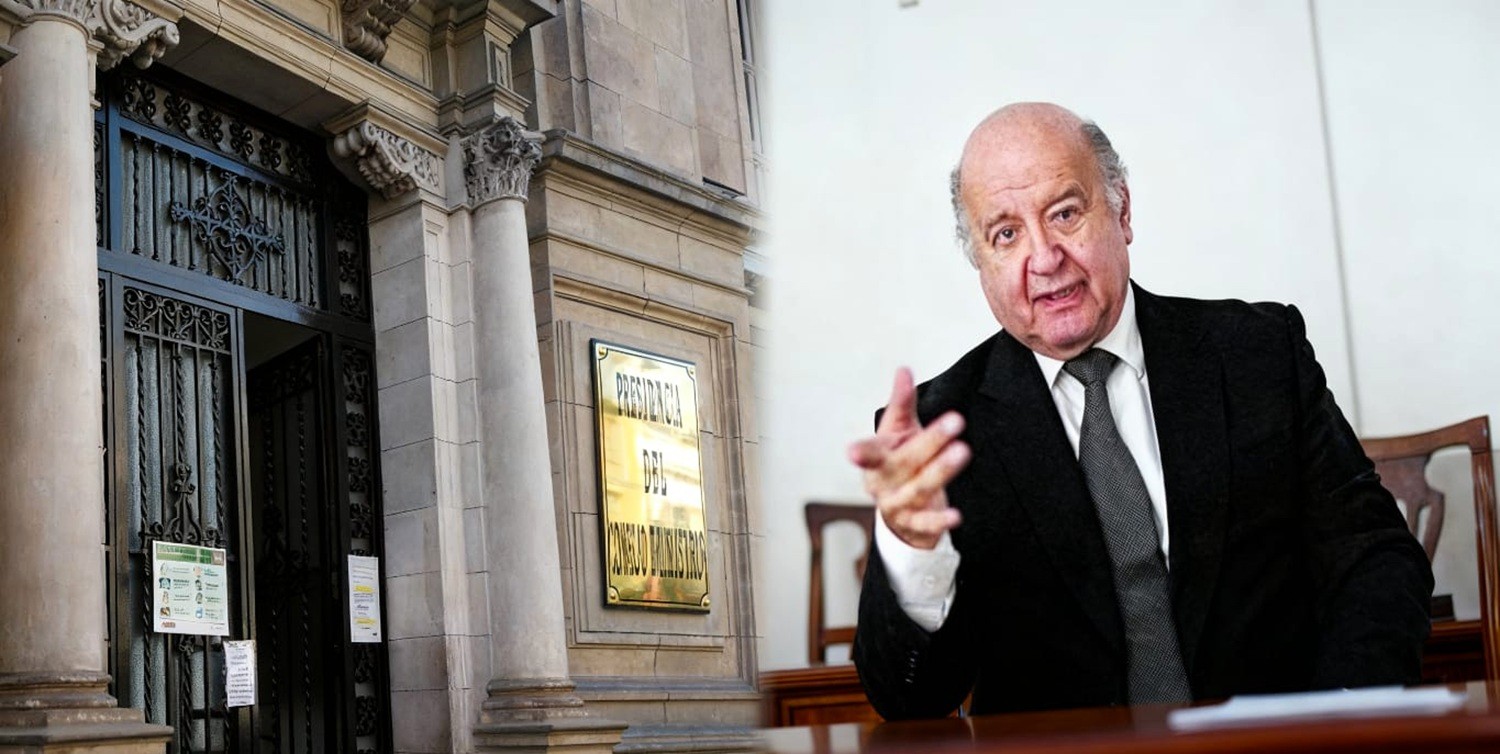
Agencia Peruana de Noticias PRENSAPERU.PE https://www.prensaperu.pe Twitter: @prensaperupe El reconocido economista y político peruano Hernando de Soto asumirá la presidencia del Consejo de Ministros, en un gesto que fortalece el rumbo institucional del gobierno de transición liderado por el presidente José María Balcázar. Con un prestigio consolidado tanto en el ámbito nacional como internacional, su designación responde a la necesidad de articular una gestión que garantice la estabilidad del Estado y la materialización de prioridades clave, entre las que destaca la organización de elecciones limpias y transparentes.
El jefe de Estado sostuvo una reunión de trabajo con actores clave del gabinete en formación, donde se definieron las primeras acciones dentro del marco constitucional y en línea con las facultades otorgadas por el Congreso de la República a la gestión transitoria. La juramentación oficial del Gabinete De Soto se llevará a cabo el martes 24 de febrero, en un acto que contará con la participación de las autoridades del poder ejecutivo y legislativo.
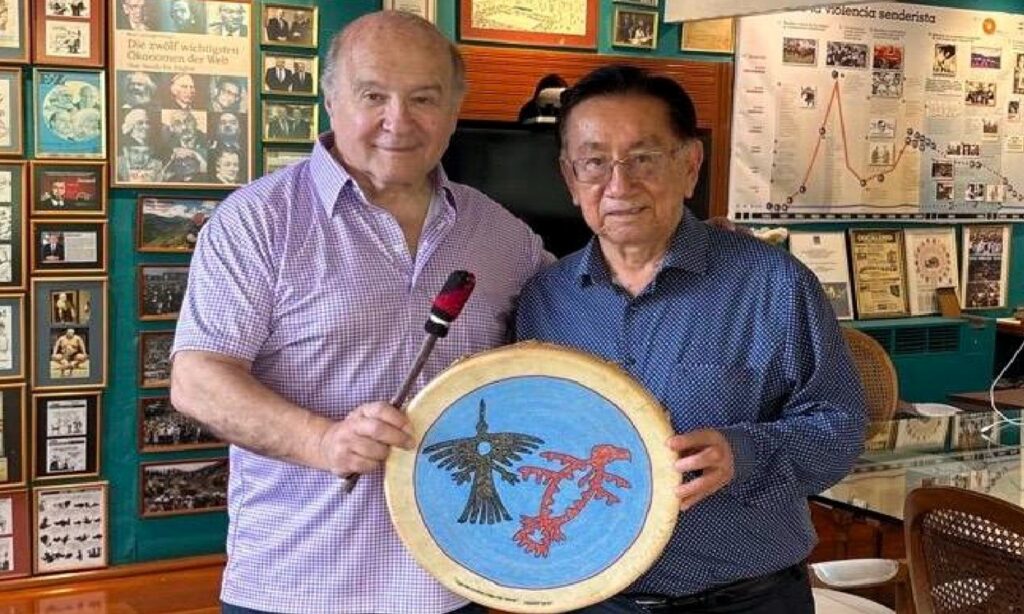
Como parte de la estrategia de proyección internacional y diálogo intercultural de la nueva gestión, está prevista una visita simbólica a líderes de pueblos indígenas de Estados Unidos y Canadá. Esta iniciativa busca tender puentes entre América del Sur y del Norte, materializando el concepto del “cóndor y el águila”, además de intercambiar experiencias sobre cómo las sociedades emergentes pueden optimizar los beneficios de la economía y la tecnología digital, asegurando que estas lleguen efectivamente a todos los sectores de la población.
PERFIL DE HERNANDO DE SOTO Y PERSPECTIVAS DEL GABINETE
Hernando de Soto se ha consolidado en la política peruana como un referente de la agenda de modernización económica, formalización de sectores informales y fortalecimiento del Estado de derecho. Con una trayectoria que incluye la fundación del Instituto Libertad y Democracia (ILD), ha sido reconocido globalmente por sus aportes sobre cómo la pobreza y la desigualdad se ven exacerbadas por la falta de acceso a sistemas legales y financieros inclusivos.
En el ámbito político nacional, ha participado en procesos de diálogo y concertación en momentos clave de la historia peruana, posicionándose como un actor que busca la convergencia entre sectores diversos.
Respecto al gabinete que liderará, se espera que tenga un enfoque técnico y pragmático, con énfasis en:
1.- La consolidación institucional y el fortalecimiento de las instituciones electorales
2.- La implementación de políticas para la formalización económica y el acceso a derechos
3.- La articulación de una política exterior que vincule desarrollo con diálogo intercultural
4.- La promoción de la innovación digital como herramienta de inclusión social
DATOS QUE DIBUJAN LA GESTIÓN DEL FUTURO GABINETE DE SOTO
La designación de Hernando de Soto refuerza la credibilidad internacional del gobierno de transición y apunta a una gestión centrada en la estabilidad institucional y la legalidad.
El enfoque del futuro gabinete se orientará a la convergencia entre desarrollo económico, inclusión social y diálogo intercultural, tanto en el ámbito nacional como internacional.
La prioridad en la organización de elecciones limpias y transparentes posiciona a la gestión De Soto como un eslabón clave en el proceso de consolidación democrática del Perú.
EXPLICACIÓN DEL MENSAJE Y TRASFONDO SIMBÓLICO DE LA FIGURA DEL PRESIDENTE BALCÁZAR Y HERNANDO DE SOTO
La imagen del círculo con el cóndor y la águila representa el diálogo y la unión entre América del Sur y América del Norte, materializando el concepto que mencionamos anteriormente de “el cóndor y el águila”. La entrega de este objeto —que parece ser un tambor ceremonial— es un gesto de intercambio cultural y construcción de puentes entre pueblos de ambas regiones.
TRASFONDO SEMIÓTICO Y SIMBÓLICO
El cóndor: En América del Sur, es un símbolo ancestral que representa la sabiduría, la conexión con el cosmos, la tierra y los pueblos originarios. También evoca la identidad latinoamericana, sus raíces profundas y la grandeza de sus territorios.
El águila: En Estados Unidos y Canadá, la águila calva (principalmente en EE.UU.) es un emblema de la nación, la libertad y el liderazgo; en contextos indígenas de Norteamérica, también simboliza la visión elevada, la fuerza y la conexión con lo divino.
El círculo: En culturas indígenas de todo el continente, representa la totalidad, la armonía, el ciclo de la vida y la igualdad de todos los elementos que forman parte de un mismo todo —en este caso, la unión de dos regiones y sus pueblos.
El tambor: Es un instrumento sagrado en muchas culturas indígenas, que sirve para comunicarse, unir a las comunidades y establecer diálogo entre el mundo terrenal y espiritual. Su entrega simboliza la apertura al diálogo y el intercambio de saberes.
Fuente: Agencia Peruana de Noticias PRENSAPERU.PE https://www.prensaperu.pe Twitter: @prensaperupe
Translate
“Hernando de Soto to be President of the Council of Ministers: Swearing-in on February 24 with technical cabinet for democratic consolidation”.
Peruvian News Agency PRENSAPERU.PE https://www.prensaperu.pe Twitter: @prensaperupe The renowned Peruvian economist and politician Hernando de Soto will assume the presidency of the Council of Ministers, in a move that strengthens the institutional direction of the transitional government led by President José María Balcázar. With consolidated prestige both nationally and internationally, his appointment responds to the need to articulate a management that guarantees state stability and the achievement of key priorities, among which the organization of free and transparent elections stands out.
The Head of State held a working meeting with key members of the cabinet being formed, where the first actions were defined within the constitutional framework and in line with the powers granted by the Congress of the Republic to the transitional administration. The official swearing-in of the De Soto Cabinet will take place on Tuesday, February 24, in a ceremony that will include the participation of executive and legislative authorities.
As part of the new administration’s international outreach and intercultural dialogue strategy, a symbolic visit to indigenous leaders from the United States and Canada is planned. This initiative seeks to build bridges between South and North America, bringing to life the concept of “the condor and the eagle”, as well as exchanging experiences on how emerging societies can maximize the benefits of the economy and digital technology, ensuring they effectively reach all sectors of the population.
PROFILE OF HERNANDO DE SOTO AND OUTLOOK FOR THE CABINET
Hernando de Soto has established himself in Peruvian politics as a reference for the agenda of economic modernization, formalization of informal sectors, and strengthening of the rule of law. With a career that includes founding the Institute for Liberty and Democracy (ILD), he has been globally recognized for his contributions on how poverty and inequality are exacerbated by lack of access to inclusive legal and financial systems.
In national politics, he has participated in dialogue and consensus-building processes at key moments in Peru’s history, positioning himself as an actor seeking convergence among diverse sectors.
Regarding the cabinet he will lead, it is expected to have a technical and pragmatic approach, with an emphasis on:
1.- Institutional consolidation and strengthening of electoral institutions
2.- Implementation of policies for economic formalization and access to rights
3.- Development of a foreign policy that links development with intercultural dialogue
4.- Promotion of digital innovation as a tool for social inclusion
DATA SHAPING THE FUTURE DE SOTO CABINET’S MANAGEMENT
The appointment of Hernando de Soto reinforces the international credibility of the transitional government and points to a management focused on institutional stability and legality.
The future cabinet’s approach will be oriented towards convergence between economic development, social inclusion, and intercultural dialogue, both nationally and internationally.
The priority on organizing free and transparent elections positions the De Soto administration as a key link in Peru’s democratic consolidation process.
EXPLANATION OF THE MESSAGE AND SYMBOLIC BACKGROUND OF THE IMAGE FEATURING PRESIDENT BALCÁZAR AND HERNANDO DE SOTO
The image of the circle with the condor and the eagle represents dialogue and unity between South America and North America, bringing to life the previously mentioned concept of “the condor and the eagle”. The presentation of this object —which appears to be a ceremonial drum— is a gesture of cultural exchange and bridge-building between peoples of both regions.
SEMIOTIC AND SYMBOLIC BACKGROUND
The condor: In South America, it is an ancestral symbol representing wisdom, connection with the cosmos, the land, and indigenous peoples. It also evokes Latin American identity, its deep roots, and the greatness of its territories.
The eagle: In the United States and Canada, the bald eagle (mainly in the US) is a national emblem of freedom and leadership; in indigenous contexts of North America, it also symbolizes elevated vision, strength, and connection with the divine.
The circle: In indigenous cultures across the continent, it represents wholeness, harmony, the cycle of life, and equality among all elements that form part of a single whole —in this case, the union of two regions and their peoples.
The drum: It is a sacred instrument in many indigenous cultures, used to communicate, unite communities, and establish dialogue between the earthly and spiritual worlds. Its presentation symbolizes openness to dialogue and the exchange of knowledge.
Source: Peruvian News Agency PRENSAPERU.PE https://www.prensaperu.pe Twitter: @prensaperupe