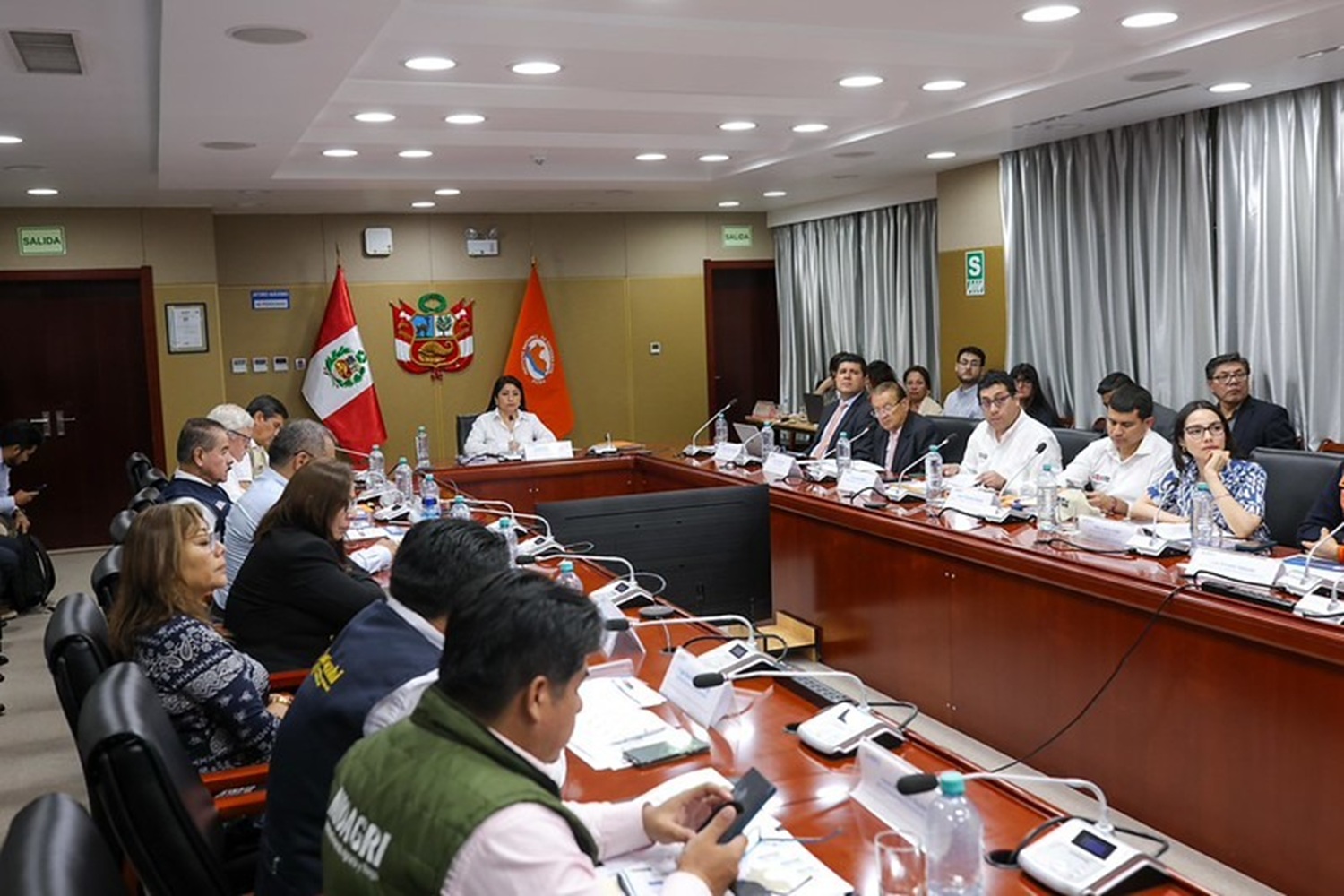
Agencia Peruana de Noticias PRENSAPERU.PE https://www.prensaperu.pe Twitter: @prensaperupe Ante la intensificación del fenómeno El Niño Costero, que hasta la fecha ha causado 68 muertes y afectado más de 700 distritos en todo el país, el Poder Ejecutivo, bajo el liderazgo del presidente José María Balcázar y la jefa del Gabinete Denisse Miralles, anunció una estrategia de articulación sin precedentes. Tras la sesión de la Comisión Multisectorial del Estudio Nacional del Fenómeno El Niño (ENFEN) en el Centro de Operaciones de Emergencia Nacional (COEN), la primera ministra destacó que la gestión del riesgo ya no se limita a declaraciones, sino que se traduce en acciones concretas sobre el terreno.
“Estamos presentes en cada zona afectada: verificamos los daños, evaluamos las intervenciones necesarias y hemos dispuesto medidas inmediatas para restablecer vías, proteger a las familias y garantizar servicios básicos como agua y energía”, enfatizó Miralles.
El Consejo de Ministros declaró y amplió el estado de emergencia en 15 regiones: Amazonas, Áncash, Arequipa, Cajamarca, Ica, Junín, La Libertad, Lambayeque, Lima, Madre de Dios, Moquegua, Piura, Puno, San Martín y Tumbes. Según información oficial, cerca de 931 kilómetros de carreteras han sufrido daños, afectando el tránsito de más de medio millón de personas semanalmente.
Como piedra angular de la estrategia de articulación, el Gobierno designó un ministro responsable por cada región. “Los gobernadores cuentan ahora con un interlocutor directo para canalizar requerimientos y acelerar tanto acciones preventivas como de respuesta. Buscamos asegurar la presencia permanente del Estado, con coordinación fluida y capacidad de toma de decisiones ágil”, explicó la titular del Consejo de Ministros. En Arequipa, por ejemplo, el ministro de Desarrollo Agrario y Riego ya lidera la coordinación regional, después de recorrer los distritos afectados y sostener reuniones técnicas con autoridades locales.
Entre las medidas inmediatas implementadas se destaca el acceso a recursos de hasta S/ 100 000 por distrito a través del Fondo para Intervenciones ante Desastres Naturales (FONDES), un mecanismo regulado por la ley N° 30458 que permite agilizar la ejecución de obras urgentes sin trabas burocráticas. Asimismo, el Ministerio de Vivienda activó el Bono de Arrendamiento por Emergencia, que otorga S/ 500 mensuales para familias damnificadas que necesiten vivienda temporal.
En el ámbito de la infraestructura, se han desplegado 46 equipos de maquinaria pesada y 8 volquetes adicionales para recuperar vías, reforzar defensas hídricas y garantizar la transitabilidad en zonas críticas. En el sector productivo, el Ministerio de Desarrollo Agrario y Riego pondrá en marcha el Seguro Agrario Catastrófico para proteger a pequeños productores afectados por las lluvias, mientras que el Ministerio de Salud ha movilizado brigadas médicas para brindar atención oportuna en las regiones más golpeadas.
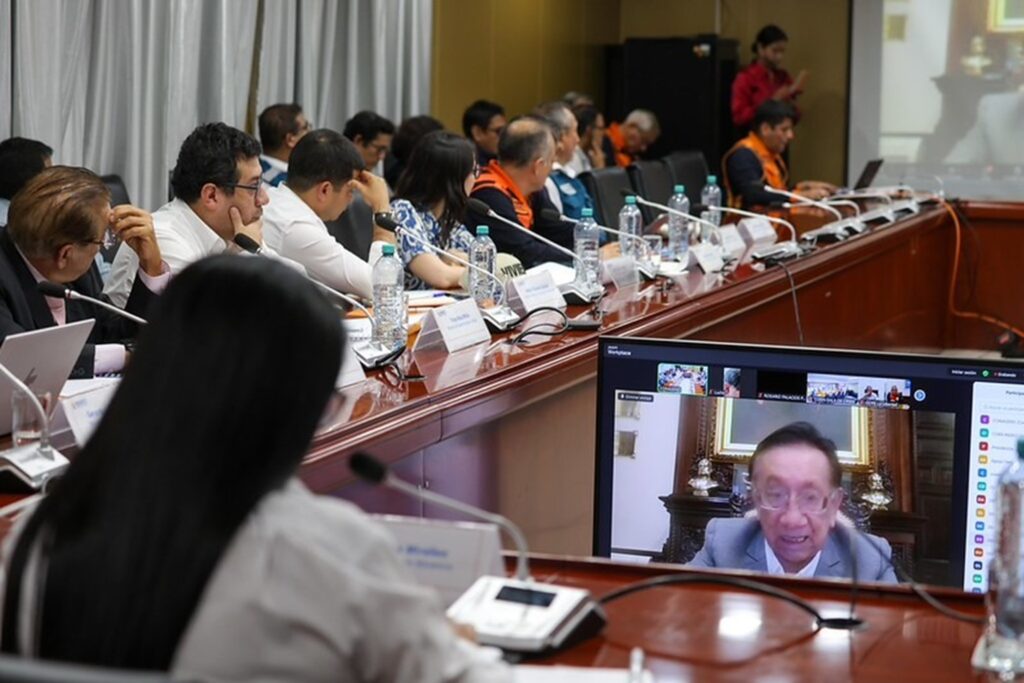
Durante la sesión del COEN, se monitoreó en tiempo real la situación de cada región, se evaluó la ejecución presupuestal y se identificaron brechas para fortalecer la respuesta. “La gestión del riesgo requiere que todo el Estado trabaje en conjunto. Cada sector tiene responsabilidades claras y plazos definidos. Nuestro compromiso es proteger vidas, asistir a las familias y reducir la vulnerabilidad frente a los escenarios climáticos que se avecinan”, sostuvo Miralles.
Respecto al impacto económico, la primera ministra señaló que el escenario moderado del fenómeno ya está contemplado en las proyecciones de crecimiento del 3,2% para 2026, presentadas previamente por el Ministerio de Economía y Finanzas. Además de los recursos del FONDES, el Gobierno está evaluando medidas tributarias para mitigar los efectos en negocios y emprendedores.
CONCLUSIONES
1.- La respuesta estatal es operativa y centrada en el territorio: El Gobierno ha pasado de declaraciones a acciones concretas, con presencia directa en las zonas afectadas, verificación de daños y despliegue de recursos para restablecer servicios básicos y la transitabilidad.
2.- La articulación intersectorial es clave para la gestión del riesgo: La designación de un ministro por región, junto con el trabajo coordinado de entidades como ENFEN y COEN, busca eliminar trabas burocráticas y garantizar una respuesta rápida y eficiente.
3.- Se combinan medidas de emergencia y protección a sectores vulnerables: Además de recursos para obras urgentes, se implementan subsidios habitacionales, seguros para pequeños productores y atención médica móvil, abordando tanto las necesidades inmediatas como las del mediano plazo.
4.- El impacto económico está contemplado en las proyecciones nacionales: El Gobierno ha integrado el escenario de El Niño Costero en sus estimaciones de crecimiento para 2026 y evalúa medidas adicionales para proteger el tejido productivo y los emprendedores.
Fuente: Agencia Peruana de Noticias PRENSAPERU.PE https://www.prensaperu.pe Twitter: @prensaperupe
Translate
Government appoints minister by region to lead operational response against El Niño, 15 regions in emergency, FONDES activated and housing bonus for affected families.
Agency Peruana de Noticias PRENSAPERU.PE https://www.prensaperu.pe Twitter: @prensaperupe Faced with the intensification of the Coastal El Niño phenomenon, which has so far caused 68 deaths and affected more than 700 districts across the country, the Executive Branch, under the leadership of President José María Balcázar and Cabinet Chief Denisse Miralles, announced an unprecedented coordination strategy. Following the meeting of the Multisectoral Commission for the National Study of the El Niño Phenomenon (ENFEN) at the National Emergency Operations Center (COEN), the Prime Minister emphasized that risk management is no longer limited to statements, but translates into concrete actions on the ground.
“We are present in every affected area: we verify the damage, evaluate the necessary interventions and have implemented immediate measures to restore roads, protect families and guarantee basic services such as water and energy,” Miralles stressed.
The Council of Ministers declared and expanded the state of emergency in 15 regions: Amazonas, Áncash, Arequipa, Cajamarca, Ica, Junín, La Libertad, Lambayeque, Lima, Madre de Dios, Moquegua, Piura, Puno, San Martín and Tumbes. According to official information, approximately 931 kilometers of roads have been damaged, affecting the travel of more than half a million people weekly.
As a cornerstone of the coordination strategy, the government designated one minister in charge per region. “Regional governors now have a direct point of contact to channel requests and accelerate both preventive and response actions. We seek to ensure the permanent presence of the State, with smooth coordination and agile decision-making capacity,” explained the Cabinet Chief. In Arequipa, for example, the Minister of Agricultural Development and Irrigation already leads regional coordination, after visiting affected districts and holding technical meetings with local authorities.
Among the immediate measures implemented, access to resources of up to S/ 100,000 per district stands out through the Fund for Interventions in Natural Disasters (FONDES), a mechanism regulated by Law No. 30458 that allows accelerating the execution of urgent works without bureaucratic obstacles. Additionally, the Ministry of Housing activated the Emergency Rental Grant, which provides S/ 500 monthly for affected families needing temporary housing.
In infrastructure, 46 heavy machinery units and 8 additional dump trucks have been deployed to recover roads, reinforce hydraulic defenses and ensure traffic flow in critical areas. In the productive sector, the Ministry of Agricultural Development and Irrigation will launch the Catastrophic Agricultural Insurance to protect small producers affected by the rains, while the Ministry of Health has mobilized medical brigades to provide timely care in the most affected regions.
During the COEN meeting, the situation in each region was monitored in real time, budget execution was evaluated and gaps were identified to strengthen the response. “Risk management requires all State bodies to work together. Each sector has clear responsibilities and defined deadlines. Our commitment is to protect lives, assist families and reduce vulnerability to upcoming climate scenarios,” Miralles stated.
Regarding the economic impact, the Prime Minister noted that the moderate scenario of the phenomenon is already included in the 3.2% growth projections for 2026, previously presented by the Ministry of Economy and Finance. In addition to FONDES resources, the government is evaluating tax measures to mitigate the effects on businesses and entrepreneurs.
CONCLUSIONS
1.- The state response is operational and ground-focused: The government has moved from statements to concrete actions, with direct presence in affected areas, damage verification and deployment of resources to restore basic services and traffic flow.
2.- Intersectoral coordination is key to risk management: The designation of one minister per region, together with the coordinated work of entities such as ENFEN and COEN, aims to eliminate bureaucratic obstacles and ensure a fast and efficient response.
3.- Emergency measures and protection for vulnerable sectors are combined: In addition to resources for urgent works, housing subsidies, insurance for small producers and mobile medical care are implemented, addressing both immediate and medium-term needs.
4.- The economic impact is included in national projections: The government has integrated the Coastal El Niño scenario into its 2026 growth estimates and is evaluating additional measures to protect the productive fabric and entrepreneurs.
Source: Agencia Peruana de Noticias PRENSAPERU.PE https://www.prensaperu.pe Twitter: @prensaperupe