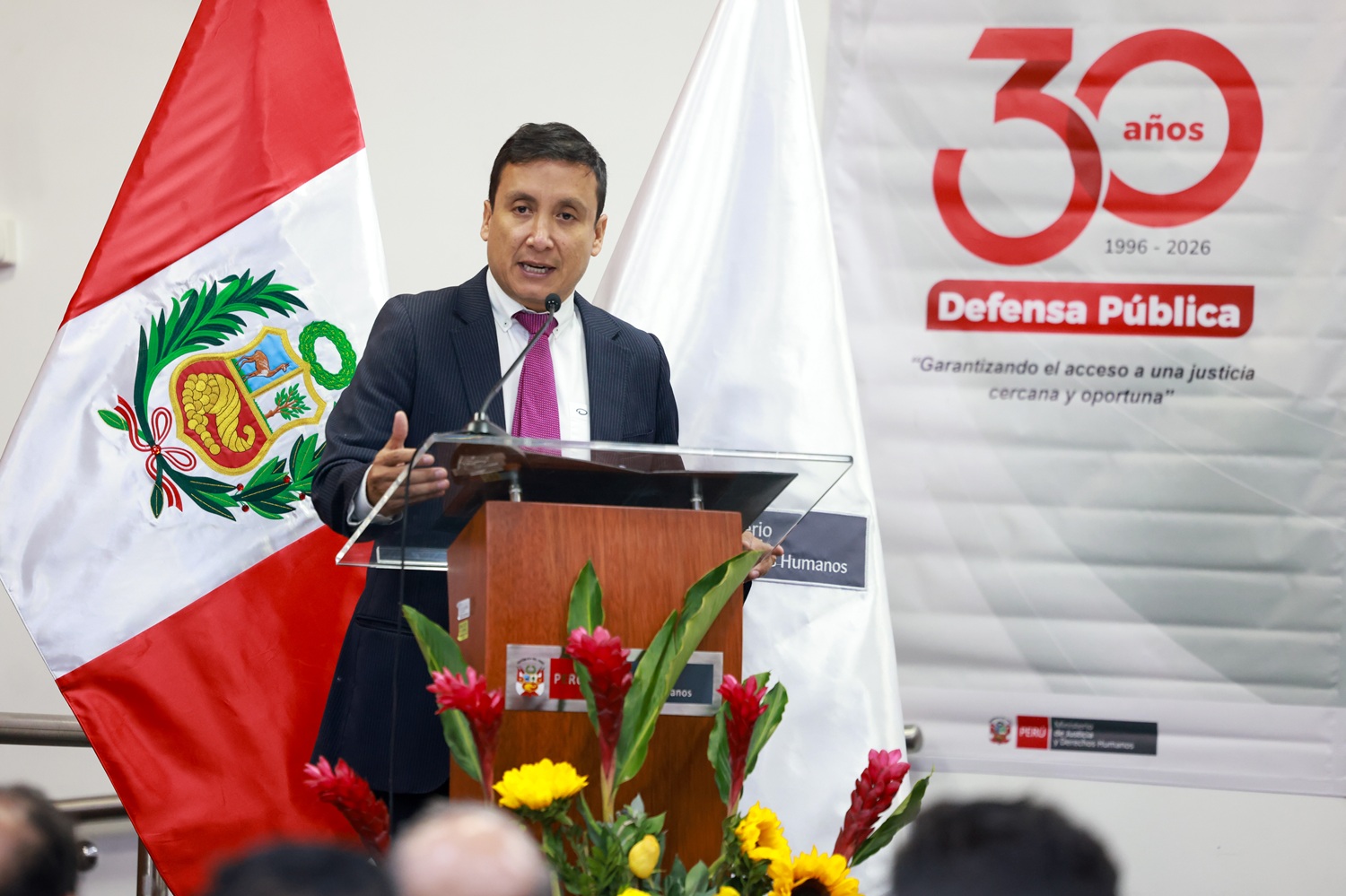
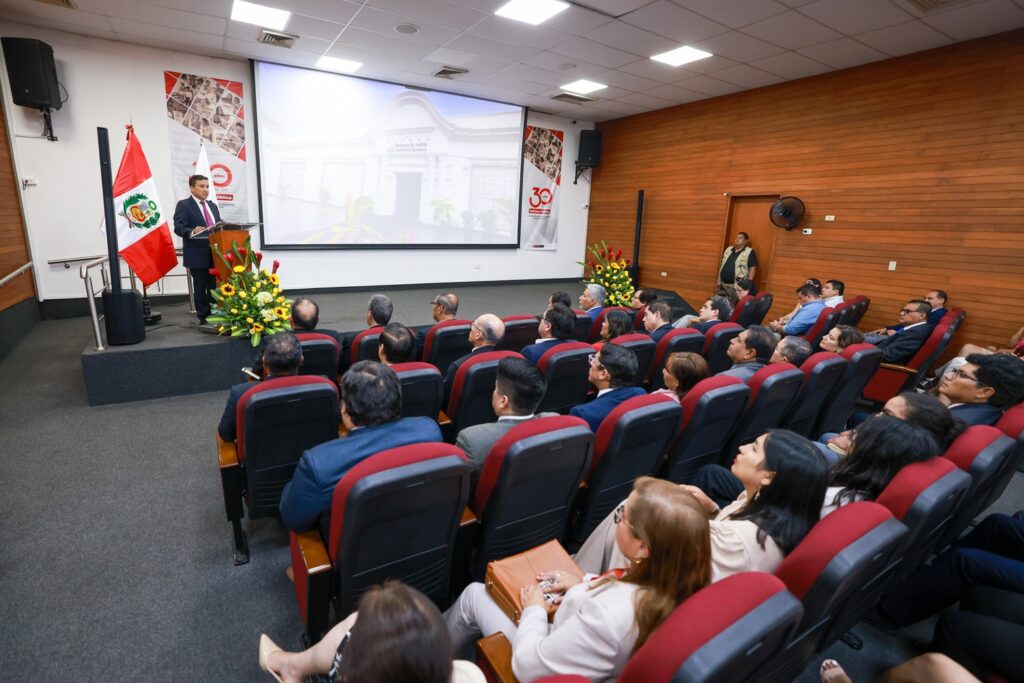
Agencia Peruana de Noticias PRENSAPERU.PE https://www.prensaperu.pe Twitter: @prensaperupe En la solemne jornada de su primera actuación oficial al frente del Ministerio de Justicia y Derechos Humanos (MINJUSDH), el señor Luis Jiménez Borra se dirigió con elocuencia a la cúpula directiva, funcionarios y servidoras del sector, reafirmando el arraigado compromiso institucional con la Nación. “Este ministerio ostenta una trayectoria histórica de insustituible servicio a la democracia y a la defensa de los derechos inherentes al ciudadano”, sostuvo el titular, en un discurso que resonó en los salones de la sede central de la entidad.
Desde el epicentro institucional, el ministro destacó que el año 2026 conmemorará el bicentenario de la creación del MINJUSDH – un hito de trascendental relevancia que debe ser acogido como “un instante propicio para la reflexión y la inflexión”, destinado a renovar y consolidar el vínculo con la ciudadanía. “Un sinnúmero de personas depositan su confianza en nuestra labor, en lo que podamos edificar en estos meses y, de manera singular, en el transcurso de este bicentenario”, subrayó, enfatizando la magnitud de la responsabilidad que recae sobre el cuerpo funcional.
En su intervención, el señor Jiménez Borra delineó los pilares estratégicos que guiarán su gestión: en primer término, el fortalecimiento de la seguridad jurídica como cimiento del orden republicano; seguido de la consolidación de una justicia próxima, incluyente y plenamente accesible a todos los sectores de la población, sin distinción alguna. Asimismo, enfatizó la promoción de la igualdad sustantiva y la dignidad intrínseca de la persona humana, así como la ejecución de una reforma integral del sistema de justicia – la cual contará con el empleo estratégico de herramientas tecnológicas de vanguardia, diseñadas para garantizar la interoperabilidad entre instancias y optimizar la eficiencia de los procesos.
Entre los ejes más delicados y trascendentales de su administración, el ministro señaló el fortalecimiento del sistema penitenciario peruano. Este esfuerzo contemplará medidas estructurales orientadas a mitigar el hacinamiento carcelario – problemática que afecta a más del 60% de las instalaciones del país – y a reforzar los procesos de rehabilitación y reinserción social de las personas privadas de libertad. Se prevé la implementación de programas de formación técnica, educación continua y atención psicosocial, con el propósito de favorecer su reincorporación como sujetos activos y responsables en la convivencia colectiva.
Asimismo, el titular del MINJUSDH manifestó que la transparencia institucional, la lucha incansable contra la corrupción y la firmeza inquebrantable frente a toda forma de violencia – especialmente la ejercida contra la mujer – constituirán ejes vertebradores de su gestión. “Estos son ideales que, como ministerio, debemos abanderar con convicción y determinación”, expresó, haciendo hincapié en la necesidad de construir un Estado de Derecho más justo y equitativo.
Paralelamente, se anunció la ampliación y optimización de servicios esenciales para la ciudadanía, entre los que se incluyen la supervisión estratégica del Consejo del Notariado – garante de la legalidad de actos y contratos patrimoniales –, la protección rigurosa de los datos personales conforme a los estándares internacionales, el fortalecimiento del mecanismo de acceso a la información pública, la promoción de la conciliación extrajudicial como vía ágil y efectiva de resolución de conflictos, y el perfeccionamiento del sistema de denuncias anticorrupción, con el fin de agilizar la atención y persecución de hechos ilícitos.
Ante el personal de la entidad, el ministro destacó la imperiosa necesidad de conformar “un ministerio presente y cercano a la comunidad, que escuche sus demandas y actúe con celeridad y eficacia”. “Lo único que me atrevo a solicitarles en esta jornada es un compromiso – no con un ministro, ni con viceministros o directores, sino un compromiso inquebrantable con la Patria”, puntualizó, en un llamado a la unidad y a la dedicación desinteresada.
La actividad contó con la distinguida participación de la señora Shadia Valdez Tejada, viceministra de Justicia; el señor Walther Iberos Guevara, viceministro de Derechos Humanos y Acceso a la Justicia; la señora María Caruajulca Quispe, procuradora general del Estado; el señor Manuel Montes Boza, superintendente nacional de Registros Públicos; el señor Francisco Naquira Cornejo, director ejecutivo del Programa Nacional de Centros Juveniles (Pronacej), así como de directores generales, funcionarios y servidoras de la entidad, quienes acudieron para ratificar su compromiso con la nueva gestión.
CONCLUSIONES
1.- El bicentenario del MINJUSDH marca un punto de inflexión para el sistema de justicia: La conmemoración de 200 años de la entidad se convierte en una oportunidad histórica para renovar el compromiso con la ciudadanía, consolidar avances y abordar las deficiencias del sistema con miras a construir un Estado de Derecho más sólido.
2.- La gestión se centra en la integralidad y la accesibilidad de la justicia: Los ejes prioritarios – seguridad jurídica, justicia cercana, igualdad, reforma integral y fortalecimiento penitenciario – buscan abordar tanto los aspectos estructurales del sistema como las necesidades concretas de la población, incluyendo la protección de grupos vulnerables.
3.- Transparencia y combate a la corrupción son pilares fundamentales: La administración se propone consolidar una cultura institucional basada en la responsabilidad, la apertura y la firmeza contra las prácticas ilícitas, mientras amplía y optimiza los servicios que vinculan al Estado con los ciudadanos.
Fuente: Agencia Peruana de Noticias PRENSAPERU.PE https://www.prensaperu.pe Twitter: @prensaperupe
Translate
Minister Luis Jiménez Borra: “Bicentenary of the MINJUSDH Announces New Era for Peruvian Justice, Based on Legal Certainty, Accessibility and Comprehensive Reform”.
Peruvian News Agency PRENSAPERU.PE https://www.prensaperu.pe Twitter: @prensaperupe On the solemn occasion of his first official act at the helm of the Ministry of Justice and Human Rights (MINJUSDH), Mr. Luis Jiménez Borra addressed the senior management, officials, and civil servants of the sector with eloquence, reaffirming the institution’s deep-rooted commitment to the Nation. “This ministry boasts a historic trajectory of irreplaceable service to democracy and to the defense of citizens’ inherent rights,” stated the minister in a speech that echoed through the halls of the entity’s central headquarters.
From the institutional hub, the minister highlighted that 2026 will commemorate the bicentenary of MINJUSDH’s creation – a milestone of profound significance that should be embraced as “a propitious moment for reflection and change,” aimed at renewing and strengthening the bond with citizens. “Countless people place their trust in our work, in what we can build in these months and, particularly, during this bicentenary,” he emphasized, underscoring the magnitude of the responsibility resting on the workforce.
In his address, Mr. Jiménez Borra outlined the strategic pillars that will guide his administration: first and foremost, the strengthening of legal certainty as the foundation of the republican order; followed by the consolidation of justice that is close to the people, inclusive, and fully accessible to all sectors of the population, without distinction. He also emphasized the promotion of substantive equality and the inherent dignity of the human person, as well as the implementation of comprehensive reform of the justice system – which will make strategic use of cutting-edge technological tools designed to ensure interoperability between bodies and optimize process efficiency.
Among the most sensitive and far-reaching areas of his administration, the minister identified the strengthening of Peru’s penitentiary system. This effort will include structural measures aimed at mitigating prison overcrowding – an issue affecting more than 60% of the country’s facilities – and enhancing rehabilitation and social reintegration processes for persons deprived of liberty. The implementation of technical training, continuing education, and psychosocial care programs is planned, with the purpose of facilitating their reintegration as active and responsible members of society.
Additionally, the head of MINJUSDH stated that institutional transparency, the relentless fight against corruption, and unwavering firmness in the face of all forms of violence – especially that perpetrated against women – will be cornerstones of his administration. “These are ideals that, as a ministry, we must champion with conviction and determination,” he stated, emphasizing the need to build a more just and equitable Rule of Law.
At the same time, the expansion and optimization of essential services for citizens were announced, including strategic oversight of the Notarial Council – guarantor of the legality of property acts and contracts – rigorous protection of personal data in accordance with international standards, strengthening of the public information access mechanism, promotion of out-of-court conciliation as an agile and effective means of conflict resolution, and improvement of the anti-corruption reporting system to expedite the handling and prosecution of illegal acts.
Before the entity’s staff, the minister highlighted the urgent need to form “a ministry that is present and close to the community, that listens to its demands and acts with speed and effectiveness.” “The only thing I dare to ask of you on this day is a commitment – not to a minister, nor to vice ministers or directors, but an unwavering commitment to the Fatherland,” he stated, in a call for unity and selfless dedication.
The event was attended by Ms. Shadia Valdez Tejada, Vice Minister of Justice; Mr. Walther Iberos Guevara, Vice Minister of Human Rights and Access to Justice; Ms. María Caruajulca Quispe, Attorney General of the State; Mr. Manuel Montes Boza, National Superintendent of Public Records; Mr. Francisco Naquira Cornejo, Executive Director of the National Program for Juvenile Centers (Pronacej), as well as general directors, officials, and civil servants of the entity, who attended to reaffirm their commitment to the new administration.
CONCLUSIONS
1.- The bicentenary of MINJUSDH marks a turning point for the justice system: The commemoration of the entity’s 200th anniversary becomes a historic opportunity to renew the commitment to citizens, consolidate progress, and address the system’s shortcomings with a view to building a stronger Rule of Law.
2.- The administration focuses on the comprehensiveness and accessibility of justice: The priority areas – legal certainty, community-based justice, equality, comprehensive reform, and penitentiary strengthening – seek to address both the structural aspects of the system and the specific needs of the population, including the protection of vulnerable groups.
3.- Transparency and the fight against corruption are fundamental pillars: The administration aims to consolidate an institutional culture based on responsibility, openness, and firmness against illicit practices, while expanding and optimizing the services that connect the State with citizens.
Source: Peruvian News Agency PRENSAPERU.PE https://www.prensaperu.pe Twitter: @prensaperupe