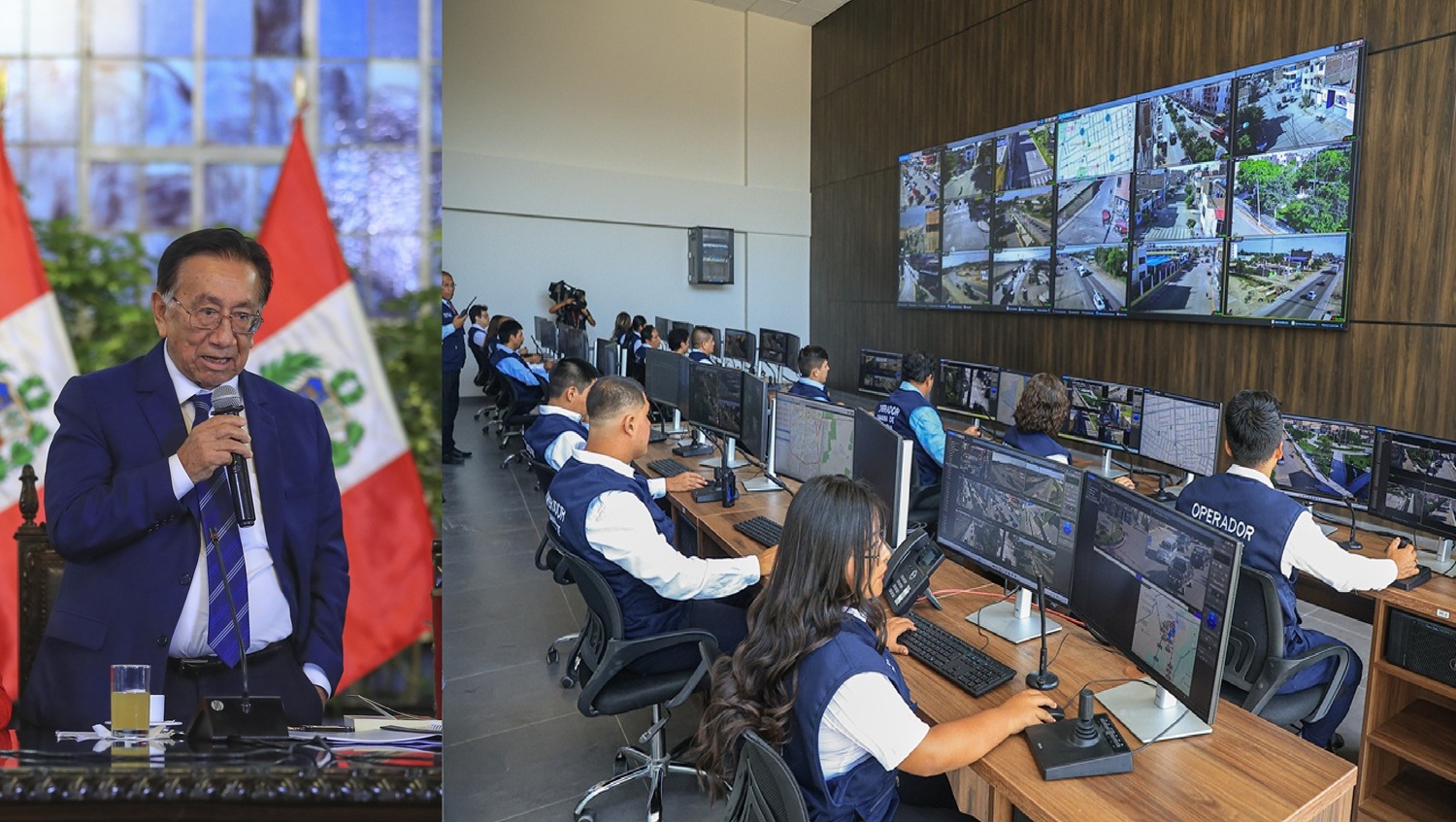
Agencia Peruana de Noticias PRENSAPERU.PE https://www.prensaperu.pe Twitter: @prensaperupe El presidente de la república, José María Balcázar, dio a conocer que el Plan Nacional de Seguridad Ciudadana será presentado en los próximos días con el propósito de someterlo a la evaluación y participación de la ciudadanía en todo el territorio nacional. La iniciativa busca dar respuesta a la creciente demanda de seguridad que ha cobrado fuerza en diversos sectores del país, especialmente entre quienes desarrollan actividades económicas expuestas a la violencia y el delito.
No obstante, el mandatario destacó que el plan por sí solo no será suficiente para enfrentar la complejidad de la problemática, por lo que considera indispensable reforzarlo con una legislación especial dirigida específicamente contra la criminalidad organizada. “Necesitamos herramientas jurídicas que nos permitan obtener resultados concretos y dar la tranquilidad que demanda la población”, enfatizó el jefe de Estado durante un encuentro de trabajo en el Palacio de Gobierno.
La reunión, convocada para abordar el problema de la inseguridad que afecta de manera directa al sector transporte —uno de los más vulnerables a robos, extorsiones y agresiones—, sirvió de escenario para anunciar reformas estructurales en el marco legal del país. Balcázar sostuvo que es preciso modificar tres pilares fundamentales del sistema de justicia penal: el Código Penal, el Código Procesal Penal y el sistema penitenciario. Estas modificaciones buscan agilizar los procesos judiciales, mejorar la efectividad de las sanciones y fortalecer las estrategias de reinserción social, además de dotar a las autoridades de mecanismos más potentes para combatir las redes criminales.
En paralelo a las reformas legales, el presidente ratificó que este mes se incorporarán 6 mil nuevos policías al servicio nacional, quienes egresarán de 17 escuelas de formación de la Policía Nacional del Perú (PNP). Estos efectivos se distribuirán en todo el país, con un enfoque especial en zonas con altos índices de delincuencia y en las rutas y terminales de transporte que concentran la actividad del sector.
En el encuentro participaron autoridades de primer nivel, entre ellas la presidenta del Consejo de Ministros, Denisse Miralles; el ministro del Interior, Hugo Begazo; el ministro de Transportes y Comunicaciones, Aldo Prieto; y el viceministro de Transportes, Juan Haro Muñoz. También estuvieron presentes el Comandante General de la PNP, Óscar Arriola; el general Víctor Revoredo, y el presidente de la Autoridad de Transporte Urbano para Lima y Callao (ATU), David Hernández, quienes abordaron conjuntamente las estrategias para proteger a conductores, pasajeros y el patrimonio del sector transporte.
Según datos preliminares del Ministerio del Interior, el sector transporte concentra más del 25% de los reportes de delincuencia contra actividades económicas en los últimos seis meses, lo que ha generado pérdidas millonarias y afectado la movilidad de la población.
DATOS
1.- El plan de seguridad tendrá doble enfoque: Por un lado, una propuesta abierta a la participación ciudadana y, por otro, reformas legales estructurales para enfrentar la criminalidad organizada, lo que indica un enfoque integral y no solo operativo.
2.- El sector transporte es una prioridad estratégica: La convocatoria de gremios de este rubro y la mención explícita de sus problemas demuestran que el gobierno busca atacar primero los puntos de mayor vulnerabilidad y impacto en la economía y la vida cotidiana.
3.- Se busca transformar el sistema penal completo: Las modificaciones planteadas al Código Penal, Procesal Penal y sistema penitenciario señalan que el objetivo no es solo castigar, sino mejorar la efectividad y equidad del sistema de justicia en su totalidad.
4.- La fuerza policial se fortalece de inmediato: La incorporación de 6 mil efectivos este mes muestra una respuesta rápida a la demanda social, complementaria a las reformas a mediano y largo plazo.
Fuente: Agencia Peruana de Noticias PRENSAPERU.PE https://www.prensaperu.pe Twitter: @prensaperupe
Translate
National Securyty Plan To Be Presented Shortly: “President Balcázar Announces National Security Plan, Citizens to Evaluate and Laws Against Organized Crime to Be Reformed”.
Peruvian News Agency PRENSAPERU.PE https://www.prensaperu.pe Twitter: @prensaperupe The President of the Republic, José María Balcázar, announced that the National Citizen Security Plan will be presented in the coming days with the purpose of submitting it to evaluation and participation by citizens across the national territory. The initiative seeks to respond to the growing demand for security that has gained momentum in various sectors of the country, especially among those engaged in economic activities exposed to violence and crime.
This announcement takes place against a backdrop of recent institutional consolidation for President Balcázar’s government. He assumed the presidency on February 19 after being elected President of Congress, and subsequently swore in the cabinet led by Denisse Miralles (with Hernando de Soto appointed as Prime Minister) on February 24, prioritizing institutional stability and electoral transparency.
However, the Head of State emphasized that the plan alone will not be sufficient to address the complexity of the issue, so he considers it essential to strengthen it with special legislation aimed specifically at combating organized crime. “We need legal tools that allow us to achieve concrete results and provide the peace of mind that the population demands,” stressed the President during a working meeting at Government Palace.
The meeting, convened to address the security issue directly affecting the transportation sector — one of the most vulnerable to theft, extortion, and assault — served as a platform to announce structural reforms to the country’s legal framework. This approach aligns with statements by the Minister of Justice and Human Rights, Luis Jiménez Borra, who recently noted that the ministry’s bicentennial marks a new era for Peruvian justice based on legal certainty, accessibility, and comprehensive reform.
Balcázar stated that it is necessary to modify three fundamental pillars of the criminal justice system: the Penal Code, the Criminal Procedure Code, and the penitentiary system. These changes aim to streamline judicial processes, improve the effectiveness of sanctions, and strengthen social reintegration strategies, in addition to providing authorities with more powerful mechanisms to combat criminal networks. Additionally, the government has declared a state of emergency on sections of the national road network to ensure safety and continuity of land transportation, reinforcing the sector’s importance on the government agenda.
Alongside the legal reforms, the President confirmed that 6,000 new police officers will join national service this month, graduating from 17 training schools of the National Police of Peru (PNP). These personnel will be deployed across the country, with a special focus on high-crime areas and transportation routes and terminals where sector activity is concentrated. The Urban Transport Authority for Lima and Callao (ATU) — which recently made a virtual platform available for student transportation procedures — is also participating in protection strategies.
The meeting was attended by high-level authorities including the President of the Council of Ministers, Denisse Miralles; the Minister of the Interior, Hugo Begazo; the Minister of Transportation and Communications, Aldo Prieto; and the Deputy Minister of Transportation, Juan Haro Muñoz. Also present were the General Commander of the PNP, Óscar Arriola; PNP General Víctor Revoredo; and the President of the ATU, David Hernández, who jointly addressed strategies to protect drivers, passengers, and the transportation sector’s assets.
According to preliminary data from the Ministry of the Interior, the transportation sector accounts for more than 25% of reported crimes against economic activities in the last six months, resulting in millions in losses and affecting population mobility.
DATA
1.- The security plan will have a dual focus: On one hand, a proposal open to citizen participation; on the other, structural legal reforms to combat organized crime, indicating a comprehensive approach rather than just operational measures.
2.- The transportation sector is a strategic priority: The convening of industry associations and explicit mention of their challenges demonstrate that the government aims to first address the most vulnerable points with the greatest impact on the economy and daily life.
3.- The entire penal system will be transformed: The proposed modifications to the Penal Code, Criminal Procedure Code, and penitentiary system indicate that the goal is not only to punish but also to improve the effectiveness and fairness of the justice system as a whole.
4.- The police force will be strengthened immediately: The incorporation of 6,000 personnel this month represents a rapid response to public demand, complementing medium- and long-term reforms.
Source: Peruvian News Agency PRENSAPERU.PE https://www.prensaperu.pe Twitter: @prensaperupe