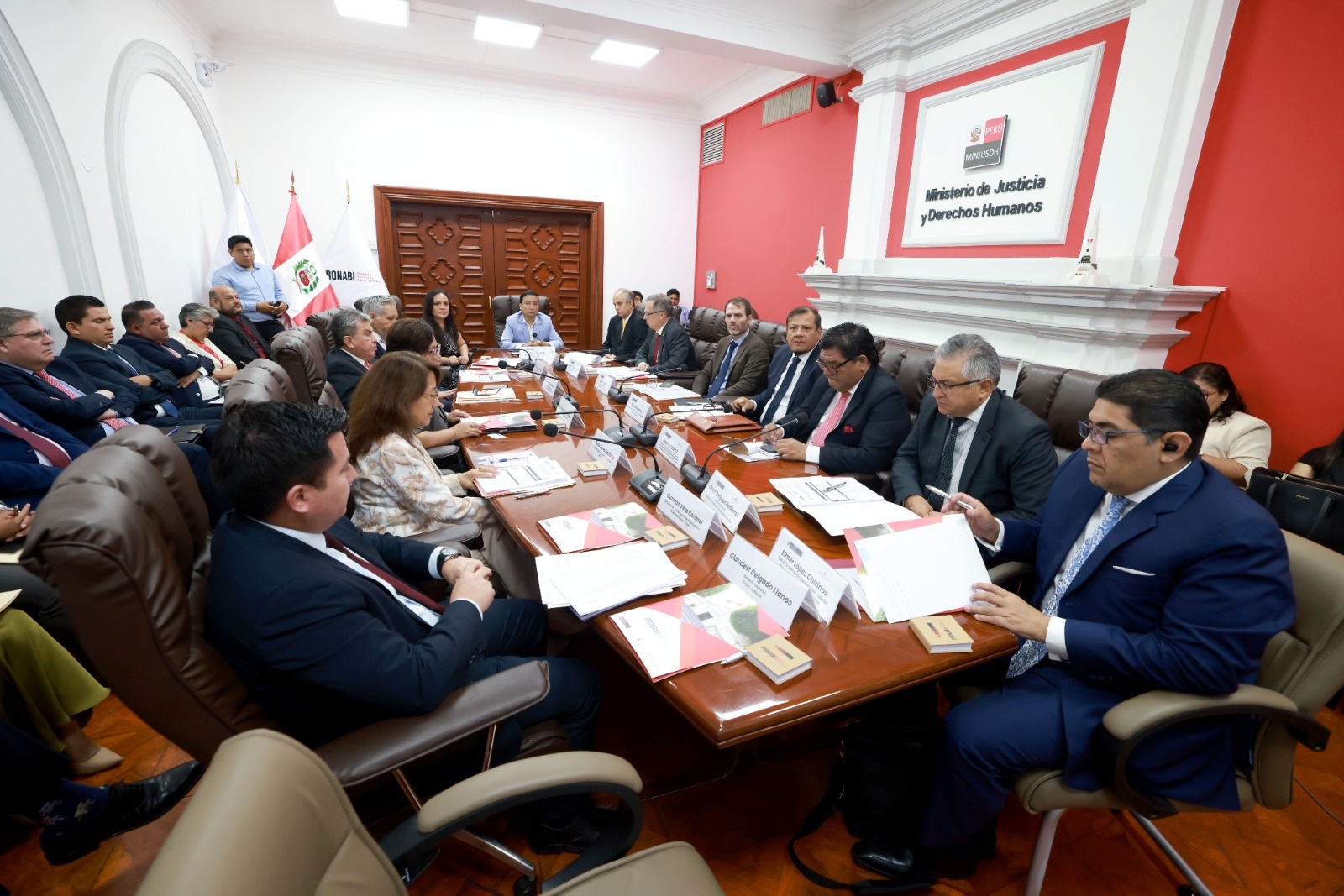
Agencia Peruana de Noticias PRENSAPERU.PE https://www.prensaperu.pe Twitter: @prensaperupe El ministro de Justicia y Derechos Humanos, Luis Jiménez Borra, ha liderado recientemente la crucial Reunión de Estados Parte del Acuerdo Tripartito entre la República del Perú, la Confederación Suiza y el Gran Ducado de Luxemburgo. Este acuerdo se centra en la transferencia de activos decomisados, un mecanismo fundamental en la lucha contra la corrupción y el crimen organizado. Durante la reunión, el ministro Jiménez destacó el impacto positivo de este instrumento, que ha permitido fortalecer el desarrollo de proyectos clave en las instituciones del sistema de justicia peruano.
El ministro Borra enfatizó que este acuerdo “constituye un referente para la recuperación y restitución de activos que son provenientes de la corrupción y del crimen organizado”. Esta declaración subraya la importancia de la cooperación internacional en la estrategia de Perú para combatir delitos que socavan el desarrollo y la confianza pública. La firmeza del ministro al afirmar que la corrupción y el crimen organizado “no merecen ninguna tregua” resalta la determinación del Estado peruano en esta batalla.
CONCEPTOS CLAVE PARA ENTENDER EL IMPACTO DEL ACUERDO
Para comprender la trascendencia de este acuerdo, es fundamental definir algunos de los conceptos centrales:
Acuerdo Tripartito: Se refiere a un convenio o pacto formal establecido entre tres partes o naciones. En este caso, el acuerdo involucra a Perú, Suiza y Luxemburgo, estableciendo un marco de colaboración específico para la transferencia de activos.
Activos Decomisados: Son bienes, fondos o propiedades que han sido incautados o confiscados por las autoridades judiciales a individuos u organizaciones que han cometido delitos, especialmente aquellos relacionados con la corrupción, el narcotráfico, el lavado de dinero y el crimen organizado. El objetivo es privar a los delincuentes de los frutos de sus actividades ilícitas.
Recuperación y Restitución de Activos: Este proceso implica la localización, incautación, congelamiento, decomiso y finalmente la devolución o reintegración de los activos ilícitos a su legítimo propietario (en este caso, el Estado peruano) o su uso para fines de interés público. La restitución se refiere específicamente a devolver el activo a la víctima, mientras que la recuperación abarca un sentido más amplio de retorno al Estado.
Cooperación Internacional: Es la colaboración entre dos o más países u organizaciones internacionales para alcanzar objetivos comunes. En el contexto de la justicia, implica compartir información, asistencia legal mutua, extradición y, como en este caso, la transferencia de activos decomisados a través de fronteras. Es vital para abordar delitos transnacionales como la corrupción y el crimen organizado.
Lucha Anticorrupción: Se refiere al conjunto de políticas, leyes, instituciones y acciones destinadas a prevenir, investigar, perseguir y sancionar actos de corrupción. Busca promover la transparencia, la rendición de cuentas y la integridad en la gestión pública y privada.
FORTALECIMIENTO DE LAS INSTITUCIONES DE JUSTICIA
Uno de los logros más significativos del acuerdo, según destacó el ministro Jiménez, es la reinversión de los recursos recuperados en el fortalecimiento de instituciones clave del sistema de justicia peruano. Estas incluyen:
El Ministerio de Justicia y Derechos Humanos (MINJUSDH): Entidad encargada de formular, planificar, dirigir, coordinar, ejecutar y supervisar las políticas relacionadas con la justicia y los derechos humanos en el país.
El Poder Judicial: Responsable de administrar justicia a través de sus diferentes instancias, garantizando el cumplimiento de las leyes y resolviendo conflictos.
El Ministerio Público: Liderado por la Fiscalía de la Nación, es el organismo autónomo encargado de defender la legalidad, los derechos ciudadanos, los intereses públicos y la persecución del delito.
La Procuraduría General del Estado: Representa y defiende jurídicamente los intereses del Estado peruano en procesos judiciales y arbitrales, incluyendo casos de corrupción.
Estas entidades, en conjunto, son pilares fundamentales para “la defensa de la legalidad, la persecución del delito y la protección del interés público”. La reinversión de los activos decomisados directamente en estas instituciones maximiza el impacto de la recuperación, dotándolas de mayores recursos para cumplir su misión.
VOLUNTAD DE CONSOLIDAR LA COOPERACIÓN Y REFERENTE INTERNACIONAL
El Estado peruano ha expresado su firme voluntad de continuar y fortalecer esta cooperación. El objetivo es “seguir avanzando para consolidar que nuestras instituciones sean más eficaces, sean más transparentes y esto responda a un servicio permanente con la ciudadanía con este espíritu de colaboración”. Este compromiso refleja una visión a largo plazo para construir un sistema de justicia más robusto y confiable.
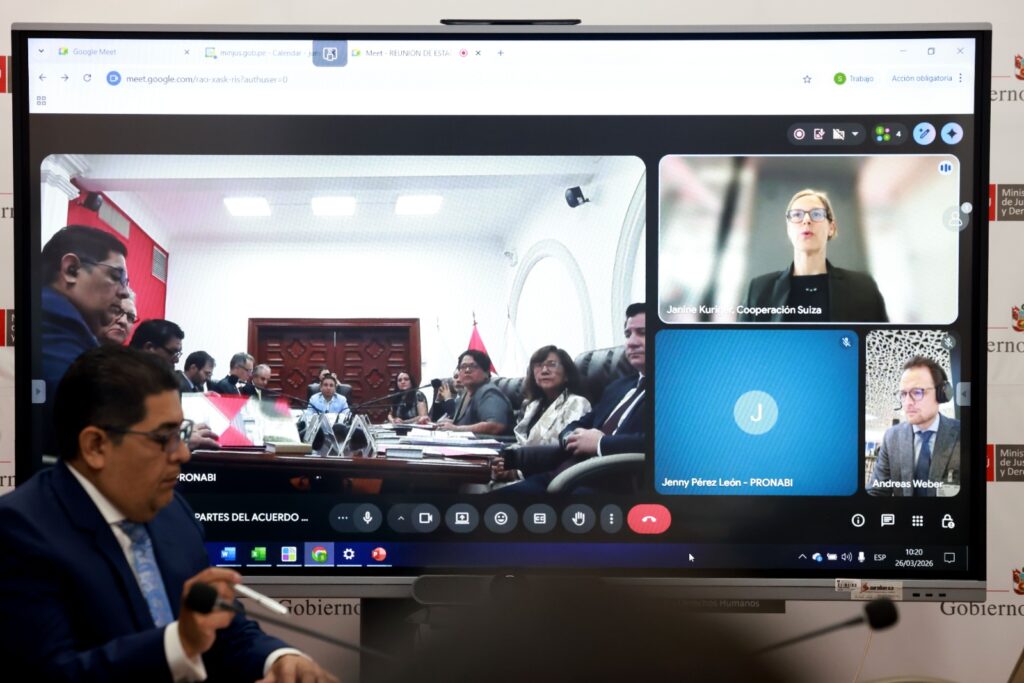
La Agencia Suiza para el Desarrollo y la Cooperación (COSUDE), a través de su representante Janine Kuriger, ha confirmado el éxito de esta iniciativa, señalando que la cooperación con Perú en esta materia se ha convertido en un referente internacional. Los fondos transferidos han financiado proyectos de lucha contra la corrupción y el crimen organizado, atrayendo la atención de la comunidad internacional que observa de cerca este modelo. El embajador de Suiza en Perú, Paul Garnier, complementó esto al valorar el compromiso de las entidades peruanas y la disposición a seguir trabajando constructivamente.
La reunión también contó con la participación activa de representantes del MINJUSDH, la Procuraduría General del Estado, el Ministerio Público y el Poder Judicial, quienes presentaron los avances y logros de los proyectos financiados. Además, se recibieron comentarios de integrantes del Basel Institute on Governance, una organización reconocida globalmente por su experiencia en gobernanza y lucha contra la corrupción, lo que añade un valioso componente de evaluación externa y buenas prácticas.
La presencia de altas autoridades como la viceministra de Justicia, Shadia Valdez Tejada; la procuradora general del Estado, María Caruajulca Quispe; el juez supremo titular Ramiro Bustamante Zegarra; y el gerente general del Ministerio Público, César Enríquez Gutiérrez, así como el embajador Luis Alberto Campana del Ministerio de Relaciones Exteriores, subraya el carácter interinstitucional y de alto nivel de este esfuerzo.
DATOS
1.- Modelo de Éxito en la Recuperación de Activos: El Acuerdo Tripartito entre Perú, Suiza y Luxemburgo se ha consolidado como un mecanismo altamente efectivo para la recuperación y restitución de activos provenientes de la corrupción y el crimen organizado, estableciendo un precedente internacional replicable para la lucha contra delitos transnacionales.
2.- Inversión Estratégica en el Sistema de Justicia: La reinversión directa de los fondos decomisados en instituciones clave del sistema de justicia peruano (MINJUSDH, Poder Judicial, Ministerio Público y Procuraduría General del Estado) fortalece significativamente su capacidad operativa, autonomía y eficacia en la defensa de la legalidad y el interés público.
3.- Compromiso Sostenible con la Transparencia: El compromiso expreso del Estado peruano, respaldado por la valoración positiva de la comunidad internacional y la participación de expertos como el Basel Institute on Governance, asegura la continuidad y el fortalecimiento de esta cooperación, impulsando una mayor transparencia y eficacia institucional en beneficio de la ciudadanía.
Fuente: Agencia Peruana de Noticias PRENSAPERU.PE https://www.prensaperu.pe Twitter: @prensaperupe
Translate
Steel Pact Between Peru, Switzerland and Luxembourg: “Government deploys its secret weapon against corruption, billions stolen return home.”
Peruvian News Agency PRENSAPERU.PE https://www.prensaperu.pe Twitter: @prensaperupe The Minister of Justice and Human Rights, Luis Jiménez Borra, recently led the crucial Meeting of State Parties to the Tripartite Agreement between the Republic of Peru, the Swiss Confederation, and the Grand Duchy of Luxembourg. This agreement focuses on the transfer of confiscated assets, a fundamental mechanism in the fight against corruption and organized crime. During the meeting, Minister Jiménez highlighted the positive impact of this instrument, which has allowed for the strengthening of key project developments in Peruvian justice system institutions.
Minister Borra emphasized that this agreement “constitutes a benchmark for the recovery and restitution of assets originating from corruption and organized crime, which deserve no reprieve.” This statement underscores the importance of international cooperation in Peru’s strategy to combat crimes that undermine development and public trust. The Minister’s firm assertion that corruption and organized crime “deserve no reprieve” highlights the Peruvian State’s determination in this battle.
KEY CONCEPTS TO UNDERSTAND THE IMPACT OF THE AGREEMENT
To understand the significance of this agreement, it is essential to define some of the central concepts:
Tripartite Agreement: Refers to a formal convention or pact established between three parties or nations. In this case, the agreement involves Peru, Switzerland, and Luxembourg, establishing a specific framework for collaboration on asset transfer.
Confiscated Assets (Decomisados): These are goods, funds, or properties that have been seized or confiscated by judicial authorities from individuals or organizations who have committed crimes, especially those related to corruption, drug trafficking, money laundering, and organized crime. The objective is to deprive criminals of the proceeds of their illicit activities.
Asset Recovery and Restitution: This process involves the tracing, seizure, freezing, confiscation, and finally the return or reintegration of illicit assets to their legitimate owner (in this case, the Peruvian State) or their use for public interest purposes. Restitution specifically refers to returning the asset to the victim, while recovery encompasses a broader sense of return to the State.
International Cooperation: This is collaboration between two or more countries or international organizations to achieve common goals. In the context of justice, it involves sharing information, mutual legal assistance, extradition, and, as in this case, the transfer of confiscated assets across borders. It is vital for addressing transnational crimes such as corruption and organized crime.
Anti-Corruption Fight: Refers to the set of policies, laws, institutions, and actions aimed at preventing, investigating, prosecuting, and punishing acts of corruption. It seeks to promote transparency, accountability, and integrity in public and private management.
STRENGTHENING JUSTICE INSTITUTIONS
One of the most significant achievements of the agreement, as highlighted by Minister Jiménez, is the reinvestment of recovered resources into strengthening key institutions of the Peruvian justice system. These include:
The Ministry of Justice and Human Rights (MINJUSDH): The entity responsible for formulating, planning, directing, coordinating, executing, and supervising policies related to justice and human rights in the country.
The Judiciary (Poder Judicial): Responsible for administering justice through its different instances, ensuring compliance with laws and resolving conflicts.
The Public Ministry (Ministerio Público): Led by the Public Prosecutor’s Office, it is the autonomous body responsible for defending legality, citizens’ rights, public interests, and prosecuting crime.
The State Attorney General’s Office (Procuraduría General del Estado): Represents and legally defends the interests of the Peruvian State in judicial and arbitration proceedings, including corruption cases.
These entities, collectively, are fundamental pillars for “the defense of legality, the prosecution of crime, and the protection of public interest.” The reinvestment of confiscated assets directly into these institutions maximizes the impact of recovery, providing them with greater resources to fulfill their mission.
WILLINGNESS TO CONSOLIDATE COOPERATION AND INTERNATIONAL BENCHMARK
The Peruvian State has expressed its firm willingness to continue and strengthen this cooperation. The goal is to “continue making progress to consolidate our institutions to be more effective, more transparent, and responsive to a permanent service to citizens with this spirit of collaboration.” This commitment reflects a long-term vision to build a more robust and reliable justice system.
The Swiss Agency for Development and Cooperation (SDC – COSUDE), through its representative Janine Kuriger, confirmed the success of this initiative, noting that cooperation with Peru in this area has become an international benchmark. The transferred funds have financed anti-corruption and organized crime projects, attracting the attention of the international community, which closely monitors this model. The Ambassador of Switzerland to Peru, Paul Garnier, complemented this by praising the commitment of the Peruvian entities and their willingness to continue working constructively.
The meeting also saw the active participation of representatives from MINJUSDH, the State Attorney General’s Office, the Public Ministry, and the Judiciary, who presented the progress and achievements of the funded projects. Additionally, comments were received from members of the Basel Institute on Governance, a globally recognized organization for its expertise in governance and anti-corruption, which adds a valuable component of external evaluation and best practices.
The presence of high authorities such as the Vice Minister of Justice, Shadia Valdez Tejada; the State Attorney General, María Caruajulca Quispe; the Supreme Justice of the Supreme Court of Justice, Ramiro Bustamante Zegarra; the General Manager of the Public Ministry, César Enríquez Gutiérrez; and the Director General for Europe of the Ministry of Foreign Affairs, Ambassador Luis Alberto Campana, among other authorities, underscores the inter-institutional and high-level nature of this effort.
DATA
1.- Successful Model for Asset Recovery: The Tripartite Agreement between Peru, Switzerland, and Luxembourg has consolidated itself as a highly effective mechanism for the recovery and restitution of assets originating from corruption and organized crime, establishing a replicable international precedent for combating transnational crimes.
2.- Strategic Investment in the Justice System: The direct reinvestment of confiscated funds into key Peruvian justice system institutions (MINJUSDH, Judiciary, Public Ministry, and State Attorney General’s Office) significantly strengthens their operational capacity, autonomy, and effectiveness in defending legality and public interest.
3.- Sustainable Commitment to Transparency: The express commitment of the Peruvian State, supported by the positive evaluation of the international community and the participation of experts like the Basel Institute on Governance, ensures the continuity and strengthening of this cooperation, promoting greater institutional transparency and effectiveness for the benefit of citizens.
Source: Peruvian News Agency PRENSAPERU.PE https://www.prensaperu.pe Twitter: @prensaperupe