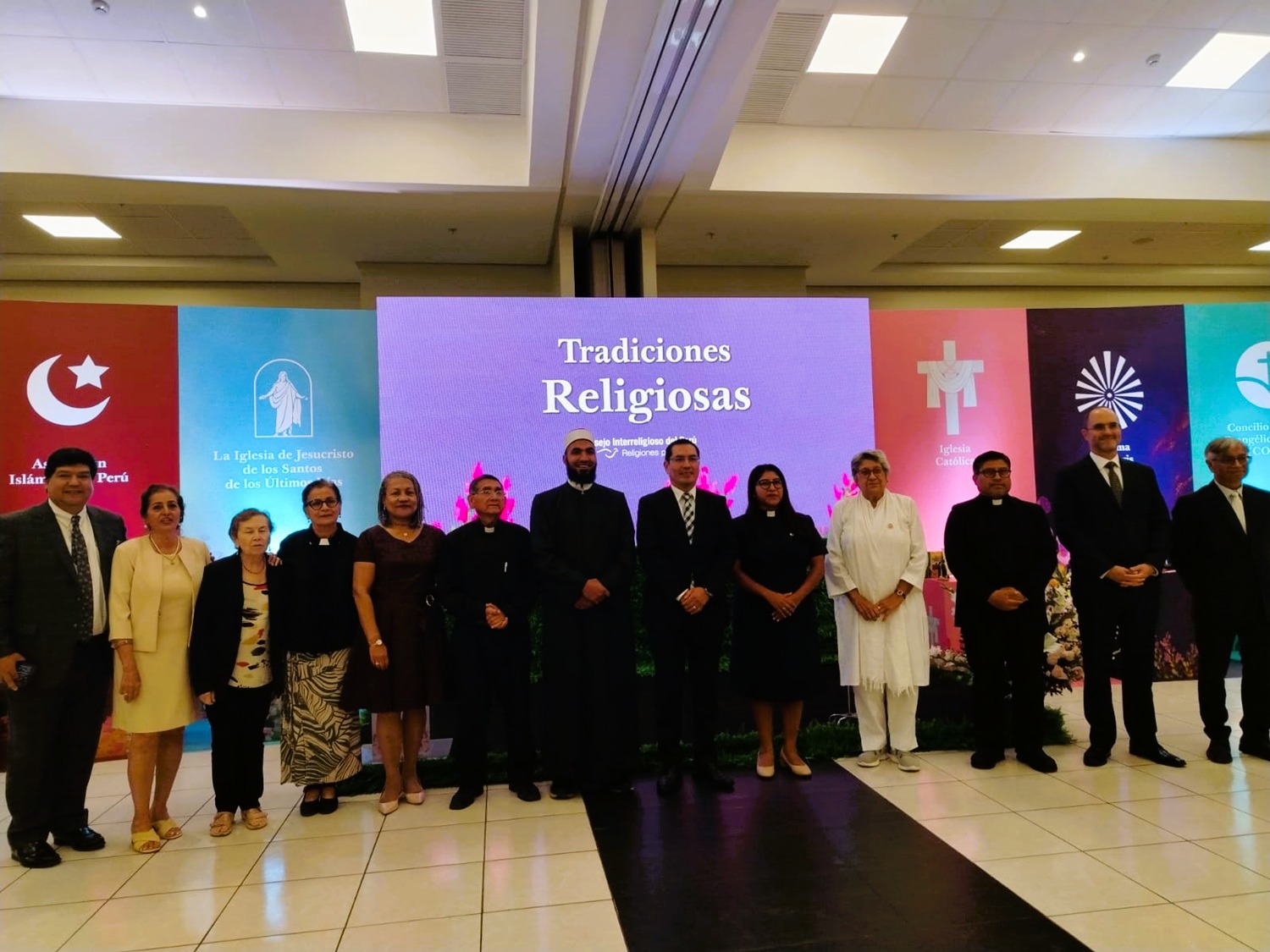
Agencia Peruana de Noticias PRENSAPERU.PE https://www.prensaperu.pe Twitter: @prensaperupe En medio de una Semana Santa que, para millones de personas en el mundo y especialmente en Perú, se caracteriza por profundas reflexiones sobre la vida, el sacrificio y la resurrección de Jesucristo, en el corazón de Lima ocurrió un hecho que trasciende lo simbólico y se convierte en un ejemplo tangible de lo que la sociedad necesita hoy más que nunca. Líderes de distintas tradiciones religiosas se dieron cita en un mismo techo con un propósito claro y poderoso: buscar paz, entendimiento y respeto mutuo en un contexto global donde las divisiones a menudo parecen tomar más fuerza que los lazos que nos unen como seres humanos.
¿Qué es el diálogo interreligioso? Se trata de un espacio de comunicación abierta y respetuosa entre personas de diferentes creencias religiosas, donde no se busca convertir al otro ni demostrar quién tiene la “verdad absoluta”, sino entender las perspectivas del prójimo, compartir experiencias y encontrar puntos comunes que fortalezcan la convivencia en sociedad. Y fue precisamente este espíritu el que impregnó cada rincón del Centro de Conferencias de Limatambo, escenario del encuentro organizado por el Consejo Interreligioso del Perú – entidad que agrupa a diversas comunidades de fe con el fin de fomentar la armonía – junto con La Iglesia de Jesucristo de los Santos de los Últimos Días.
La convocatoria fue un éxito rotundo: se reunieron representantes de más de una decena de comunidades, entre ellas católicos, judíos, musulmanes, testigos de Jehová, budistas y, por supuesto, miembros de la Iglesia de los Santos de los Últimos Días, entre otras. No se trató de una simple reunión protocolaria: fue un espacio real de intercambio, donde cada tradición compartió sus fundamentos, cómo vive su fe en el día a día y, lo más importante, qué aportes puede ofrecer para construir un mundo más justo y pacífico.
A lo largo de la jornada intensa, los participantes tuvieron la oportunidad de escuchar exposiciones claras y cercanas, compartieron momentos de oración y meditación adaptados a cada creencia (sin imponer ninguna sobre las otras) y recorrieron stands donde cada comunidad presentó sus tradiciones, símbolos y prácticas. Por ejemplo, se explicaron rituales propios de la Pascua judía, se compartieron detalles sobre las festividades del Budismo en Perú y se mostraron elementos característicos de la cultura islámica. Todo con una idea central que se fue fortaleciendo con cada palabra y cada gesto: las diferencias no tienen que separarnos, también pueden enriquecer lo que somos como sociedad.
Laura Vargas, representante del Consejo Interreligioso del Perú, sintetizó el espíritu del encuentro de manera contundente: “Nuestras diferencias no son motivo de división, sino una oportunidad para enriquecernos mutuamente. Cada tradición lleva consigo siglos de sabiduría sobre cómo vivir en comunidad, cómo cuidar al prójimo y cómo encontrar sentido a nuestra existencia – y cuando compartimos eso, todos ganamos”.
Ese enfoque constructivo se sintió en cada instante del evento. No hubo espacio para discusiones acaloradas ni intentos de imponer criterios: se trató de reconocer que la fe, cuando se vive con respeto y humildad, puede ser un poderoso punto de encuentro, más allá de las particularidades de cada doctrina.
Uno de los mensajes que más resonó entre los asistentes fue que la fe no es un concepto abstracto que se queda en los libros sagrados o en los lugares de culto: tiene que traducirse en acciones concretas. ¿Qué significa vivir la fe de manera práctica? Es aplicar los valores que cada creencia promueve – como la solidaridad, la honestidad, el amor al prójimo y la justicia – en todos los ámbitos de la vida: en el hogar, en el trabajo, en la calle y en las relaciones con quienes piensan distinto. El élder Roberto Pacheco, de La Iglesia de Jesucristo de los Santos de los Últimos Días, lo explicó de forma directa y clara: “La fe no es solo creer, sino también vivir conforme a lo que creemos. No sirve de nada decir que amamos a Dios si no amamos a nuestro hermano, y eso se ve en cómo tratamos a los demás cada día”.
Y esta perspectiva cambia completamente la mirada sobre lo que significa construir paz: no basta con hablar de ella en foros o eventos – hay que hacerlo realidad en lo cotidiano. En cómo resolvemos conflictos en la familia, en cómo apoyamos a nuestros vecinos en dificultades, en cómo tratamos a quienes tienen ideas diferentes a las nuestras y en cómo contribuimos al bienestar de la comunidad en la que vivimos.
El encuentro contó con voces poderosas de distintas confesiones que enriquecieron aún más el diálogo.
El sheij Ahmad Hammed, representante de la comunidad musulmana, explicó el significado del Ramadán – que en este año se superpuso parcialmente con la Semana Santa – como “un tiempo para acercarse a Dios, reflexionar sobre nuestras acciones, cambiar internamente y fortalecer nuestra solidaridad con los más necesitados. Es un mes de purificación del corazón y del espíritu, que nos invita a ser mejores personas”.
Desde la Iglesia Católica, el padre Jorge Carreño recordó un principio fundamental en este contexto: “Debemos ser constructores de fraternidad y defensores de la dignidad humana. Cada persona, sin importar su fe, su raza o su origen, tiene un valor único e irreemplazable, y es nuestra responsabilidad velar por ello”.
Y desde la comunidad judía, el rabino Fernando Lapiduz destacó el valor incalculable de espacios como este: “En un mundo donde muchas veces se habla más de lo que nos divide que de lo que nos une, estos encuentros son un baluarte de esperanza. Aquí las personas pueden sentirse escuchadas, respetadas y comprendidas, y eso es el primer paso para construir una sociedad más armoniosa”.
Al final del día, quedó claro que la paz no es algo que llegue sola del cielo ni que se construya de la noche a la mañana: se construye con decisiones diarias, con pequeños gestos de bondad y con el compromiso de cada uno de hacer su parte. Y la fe, cuando es sincera y se vive con humildad, empuja a hacer justamente eso: ser mejores y contribuir a que los demás también lo sean.
En una semana donde la humanidad recuerda los mensajes centrales de Jesucristo sobre el amor, el perdón y la servicio al prójimo, este tipo de iniciativas invitan a mirar el evangelio – y cualquier enseñanza religiosa – desde un ángulo muy práctico: vivir con más empatía, servir más a quienes lo necesitan y aprender a ver al otro con respeto y admiración, incluso cuando piensa distinto.
DATOS
1.- El diálogo interreligioso es un motor de convivencia: Espacios como este demuestran que las diferencias religiosas no tienen por qué ser un obstáculo para la armonía, sino todo lo contrario – pueden enriquecer la sociedad cuando se comparten con respeto.
2.- La fe debe traducirse en acciones: Las enseñanzas religiosas adquieren verdadero valor cuando se aplican en la vida cotidiana, en cómo tratamos a los demás y en nuestra contribución a la construcción de una sociedad más justa.
3.- La paz se construye día a día: No es un objetivo abstracto, sino el resultado de decisiones individuales y colectivas que promueven el entendimiento, la fraternidad y el respeto a la dignidad de todas las personas
Fuente: Agencia Peruana de Noticias PRENSAPERU.PE https://www.prensaperu.pe Twitter: @prensaperupe
Translate
From Peru: “Holy Week in Lima, religions unite to build the peace the world needs, the meeting of diverse faiths that leaves a mark.”
Peruvian News Agency PRENSAPERU.PE https://www.prensaperu.pe Twitter: @prensaperupe During Holy Week, which for millions of people around the world – and particularly in Peru – is marked by deep reflection on the life, sacrifice, and resurrection of Jesus Christ, something meaningful took place in the heart of Lima that goes beyond symbolism and becomes a tangible example of what society needs now more than ever. Leaders from different religious traditions came together under one roof with a clear and powerful purpose: to seek peace, understanding, and mutual respect in a global context where divisions often seem to gain more ground than the bonds that unite us as human beings.
What is interfaith dialogue? It is a space for open and respectful communication between people of different religious beliefs, where the goal is not to convert others or prove who has the “absolute truth,” but to understand others’ perspectives, share experiences, and find common ground to strengthen coexistence in society. This was precisely the spirit that permeated every corner of the Limatambo Conference Center, the venue for the gathering organized by the Peruvian Interreligious Council – an organization that brings together various faith communities to promote harmony – along with The Church of Jesus Christ of Latter-day Saints.
The event was a resounding success: representatives from more than a dozen communities attended, including Catholics, Jews, Muslims, Jehovah’s Witnesses, Buddhists, and members of The Church of Jesus Christ of Latter-day Saints, among others. This was no mere formal meeting: it was a real space for exchange, where each tradition shared its foundations, how faith is lived in daily life, and most importantly, what contributions it can offer to build a more just and peaceful world.
Throughout the intense day, participants had the opportunity to listen to clear and approachable presentations, share moments of prayer and meditation adapted to each belief (without imposing any over the others), and visit booths where each community showcased its traditions, symbols, and practices. For example, rituals specific to Jewish Passover were explained, details about Buddhist celebrations in Peru were shared, and characteristic elements of Islamic culture were displayed. Everything revolved around a core idea that grew stronger with every word and gesture: differences do not have to divide us – they can also enrich who we are as a society.
Laura Vargas, representative of the Peruvian Interreligious Council, succinctly captured the spirit of the gathering: “Our differences are not a reason for division, but an opportunity to enrich one another. Each tradition carries centuries of wisdom about how to live in community, how to care for others, and how to find meaning in our existence – and when we share this, everyone benefits.”
This constructive approach was felt at every moment of the event. There was no room for heated debates or attempts to impose criteria: the focus was on recognizing that faith, when lived with respect and humility, can be a powerful unifying force, beyond the specifics of each doctrine.
One of the most resonant messages among attendees was that faith is not an abstract concept confined to sacred texts or places of worship: it must be translated into concrete actions. What does it mean to live faith practically? It means applying the values each belief promotes – such as solidarity, honesty, love for others, and justice – in all areas of life: at home, at work, on the street, and in relationships with those who think differently. Elder Roberto Pacheco of The Church of Jesus Christ of Latter-day Saints explained this clearly and directly: “Faith is not just believing – it is also living according to what we believe. It is useless to say we love God if we do not love our neighbor, and this is reflected in how we treat others every day.”
This perspective completely changes the way we look at building peace: talking about it in forums or events is not enough – we must make it a reality in our daily lives. In how we resolve conflicts in our families, how we support neighbors in need, how we treat those with different ideas, and how we contribute to the well-being of the community we live in.
The gathering featured powerful voices from different faith traditions that further enriched the dialogue.
Sheikh Ahmad Hammed, representative of the Muslim community, explained the meaning of Ramadan – which this year partially overlapped with Holy Week – as “a time to draw closer to God, reflect on our actions, change from within, and strengthen our solidarity with the most vulnerable. It is a month of purification for the heart and spirit, inviting us to be better people.”
From the Catholic Church, Father Jorge Carreño reminded everyone of a fundamental principle in this context: “We must be builders of fraternity and defenders of human dignity. Every person, regardless of their faith, race, or background, has unique and irreplaceable worth – and it is our responsibility to protect this.”
From the Jewish community, Rabbi Fernando Lapiduz highlighted the invaluable value of spaces like this: “In a world where we often hear more about what divides us than what unites us, these gatherings are a bastion of hope. Here, people can feel heard, respected, and understood – and that is the first step toward building a more harmonious society.”
In the end, it was clear that peace is not something that comes down from heaven on its own or is built overnight: it is constructed through daily decisions, small acts of kindness, and the commitment of each individual to do their part. And faith, when sincere and lived with humility, drives us to do exactly that: to be better and help others do the same.
During a week when humanity remembers the central messages of Jesus Christ about love, forgiveness, and service to others, initiatives like this invite us to look at the gospel – and any religious teaching – from a very practical angle: to live with more empathy, to serve those in need more often, and to learn to see others with respect and admiration, even when they think differently.
DATA
1.- Interfaith dialogue drives coexistence: Spaces like this demonstrate that religious differences do not have to be an obstacle to harmony – on the contrary, they can enrich society when shared with respect.
2.- Faith must translate into action: Religious teachings gain true value when applied in daily life, in how we treat others, and in our contribution to building a more just society.
3.- Peace is built day by day: It is not an abstract goal, but the result of individual and collective decisions that promote understanding, fraternity, and respect for the dignity of all people.
Source: Peruvian News Agency PRENSAPERU.PE https://www.prensaperu.pe Twitter: @prensaperupe