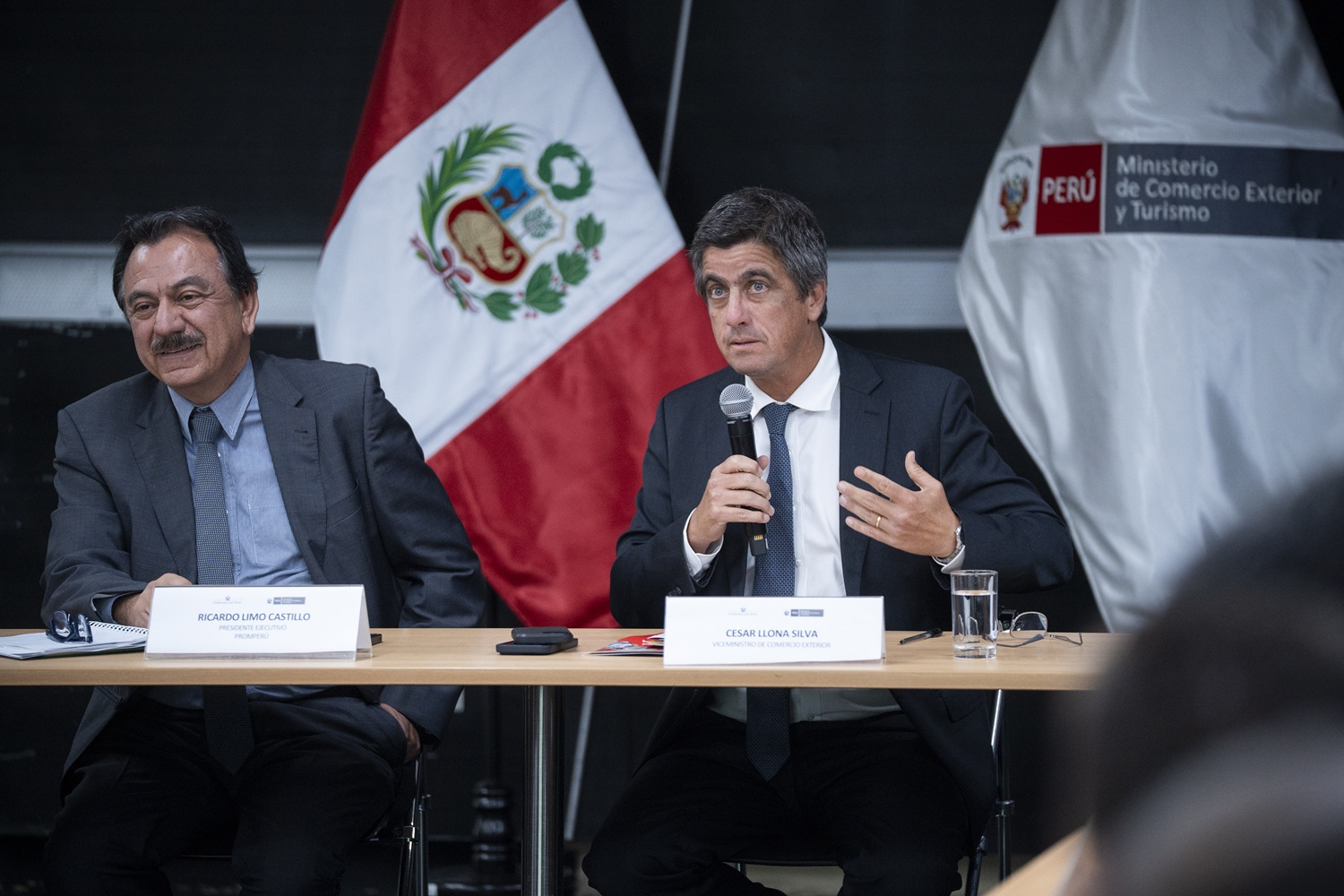
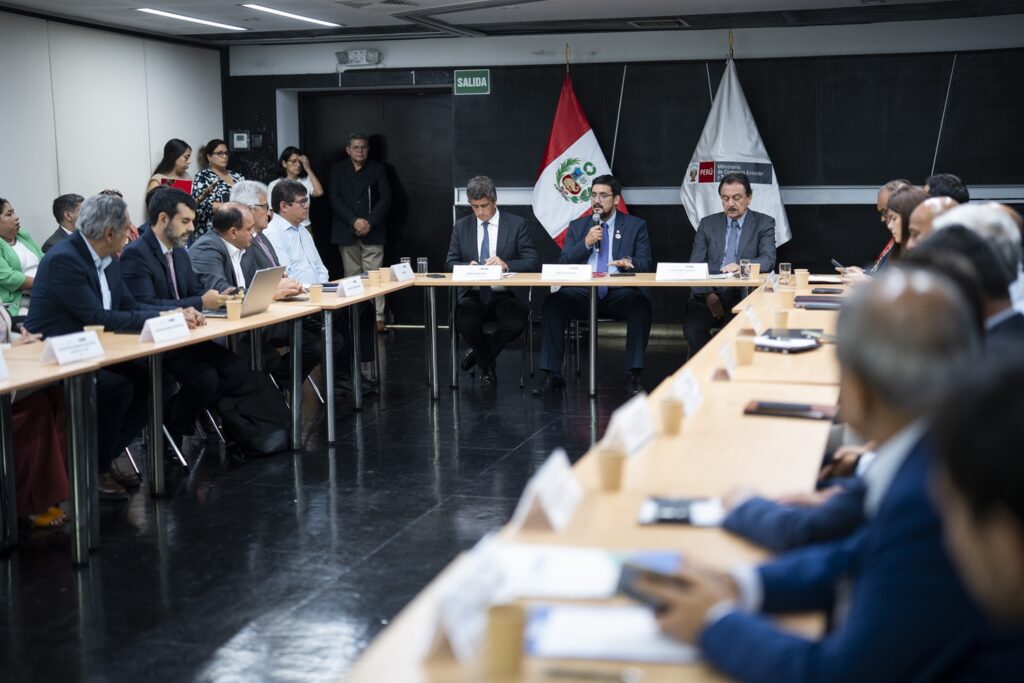
Agencia Peruana de Noticias PRENSAPERU.PE https://www.prensaperu.pe Twitter: @prensaperupe El Ministerio de Comercio Exterior y Turismo (Mincetur) llevó a cabo una reunión con representantes de gremios empresariales del sector productivo, exportador y logístico, donde presentó oficialmente el Grupo de Trabajo para el Monitoreo y Alerta Temprana de Comercio Exterior. Esta iniciativa busca consolidar un marco de coordinación interinstitucional que permita al Estado peruano actuar con mayor celeridad y efectividad frente a cualquier situación coyuntural que pudiera alterar el desarrollo normal del intercambio comercial internacional.
DEFINICIONES CONCEPTUALES
Monitoreo de Comercio Exterior: Proceso sistemático de seguimiento, recolección y análisis de información relacionada con las actividades de importación y exportación de un país, así como de los factores globales que influyen en ellas. Incluye el control de indicadores como volúmenes comerciales, precios internacionales, flujos logísticos y condiciones de mercado.
Alerta Temprana: Mecanismo que permite identificar señales precoces de posibles riesgos o perturbaciones en el entorno comercial, con el fin de tomar medidas preventivas antes de que estos impacten de manera significativa el sector.
Situaciones Coyunturales: Eventos o circunstancias de carácter temporal que afectan el funcionamiento del comercio internacional, como conflictos geopolíticos, fenómenos naturales extremos, cambios súbitos en políticas comerciales extranjeras o interrupciones en cadenas de suministro globales.
Coordinación Interinstitucional: Proceso de articulación entre diferentes organismos públicos y actores privados para alcanzar un objetivo común, garantizando la sinergia de esfuerzos, el intercambio de información y la adopción de decisiones conjuntas.
PRESENTACIÓN DE LA INICIATIVA POR EL MINCETUR
El titular del Mincetur, José Reyes, destacó la importancia estratégica de esta propuesta en el contexto global actual, caracterizado por una creciente volatilidad en los mercados internacionales. “Tenemos un firme interés en desarrollar espacios e instrumentos que nos permitan, como Poder Ejecutivo, reducir el impacto de situaciones que ocurren dentro y fuera del país”, afirmó el ministro.
Explicó que el grupo busca abordar tanto desafíos externos como internos: por un lado, los generados por conflictos y tensiones geopolíticas (como guerras, disputas comerciales o cambios en alianzas internacionales que alteran rutas y acuerdos comerciales) y, por otro, aquellos derivados de fenómenos climatológicos (como El Niño, sequías o huracanes que afectan la producción agropecuaria, las infraestructuras portuarias y terrestres, y los costos de transporte).
El funcionario enfatizó que “es fundamental trabajar de manera articulada entre todos los actores, avanzando de forma conjunta para identificar y promover soluciones oportunas”, ya que el comercio exterior representa una pieza clave en el crecimiento económico peruano, contribuyendo con más del 20% del Producto Interno Bruto (PIB) según datos recientes del INEI.
ENFOQUES DEL GRUPO DE TRABAJO
El viceministro de Comercio Exterior, César Llona, detalló que la iniciativa se estructura en dos ejes fundamentales:
1.- Enfoque Reactivo: Busca agilizar la respuesta del Estado frente a contingencias ya presentes. Esto implica definir protocolos claros de actuación, asignar responsabilidades a cada institución involucrada y establecer canales de comunicación rápidos para implementar medidas correctoras. Por ejemplo, en caso de una interrupción en una ruta marítima clave para las exportaciones peruanas, el grupo coordinaría acciones entre la Marina de Guerra del Perú, empresas portuarias y gremios exportadores para diversificar rutas o ajustar plazos de envío.
2.- Enfoque Preventivo: Se orienta a establecer mecanismos de alerta temprana que permitan identificar riesgos potenciales antes de que materialicen. Esto incluirá el desarrollo de sistemas de seguimiento de indicadores globales (como tensiones en zonas productoras de materias primas, cambios en políticas arancelarias o pronósticos climáticos a largo plazo) y la generación de informes periódicos que permitan a los actores tomar decisiones anticipadas.
En este marco, el Mincetur asumirá un rol articulador y de coordinador institucional, promoviendo el vínculo efectivo entre organismos públicos como PROMPERÚ, la Superintendencia Nacional de Aduanas y de Administración Tributaria (SUNAT), el Ministerio de Transportes y Comunicaciones (MTC), y actores privados representados en gremios del sector.
IMPACTO DE LOS FACTORES DE RIESGO
Las actividades comerciales pueden verse afectadas de manera significativa por diversos factores:
Conflictos geopolíticos: Alteran las rutas de transporte, aumentan los costos de seguros marítimos y aéreos, y pueden generar sanciones o restricciones comerciales que limitan el acceso a mercados clave.
Fenómenos climatológicos: El Fenómeno El Niño, por ejemplo, ha generado en el pasado inundaciones que dañaron infraestructuras portuarias en el Callao (principal puerto del país) y afectaron la producción de productos exportables como café, cacao y pescado. Asimismo, sequías pueden reducir la disponibilidad de agua para la agricultura exportadora o afectar la generación de energía eléctrica, impactando los costos de producción.
Interrupciones en cadenas de suministro: Eventos como pandemias o problemas en zonas de producción global de componentes pueden retrasar la llegada de insumos necesarios para la industria peruana o aumentar sus costos.
La reunión contó con la presencia destacada del presidente ejecutivo de PROMPERÚ, Ricardo Limo, quien aseguró que la entidad apoyará la iniciativa con su experiencia en la promoción del comercio exterior y la vinculación con mercados internacionales. Los representantes gremiales empresariales saludaron la propuesta y compartieron ideas como la creación de una plataforma digital de intercambio de información y la inclusión de representantes de sectores específicos según las contingencias que se presenten.
DATOS
El Grupo de Trabajo para el Monitoreo y Alerta Temprana de Comercio Exterior representa un paso fundamental hacia la profesionalización de la gestión de riesgos en el sector comercial peruano, al integrar por primera vez de manera estructurada los esfuerzos de actores públicos y privados bajo un enfoque tanto preventivo como reactivo.
La iniciativa responde a la necesidad de adaptarse a un entorno global cada vez más volátil, donde factores como las tensiones geopolíticas y los cambios climáticos representan riesgos constantes para el comercio exterior, pieza clave del crecimiento económico del Perú.
El éxito de este grupo dependerá de la efectividad de la coordinación interinstitucional, la calidad de la información que se gestione y la capacidad de tomar decisiones rápidas y concertadas, lo que requerirá un compromiso continuo de todos los actores involucrados.
Fuente: Agencia Peruana de Noticias PRENSAPERU.PE https://www.prensaperu.pe Twitter: @prensaperupe
Translate
Mincetur launches working group to monitor and warn about risks in Peruvian foreign trade, protecting its international trade from global crises.
Peruvian News Agency PRENSAPERU.PE https://www.prensaperu.pe Twitter: @prensaperupe The Ministry of Foreign Trade and Tourism (Mincetur) held a meeting with representatives of business associations from the productive, export and logistics sectors, where it officially presented the Working Group for Foreign Trade Monitoring and Early Warning. This initiative aims to consolidate a framework for inter-institutional coordination that allows the Peruvian State to act more quickly and effectively in the face of any contingent situation that could alter the normal development of international trade.
CONCEPTUAL DEFINITIONS
Foreign Trade Monitoring: Systematic process of tracking, collecting and analyzing information related to a country’s import and export activities, as well as the global factors that influence them. It includes monitoring indicators such as trade volumes, international prices, logistics flows and market conditions.
Early Warning: Mechanism that allows identifying early signs of possible risks or disruptions in the commercial environment, in order to take preventive measures before these significantly impact the sector.
Contingent Situations: Temporary events or circumstances that affect the functioning of international trade, such as geopolitical conflicts, extreme natural phenomena, sudden changes in foreign trade policies or disruptions in global supply chains.
Inter-institutional Coordination: Process of articulation between different public bodies and private actors to achieve a common goal, ensuring synergy of efforts, information exchange and joint decision-making.
PRESENTATION OF THE INITIATIVE BY MINCETUR
The head of Mincetur, José Reyes, highlighted the strategic importance of this proposal in the current global context, characterized by increasing volatility in international markets. “We have a strong interest in developing spaces and tools that allow us, as the Executive Branch, to reduce the impact of situations that occur both inside and outside the country,” stated the minister.
He explained that the group seeks to address both external and internal challenges: on one hand, those generated by geopolitical conflicts and tensions (such as wars, trade disputes or changes in international alliances that alter routes and trade agreements) and, on the other, those resulting from climatic phenomena (such as El Niño, droughts or hurricanes that affect agricultural and livestock production, port and land infrastructure, and transportation costs).
The official emphasized that “it is essential to work in a coordinated manner among all actors, moving forward together to identify and promote timely solutions,” since foreign trade represents a key piece in Peru’s economic growth, contributing more than 20% of the Gross Domestic Product (GDP) according to recent data from the National Institute of Statistics and Informatics (INEI).
FOCUSES OF THE WORKING GROUP
The Vice Minister of Foreign Trade, César Llona, detailed that the initiative is structured around two fundamental axes:
1.- Reactive Focus: Seeks to speed up the State’s response to existing contingencies. This involves defining clear action protocols, assigning responsibilities to each involved institution and establishing fast communication channels to implement corrective measures. For example, in the event of an interruption in a key maritime route for Peruvian exports, the group would coordinate actions between the Peruvian Navy, port companies and export associations to diversify routes or adjust shipping deadlines.
2.- Preventive Focus: Is aimed at establishing early warning mechanisms that allow identifying potential risks before they materialize. This will include the development of systems to monitor global indicators (such as tensions in raw material producing areas, changes in tariff policies or long-term climate forecasts) and the generation of periodic reports that allow actors to make proactive decisions.
Within this framework, Mincetur will assume a leading and coordinating institutional role, promoting effective links between public bodies such as PROMPERÚ, the National Superintendency of Customs and Tax Administration (SUNAT), the Ministry of Transportation and Communications (MTC), and private actors represented in sectoral associations.
IMPACT OF RISK FACTORS
Commercial activities can be significantly affected by various factors:
Geopolitical conflicts: Alter transportation routes, increase maritime and air insurance costs, and can generate sanctions or trade restrictions that limit access to key markets.
Climatic phenomena: The El Niño Phenomenon, for example, has in the past caused floods that damaged port infrastructure in Callao (the country’s main port) and affected the production of export products such as coffee, cocoa and fish. Likewise, droughts can reduce water availability for export agriculture or affect electricity generation, impacting production costs.
Supply chain disruptions: Events such as pandemics or problems in global component production areas can delay the arrival of inputs needed for the Peruvian industry or increase their costs.
The meeting was attended by the executive president of PROMPERÚ, Ricardo Limo, who assured that the entity will support the initiative with its experience in promoting foreign trade and linking to international markets. Business association representatives welcomed the proposal and shared ideas such as the creation of a digital information exchange platform and the inclusion of representatives from specific sectors according to the contingencies that arise.
DATA
The Working Group for Foreign Trade Monitoring and Early Warning represents a fundamental step towards the professionalization of risk management in Peru’s commercial sector, as it structurally integrates for the first time the efforts of public and private actors under both a preventive and reactive approach.
The initiative responds to the need to adapt to an increasingly volatile global environment, where factors such as geopolitical tensions and climate change represent constant risks for foreign trade, a key piece of Peru’s economic growth.
The success of this group will depend on the effectiveness of inter-institutional coordination, the quality of the information managed and the ability to make quick and agreed decisions, which will require a continuous commitment from all involved actors
Source: Peruvian News Agency PRENSAPERU.PE https://www.prensaperu.pe Twitter: @prensaperupe