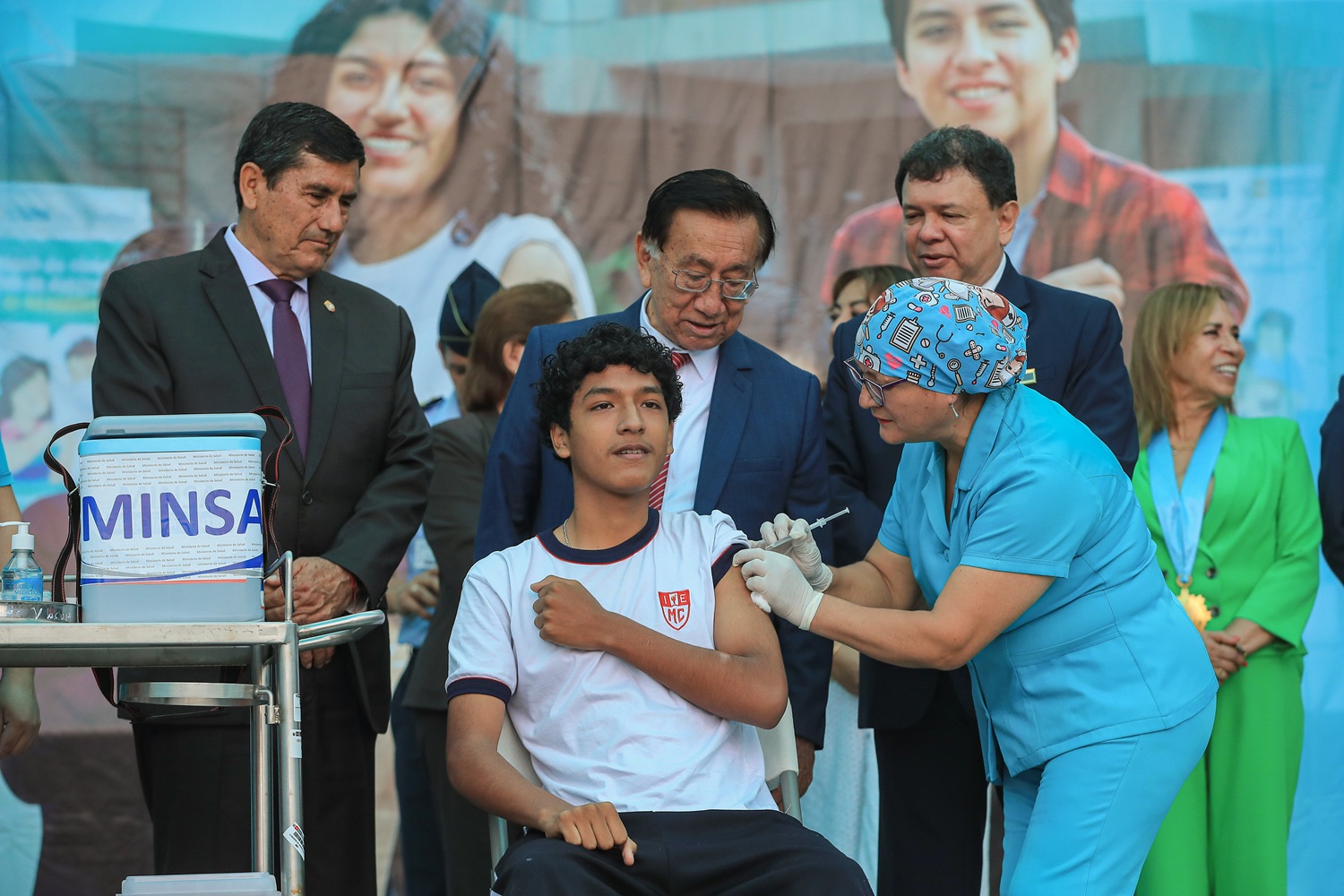
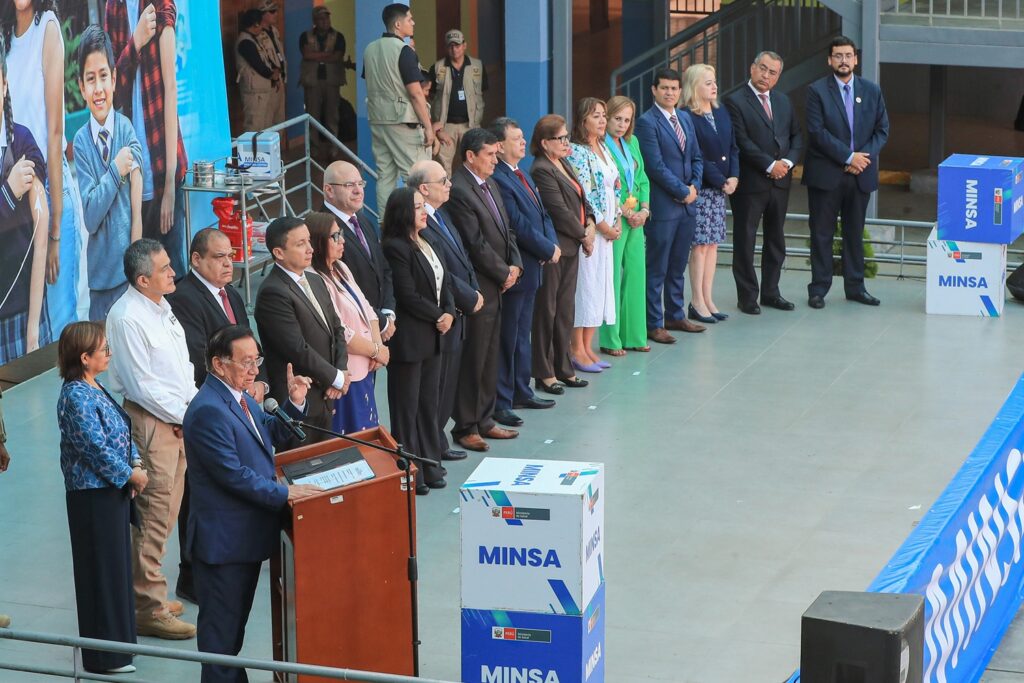
Agencia Peruana de Noticias PRENSAPERU.PE https://www.prensaperu.pe Twitter: @prensaperupe En un acto de gran trascendencia para la salud pública peruana, el Primer Ministro Luis Arroyo Sánchez acompañó al Presidente de la República, José María Balcázar, en el lanzamiento oficial de la Campaña Nacional de Vacunación contra el Virus del Papiloma Humano (VPH) correspondiente al año escolar 2026. El evento, realizado en la Institución Educativa Emblemática Melitón Carvajal de Lince, tuvo como objetivo central reafirmar el compromiso del Ejecutivo de proteger a miles de niños y adolescentes del país, previniendo enfermedades graves como el cáncer de cuello uterino y otros tipos de tumores asociados a este virus.
¿Qué es el Virus del Papiloma Humano (VPH)?
El Virus del Papiloma Humano es una familia de más de 200 tipos de virus de ADN, de los cuales aproximadamente 40 pueden transmitirse a través de contacto sexual. Algunos de ellos se consideran “de bajo riesgo” y causan verrugas genitales, mientras que los “de alto riesgo” (principalmente los tipos 16 y 18) son la causa principal del cáncer de cuello uterino, además de estar asociados a tumores de ano, pene, vagina, vulva y parte posterior de la garganta.
¿Qué es la vacuna contra el VPH? Se trata de un biológico que estimula el sistema inmunológico para producir anticuerpos que protegen contra las infecciones causadas por los tipos de VPH incluidos en su composición. La vacuna nonavalente, utilizada en esta campaña peruana, protege contra 9 tipos de virus oncológicos (6 de bajo riesgo y 3 de alto riesgo adicionales a los incluidos en vacunas anteriores), lo que amplía significativamente el alcance de la protección.
Un Compromiso Político con la Prevención
Bajo los lineamientos de la Organización Mundial de la Salud (OMS), que ha establecido metas globales para la eliminación del cáncer de cuello uterino para 2030, la campaña representa una decisión política firme del Gobierno de Transición. La prevención se ha consolidado como uno de los pilares estratégicos de la gestión sanitaria, con el objetivo de cerrar brechas históricas en el acceso a servicios de salud y garantizar que las futuras generaciones crezcan libres de enfermedades completamente prevenibles.
La inversión en vacunación masiva ha sido posicionada como la intervención más poderosa para cortar la transmisión del VPH y reducir la incidencia de los cánceres asociados. Según datos del Ministerio de Salud (Minsa), entre los años 2019 y 2025 se han aplicado más de 4.6 millones de dosis de vacunas contra el VPH, marcando un hito sin precedentes en la historia sanitaria del Perú.
Actualmente, el país cuenta con una cobertura de vacunación del 84% en niñas de 9 a 14 años – un logro que puede prevenir hasta el 70% de los casos de cáncer de cuello uterino. Con la vacuna nonavalente, el Gobierno busca alcanzar el 100% de cobertura y avanzar aceleradamente hacia la eliminación de esta enfermedad.
Ampliación de Cobertura: Varones también Incluidos
Para el año 2026, el Minsa ha ampliado significativamente el alcance de la campaña, incluyendo a niños y adolescentes de hasta 18 años – tanto varones como mujeres – con un esquema de una sola dosis, que según evidencia científica garantiza una protección eficaz y sostenida.
La estrategia se desarrollará en dos etapas clave:
Primera etapa: Dirigida a cerrar brechas en adolescentes de 10 a 18 años que no han recibido ninguna dosis, con intervenciones directas en instituciones educativas desde el tercer grado de primaria hasta el quinto de secundaria.
Segunda etapa: Enfocada en niños y niñas que cumplirán 10 años durante 2026, asegurando que reciban la vacuna en el momento óptimo para maximizar su efectividad.
La inclusión de varones en la campaña responde a la necesidad de protegerlos contra los cánceres asociados al VPH y, al mismo tiempo, reducir la transmisión del virus en la población, contribuyendo así a la protección colectiva.
Inversión en Salud y Nuevas Iniciativas
Durante su intervención en el lanzamiento, el Presidente José María Balcázar destacó que el Gobierno destinará mayores recursos a la prevención de enfermedades en Perú, remarcando que la vacunación contra el VPH es un acto trascendental frente a un mal que afecta no solo a adultos, sino también a niños y jóvenes del país.
Por su parte, el Ministro de Salud, Juan Carlos Velasco, anunció que se garantizará un presupuesto de S/ 700 millones para todo el esquema de vacunación contra el VPH y otras enfermedades prioritarias. Además, informó que el Perú se encuentra a la vanguardia de las tecnologías sanitarias, y que por primera vez se iniciará la vacunación contra el Virus Sincitial Respiratorio (VSR) – un agente patógeno que causa infecciones respiratorias graves, especialmente en bebés y adultos mayores, con el objetivo de reducir la mortalidad neonatal y materna asociada a esta enfermedad.
La actividad contó con la participación de un amplio gabinete ministerial, entre ellos las ministras y ministros de Educación, María Esther Cuadros; Mujer y Poblaciones Vulnerables, Edith Pariona; Desarrollo e Inclusión Social, Lily Vásquez; Relaciones Exteriores, Hugo de Zela; Defensa, Carlos Díaz; Ambiente, Nelly Paredes; Justicia y Derechos Humanos, Luis Jiménez; Interior, José Zapata; Vivienda, Construcción y Saneamiento, Wilder Sifuentes; y Cultura, Fátima Altabás. También asistieron la alcaldesa distrital de Lince, Malca Schnaiderman, y la directora del colegio anfitrión, Consuelo Soto.
DATOS
1.- La vacunación contra el VPH es un pilar fundamental para la eliminación del cáncer de cuello uterino: Con una cobertura actual del 84% en niñas de 9 a 14 años y el uso de la vacuna nonavalente, el Perú avanza firmemente hacia los objetivos globales de la OMS para 2030.
2.- La ampliación de cobertura a varones hasta los 18 años refuerza la protección colectiva: La inclusión de jóvenes hombres no solo los protege contra cánceres asociados al VPH, sino que también reduce la transmisión del virus en la población.
3.- La inversión en prevención es una política de Estado: El presupuesto de S/ 700 millones y el lanzamiento de nuevas iniciativas como la vacunación contra el VSR demuestran el compromiso del Gobierno de priorizar la salud pública y cerrar brechas históricas.
4.- La educación y la participación intersectorial son clave para el éxito de la campaña: La intervención directa en instituciones educativas y la participación de múltiples ministerios refuerzan la importancia de trabajar en conjunto para proteger el futuro de las nuevas generaciones.
Fuente: Agencia Peruana de Noticias PRENSAPERU.PE https://www.prensaperu.pe Twitter: @prensaperupe
Translate
Perú Inicia Campaña VPH 2026: “Gobierno protege a niños y adolescentes contra el cáncer con presupuesto de S/ 700 millones.”
Peruvian News Agency PRENSAPERU.PE https://www.prensaperu.pe Twitter: @prensaperupe In an event of great significance for Peruvian public health, Prime Minister Luis Arroyo Sánchez accompanied the President of the Republic, José María Balcázar, at the official launch of the National Human Papillomavirus (HPV) Vaccination Campaign for the 2026 school year. Held at the Emblematic Educational Institution Melitón Carvajal in Lince, the central goal of the event was to reaffirm the Executive Branch’s commitment to protecting thousands of the country’s children and adolescents, preventing serious illnesses such as cervical cancer and other types of tumors associated with this virus.
What is Human Papillomavirus (HPV)?
Human Papillomavirus is a family of over 200 types of DNA viruses, around 40 of which can be transmitted through sexual contact. Some are considered “low-risk” and cause genital warts, while “high-risk” types (mainly 16 and 18) are the leading cause of cervical cancer, and are also linked to tumors of the anus, penis, vagina, vulva, and back of the throat.
What is the HPV vaccine?
It is a biological product that stimulates the immune system to produce antibodies protecting against infections caused by the HPV types included in its formulation. The nonavalent vaccine used in this Peruvian campaign protects against 9 oncogenic virus types (6 low-risk and 3 additional high-risk types not included in previous vaccines), significantly expanding the scope of protection.
A Political Commitment to Prevention
Under guidelines from the World Health Organization (WHO), which has set global targets for the elimination of cervical cancer by 2030, the campaign represents a firm policy decision by the Transitional Government. Prevention has been established as one of the strategic pillars of health management, with the aim of closing historical gaps in access to health services and ensuring future generations grow up free of completely preventable diseases.
Investment in mass vaccination has been positioned as the most powerful intervention to halt HPV transmission and reduce the incidence of associated cancers. According to data from the Ministry of Health (Minsa), more than 4.6 million doses of HPV vaccine were administered between 2019 and 2025, marking an unprecedented milestone in Peru’s health history.
Currently, the country has a vaccination coverage rate of 84% among girls aged 9 to 14 – an achievement that can prevent up to 70% of cervical cancer cases. With the nonavalent vaccine, the Government aims to reach 100% coverage and accelerate progress toward eliminating this disease.
Expanded Coverage: Boys Also Included
For 2026, Minsa has significantly expanded the campaign’s scope to include boys and girls up to 18 years of age – both males and females – with a single-dose schedule. Scientific evidence confirms this provides effective and sustained protection.
The strategy will be implemented in two key phases:
First phase: Focused on closing gaps among adolescents aged 10 to 18 who have not received any doses, with direct interventions in educational institutions from the third grade of primary school through the fifth grade of secondary school.
Second phase: Targeted at boys and girls turning 10 in 2026, ensuring they receive the vaccine at the optimal time to maximize its effectiveness.
Including boys in the campaign addresses the need to protect them against HPV-associated cancers while reducing virus transmission in the population, thereby contributing to collective protection.
Health Investment and New Initiatives
During his speech at the launch, President José María Balcázar emphasized that the Government will allocate increased resources to disease prevention in Peru, noting that HPV vaccination is a landmark measure against an illness affecting not only adults but also the country’s children and young people.
For his part, Minister of Health Juan Carlos Velasco announced that a budget of S/ 700 million (Peruvian soles) will be guaranteed for the full HPV vaccination schedule and other priority diseases. Additionally, he stated that Peru is at the forefront of health technologies, and that vaccination against Respiratory Syncytial Virus (RSV) will be launched for the first time. RSV is a pathogen that causes severe respiratory infections, particularly in infants and older adults, with the goal of reducing neonatal and maternal mortality associated with this disease.
The event was attended by a broad ministerial cabinet, including the Ministers of Education, María Esther Cuadros; Women and Vulnerable Populations, Edith Pariona; Development and Social Inclusion, Lily Vásquez; Foreign Affairs, Hugo de Zela; Defense, Carlos Díaz; Environment, Nelly Paredes; Justice and Human Rights, Luis Jiménez; Interior, José Zapata; Housing, Construction and Sanitation, Wilder Sifuentes; and Culture, Fátima Altabás. Also in attendance were the District Mayor of Lince, Malca Schnaiderman, and the director of the host school, Consuelo Soto.
FACTS
1.- HPV vaccination is a fundamental pillar for eliminating cervical cancer: With current coverage of 84% among girls aged 9 to 14 and use of the nonavalent vaccine, Peru is making steady progress toward the WHO’s 2030 global targets.
2.- Expanding coverage to boys up to 18 years of age strengthens collective protection: Including young men not only protects them against HPV-associated cancers but also reduces virus transmission in the population.
3.- Investment in prevention is a state policy: The S/ 700 million budget and launch of new initiatives such as RSV vaccination demonstrate the Government’s commitment to prioritizing public health and closing historical gaps.
4.- Education and intersectoral participation are key to the campaign’s success: Direct interventions in educational institutions and participation from multiple ministries reinforce the importance of working together to protect the future of new generations.
Source: Peruvian News Agency PRENSAPERU.PE https://www.prensaperu.pe Twitter: @prensaperupe