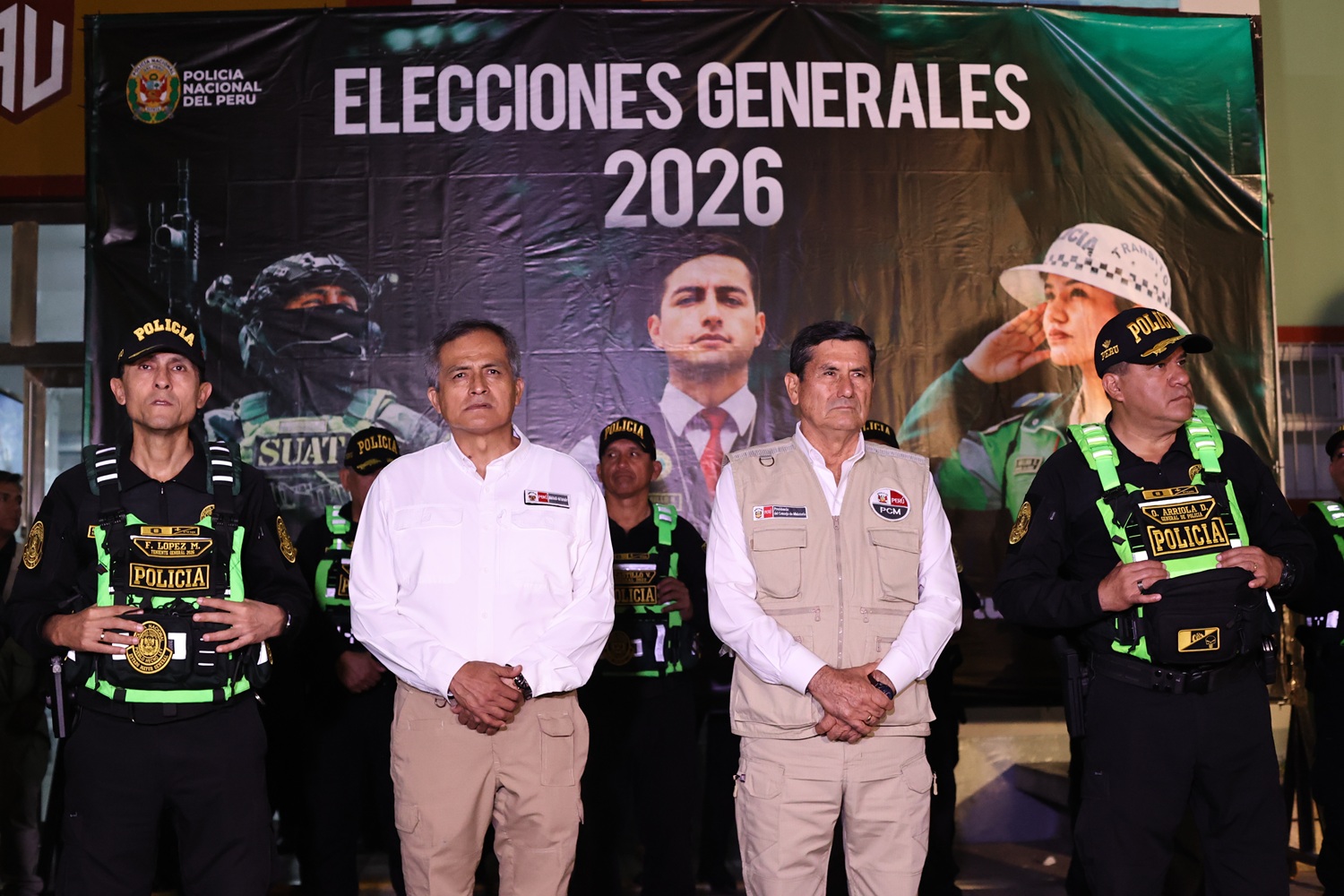
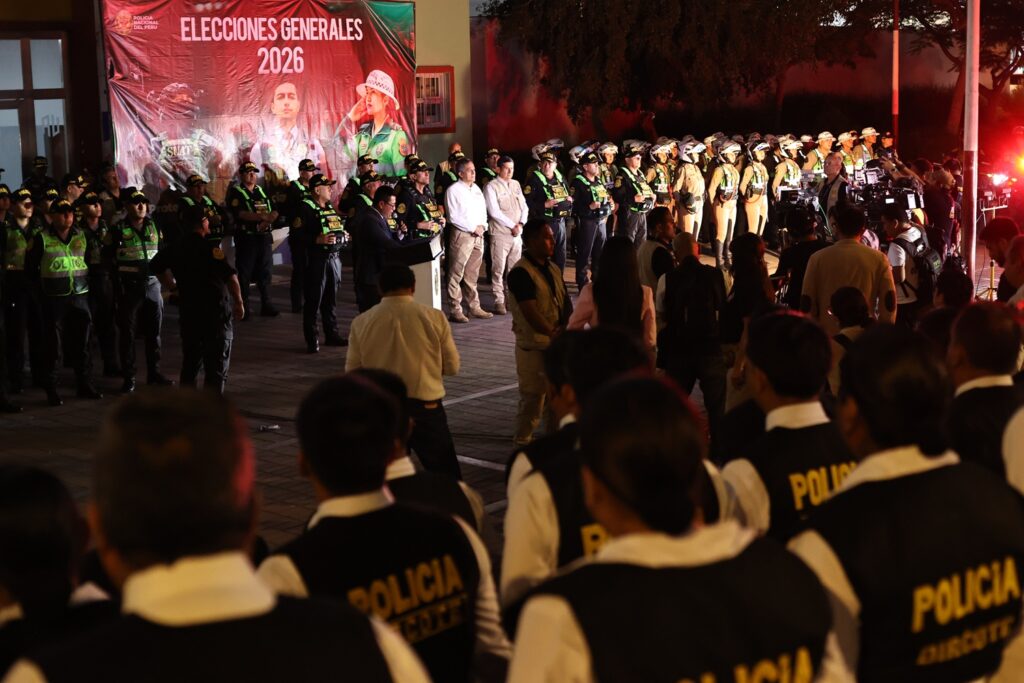
Agencia Peruana de Noticias PRENSAPERU.PE https://www.prensaperu.pe Twitter: @prensaperupe Con el propósito supremo de salvaguardar la paz social, el orden institucional y el respeto irrestricto a la voluntad popular, el presidente del Consejo de Ministros (PCM), Luis Enrique Arroyo Sánchez, presentó oficialmente el Plan de Operaciones Elecciones Generales 2026. Se trata de un dispositivo de seguridad sin precedentes en la historia republicana, que movilizará a un contingente combinado de más de 100 mil miembros de la Policía Nacional del Perú (PNP) y las Fuerzas Armadas (FF. AA.) a lo largo de todo el territorio nacional, con miras a la jornada comicial programada para este domingo 12 de abril.
El jefe del Gabinete Ministerial destacó que esta movilización constituye un despliegue de magnitud histórica, diseñado no solo como una medida de custodia, sino como una garantía funcional para el ejercicio pleno de la ciudadanía. El objetivo central es brindar las condiciones de seguridad y certidumbre necesarias para que el electorado pueda acudir a los centros de votación con plena libertad, sin coacción ni temor, materializando así el derecho constitucional al sufragio.
Según los detalles técnicos expuestos, el Ministerio del Interior ha articulado la participación de 61,000 efectivos policiales, quienes actuarán como la primera línea de seguridad en el entorno urbano y la vigilancia cercana. Por su parte, las Fuerzas Armadas desplegarán a 45,000 efectivos, apoyándose en una flota logística compuesta por 10,338 unidades de patrullaje y transporte distribuidas a nivel nacional. Este dispositivo cubrirá más de 10,000 locales de votación y sus respectivas circunscripciones, asegurando la cobertura tanto en centros poblados de alta densidad demográfica como en zonas de difícil acceso o geografía compleja.
Arroyo Sánchez enfatizó que la estrategia operativa se cimienta en dos pilares irrenunciables: el mantenimiento del orden público y la protección integral del material electoral y los activos del sufragio. Todo ello se ejecutará bajo estrictos parámetros de neutralidad y transparencia, evitando cualquier injerencia que pudiera cuestionar la legitimidad del proceso. En este sentido, recalcó que el Gobierno que lidera el presidente José María Balcázar mantiene un compromiso inquebrantable con la seguridad ciudadana y, fundamentalmente, con la consolidación de la transición democrática. “Nuestra labor es asegurar que la arquitectura de la democracia funcione según lo establece la ley”, afirmó.
Asimismo, el titular de la PCM resaltó la sinergia interinstitucional que ha permitido elaborar este plan. Destacó el trabajo coordinado entre el Poder Ejecutivo y los organismos constitucionales autónomos electorales —Jurado Nacional Electoral (JNE), Oficina Nacional de Procesos Electorales (ONPE) y Registro Nacional de Identificación y Estado Civil (RENIEC)—, respetando celosamente su autonomía funcional y brindando el soporte logístico y humano necesario para que la jornada se desarrolle sin contratiempos ni interrupciones que afecten su normal desarrollo.
Finalmente, el funcionario dirigió un llamado cívico a la colectividad para una participación masiva y responsable. “Ciudadanos del Perú: el voto consciente e informado es la herramienta más poderosa para fortalecer nuestra arquitectura democrática. El futuro de la nación se define este domingo, y este Gobierno está aquí para garantizar que esa decisión soberana sea respetada en un marco irrevocable de paz y orden institucional”, puntualizó.
LO QUE SE BUSCA CON ESTAS MEDIDAS
1.- Magnitud y Cobertura del Dispositivo: El plan representa el mayor despliegue de fuerzas de seguridad en la historia electoral del país, combinando capacidades policiales y militares para cubrir más de 10,000 locales de votación. Esto demuestra la prioridad que el Estado otorga a la seguridad del proceso, pero también evidencia la necesidad de controlar un territorio amplio y diverso.
2.- Neutralidad como Garantía Democrática: La insistencia en la neutralidad y el respeto a la autonomía de los organismos electorales es fundamental. Establece una línea divisoria clara entre la función de seguridad, competencia del Ejecutivo, y la función administrativa y jurisdiccional electoral, lo cual es vital para evitar cualquier sospecha de manipulación o parcialidad política.
3.- Seguridad como Derecho y Facilitador: El discurso oficial redefine la seguridad no solo como ausencia de violencia, sino como una condición habilitante para el ejercicio de derechos. Al garantizar el traslado seguro y la protección del voto, el Estado busca contrarrestar factores de exclusión o temor que históricamente han limitado la participación ciudadana.
4.- Responsabilidad Compartida en la Gobernabilidad: Se establece una relación simbiótica entre la acción del Estado y la acción del ciudadano: mientras el Gobierno garantiza las condiciones materiales y de orden, la ciudadanía completa el ciclo democrático con su participación. El llamado al “voto consciente” sugiere además que la democracia se fortalece no solo por la cantidad de votos, sino por la calidad y el criterio informado detrás de ellos.
Fuente: Agencia Peruana de Noticias PRENSAPERU.PE https://www.prensaperu.pe Twitter: @prensaperupe
Translate
“Security Wall: More than 100,000 troops are deployed throughout the territory, the largest electoral operation in the history of Peru”.
Peruvian News Agency PRENSAPERU.PE https://www.prensaperu.pe Twitter: @prensaperupe With the supreme purpose of safeguarding social peace, institutional order, and unrestricted respect for the popular will, the President of the Council of Ministers (PCM), Luis Enrique Arroyo Sánchez, officially presented the Operations Plan for the General Elections 2026. This is an unprecedented security deployment in the nation’s history, mobilizing a combined contingent of over 100,000 members of the National Police of Peru (PNP) and the Armed Forces (FF.AA.) throughout the national territory, for the election day scheduled for this Sunday, April 12.
The head of the Ministerial Cabinet highlighted that this mobilization constitutes a historic deployment, designed not only as a security measure but as a functional guarantee for the full exercise of citizenship. The central objective is to provide the necessary conditions of security and certainty so that the electorate can attend voting centers with complete freedom, without coercion or fear, thereby materializing the constitutional right to suffrage.
According to the technical details presented, the Ministry of the Interior has coordinated the participation of 61,000 police officers, who will act as the first line of security in urban areas and provide close surveillance. Meanwhile, the Armed Forces will deploy 45,000 personnel, supported by a logistical fleet composed of 10,338 patrol and transport units distributed nationwide. This operation will cover more than 10,000 voting locations and their respective constituencies, ensuring coverage both in densely populated urban centers and in areas of difficult access or complex geography.
Arroyo Sánchez emphasized that the operational strategy is based on two fundamental pillars: the maintenance of public order and the comprehensive protection of electoral materials and voting assets. All of this will be executed under strict parameters of neutrality and transparency, avoiding any interference that could question the legitimacy of the process. In this regard, he stressed that the Government led by President José María Balcázar maintains an unwavering commitment to citizen security and, fundamentally, to the consolidation of the democratic transition. “Our task is to ensure that the architecture of democracy functions according to the law,” he stated.
The head of the PCM also highlighted the inter-institutional synergy that made this plan possible. He emphasized the coordinated work between the Executive Branch and the autonomous constitutional electoral bodies—the National Electoral Board (JNE), the National Office of Electoral Processes (ONPE), and the National Registry of Identification and Civil Status (RENIEC)—while carefully respecting their functional autonomy and providing the necessary logistical and human support to ensure the election day proceeds smoothly and without interruptions.
Finally, the official made a civic call to the public for massive and responsible participation. “Citizens of Peru: the conscious and informed vote is the most powerful tool to strengthen our democratic architecture. The future of the nation is being decided this Sunday, and this Government is here to guarantee that this sovereign decision is respected within an irrevocable framework of peace and institutional order,” he pointed out.
WHAT THESE MEASURES ARE SEEKING TO ACHIEVE
1.- Magnitude and Coverage of the Operation: The plan represents the largest deployment of security forces in the country’s electoral history, combining police and military capabilities to cover over 10,000 voting stations. This demonstrates the priority the State places on process security, but also highlights the need to control a vast and diverse territory.
2.- Neutrality as a Democratic Guarantee: The emphasis on neutrality and respect for the autonomy of electoral bodies is fundamental. It establishes a clear dividing line between the security function, under the responsibility of the Executive Branch, and the administrative and jurisdictional electoral functions, which is vital to avoid any suspicion of political manipulation or bias.
3.- Security as an Enabling Right: The official discourse redefines security not merely as the absence of violence, but as a necessary condition for the exercise of rights. By ensuring safe travel and the protection of the vote, the State seeks to counteract factors of exclusion or fear that have historically limited citizen participation.
4.- Shared Responsibility in Governance: A symbiotic relationship is established between State action and citizen action: while the Government guarantees the material and orderly conditions, the citizenry completes the democratic cycle through their participation. The call for a “conscious vote” also suggests that democracy is strengthened not only by the quantity of votes but by the quality and informed criteria behind them.
Source: Peruvian News Agency PRENSAPERU.PE https://www.prensaperu.pe Twitter: @prensaperupe