
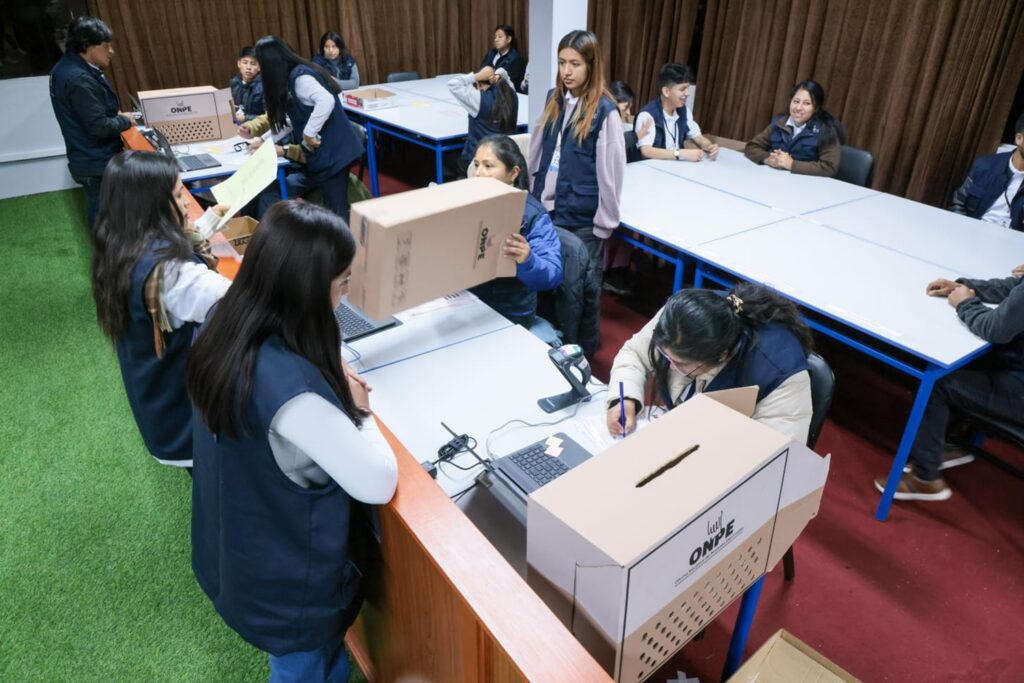
Agencia Peruana de Noticias PRENSAPERU.PE https://www.prensaperu.pe Twitter: @prensaperupe La Oficina Nacional de Procesos Electorales (ONPE) declaró concluida, de manera parcial, la jornada electoral correspondiente a las Elecciones Generales 2026 a partir de las 18:00 horas del domingo. Sin embargo, el desarrollo del sufragio presentó anomalías significativas, ya que un total de 211 mesas de sufragio ubicadas en la jurisdicción de Lima Metropolitana no pudieron ser instaladas en la fecha establecida.
Ante esta situación, la autoridad electoral ha dispuesto la reprogramación de la votación para este lunes 13 de abril, con el fin supremo de garantizar el ejercicio pleno del derecho constitucional al sufragio y asegurar que ningún ciudadano se vea privado de participar en esta instancia democrática.
COBERTURA Y ANOMALÍAS: EL 99.8% DE CUMPLIMIENTO
El jefe de la ONPE, Piero Corvetto Salinas, informó que, a nivel nacional, se logró instalar y activar el 99.8% de las mesas de sufragio, una cifra que denota una cobertura masiva pero que no exime de responsabilidad sobre el margen restante.
Específicamente, en Lima Metropolitana no pudieron iniciar sus labores 211 mesas distribuidas en 15 locales de votación, localizados principalmente en tres distritos del sur:
San Juan de Miraflores: 3 locales.
Lurín: 7 locales.
Pachacamac: 3 locales.
Estas deficiencias afectaron directamente a 63,300 ciudadanos, quienes se vieron impedidos de emitir su voto el día domingo.
RESPUESTA INSTITUCIONAL Y GARANTÍAS AL ELECTORADO
Consciente del impacto generado, la autoridad electoral anunció medidas inmediatas:
1.- Dispensa de Sanción: Se gestionará la exoneración de la multa por omisión al voto para los ciudadanos afectados, reconociendo que la inasistencia no se debió a negligencia del elector sino a fallas del sistema.
2.- Reprogramación: Para este lunes 13 de abril se habilitarán 187 mesas en 13 locales, donde podrán votar 55,261 electores en horario extendido de 7:00 a. m. a 6:00 p. m.
3.- Acceso a Resultados: La ONPE ha habilitado plataformas digitales en su portal web oficial, permitiendo el monitoreo en tiempo real del cómputo de votos a medida que las actas son procesadas en los 126 centros de datos distribuidos nacionalmente.
RESPONSABILIDAD Y ACCIONES LEGALES
El titular de la ONPE no eludió responsabilidades y señaló que la causa principal de los retrasos y la no instalación de mesas radicó en el incumplimiento contractual de la empresa contratada para el transporte y distribución del material electoral.
En consecuencia, se anunció lo siguiente:
Acciones Legales: Se iniciarán procesos administrativos y penales contra la empresa proveedora del servicio por los daños y perjuicios causados al proceso democrático.
Transparencia Total: La institución se someterá voluntariamente a las investigaciones que dispongan el Ministerio Público, la Contraloría General de la República y la Junta Nacional de Justicia, buscando esclarecer responsabilidades en la cadena de logística y supervisión.
LISTADO DE LOCALES DONDE SE VOTA ESTE LUNES 13
SAN JUAN DE MIRAFLORES
IE Parroquial Virgen de la Asunción
IE 6041 Alfonso Ugarte
IE 6151 San Luis Gonzaga
LURÍN
IE 7078 Virgen de Chapi
IE 7098 Rodrigo Lara Bonilla
IE 7104 Ramiro Priale Priale
IE 6023 Julio C. Tello Rojas
IE 7239 Santísimo Salvador
IE 7267 Señor de los Milagros
IE 6026 Virgen de Fátima
PACHACAMAC
IE 7261 Santa Rosa de Collanac
IEP El Universo de César Vallejo
IE Parroquial Virgen del Rosario
EL ESCENARIO POLÍTICO: UNA CARRERA AJUSTADA HACIA LA SEGUNDA VUELTA
Simultáneamente al cierre de mesas, las encuestas a boca de urna y proyecciones de medios especializados han delineado un escenario político altamente fragmentado y competitivo.
Los datos preliminares reflejan que ningún candidato presidencial logró superar la barrera del 50% más uno de los sufragios válidos, tal como exige la Ley Electoral. Esto confirma técnicamente la necesidad de una segunda vuelta electoral.
La contienda se define entre seis postulantes que mantienen márgenes muy estrechos de diferencia, destacando en las preferencias:
1.- Keiko Fujimori Higuchi (Fuerza Popular)
2.- Roberto Sánchez Palomino (Juntos por el Perú)
3.- Ricardo Belmont Cassinelli (Obras)
4.- Jorge Nieto Montesinos (Partido del Buen Gobierno)
5.- Rafael López Aliaga (Renovación Popular)
6.- Alfonso López Chau (Ahora Nación)
De este grupo, solo los dos que obtengan la más alta votación pasarán a disputar la presidencia en una fecha posterior, definiendo así el rumbo del Poder Ejecutivo y del nuevo Congreso Bicameral.
CONCLUSIONES
1.- Resiliencia Democrática pero Fragilidad Logística: A pesar de alcanzar un 99.8% de instalación, los incidentes en el sur de Lima evidencian fallas críticas en la cadena de suministro y transporte. Esto demuestra que, aunque la voluntad ciudadana es masiva, la infraestructura estatal aún presenta vulnerabilidades que deben ser corregidas para garantizar procesos perfectos.
2.- El Principio de Responsabilidad y Derechos: La decisión de no multar a los afectados y reprogramar la votación reafirma el principio de que el derecho al sufragio es inviolable y prevalece sobre cualquier formalidad. Asimismo, el anuncio de acciones legales contra la empresa contratista marca un precedente en materia de consecuencias por el incumplimiento de servicios públicos esenciales.
3.- Un Parlamento Nuevo y un Gobierno en Disputa: La jornada cierra con la certeza de que el Perú retornará a la bicameralidad, pero con una presidencia aún indefinida. La estrechez en las cifras de los seis candidatos principales refleja un electorado dividido, lo que augura un escenario político complejo donde la gobernabilidad dependerá de la capacidad de negociación y construcción de mayorías.
DATO
Al cierre del presente informe, Oficina Nacional de Procesos Electorales (ONPE) ha escrutado 1’290,494 votos de los más de 27 millones de peruanos actos para sufragar.
Fuente: Agencia Peruana de Noticias PRENSAPERU.PE https://www.prensaperu.pe Twitter: @prensaperupe
Translate
Peru: VOTING CONTINUES! 99.8% of polling stations have cast their ballots; the remaining voters will vote today at 13 locations in Lima. Candidates neck and neck in percentage points are vying for a second round.
Peruvian News Agency PRENSAPERU.PE https://www.prensaperu.pe Twitter: @prensaperupe The National Office of Electoral Processes (ONPE) declared the electoral day corresponding to the General Elections 2026 partially concluded as of 6:00 PM on Sunday. However, the development of the voting presented significant anomalies, as a total of 211 polling stations located in the jurisdiction of Metropolitan Lima could not be installed on the established date.
Faced with this situation, the electoral authority has scheduled the voting for this Monday, April 13, with the supreme purpose of guaranteeing the full exercise of the constitutional right to vote and ensuring that no citizen is prevented from participating in this democratic event.
COVERAGE AND ANOMALIES: 99.8% COMPLIANCE
The head of ONPE, Piero Corvetto Salinas, reported that nationwide, 99.8% of polling stations were successfully installed and activated, a figure that denotes massive coverage but does not exempt responsibility for the remaining margin.
Specifically, in Metropolitan Lima, 211 tables could not start operations in 15 voting locations, mainly located in three districts in the south:
San Juan de Miraflores: 3 locations.
Lurín: 7 locations.
Pachacamac: 3 locations.
These deficiencies directly affected 63,300 citizens, who were unable to cast their vote on Sunday.
INSTITUTIONAL RESPONSE AND GUARANTEES FOR THE ELECTORATE
Aware of the impact generated, the electoral authority announced immediate measures:
1.- Exemption from Sanction: Procedures will be carried out to exempt the fine for failure to vote for the affected citizens, recognizing that their absence was not due to negligence on the part of the voter but to failures in the system.
2.- Rescheduling: For this Monday, April 13, 187 polling stations will be enabled in 13 locations, where 55,261 voters will be able to cast their vote between 7:00 AM and 6:00 PM.
3.- Access to Results: ONPE has enabled digital platforms on its official website, allowing real-time monitoring of the vote count as the minutes are processed in the 126 data centers distributed nationwide.
RESPONSIBILITY AND LEGAL ACTIONS
The head of ONPE did not evade responsibility and indicated that the main cause of the delays and the non-installation of tables was the contractual non-compliance by the company hired for the transport and distribution of electoral material in Metropolitan Lima.
Consequently, the following was announced:
Legal Actions: Administrative and criminal proceedings will be initiated against the service provider for the damages caused to the democratic process.
Total Transparency: The institution will voluntarily submit to any investigations initiated by the Public Ministry, the Comptroller General of the Republic, and the National Board of Justice, seeking to clarify responsibilities in the logistics and supervision chain.
LIST OF LOCATIONS WHERE VOTING TAKES PLACE THIS MONDAY 13
SAN JUAN DE MIRAFLORES
IE Parroquial Virgen de la Asunción
IE 6041 Alfonso Ugarte
IE 6151 San Luis Gonzaga
LURÍN
IE 7078 Virgen de Chapi
IE 7098 Rodrigo Lara Bonilla
IE 7104 Ramiro Priale Priale
IE 6023 Julio C. Tello Rojas
IE 7239 Santísimo Salvador
IE 7267 Señor de los Milagros
IE 6026 Virgen de Fátima
PACHACAMAC
IE 7261 Santa Rosa de Collanac
IEP El Universo de César Vallejo
IE Parroquial Virgen del Rosario
THE POLITICAL SCENARIO: A TIGHT RACE TOWARDS A RUNOFF
Simultaneously with the closing of the polls, exit polls and projections from specialized media outlets have outlined a highly fragmented and competitive political scenario.
Preliminary data reflect that no presidential candidate managed to exceed the threshold of 50% plus one of the valid votes, as required by Peruvian Electoral Law. This technically confirms the need for a second electoral round.
The contest is defined among six candidates who maintain very narrow margins of difference, standing out in the preferences:
1.- Keiko Fujimori Higuchi (Popular Force)
2.- Roberto Sánchez Palomino (Together for Peru)
3.- Ricardo Belmont Cassinelli (Works)
4.- Jorge Nieto Montesinos (Good Government Party)
5.- Rafael López Aliaga (Popular Renewal)
6.- Alfonso López Chau (Now Nation)
From this group, only the two who obtain the highest vote count will go on to dispute the presidency at a later date, thereby defining the direction of the Executive Branch and the new Bicameral Congress.
CONCLUSIONS
1.- Democratic Resilience but Logistical Fragility: Despite reaching 99.8% installation, the incidents in southern Lima reveal critical failures in the supply and transport chain. This demonstrates that, although citizen participation is massive, state infrastructure still presents vulnerabilities that must be corrected to guarantee perfect processes.
2.- The Principle of Responsibility and Rights: The decision not to fine those affected and reschedule voting reaffirms the principle that the right to suffrage is inviolable and prevails over any formality. Likewise, the announcement of legal actions against the contracted company sets a precedent regarding consequences for the failure to provide essential public services.
3.- A New Parliament and a Disputed Government: The electoral day closes with the certainty that Peru will return to bicameralism, but with a presidency still undefined. The closeness in the figures of the six main candidates reflects a divided electorate, which augurs a complex political scenario where governability will depend on the capacity for negotiation and building majorities.
FACT
At the time of this report, the National Office of Electoral Processes (ONPE) had counted 1,290,494 votes out of the more than 27 million Peruvians eligible to vote.
Source: Peruvian News Agency PRENSAPERU.PE https://www.prensaperu.pe Twitter: @prensaperupe