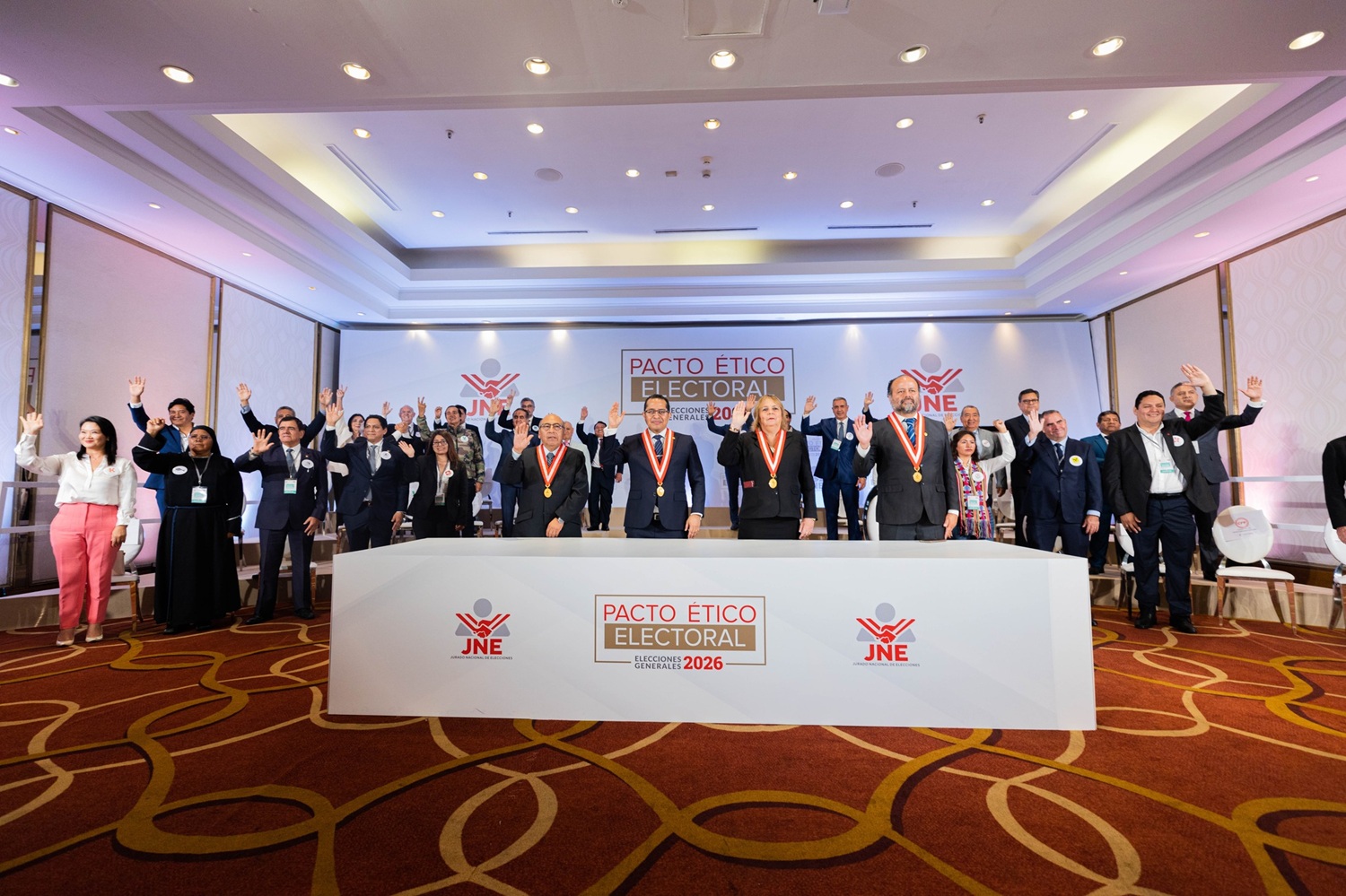
Agencia Peruana de Noticias PRENSAPERU.PE https://www.prensaperu.pe Twitter: @prensaperupe En un contexto de creciente desconfianza ciudadana hacia las instituciones políticas y demandas de transparencia, el Jurado Nacional de Elecciones (JNE) ha impulsado el Pacto Ético Electoral (PEE) para las Elecciones Generales de 2026 (EG-2026), un instrumento que busca sentar las bases para una campaña limpia, respetuosa y alineada con los valores democráticos. Sin embargo, la firma de este compromiso por parte de 29 organizaciones políticas ha generado debates sobre su viabilidad, ya que muchas de ellas tienen antecedentes de conductas que contrastan con los principios que ahora suscriben.
¿QUÉ ES EL PACTO ÉTICO ELECTORAL 2026?
El PEE es un compromiso público, voluntario y responsable que busca garantizar un proceso electoral en el marco de la democracia, el respeto y la honestidad. Su objetivo central es evitar agresiones, ataques personales o colectivos, violencia y desinformación, así como promover el uso ético de las redes sociales y la inteligencia artificial. También establece la creación de un Tribunal de Honor, integrado por ciudadanos independientes, encargado de supervisar el cumplimiento de los acuerdos y adoptar medidas correctivas en caso de incumplimiento. El decálogo del pacto incluye compromisos como acatar los resultados oficiales, respetar a los actores electorales y evitar la difusión de noticias falsas o manipuladas.
¿QUIÉNES LO HAN SUSCRITO?
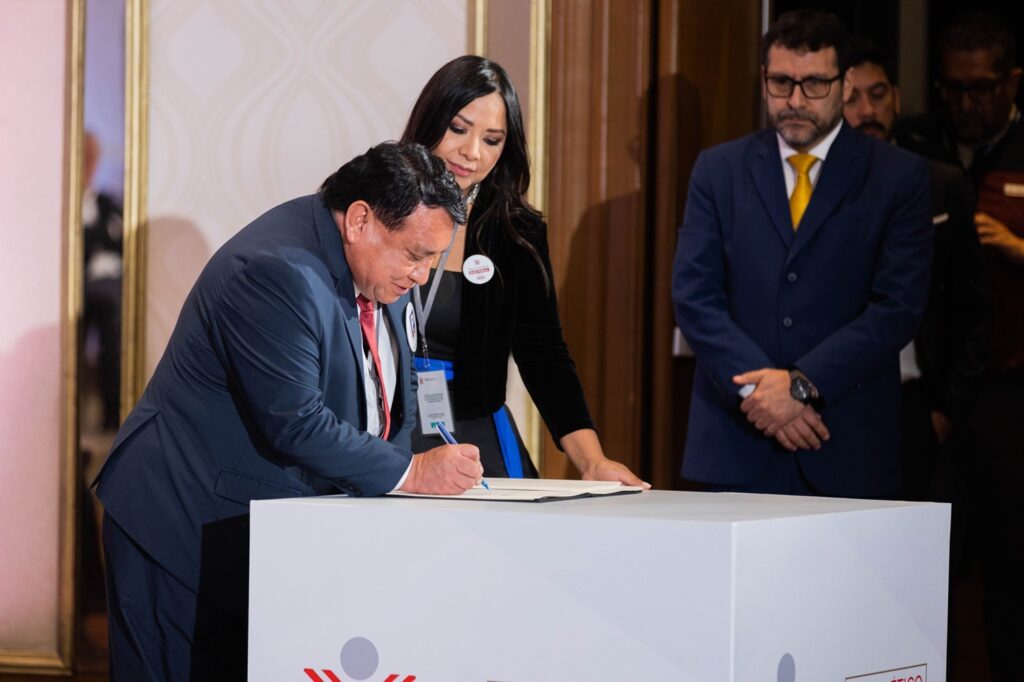
Un total de 29 organizaciones políticas han firmado el PEE, entre ellas partidos de diversos signos políticos y dos alianzas electorales:
1.- Partidos: Ahora Nación, Alianza Para el Progreso, Avanza País, Frente Popular Agrícola FIA, Fuerza Popular, Libertad Popular, Partido Aprista Peruano, Partido Cívico Obras, Partido de los Trabajadores y Emprendedores, Partido del Buen Gobierno, Partido Demócrata Verde, Partido Democrático Federal, Partido Morado, País para Todos, Cooperación Popular, Integridad Democrática, Perú Acción, Perú Primero, PRIN, Sí Creo, Perú Moderno, Podemos Perú, Primero la Gente, Progresemos, Salvemos al Perú, Somos Perú, Juntos Por el Perú.
2.- Alianzas electorales: Venceremos y Unidad Nacional.
Destaca que 9 de las 38 agrupaciones habilitadas para las EG-2026 no han suscrito el pacto, entre ellas Perú Libre y Renovación Popular.
¿CÓMO SE LLEVARÁ A CABO SU CUMPLIMIENTO?
El JNE ha enfatizado que el pacto no sustituye la ley, sino que la complementa, buscando generar una cultura de respeto en la política. El Tribunal de Honor, cuyos integrantes serán consensuados por las organizaciones firmantes, tendrá la función de investigar denuncias de incumplimiento y aplicar sanciones como advertencias públicas o la exclusión temporal de actividades electorales. Además, las instituciones públicas, organizaciones de la sociedad civil y medios de comunicación se han sumado como adherentes, con el compromiso de monitorear y difundir el cumplimiento del pacto.
¿CUÁNDO Y DÓNDE SE REALIZÓ LA FIRMA?
La ceremonia de suscripción se desarrolló este jueves 18 de diciembre de 2025, en el Hotel Sheraton del centro de Lima, y fue transmitida en directo a nivel nacional por TV Perú, Canal JNE TV y las redes sociales del organismo electoral. Durante el evento, el presidente del JNE, Roberto Burneo Bermejo, destacó que el pacto es “un mensaje claro y potente al Perú: que la política puede competir sin agredirse; que el debate puede volver a las propuestas e ideas; y que el país puede elegir en libertad, sin miedo y sin desinformación”.
LA ÉTICA EN PRUEBA: ANTECEDENTES QUE GENERAN DOUBTES
A pesar del optimismo generado por la firma del PEE, la realidad de la política peruana plantea interrogantes sobre la capacidad de las organizaciones firmantes de cumplir con sus compromisos. Entre los aspectos más relevantes:
El caso de Keiko Fujimori y Fuerza Popular: La líder de Fuerza Popular ha sido protagonista de polémicas en procesos electorales pasados. En las elecciones de 2021, al perder la segunda vuelta contra Pedro Castillo, Fujimori interpuso más de 800 reclamos sin fundamento legal, clamó fraude sin presentar pruebas y se negó a reconocer el resultado hasta que fue proclamado oficialmente por el JNE. Esta conducta, calificada por analistas como una “vía Trump”, contrasta con el compromiso del PEE de acatar los resultados electorales y evitar la desinformación.
Partidos con congresistas investigados por corrupción: Algunas de las organizaciones que han firmado el pacto tienen miembros en el Congreso que se encuentran vinculados a actos de corrupción o a organizaciones criminales, según investigaciones de la justicia peruana. Por ejemplo, el Partido Aprista Peruano ha tenido excongresistas como Luciana León, investigada por tráfico de influencias y peculado. Esta situación plantea la pregunta: ¿qué ética puede mostrar un partido que tiene representantes comprometidos con actos ilegales en el marco de un proceso electoral?
Desinformación y deepfakes como amenaza: El PEE promueve el uso ético de las tecnologías, pero las elecciones de 2026 enfrentan el reto de los deepfakes y la difusión de noticias falsas en redes sociales. En un contexto en el que estas herramientas pueden influir en la decisión de los votantes, la capacidad de los partidos de cumplir con su compromiso de evitar la desinformación será crucial.
LA IMPORTANCIA DE LA ÉTICA EN LOS PROCESOS ELECTORALES
La ética en la competencia electoral no es un asunto accesorio, sino un componente esencial de la legitimidad democrática. Un proceso electoral limpio y respetuoso permite que la ciudadanía elija a sus representantes con confianza, fortalece las instituciones y contribuye a la gobernabilidad del país. En un Perú que ha vivido crisis políticas recurrentes, el PEE representa una oportunidad para revertir la desconfianza ciudadana y construir una democracia más madura.
CONCLUSIONES
1.- El Pacto Ético Electoral 2026 es un instrumento relevante para promover una campaña limpia y respetuosa, pero su éxito dependerá de la voluntad de las organizaciones firmantes de cumplir con sus compromisos.
2.- Los antecedentes de conductas antidemocráticas y corrupción de algunas de las organizaciones que han suscrito el pacto generan dudas sobre su viabilidad, lo que requiere un monitoreo estricto por parte del Tribunal de Honor y la sociedad civil.
3.- El caso de Keiko Fujimori y Fuerza Popular es un ejemplo claro de cómo las acciones pasadas pueden contradecir los compromisos presentes, lo que obliga a los partidos a demostrar su cambio con hechos y no solo con palabras.
4.- La desinformación y los deepfakes representan un reto significativo para el cumplimiento del PEE, por lo que es necesario implementar medidas para garantizar el uso ético de las tecnologías en la campaña electoral.
5.- La ética en los procesos electorales es fundamental para la legitimidad democrática del Perú. El PEE es un primer paso, pero requiere el compromiso de todos los actores para convertirse en una realidad.
Fuente: Agencia Peruana de Noticias PRENSAPERU.PE https://www.prensaperu.pe Twitter: @prensaperupe
English Translation
The 2026 Electoral Ethics Pact: “A commitment put to the test between promises and political realities in Peru.”
Peruvian News Agency PRENSAPERU.PE https://www.prensaperu.pe Twitter: @prensaperupe In a context of growing public distrust of political institutions and demands for transparency, the National Elections Board (JNE) has promoted the Electoral Ethics Pact (PEE) for the 2026 General Elections (EG-2026), an instrument that seeks to lay the groundwork for a clean, respectful campaign aligned with democratic values. However, the signing of this commitment by 29 political organizations has generated debate about its viability, since many of them have a history of conduct that contradicts the principles they now subscribe to.
WHAT IS THE 2026 ELECTORAL ETHICS PACT?
The Electoral Pact (PEE) is a public, voluntary, and responsible commitment that seeks to guarantee an electoral process within a framework of democracy, respect, and honesty. Its central objective is to prevent aggression, personal or collective attacks, violence, and disinformation, as well as to promote the ethical use of social media and artificial intelligence. It also establishes the creation of a Court of Honor, composed of independent citizens, responsible for monitoring compliance with the agreements and adopting corrective measures in case of non-compliance. The pact’s ten principles include commitments such as accepting the official results, respecting electoral actors, and avoiding the dissemination of false or manipulated news.
WHO HAS SIGNED IT?
A total of 29 political organizations have signed the PEE, including parties of various political persuasions and two electoral alliances:
1.- Parties: Now Nation, Alliance for Progress, Go Country, Popular Agricultural Front (FIA), Popular Force, Popular Liberty, Peruvian Aprista Party, Civic Works Party, Workers and Entrepreneurs Party, Good Government Party, Green Democratic Party, Federal Democratic Party, Purple Party, Country for All, Popular Cooperation, Democratic Integrity, Peru Action, Peru First, PRIN, Yes I Believe, Modern Peru, We Can Peru, People First, Let’s Progress, Let’s Save Peru, We Are Peru, Together for Peru.
2.- Electoral Alliances: We Will Win and National Unity.
It is noteworthy that 9 of the 38 groups authorized for the 2026 general elections have not signed the pact, including Peru Free and Popular Renewal.
HOW WILL ITS COMPLIANCE BE CARRIED OUT?
The National Elections Board (JNE) has emphasized that the pact does not replace the law, but rather complements it, seeking to foster a culture of respect in politics. The Court of Honor, whose members will be agreed upon by the signatory organizations, will be responsible for investigating complaints of non-compliance and applying sanctions such as public warnings or temporary exclusion from electoral activities. Furthermore, public institutions, civil society organizations, and media outlets have joined as signatories, committing to monitor and publicize compliance with the pact.
WHEN AND WHERE WAS THE SIGNING TAKEN?
The signing ceremony took place on Thursday, December 18, 2025, at the Sheraton Hotel in downtown Lima, and was broadcast live nationwide on TV Perú, JNE TV, and the electoral body’s social media channels. During the event, the president of the JNE, Roberto Burneo Bermejo, emphasized that the pact is “a clear and powerful message to Peru: that politics can compete without attacking each other; that the debate can return to proposals and ideas; and that the country can choose freely, without fear and without misinformation.”
The National Elections Board (JNE) has emphasized that the pact does not replace the law, but rather complements it, seeking to foster a culture of respect in politics. The Court of Honor, whose members will be agreed upon by the signatory organizations, will be responsible for investigating complaints of non-compliance and applying sanctions such as public warnings or temporary exclusion from electoral activities. Furthermore, public institutions, civil society organizations, and media outlets have joined as signatories, committing to monitor and publicize compliance with the pact.
WHEN AND WHERE WAS THE SIGNING TAKEN?
The signing ceremony took place on Thursday, December 18, 2025, at the Sheraton Hotel in downtown Lima, and was broadcast live nationwide on TV Perú, JNE TV, and the electoral body’s social media channels. During the event, the president of the JNE, Roberto Burneo Bermejo, emphasized that the pact is “a clear and powerful message to Peru: that politics can compete without attacking each other; that the debate can return to proposals and ideas; and that the country can choose freely, without fear and without misinformation.”
ETHICS ON TEST: BACKGROUND THAT RAISES DOUBTS
Despite the optimism generated by the signing of the PEE, the reality of Peruvian politics raises questions about the ability of the signatory organizations to fulfill their commitments. Among the most relevant aspects:
The case of Keiko Fujimori and Fuerza Popular: The leader of Fuerza Popular has been at the center of controversies in past electoral processes. In the 2021 elections, after losing the second round to Pedro Castillo, Fujimori filed more than 800 unfounded complaints, alleged fraud without presenting evidence, and refused to recognize the result until it was officially proclaimed by the National Elections Board (JNE). This behavior, described by analysts as a “Trump-style” approach, contrasts with the PEE’s commitment to abide by the election results and avoid disinformation.
Parties with Congress Members Under Investigation for Corruption: Some of the organizations that have signed the pact have members in Congress linked to acts of corruption or criminal organizations, according to investigations by the Peruvian justice system. For example, the Peruvian Aprista Party has had former congress members like Luciana León, investigated for influence peddling and embezzlement. This situation raises the question: what ethical standards can a party demonstrate when it has representatives involved in illegal acts within the framework of an electoral process?
Disinformation and Deepfakes as a Threat: The PEE promotes the ethical use of technology, but the 2026 elections face the challenge of deepfakes and the spread of fake news on social media. In a context where these tools can influence voters’ decisions, the parties’ ability to fulfill their commitment to preventing disinformation will be crucial.
THE IMPORTANCE OF ETHICS IN ELECTORAL PROCESSES
Ethics in electoral competition is not a secondary matter, but an essential component of democratic legitimacy. A clean and respectful electoral process allows citizens to elect their representatives with confidence, strengthens institutions, and contributes to the country’s governability. In a Peru that has experienced recurring political crises, the Electoral Ethics Pact (PEE) represents an opportunity to reverse public distrust and build a more mature democracy.
CONCLUSIONS
1.- The 2026 Electoral Ethics Pact is a relevant instrument for promoting a clean and respectful campaign, but its success will depend on the willingness of the signatory organizations to fulfill their commitments.
2.- The history of antidemocratic conduct and corruption by some of the organizations that have signed the pact raises doubts about its viability, requiring strict monitoring by the Court of Honor and civil society.
3.- The case of Keiko Fujimori and Fuerza Popular is a clear example of how past actions can contradict present commitments, forcing parties to demonstrate their change with actions, not just words.
4.- Disinformation and deepfakes represent a significant challenge to the fulfillment of the National Electoral Process (PEE), making it necessary to implement measures to guarantee the ethical use of technology in the electoral campaign.
5.- Ethics in electoral processes is fundamental to Peru’s democratic legitimacy. The PEE is a first step, but it requires the commitment of all actors to become a reality.
Source: Peruvian News Agency PRENSAPERU.PE https://www.prensaperu.pe Twitter: @prensaperupe