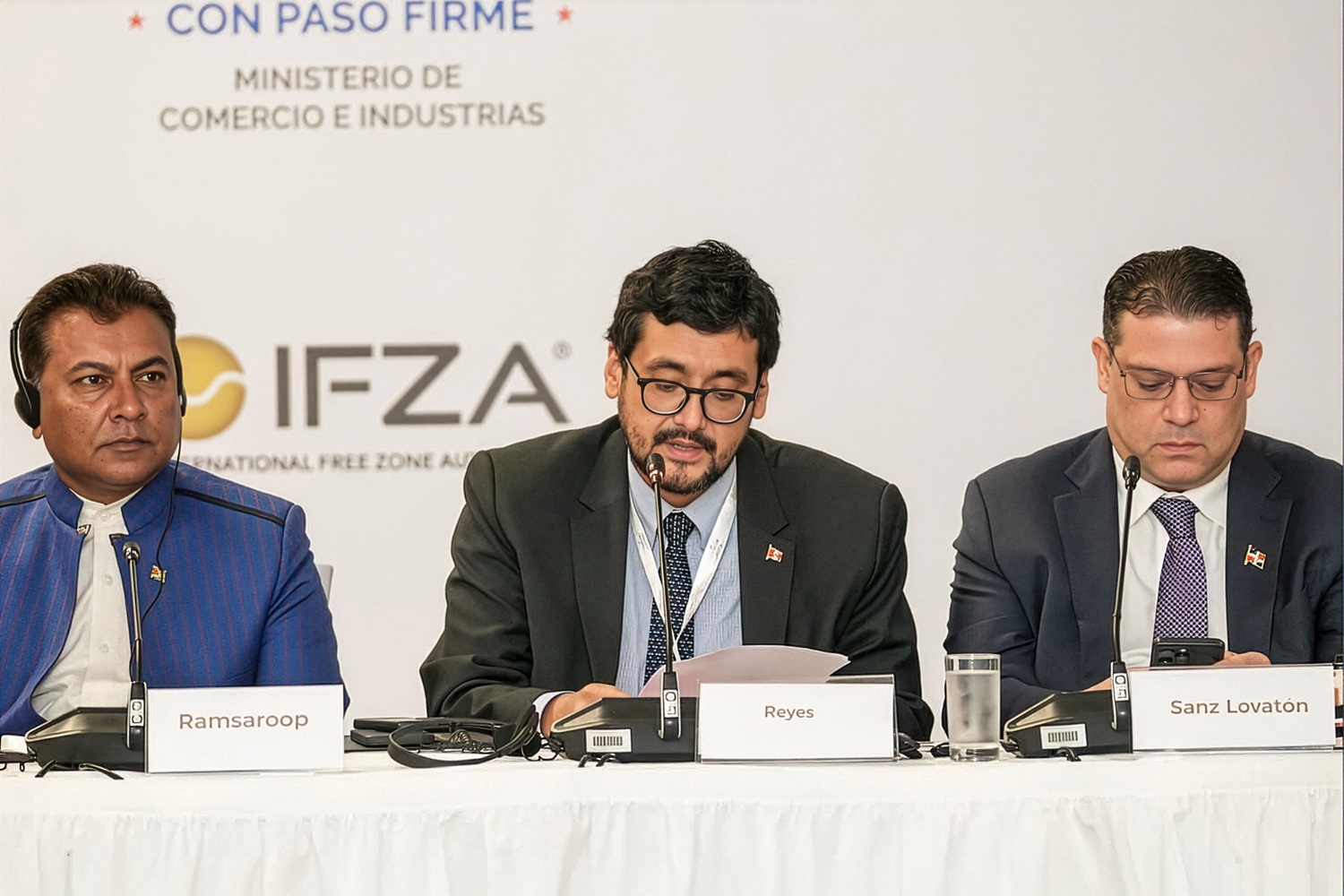
Agencia Peruana de Noticias PRENSAPERU.PE https://www.prensaperu.pe Twitter: @prensaperupe En un movimiento estratégico que busca reposicionar al Perú en el mapa de la inversión global, el ministro de Comercio Exterior y Turismo, José Reyes Llanos, ha presentado en la 12ª Conferencia Ministerial Global del Congreso Mundial de Zonas Francas (WFZO) en Panamá, la nueva estrategia del país para el desarrollo de las Zonas Económicas Especiales Privadas (ZEEP). Ante un foro que reúne a autoridades, inversionistas y operadores de más de 100 países, el anuncio no solo marca una nueva etapa para la economía peruana, sino que plantea una serie de interrogantes clave: ¿Qué tan atractivo será este modelo para el capital global? ¿Logrará el Perú transformarse en el hub regional que ambiciona ser y qué impacto real tendrá en la generación de empleo y transferencia tecnológica?
El titular del Mincetur detalló que este nuevo modelo ZEEP ofrece un “entorno altamente competitivo con incentivos tributarios y aduaneros, reglas claras y estabilidad jurídica”. El objetivo es claro: facilitar la instalación de empresas orientadas a la diversificación productiva, la innovación y la integración en cadenas globales de valor. La oportunidad es tangible, destacó Reyes Llanos, pues el Perú goza de una ubicación estratégica en la costa del Pacífico, acceso a múltiples mercados y una sólida red de acuerdos comerciales.
“Las ZEEP no solo impulsan la competitividad del país, sino que apuntan a generar empleo de calidad, transferencia tecnológica y desarrollo territorial”, señaló el ministro, invitando a los inversionistas a ser parte de esta “nueva etapa”, aprovechando un marco normativo sólido y una visión estratégica de largo plazo. Este Congreso Mundial, que por primera vez se celebra en América Latina, brindó la plataforma ideal para posicionar el nuevo régimen peruano en un escenario internacional.
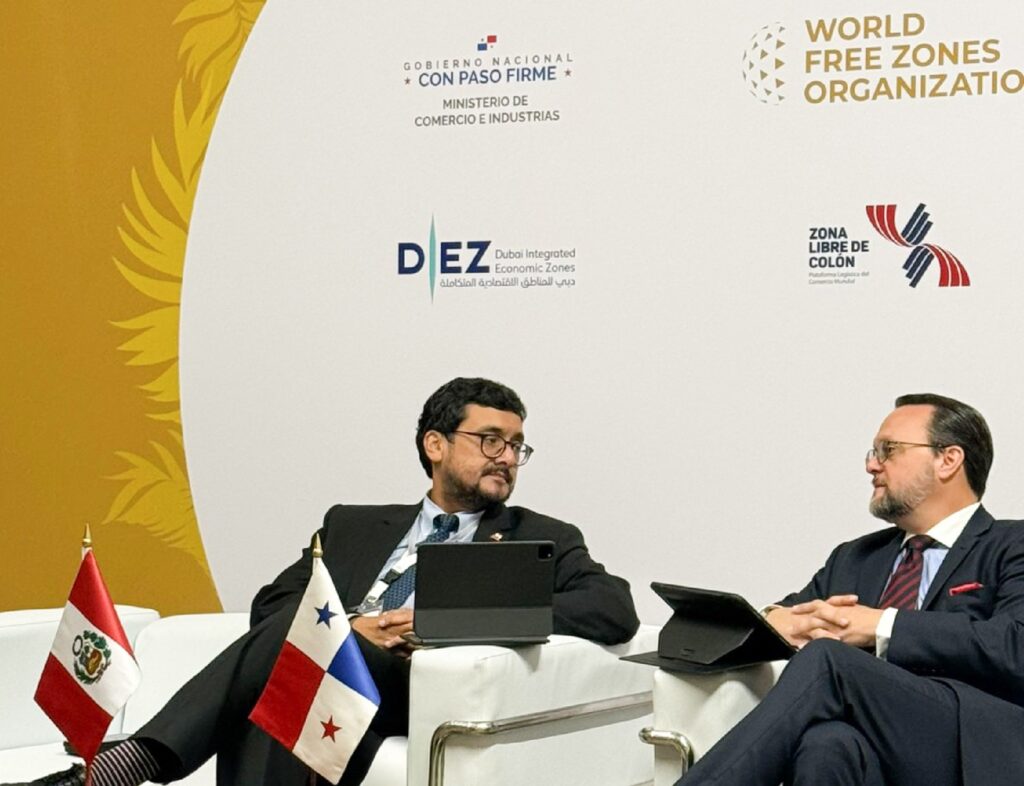
Por la mañana, el ministro Reyes también aprovechó para reunirse con Julio Moltó, titular de Comercio e Industrias de Panamá, consolidando la integración comercial y revisando los instrumentos técnicos del Tratado de Libre Comercio (TLC) entre ambas naciones, subrayando el compromiso del Perú con la dinamización del comercio exterior.
Conceptos Esenciales para Entender las ZEEP
Para comprender la magnitud de esta nueva estrategia, es fundamental clarificar algunos términos clave:
Zonas Económicas Especiales (ZEE): Son áreas geográficas delimitadas dentro de un país, donde se aplican regulaciones económicas, tributarias y aduaneras más flexibles y ventajosas que en el resto del territorio. Su objetivo es atraer inversión, fomentar la producción, generar empleo, promover la transferencia tecnológica y diversificar la economía. Incluyen zonas francas, zonas de procesamiento para la exportación, etc.
Zonas Económicas Especiales Privadas (ZEEP): En el caso peruano, el “Privadas” destaca que la iniciativa para su creación y su administración recae principalmente en el sector privado. A diferencia de las ZEE tradicionales gestionadas directamente por el Estado, aquí el rol del Mincetur es de autorización y supervisión, liberando al Estado de la carga operativa directa y apostando por la eficiencia privada.
Incentivos Tributarios y Aduaneros: Son beneficios específicos (como exenciones o reducciones de impuestos, aranceles, IGV, etc.) que se ofrecen a las empresas que operan dentro de las ZEEP para hacerlas más atractivas.
Diversificación Productiva: Es la estrategia de un país para no depender de uno o pocos productos (por ejemplo, solo materias primas) y, en cambio, desarrollar una variedad de bienes y servicios con mayor valor agregado.
Cadenas Globales de Valor (CGV): Se refiere a la secuencia de actividades que realiza una empresa para llevar un producto o servicio desde su concepción hasta el consumidor final, que se distribuyen en diferentes países (diseño en uno, manufactura en otro, marketing en un tercero, etc.). Integrarse en ellas significa participar activamente en este proceso global.
Hub Regional: Un centro o punto de conexión estratégico que atrae y distribuye un alto volumen de actividad en una región específica, ya sea en inversión, producción, logística o comercio.
Alcance de la Ley de Zonas Económicas Especiales Privadas en Perú
La implementación de este nuevo modelo se sustenta en un marco legal que redefine la participación del sector privado. La ley establece que es el sector privado quien tendrá la iniciativa para la creación de nuevas ZEE, mientras que el Ministerio de Comercio Exterior y Turismo (Mincetur) asume la función clave de autorizar y supervisar a los operadores privados.
El reglamento de la ley, aprobado el 22 de abril de 2026, es la columna vertebral operativa. Este define aspectos cruciales para el funcionamiento de las ZEEP, desde el procedimiento para su creación y la selección de los operadores privados, hasta las actividades permitidas dentro de estas zonas y los mecanismos de supervisión y control que garantizarán la transparencia y el cumplimiento de los objetivos. Este enfoque, alineado a estándares internacionales, busca impulsar la generación de actividades de valor agregado y empleo tecnificado, trascendiendo la mera manufactura o ensamblaje.
¿Un Nuevo Capítulo para la Inversión en Perú?
La apuesta de Perú por las ZEEP es una señal clara de su intención de atraer capital extranjero y diversificar su matriz económica, tradicionalmente dependiente de la exportación de materias primas. Sin embargo, el éxito de esta estrategia dependerá de varios factores clave: la efectividad de la promoción internacional, la agilidad de los procesos administrativos y la percepción de estabilidad política y jurídica del país, un factor que ha sido variable en los últimos años.
La promesa de “empleo de calidad, transferencia tecnológica y desarrollo territorial” es ambiciosa y, si se cumple, podría transformar significativamente las economías locales en donde se implementen estas zonas. El desafío radica en asegurar que los beneficios se distribuyan equitativamente y que el desarrollo no se concentre solo en unos pocos enclaves. Con esta propuesta, Perú no solo busca inversionistas, sino socios estratégicos para un crecimiento sostenido y diversificado.
DATOS CONCEPTUALES
1.- Apuesta Decidida por la Inversión Privada y la Diversificación: El modelo ZEEP marca un cambio fundamental en la estrategia económica peruana, delegando la iniciativa y administración de estas zonas al sector privado. Esto refleja una fuerte confianza en el capital privado para impulsar la diversificación productiva y reducir la dependencia de las materias primas, buscando atraer inversiones de alto valor agregado.
2.- Marco Normativo Riguroso para la Operación Privada: La aprobación del reglamento de la ley de ZEEP en abril de 2026 es crucial, ya que establece reglas claras para la creación, operación, selección de administradores y supervisión de estas zonas. Esto brinda seguridad jurídica a los inversionistas y asegura que el Mincetur mantendrá un rol fiscalizador activo para el cumplimiento de los objetivos planteados.
3.- Potencial de Transformación Regional y Generación de Empleo Calificado: Si se implementan con éxito, las ZEEP tienen el potencial de convertir al Perú en un “hub regional” para la inversión, la producción y el comercio internacional. El énfasis en la generación de “empleo de calidad” y “transferencia tecnológica” sugiere un impacto significativo en el desarrollo de capital humano y en la modernización de la industria local.
4.- El Desafío de la Estabilidad y Promoción Efectiva: A pesar de los atractivos incentivos, el éxito de las ZEEP dependerá en gran medida de la percepción de estabilidad jurídica y política del Perú a nivel internacional, así como de una promoción sostenida y efectiva. La participación en el Congreso Mundial de Zonas Francas es un buen inicio, pero la continuidad y consistencia en estas áreas serán fundamentales para captar y retener el capital global deseado.
Fuente: Agencia Peruana de Noticias PRENSAPERU.PE https://www.prensaperu.pe Twitter: @prensaperupe
Translate
From Panama, the Ministry of Foreign Trade and Tourism (MINCETUR) leads the way: “Peru is deploying its strong card of ‘Private Special Economic Zones (ZEEP)’, the strategy that promises to reinvent investment in the country.”
Peruvian News Agency PRENSAPERU.PE https://www.prensaperu.pe Twitter: @prensaperupe In a strategic move to reposition Peru on the global investment map, the Minister of Foreign Trade and Tourism, José Reyes Llanos, presented Peru’s new strategy for the development of Private Special Economic Zones (ZEEP) at the 12th Global Ministerial Conference of the World Free Zones Organization (WFZO) in Panama. Before a forum gathering authorities, investors, and operators from over 100 countries, the announcement not only marks a new stage for the Peruvian economy but also raises a series of crucial questions: How attractive will this model be for global capital? Will Peru succeed in transforming itself into the regional hub it aspires to be, and what real impact will it have on job creation and technology transfer?
The head of Mincetur detailed that this new ZEEP model offers a “highly competitive environment with tax and customs incentives, clear rules, and legal stability.” The objective is clear: to facilitate the establishment of companies focused on productive diversification, innovation, and integration into global value chains. The opportunity is tangible, Reyes Llanos emphasized, as Peru enjoys a strategic location on the Pacific coast, access to multiple markets, and a solid network of first-class trade agreements.
“The ZEEP not only boost the country’s competitiveness but also aim to generate quality employment, technology transfer, and territorial development,” the minister noted, inviting investors to be part of this “new stage,” leveraging a solid regulatory framework and a long-term strategic vision. This World Congress, held for the first time in Latin America, provided the ideal platform to position the new Peruvian regime in an international setting.
In the morning, Minister Reyes also took the opportunity to meet with Julio Moltó, Panama’s Minister of Commerce and Industries, consolidating trade integration and reviewing the technical instruments of the Free Trade Agreement (FTA) in force between both nations, underscoring Peru’s commitment to boosting foreign trade.
Essential Concepts to Understand ZEEP
To comprehend the magnitude of this new strategy, it is fundamental to clarify some key terms:
Special Economic Zones (SEZ): These are geographically delimited areas within a country where more flexible and advantageous economic, tax, and customs regulations apply than in the rest of the territory. Their objective is to attract investment, foster production, generate employment, promote technology transfer, and diversify the economy. They include free zones, export processing zones, etc.
Private Special Economic Zones (ZEEP): In the Peruvian case, “Private” highlights that the initiative for their creation and administration primarily rests with the private sector. Unlike traditional SEZs directly managed by the State, here Mincetur’s role is one of authorization and supervision, freeing the State from direct operational burden and betting on private efficiency.
Tax and Customs Incentives: These are specific benefits (such as tax exemptions or reductions, tariffs, IGV – General Sales Tax, etc.) offered to companies operating within ZEEP to make them more attractive.
Productive Diversification: This is a country’s strategy to avoid dependence on one or a few products (for example, only raw materials) and, instead, develop a variety of goods and services with higher added value.
Global Value Chains (GVC): Refers to the sequence of activities a company performs to bring a product or service from conception to the final consumer, distributed across different countries (design in one, manufacturing in another, marketing in a third, etc.). Integrating into them means actively participating in this global process.
Regional Hub: A strategic center or connection point that attracts and distributes a high volume of activity in a specific region, whether in investment, production, logistics, or trade.
Scope of the Law on Private Special Economic Zones in Peru
The implementation of this new model is based on a legal framework that redefines the participation of the private sector. The law establishes that it is the private sector that will have the initiative for the creation of new SEZs, while the Ministry of Foreign Trade and Tourism (Mincetur) assumes the key function of authorizing and supervising private operators.
The regulation of the law, approved on April 22, 2026, is the operational backbone. It defines crucial aspects for the functioning of ZEEP, from the procedure for their creation and the selection of private operators, to the activities permitted within these zones and the supervision and control mechanisms that will guarantee transparency and the fulfillment of objectives. This approach, aligned with international standards, seeks to drive the generation of value-added activities and skilled employment, transcending mere manufacturing or assembly.
A New Chapter for Investment in Peru?
Peru’s commitment to ZEEP is a clear sign of its intention to attract foreign capital and diversify its economic matrix, traditionally dependent on raw material exports. However, the success of this strategy will depend on several key factors: the effectiveness of international promotion, the agility of administrative processes, and the perception of political and legal stability in the country, a factor that has been variable in recent years.
The promise of “quality employment, technology transfer, and territorial development” is ambitious and, if fulfilled, could significantly transform local economies where these zones are implemented. The challenge lies in ensuring that benefits are distributed equitably and that development is not concentrated in just a few enclaves. With this proposal, Peru is not only seeking investors but also strategic partners for sustained and diversified growth.
CONCEPTUAL DATA
1.- Decisive Commitment to Private Investment and Diversification: The ZEEP model marks a fundamental change in Peru’s economic strategy, delegating the initiative and administration of these zones to the private sector. This reflects strong confidence in private capital to drive productive diversification and reduce reliance on raw materials, seeking to attract high value-added investments.
2.- Rigorous Regulatory Framework for Private Operation: The approval of the ZEEP law’s regulation in April 2026 is crucial, as it establishes clear rules for the creation, operation, selection of administrators, and supervision of these zones. This provides legal certainty to investors and ensures that Mincetur will maintain an active supervisory role to achieve the stated objectives.
3.- Potential for Regional Transformation and Generation of Skilled Employment: If successfully implemented, the ZEEP have the potential to transform Peru into a “regional hub” for investment, production, and international trade. The emphasis on generating “quality employment” and “technology transfer” suggests a significant impact on human capital development and the modernization of local industry.
4.- The Challenge of Stability and Effective Promotion: Despite attractive incentives, the success of ZEEP will largely depend on the perception of Peru’s legal and political stability at an international level, as well as sustained and effective promotion. Participation in the World Free Zones Congress is a good start, but continuity and consistency in these areas will be fundamental to attract and retain desired global capital.
Source: Peruvian News Agency PRENSAPERU.PE https://www.prensaperu.pe Twitter: @prensaperupe