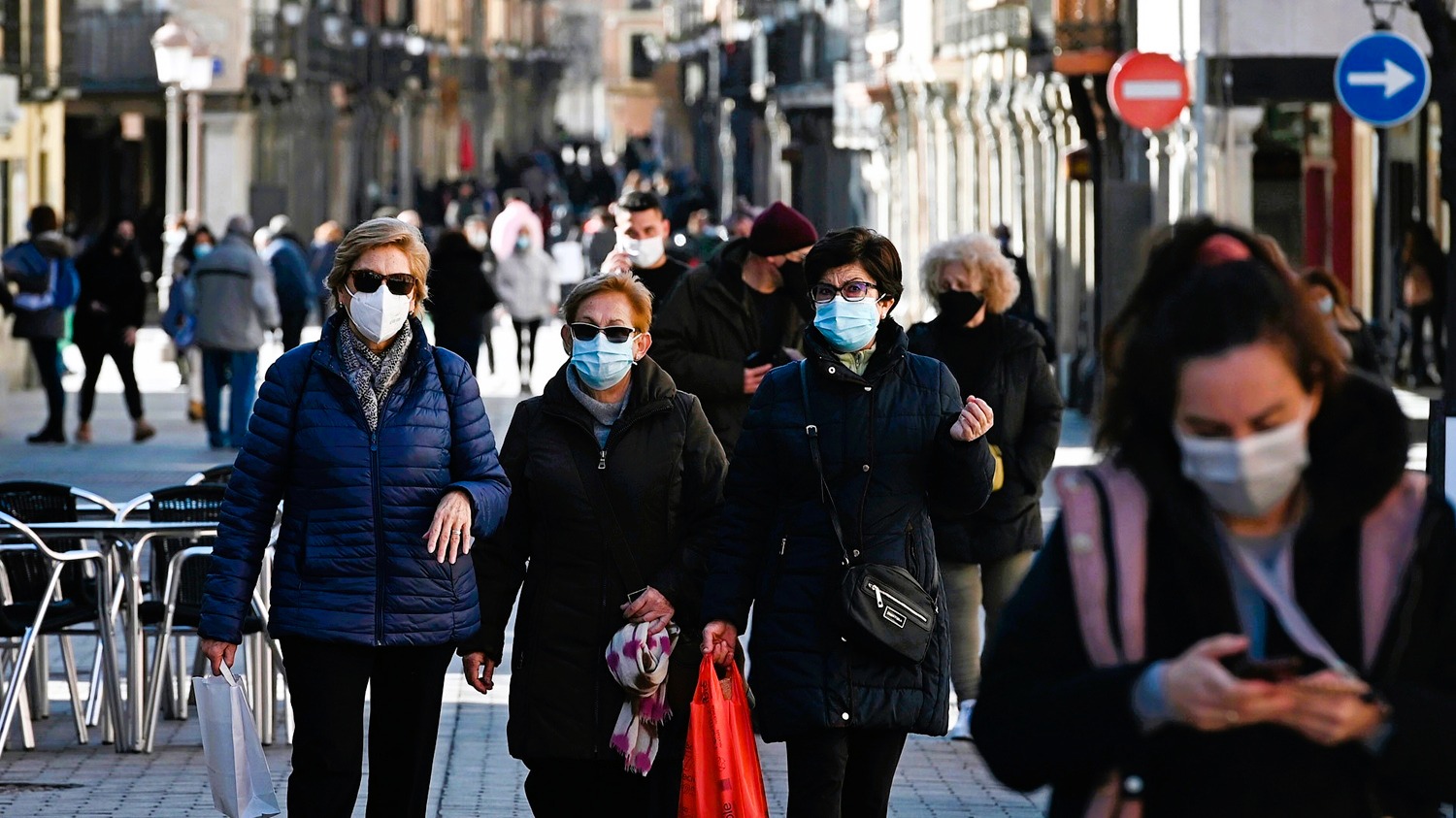
Agencia Peruana de Noticias PRENSAPERU.PE https://www.prensaperu.pe Twitter: @prensaperupe La temporada de gripe en el hemisferio norte ha encendido alertas globales en 2025: una subvariante denominada K de la influenza A (H3N2) ha adelantado el pico epidémico entre 3 y 6 semanas, disparando las tasas de contagios y hospitalizaciones hasta sobrepasar la capacidad de atención en España y Estados Unidos. Este artículo analiza las características de esta variante, su impacto en ambos países y las implicaciones para la salud pública, cruzando datos de agencias sanitarias internacionales y expertos.
¿QUÉ ES LA VARIANTE K DE LA GRIPE H3N2? CONTEXTO CIENTÍFICO Y TÉRMINOS CORRECTOS
La gripe H3N2 es un subtipo de virus del género Orthomyxoviridae que circula habitualmente en temporadas invernales, causando síntomas como fiebre alta (>38°C), dolor muscular, malestar general y tos seca. La variante K es un subclado que ha sufrido mutaciones en su cápside externa, lo que le confiere dos características clave:
Alta contagiosidad: Se propaga más rápidamente entre personas que subtipos anteriores de H3N2.
Evación parcial de la inmunidad: Tanto la inmunidad natural (por infecciones pasadas) como la generada por las vacunas actuales tienen menor eficacia frente a ella, aunque siguen reduciendo el riesgo de complicaciones graves.
Importante: No se trata de un virus “variante” de origen porcino (denominado H3N2v), sino de una mutación de la gripe estacional humana H3N2.
IMPACTO EN ESPAÑA: COLAPSO EN 12 AUTONOMÍAS AÚN SIN LLEGAR AL PICO
Según datos del Instituto de Salud Carlos III (ISCIII) de diciembre de 2025, la tasa de gripe en España alcanza los 112,2 casos por cada 100.000 habitantes —casi diez veces más que el mismo periodo del año anterior. El panorama es aún más preocupante en el ámbito hospitalario:
Un total de 12 autonomías sufren colapso en sus urgencias (entre ellas Cataluña, Madrid y Valencia), con pacientes esperando horas en pasillos o siendo ingresados en unidades no correspondientes (como maternidad o cuidados paliativos), lo que aumenta el riesgo de infecciones cruzadas.
La variante K domina el 78% de los casos detectados, y los grupos más afectados son niños pequeños (1-4 años) y adultos mayores con enfermedades crónicas.
Los sindicatos sanitarios denuncian que los planes de contingencia son insuficientes y que el personal está sobrepasado, con turnos doblados.
IMPACTO EN ESTADOS UNIDOS: TEMPORADA DE ALTA GRAVEDAD
Los Centers for Disease Control and Prevention (CDC) confirman que la variante K se ha convertido en la dominante en Estados Unidos y que el brote podría extenderse hasta la primavera de 2026. Los datos clave son:
La tasa acumulada de hospitalizaciones por gripe en la temporada 2024-2025 es la más alta desde 2010-2011, con 127,1 ingresos por cada 100.000 habitantes.
El 16,8% de los pacientes hospitalizados requiere cuidados intensivos y el 6,1% ventilación mecánica invasiva —porcentajes similares a temporadas pasadas, pero con un volumen mayor de casos que saturan las unidades.
Solo un tercio de los pacientes hospitalizados estaba vacunado, y el tratamiento antiviral se administra en menos del 62% de los niños de 5-17 años, lo que agrava las complicaciones.
Además, la circulación simultánea de la variante K con el virus respiratorio sincitial (VRS) y el SARS-CoV-2 complica el diagnóstico y agrava la saturación hospitalaria en ambos países.
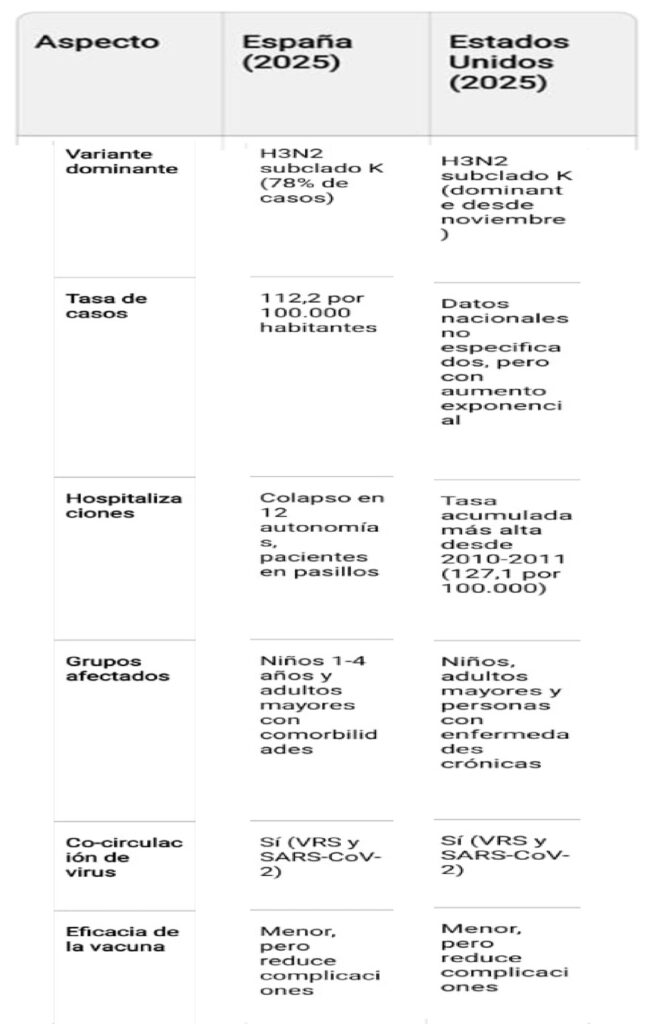
CRUCE DE INFORMACIÓN: PUNTOS EN COMÚN Y DIFERENCIAS ENTRE ESPAÑA Y ESTADOS UNIDOS
CONCLUSIONES
1.- La variante K de la H3N2 es el motor de una temporada gripal anticipada y severa: Ha adelantado el pico epidémico en 3-6 semanas en el hemisferio norte, generando un volumen de casos sin precedentes en España y Estados Unidos.
2.- Los sistemas hospitalarios están sobrepasados: En España, 12 autonomías sufren colapso en urgencias; en Estados Unidos, la tasa de hospitalizaciones es la más alta en más de una década, con presión en unidades de cuidados intensivos.
3.- La vacuna sigue siendo útil, pero requiere medidas complementarias: Aunque su eficacia es menor frente a la variante K, reduce el riesgo de complicaciones graves; es fundamental ampliar el acceso al tratamiento antiviral y fortalecer los planes de contingencia.
4.- El riesgo para el hemisferio sur es real: Expertos prevén que la variante K podría llegar a Latinoamérica (incluyendo Perú) entre fines del verano y principios de otoño austral, lo que exige planificar campañas de vacunación temprana.
Fuente: Agencia Peruana de Noticias PRENSAPERU.PE https://www.prensaperu.pe Twitter: @prensaperupe

English Translation
THE K VARIANT OF H3N2: “How it’s overwhelming hospitals in Spain and the United States during an early flu season.”
Peruvian News Agency PRENSAPERU.PE https://www.prensaperu.pe Twitter: @prensaperupe The flu season in the Northern Hemisphere has triggered global alerts in 2025: a subvariant called K of influenza A (H3N2) has brought forward the epidemic peak by 3 to 6 weeks, driving up infection and hospitalization rates to the point of exceeding healthcare capacity in Spain and the United States. This article analyzes the characteristics of this variant, its impact on both countries, and the implications for public health, cross-referencing data from international health agencies and experts.
WHAT IS THE K VARIANT OF H3N2 FLU? SCIENTIFIC CONTEXT AND CORRECT TERMS
H3N2 influenza is a subtype of virus from the Orthomyxoviridae family that typically circulates during the winter months, causing symptoms such as high fever (>38°C), muscle pain, general malaise, and a dry cough. The K variant is a subclade that has undergone mutations in its outer capsid, giving it two key characteristics:
High contagiousness: It spreads more rapidly between people than previous H3N2 subtypes.
Partial evasion of immunity: Both natural immunity (from past infections) and immunity generated by current vaccines are less effective against it, although they still reduce the risk of serious complications.
Important: This is not a “variant” virus of swine origin (called H3N2v), but rather a mutation of the human seasonal H3N2 influenza virus.
IMPACT IN SPAIN: COLLAPSE IN 12 AUTONOMOUS COMMUNITIES YET TO BE FOUND AT THE PEAK
According to data from the Carlos III Health Institute (ISCIII) in December 2025, the flu rate in Spain reached 112.2 cases per 100,000 inhabitants—almost ten times higher than the same period the previous year. The situation is even more worrying in hospitals:
A total of 12 autonomous communities are experiencing overcrowding in their emergency departments (including Catalonia, Madrid, and Valencia), with patients waiting for hours in hallways or being admitted to inappropriate units (such as maternity or palliative care), which increases the risk of cross-infection.
The K variant accounts for 78% of detected cases, and the most affected groups are young children (1-4 years old) and older adults with chronic illnesses.
Healthcare unions denounce that contingency plans are insufficient and that staff are overwhelmed, working double shifts.
IMPACT IN THE UNITED STATES: PEAK SEVERITY SEASON
The Centers for Disease Control and Prevention (CDC) confirm that the K variant has become dominant in the United States and that the outbreak could extend into the spring of 2026. Key data points include:
The cumulative rate of influenza hospitalizations in the 2024-2025 season is the highest since 2010-2011, with 127.1 hospitalizations per 100,000 residents.
16.8% of hospitalized patients require intensive care and 6.1% require invasive mechanical ventilation—percentages similar to past seasons, but with a higher volume of cases overwhelming the units.
Only one-third of hospitalized patients were vaccinated, and antiviral treatment is administered to less than 62% of children aged 5-17, exacerbating complications.
Furthermore, the simultaneous circulation of the K variant with respiratory syncytial virus (RSV) and SARS-CoV-2 complicates diagnosis and exacerbates hospital overcrowding in both countries.
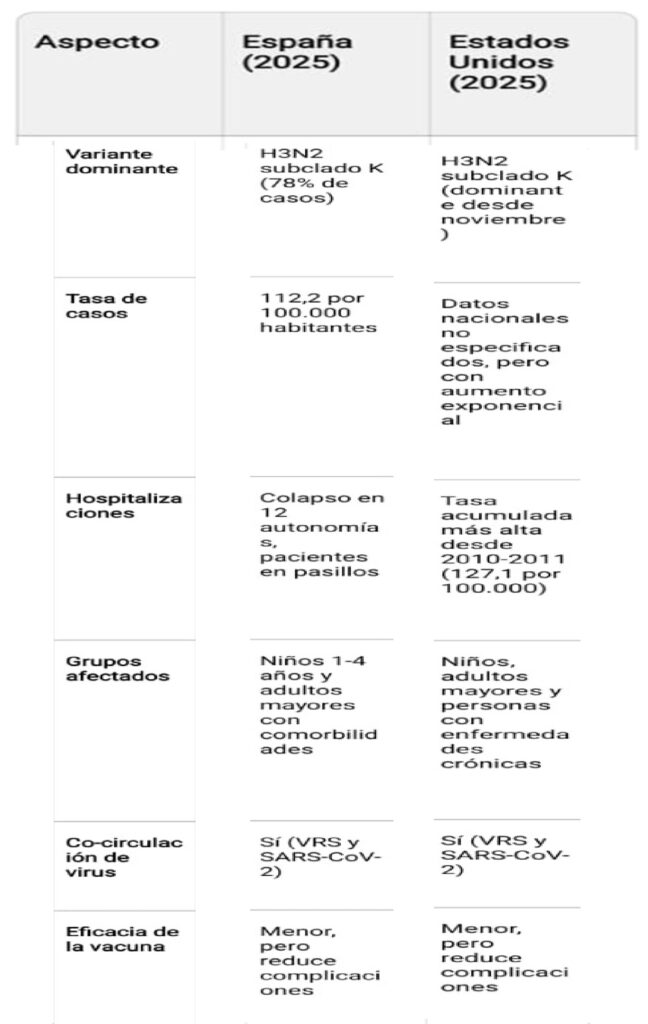
INFORMATION CROSS-REVIEW: SIMILARITIES AND DIFFERENCES BETWEEN SPAIN AND THE UNITED STATES
CONCLUSIONS
1.- The K variant of H3N2 is driving an early and severe flu season: It has brought forward the epidemic peak by 3-6 weeks in the Northern Hemisphere, generating an unprecedented volume of cases in Spain and the United States.
2.- Hospital systems are overwhelmed: In Spain, 12 autonomous communities are experiencing emergency room collapses; in the United States, the hospitalization rate is the highest in more than a decade, with pressure on intensive care units.
3.- The vaccine remains useful, but requires complementary measures: Although its efficacy is lower against the K variant, it reduces the risk of serious complications; it is essential to expand access to antiviral treatment and strengthen contingency plans.
4.- The risk to the Southern Hemisphere is real: Experts predict that the K variant could reach Latin America (including Peru) between the end of summer and the beginning of autumn in the Southern Hemisphere, which requires planning early vaccination campaigns.
Source: Peruvian News Agency PRENSAPERU.PE https://www.prensaperu.pe Twitter: @prensaperupe