
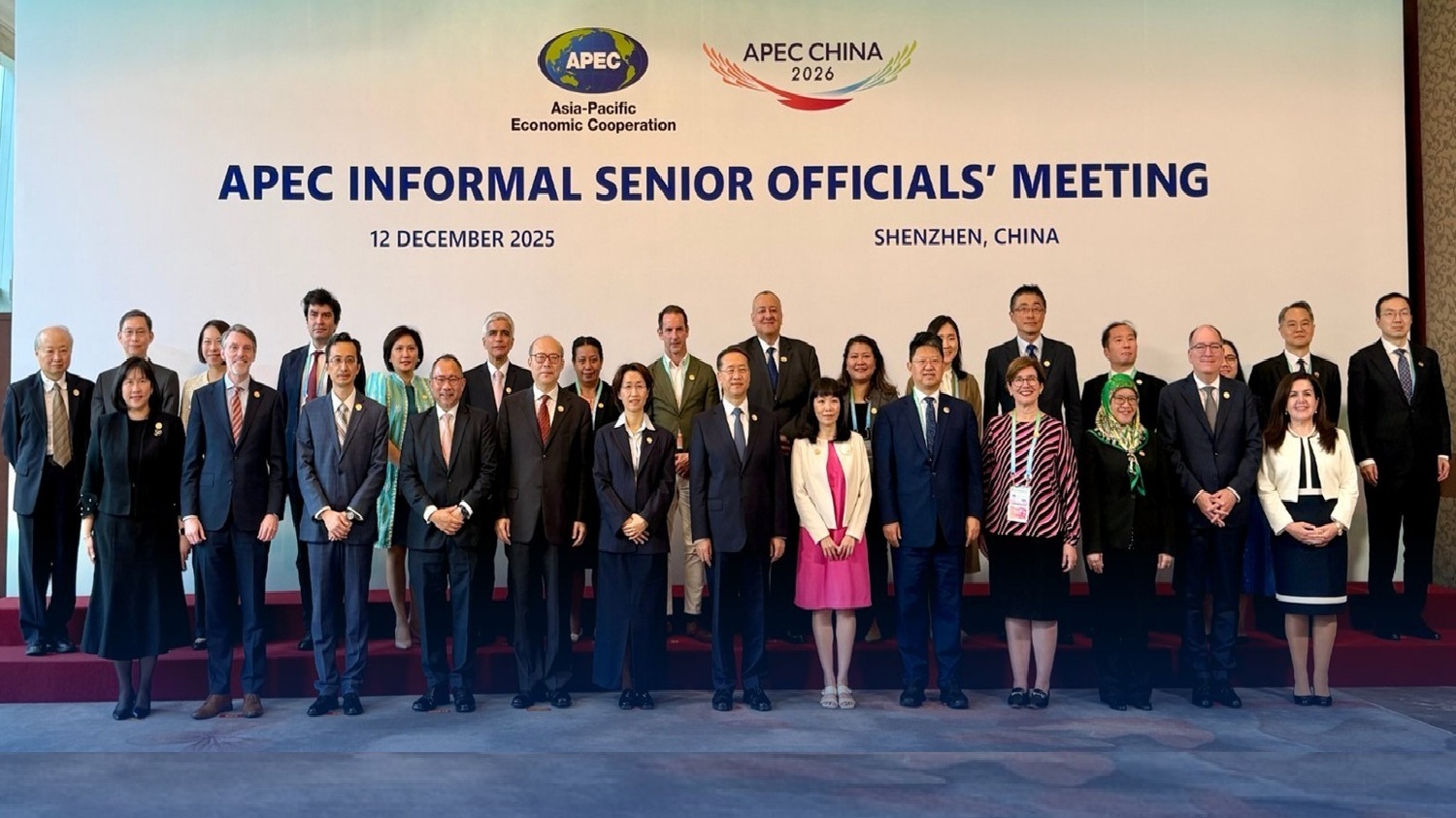
Agencia Peruana de Noticias PRENSAPERU.PE https://www.prensaperu.pe Twitter: @prensaperupe En Shenzhen, ciudad costera y centro global de innovación del sur de China, se convocó a la reunión de altos funcionarios de las economías miembros del Foro de Cooperación Económica Asia-Pacífico (APEC) con el fin de definir los ejes de la agenda para 2026, año en que China ejerce la presidencia del foro. En esta instancia, se presentó el tema central: “Construir una comunidad Asia-Pacífico para prosperar juntos”, que se erige como la visión guía para abordar los retos regionales e impulsar la cooperación económica.
CONTEXTO GEOPOLÍTICO Y ECONÓMICO: RETOS URGENTES A ABORDAR
El viceministro de Asuntos Exteriores de China, Ma Zhaoxu, abrió la reunión subrayando la necesidad imperante de unidad y coordinación política ante el auge del proteccionismo, las tendencias antiglobalización y la desaceleración del crecimiento económico global. Según sus declaraciones, estos factores han generado incertidumbres significativas que posicionan como “prueba urgente y seria” para APEC la tarea de fortalecer la cohesión regional y sostener el desarrollo económico de la zona.
Ma Zhaoxu recordó las palabras del presidente Xi Jinping durante la Reunión de Líderes Económicos de APEC 2025 en Gyeongju, en las que se reafirmó la disposición de China a convocar a todas las partes para avanzar en la construcción de la comunidad Asia-Pacífica, promoviendo la cooperación en áreas prioritarias como el Área de Libre Comercio de Asia-Pacífico (FTAAP), la conectividad, la economía digital y la inteligencia artificial (IA).
PRIORIDADES DE CHINA PARA APEC 2026: APERTURA, INNOVACIÓN Y COOPERACIÓN
La visión de comunidad no se limita a una aspiración, sino que se traduce en tres ejes prácticos que guiarán las acciones del foro en 2026:
Apertura: Reconocida como la “savia vital” de la región, la apertura se sustenta en el descenso de los aranceles medios de APEC desde el 17% al 5% en las últimas décadas. Con 2026 marcando el vigésimo aniversario del FTAAP, se solicita apoyo continuo al sistema comercial multilateral, la consolidación de un entorno económico regional estable y abierto, el fortalecimiento de la resiliencia industrial y de cadenas de suministro, y la profundización de la conectividad.
Innovación: Frente al rápido avance tecnológico —especialmente en IA—, se insta a APEC a profundizar la colaboración en tecnologías de vanguardia, ampliar los servicios públicos digitales, promover la interoperabilidad de estándares y garantizar la distribución equitativa de los beneficios tecnológicos. Shenzhen, como centro global de innovación, se presenta como plataforma para compartir experiencia en este ámbito.
Cooperación: Se resalta el papel de APEC como principal foro de cooperación económica regional, con un llamado a mayor coordinación y fortalecimiento de capacidades en áreas como política fiscal, seguridad alimentaria, energía, pequeñas y medianas empresas (pymes), transporte, turismo, recursos humanos y salud pública, con el objetivo de asegurar que “ningún miembro ni comunidad quede atrás”.
SHENZHEN: ESCENARIO Y SIMBOLO DE LA PRESIDENCIA CHINA
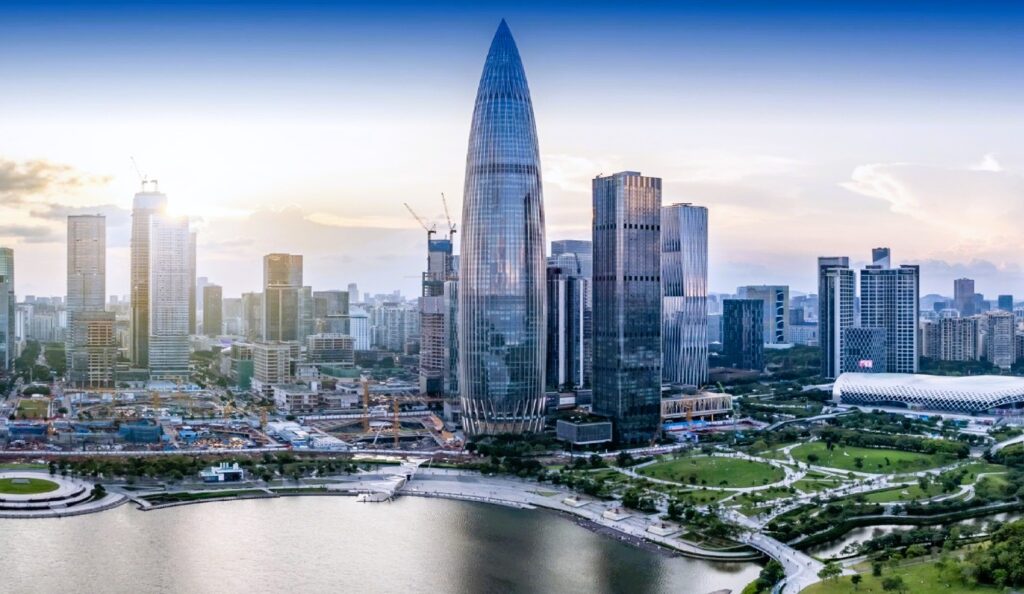
La elección de Shenzhen como sede de la reunión no es casual: La ciudad, una de las primeras zonas económicas especiales de China, ha registrado un crecimiento exponencial, pasando de un Producto Interno Bruto (PIB) de 270 millones de yuanes en 1980 a 3,68 billones de yuanes en 2024, con un comercio total de 4,5 billones de yuanes el año pasado. Además, Shenzhen acogerá la Semana de Líderes Económicos de APEC en noviembre de 2026.
El presidente de la Reunión de Altos Funcionarios de APEC 2026, embajador Chen Xu, presentó el logotipo del foro, inspirado en la “Ciudad de Peng” (nombre legendario de Shenzhen, en referencia a la criatura que se transforma de pez a ave). El diseño cuenta con 21 plumas entrelazadas —una por cada economía miembro— que forman la figura del Peng, simbolizando la diversidad y la conectividad de la región en su camino hacia la prosperidad compartida.
HITO ESTRATÉGICO Y PRÓXIMOS ENCUENTROS
APEC 2026 marcará un hito clave con la primera revisión quinquenal del Plan de Acción Aotearoa, que ofrecerá la oportunidad de evaluar los progresos y readaptar los esfuerzos para alcanzar la visión 2040 de una comunidad Asia-Pacífica abierta, dinámica, resiliente y pacífica.
Los próximos encuentros técnicos de altos funcionarios se llevarán a cabo en Guangzhou del 1 al 10 de febrero de 2026.
CONCLUSIONES
1.- La presidencia china de APEC 2026 se centra en una visión práctica de comunidad Asia-Pacífica, orientada a abordar los retos del proteccionismo y la antiglobalización mediante la unidad y la coordinación.
2.- Las prioridades de apertura, innovación y cooperación proporcionan un marco concreto para traducir la visión en acciones, con énfasis en el FTAAP, la tecnología digital y la equidad regional.
3.- Shenzhen representa tanto el potencial de crecimiento económico de la región como el simbolismo de la transformación y la conectividad que busca APEC.
4.- El logotipo de APEC 2026 sintetiza la identidad diversa pero cohesionada de las 21 economías miembros, reflejando su compromiso con la prosperidad compartida.
5.- La revisión del Plan de Acción Aotearoa y los próximos encuentros en Guangzhou posicionan a 2026 como un año estratégico para refinar la agenda de cooperación económica regional.
Fuente: Agencia Peruana de Noticias PRENSAPERU.PE https://www.prensaperu.pe Twitter: @prensaperupe
English Translation
China – Shenzhen convenes APEC 2026: “Towards an Asia-Pacific community of shared prosperity, setting the course for the forum’s agenda next year”.
Peruvian News Agency PRENSAPERU.PE https://www.prensaperu.pe Twitter: @prensaperupe In Shenzhen, a coastal city and global innovation hub in southern China, a meeting of high-ranking officials from the member economies of the Asia-Pacific Economic Cooperation (APEC) forum was convened to define the key points of the agenda for 2026, the year in which China holds the forum’s presidency. The central theme presented was: “Building an Asia-Pacific community to prosper together,” which serves as the guiding vision for addressing regional challenges and boosting economic cooperation.
GEOPOLITICAL AND ECONOMIC CONTEXT: URGENT CHALLENGES TO ADDRESS
Chinese Vice Foreign Minister Ma Zhaoxu opened the meeting by emphasizing the urgent need for political unity and coordination in the face of rising protectionism, anti-globalization trends, and slowing global economic growth. According to his remarks, these factors have created significant uncertainties, making it an “urgent and serious test” for APEC to strengthen regional cohesion and sustain the region’s economic development.
Ma Zhaoxu recalled President Xi Jinping’s remarks at the 2025 APEC Economic Leaders’ Meeting in Gyeongju, in which he reaffirmed China’s willingness to convene all parties to advance the building of the Asia-Pacific community, promoting cooperation in priority areas such as the Free Trade Area of the Asia-Pacific (FTAAP), connectivity, the digital economy, and artificial intelligence (AI).
CHINA’s PRIORITIES FOR for APEC 2026: OPENNESS, INNOVATION AND COOPERATION
The vision of community is not merely an aspiration, but translates into three practical pillars that will guide the forum’s actions in 2026:
Openness: Recognized as the “lifeblood” of the region, openness is underpinned by the decline in APEC average tariffs from 17% to 5% over the past few decades. With 2026 marking the twentieth anniversary of the Free Trade Area of the Americas (FTAAP), continued support is requested for the multilateral trading system, the consolidation of a stable and open regional economic environment, the strengthening of industrial and supply chain resilience, and the deepening of connectivity.
Innovation: In the face of rapid technological advancement—especially in AI—APEC is urged to deepen collaboration on cutting-edge technologies, expand digital public services, promote the interoperability of standards, and ensure the equitable distribution of technological benefits. Shenzhen, as a global innovation hub, is presented as a platform for sharing expertise in this area.
Cooperation: The role of APEC as the main forum for regional economic cooperation is highlighted, with a call for greater coordination and capacity building in areas such as fiscal policy, food security, energy, small and medium-sized enterprises (SMEs), transportation, tourism, human resources, and public health, with the goal of ensuring that “no member or community is left behind.”
SHENZHEN: STAGE AND SYMBOL OF THE CHINESE PRESIDENCY
The choice of Shenzhen as the meeting venue is no coincidence: The city, one of China’s first special economic zones, has experienced exponential growth, increasing its Gross Domestic Product (GDP) from 270 million yuan in 1980 to 3.68 trillion yuan in 2024, with total trade reaching 4.5 trillion yuan last year. Furthermore, Shenzhen will host APEC Economic Leaders Week in November 2026.
The Chair of the APEC 2026 Senior Officials’ Meeting, Ambassador Chen Xu, unveiled the forum’s logo, inspired by the “City of Peng” (the legendary name for Shenzhen, referring to the creature that transforms from fish to bird). The design features 21 intertwined feathers—one for each member economy—forming the Peng bird, symbolizing the region’s diversity and connectivity on its path to shared prosperity.
STRATEGIC MILESTONE AND UPCOMING MEETINGS
APEC 2026 will mark a key milestone with the first five-year review of the Aotearoa Action Plan, providing an opportunity to assess progress and readjust efforts toward achieving the 2040 vision of an open, dynamic, resilient, and peaceful Asia-Pacific community.
The next Senior Officials’ Technical Meetings will be held in Guangzhou from February 1 to 10, 2026.
CONCLUSIONS
1.- China’s APEC 2026 presidency focuses on a practical vision of an Asia-Pacific community, aimed at addressing the challenges of protectionism and anti-globalization through unity and coordination.
2.- The priorities of openness, innovation, and cooperation provide a concrete framework for translating this vision into action, with an emphasis on the Free Trade Area of the Asia-Pacific (FTAAP), digital technology, and regional equity.
3.- Shenzhen represents both the region’s potential for economic growth and the symbolism of the transformation and connectivity that APEC seeks.
4.- The APEC 2026 logo encapsulates the diverse yet cohesive identity of the 21 member economies, reflecting their commitment to shared prosperity.
5.- The review of the Aotearoa Action Plan and the upcoming meetings in Guangzhou position 2026 as a strategic year for refining the regional economic cooperation agenda.
Source: Peruvian News Agency PRENSAPERU.PE https://www.prensaperu.pe Twitter: @prensaperupe