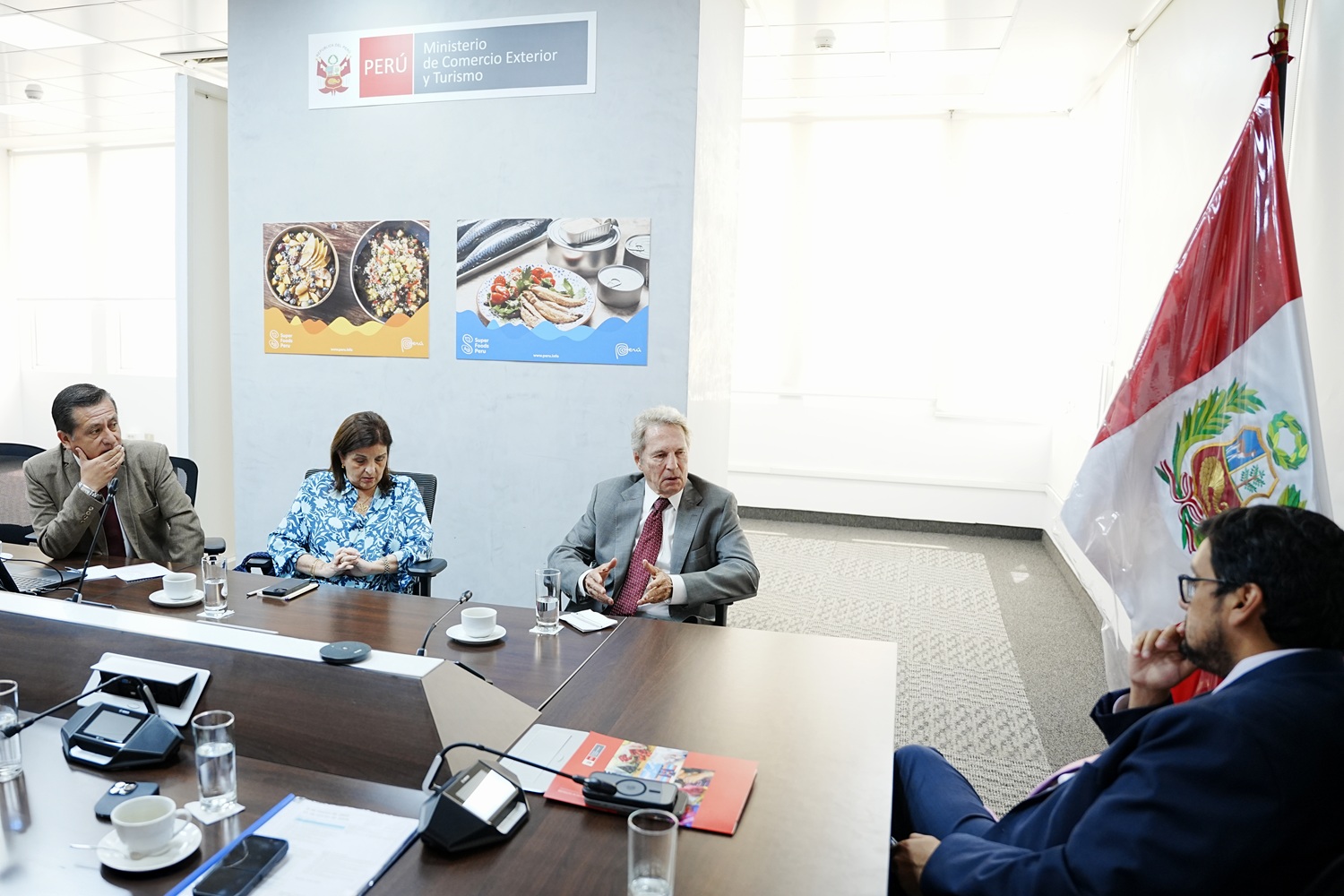
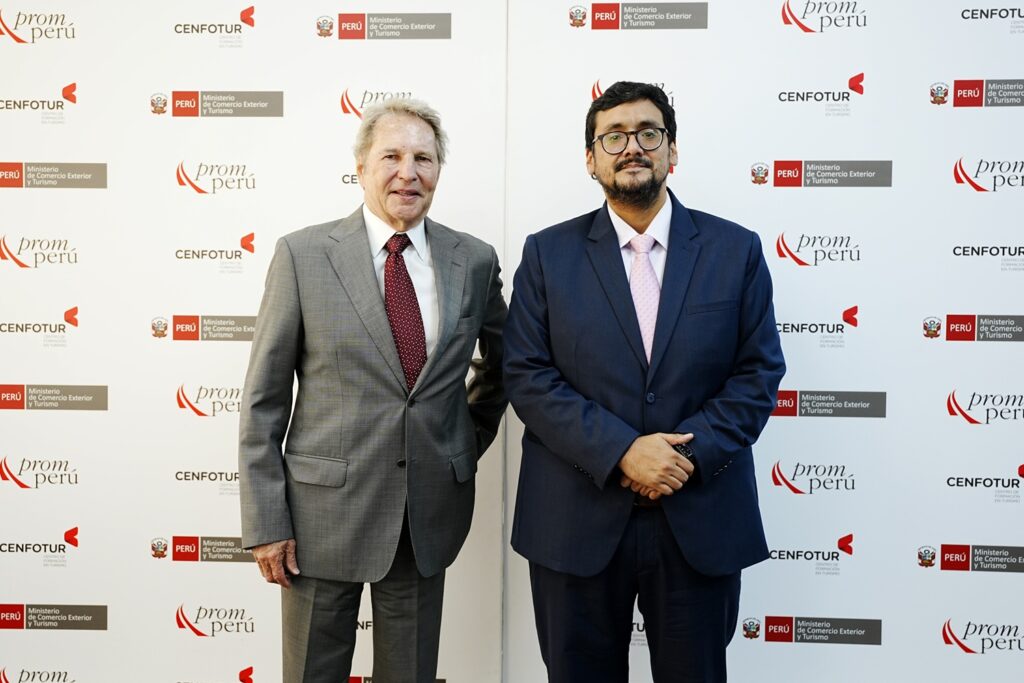
Agencia Peruana de Noticias PRENSAPERU.PE https://www.prensaperu.pe Twitter: @prensaperupe El ministro de Comercio Exterior y Turismo (MINCETUR), José Reyes, se reunió esta mañana con una delegación de la Cámara Nacional de Turismo (CANATUR) liderada por su presidente José Koechlin—entidad gremial que agrupa a las principales empresas y actores del sector turístico peruano, fundada en 1964 con el objetivo de promover el desarrollo sostenible de la actividad en el país—, liderada por su presidente José Koechlin. El encuentro tuvo como propósito central coordinar acciones estratégicas orientadas a fortalecer la competitividad y resiliencia de la industria turística peruana, que representa aproximadamente el 8% del Producto Interno Bruto (PIB) nacional y genera más de 2 millones de empleos directos e indirectos.
Durante la jornada, los participantes abordaron múltiples ejes fundamentales para el futuro del turismo en Perú:
1.- Diversificación de destinos turísticos: Se destacó la necesidad de ir más allá de los clásicos polos como Machu Picchu, Cusco o el Valle Sagrado, para potenciar regiones con gran potencial aún poco explotado, como el Amazonas, Piura, Tacna, Madre de Dios y la costa norte. Esta estrategia busca reducir la saturación en los destinos consolidados, distribuir los beneficios económicos de manera más equitativa en todo el territorio nacional y generar empleo en zonas rurales y vulnerables.
2.- Hoja de ruta de economía circular en turismo: Se discutió la implementación de esta hoja de ruta, un instrumento que busca integrar principios de reducción, reutilización y reciclaje en todas las etapas de la cadena turística —desde la planificación de destinos hasta la gestión de residuos en establecimientos hoteleros y la oferta de experiencias sostenibles—. MINCETUR ha venido trabajando en esta iniciativa junto a organismos internacionales como el Programa de las Naciones Unidas para el Medio Ambiente (PNUMA) y la Organización Mundial del Turismo (OMT), con el fin de asegurar que el crecimiento del sector sea compatible con la conservación de recursos naturales y culturales.
3.- Impulso a la conectividad interregional: Se analizaron medidas para mejorar la infraestructura de transporte terrestre, aéreo y fluvial que une diferentes destinos turísticos. Esto incluye la modernización de aeropuertos regionales, la pavimentación de carreteras de acceso a zonas turísticas y la optimización de servicios de transporte público y privado que faciliten el desplazamiento de visitantes y la movilidad de la mano de obra del sector.
4.- Implementación del corredor turístico seguro: Se revisó el avance de este programa, lanzado en 2024 por MINCETUR en coordinación con el Ministerio del Interior y las fuerzas del orden, que tiene como objetivo garantizar la seguridad de turistas y trabajadores del sector en los principales destinos y rutas turísticas del país. El corredor incluye la instalación de puntos de vigilancia, sistemas de emergencia móvil y la capacitación de personal turístico en protocolos de seguridad.
La reunión, celebrada en la sede central de MINCETUR en Lima, contó con la presencia de la viceministra de Turismo, Aracelly Laca —encargada de la formulación y ejecución de políticas para el desarrollo del sector—, y el jefe del Gabinete de Asesores, Luis Alberto Mesías. Por parte de CANATUR, además del presidente Koechlin, participaron su primera vicepresidenta, Maritza Montero, y su gerente general, Carlos Loayza, quienes representaron los intereses de gremios asociados como hoteleros, operadores turísticos, restauradores y proveedores de servicios complementarios.
DATOS
La alianza entre MINCETUR y CANATUR demuestra un enfoque concertado para transformar el turismo peruano en un sector más inclusivo, sostenible y competitivo, abordando tanto la distribución equitativa de beneficios como la protección del patrimonio natural y cultural del país.
Los ejes estratégicos discutidos —diversificación de destinos, economía circular, conectividad y seguridad— forman un conjunto integral que busca resolver desafíos históricos del sector y posicionar al Perú como un destino turístico de clase mundial en el largo plazo.
Fuente: Agencia Peruana de Noticias PRENSAPERU.PE https://www.prensaperu.pe Twitter: @prensaperupe
Translate
MINCETUR and CANATUR Join Forces to Strengthen Peruvian Tourism with Sustainable Approach and Circular Economy Roadmap Backed by International Support.
Agencia Peruana de Noticias PRENSAPERU.PE https://www.prensaperu.pe Twitter: @prensaperupe The Minister of Foreign Trade and Tourism (MINCETUR), José Reyes, met this morning with a delegation from the National Chamber of Tourism (CANATUR), led by its president, José Koechlin. CANATUR is a trade association that brings together the main companies and stakeholders in the Peruvian tourism sector, founded in 1964 with the aim of promoting the sustainable development of the industry in the country. The meeting’s main purpose was to coordinate strategic actions aimed at strengthening the competitiveness and resilience of the Peruvian tourism industry, which represents approximately 8% of the national Gross Domestic Product (GDP) and generates more than 2 million direct and indirect jobs.
During the meeting, participants addressed several key pillars for the future of tourism in Peru:
1.- Diversification of tourist destinations: The need to go beyond classic hubs such as Machu Picchu, Cusco or the Sacred Valley was highlighted, in order to boost regions with great but still underdeveloped potential, such as Amazonas, Piura, Tacna, Madre de Dios and the northern coast. This strategy seeks to reduce saturation in established destinations, distribute economic benefits more equitably throughout the country and generate employment in rural and vulnerable areas.
2.- Circular economy roadmap for tourism: The implementation of this roadmap was discussed; it is a tool that aims to integrate principles of reduction, reuse and recycling in all stages of the tourism chain — from destination planning to waste management in hotels and the offering of sustainable experiences. MINCETUR has been working on this initiative together with international organizations such as the United Nations Environment Programme (UNEP) and the World Tourism Organization (UNWTO), to ensure that sector growth is compatible with the conservation of natural and cultural resources.
3.- Boosting interregional connectivity: Measures to improve land, air and river transport infrastructure connecting different tourist destinations were analyzed. This includes the modernization of regional airports, the paving of access roads to tourist areas and the optimization of public and private transport services to facilitate the movement of visitors and the mobility of the sector’s workforce.
4.- Implementation of the safe tourist corridor: Progress on this program was reviewed; launched in 2024 by MINCETUR in coordination with the Ministry of the Interior and law enforcement forces, it aims to guarantee the safety of tourists and sector workers in the country’s main destinations and tourist routes. The corridor includes the installation of surveillance points, mobile emergency systems and training for tourism staff on safety protocols.
The meeting, held at MINCETUR’s central headquarters in Lima, was attended by the Vice Minister of Tourism, Aracelly Laca — responsible for formulating and implementing policies for sector development — and the Head of the Advisory Cabinet, Luis Alberto Mesías. On behalf of CANATUR, in addition to President Koechlin, First Vice President Maritza Montero and General Manager Carlos Loayza participated, representing the interests of affiliated associations such as hoteliers, tour operators, restaurateurs and providers of complementary services.
FACTS
The alliance between MINCETUR and CANATUR demonstrates a joint approach to transforming Peruvian tourism into a more inclusive, sustainable and competitive sector, addressing both the equitable distribution of benefits and the protection of the country’s natural and cultural heritage.
The strategic pillars discussed — destination diversification, circular economy, connectivity and safety — form a comprehensive set that seeks to address historical challenges of the sector and position Peru as a world-class tourist destination in the long term.
Source: Agencia Peruana de Noticias PRENSAPERU.PE https://www.prensaperu.pe Twitter: @prensaperupe