
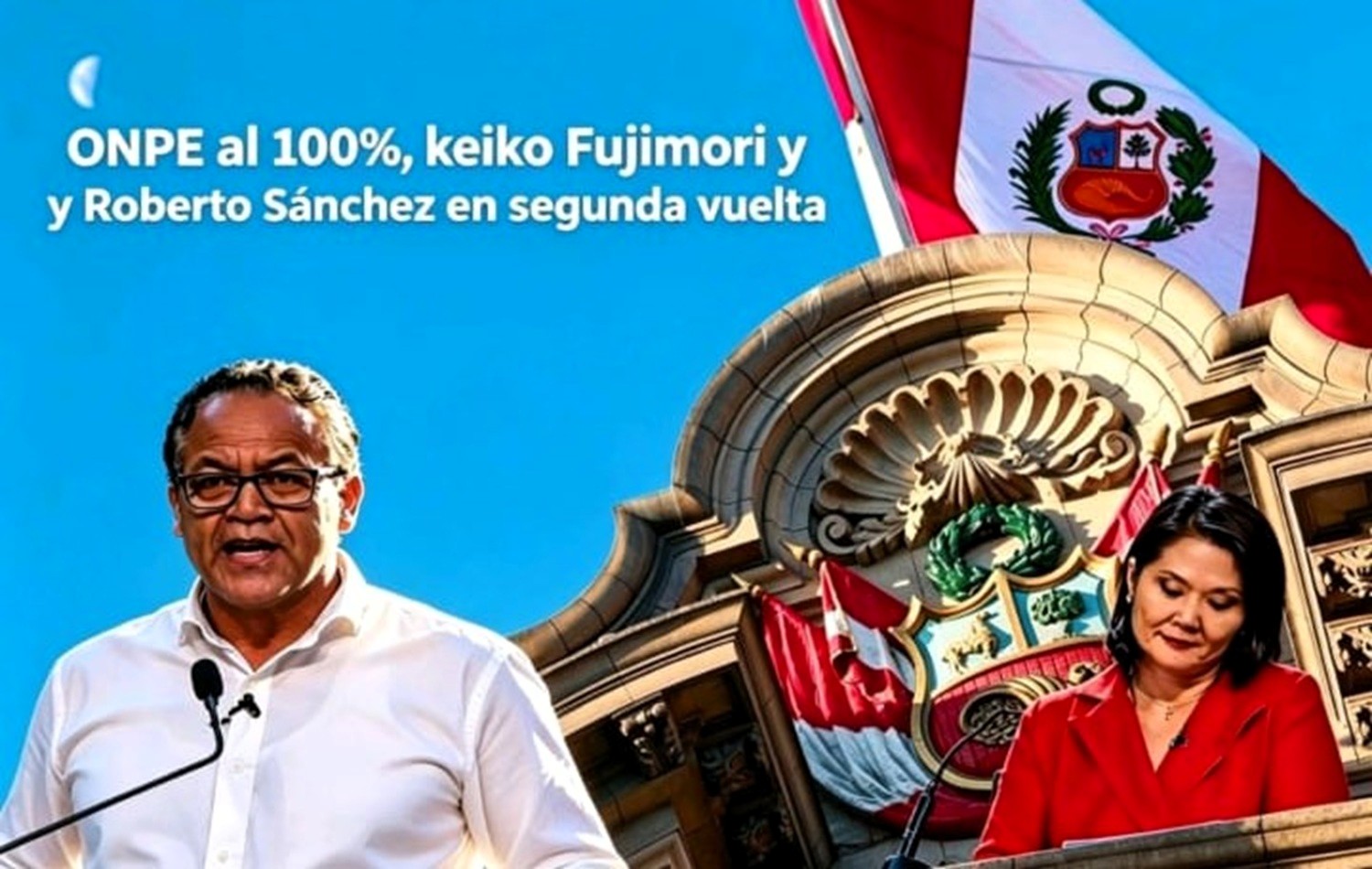
Agencia Peruana de Noticias PRENSAPERU.PE https://www.prensaperu.pe Twitter: @prensaperupe La Oficina Nacional de Procesos Electorales (ONPE) ha concluido oficialmente el procesamiento y conteo de la totalidad de las 92,766 actas electorales recibidas en todo el territorio nacional y desde el extranjero, entregando los resultados definitivos de la primera vuelta de las Elecciones Generales 2026. Este reporte marca el cierre de una jornada electoral histórica, caracterizada por una alta fragmentación política y una definición muy ajustada por el segundo lugar, que mantuvo en vilo al país durante varios días.
Con cifras definitivas y validadas por la autoridad electoral, estos son los resultados detallados de los tres candidatos más votados, que definen el nuevo escenario político del Perú:
Keiko Fujimori – Fuerza Popular: 17.181%: La lideresa de Fuerza Popular se consolidó como la candidata más votada a nivel nacional, obteniendo 2,877,678 votos válidos, lo que representa exactamente el 17.181% del total de sufragios contabilizados. Su respaldo se concentró principalmente en regiones de la costa norte y zonas de la Amazonía: ganó en departamentos como Piura, Tumbes, Lambayeque, La Libertad, Áncash, Ica, Loreto y el Callao, donde su propuesta de orden, seguridad y estabilidad económica tuvo mayor aceptación entre el electorado. Fue la única candidata que logró superar claramente la barrera del 15%, marcando una diferencia sólida respecto al resto de postulantes.
Roberto Sánchez Palomino – Juntos por el Perú: 12.031%: El exministro de Estado y líder de Juntos por el Perú alcanzó el segundo lugar con 2,015,114 votos, equivalentes al 12.031% de la votación nacional, asegurando así su pase a la segunda vuelta electoral del próximo 7 de junio. Su triunfo fue el más esperado y reñido de todo el proceso: se definió recién en las últimas horas de conteo, cuando se procesaron las actas del sur andino y las zonas rurales, donde él obtuvo sus mejores resultados. Ganó en regiones históricamente vinculadas a las demandas sociales y descentralizadoras: Cusco, Puno, Ayacucho, Apurímac, Cajamarca, Huancavelica y Amazonas, logrando conectar con las poblaciones que reclaman mayor presencia del Estado y justicia social.
Rafael López Aliaga – Renovación Popular: 11.904%: El exalcalde de Lima y candidato de Renovación Popular quedó en el tercer puesto, con 1,992,904 votos, es decir, el 11.904% de la votación nacional. La característica más llamativa de este resultado es la diferencia mínima que lo separó del segundo lugar: apenas 21,210 votos, una brecha inferior al 0.13%, que hizo que la contienda se mantuviera abierta hasta el último minuto y generara intensos debates y reclamos sobre el desarrollo del proceso. Su respaldo fue fuerte en la capital y regiones de la sierra central, con un discurso centrado en la libertad económica, la lucha contra la corrupción y la gestión eficiente.
CONTEXTO CLAVE QUE EXPLICA ESTOS RESULTADOS
Gran fragmentación política: Participaron 35 candidatos presidenciales, lo que dispersó enormemente el voto y provocó que ningún postulante lograra superar el 20% de apoyo. Esto confirma que el país no tiene una mayoría política definida y que la representación está muy dividida.
Perú geográfico y dividido: El mapa electoral quedó claramente trazado: Keiko Fujimori representó el respaldo de la costa, el norte y la Amazonía; Roberto Sánchez se impuso en el sur andino y el interior rural; y Rafael López Aliaga fue la primera opción en Lima y zonas de la sierra central. Esta división refleja las distintas realidades, necesidades y visiones que conviven en el país.
Voto de protesta y desafección: Se registró un 16.84% de votos blancos y nulos, una cifra alta que demuestra que una parte importante de la ciudadanía expresó su desacuerdo o desconfianza hacia todas las opciones presentadas, un dato que será clave para la estrategia de cara a la segunda vuelta.
Definición por muy poco: La diferencia entre el segundo y tercero fue de menos del 0.13%, lo que convierte a esta elección en una de las más ajustadas de la historia democrática del Perú y evidencia lo difícil que fue conquistar la confianza del electorado.
Estos resultados serán oficializados y proclamados formalmente por el Jurado Nacional de Elecciones (JNE) el próximo domingo 17 de mayo, momento en el que se iniciará oficialmente la campaña hacia la segunda vuelta, donde se enfrentarán Keiko Fujimori y Roberto Sánchez Palomino por la Presidencia de la República.
DATOS FUNDAMENTALES
1.- El país está profundamente dividido, sin mayoría clara: Los resultados confirman que no hay una fuerza política que aglutine el apoyo mayoritario de los peruanos. La brecha entre el primero y el segundo es de apenas 5 puntos, y entre el segundo y el tercero es prácticamente inexistente. La segunda vuelta definirá qué visión de país se impone, pero la gobernabilidad requerirá acuerdos amplios.
2.- El Perú geográfico marcó la diferencia: El sur andino y las zonas rurales decidieron quién pasa a segunda vuelta. El voto de las regiones históricamente olvidadas fue el factor decisivo que permitió a Roberto Sánchez superar por muy poco a López Aliaga, demostrando que la agenda de descentralización, justicia social y presencia del Estado es fundamental para millones de peruanos.
3.- La fragmentación exige un nuevo estilo de liderazgo: Al no haber ganador absoluto y haber tantas opciones, el próximo gobierno no podrá gobernar solo. Quien resulte elegido tendrá la obligación de construir consensos, dialogar con regiones, sectores y fuerzas políticas distintas, y responder a las demandas de todos los territorios, no solo de quienes lo votaron.
4.- El margen mínimo de definición exige transparencia y confianza: Que solo 21,000 votos separen el acceso al balotaje demuestra cuán delicado es el sistema electoral. Estos resultados ponen de relieve la importancia de contar con instituciones sólidas, como la ONPE y el JNE, que garanticen que cada voto cuente y que la voluntad popular se respete plenamente.
Fuente: Agencia Peruana de Noticias PRENSAPERU.PE https://www.prensaperu.pe Twitter: @prensaperupe
Translate
“ONPE at 100%: Keiko Fujimori (17.18%) and Roberto Sánchez (12.03%) in ‘Second Round’. The JNE will proclaim the official results this Sunday, beginning the final stretch for the presidency in Peru.”
Peruvian News Agency PRENSAPERU.PE https://www.prensaperu.pe Twitter: @prensaperupe The National Office of Electoral Processes (ONPE) has officially concluded the processing and counting of all 92,766 electoral records received throughout the national territory and from abroad, releasing the definitive results of the first round of the 2026 General Elections. This report marks the close of a historic electoral day, characterized by high political fragmentation and an extremely tight race for second place, which kept the entire country on edge for several days.
With definitive figures validated by the electoral authority, these are the detailed results of the three most voted candidates, which define Peru’s new political landscape:
Keiko Fujimori – Popular Force: 17.181%: The leader of Popular Force consolidated her position as the most voted candidate nationwide, obtaining 2,877,678 valid votes, representing exactly 17.181% of all ballots counted. Her support was concentrated mainly in regions of the northern coast and areas of the Amazon: she won in departments such as Piura, Tumbes, Lambayeque, La Libertad, Áncash, Ica, Loreto, and Callao, where her proposal focused on order, security, and economic stability found greater acceptance among voters. She was the only candidate to clearly surpass the 15% threshold, establishing a solid lead over the rest of the contenders.
Roberto Sánchez Palomino – Together for Peru: 12.031%: The former Minister of State and leader of Together for Peru secured second place with 2,015,114 votes, equivalent to 12.031% of the national vote, thus guaranteeing his passage to the second round of elections scheduled for June 7. His victory was the most anticipated and closely contested of the entire process: it was decided only in the final hours of counting, when ballots from the Andean highlands and rural areas — where he obtained his strongest results — were processed. He won in regions historically linked to social demands and decentralization efforts: Cusco, Puno, Ayacucho, Apurímac, Cajamarca, Huancavelica, and Amazonas, successfully connecting with populations calling for greater State presence and social justice.
Rafael López Aliaga – Popular Renewal: 11.904%: The former mayor of Lima and candidate for Popular Renewal placed third, with 1,992,904 votes, representing 11.904% of the national vote. The most striking feature of this result is the minimal difference that separated him from second place: barely 21,210 votes, a margin of less than 0.13%, which kept the race open until the very last minute and sparked intense debate and claims regarding the conduct of the electoral process. His support was strong in the capital and regions of the central highlands, backed by a discourse centered on economic freedom, the fight against corruption, and efficient governance.
KEY CONTEXT EXPLAINING THESE RESULTS
High political fragmentation: Thirty‑five presidential candidates participated, which dispersed the vote significantly and meant that no contender managed to exceed 20% support. This confirms that the country lacks a defined political majority and that representation is deeply divided.
Geographic and divided Peru: The electoral map was clearly drawn: Keiko Fujimori represented the backing of the coast, the north, and the Amazon; Roberto Sánchez prevailed in the southern highlands and rural inland areas; and Rafael López Aliaga was the top choice in Lima and parts of the central highlands. This division reflects the differing realities, needs, and visions that coexist within the country.
Protest vote and disaffection: A total of 16.84% blank and null votes were recorded — a high figure demonstrating that a significant portion of citizens expressed their disagreement or lack of trust toward all the options presented, a factor that will be key in shaping strategies ahead of the second round.
Decided by a very narrow margin: The difference between second and third place stood at less than 0.13%, making this one of the closest elections in Peru’s democratic history and highlighting just how difficult it was to win over the electorate’s confidence.
These results will be officially certified and proclaimed by the National Jury of Elections (JNE) next Sunday, May 17, marking the official start of the campaign leading up to the second round, where Keiko Fujimori and Roberto Sánchez Palomino will face each other for the Presidency of the Republic.
FUNDAMENTAL DATA
1.- The country is deeply divided, with no clear majority: The results confirm that no single political force commands the majority support of Peruvians. The gap between first and second place is barely 5 percentage points, while the difference between second and third is practically nonexistent. The second round will determine which vision of the country prevails, but effective governance will require broad‑based agreements.
2.- Geographic Peru made the difference: The southern highlands and rural areas decided who would advance to the second round. The vote from historically neglected regions was the decisive factor that allowed Roberto Sánchez to narrowly surpass López Aliaga, demonstrating that the agenda of decentralization, social justice, and State presence is fundamental for millions of Peruvians.
3.- Fragmentation demands a new style of leadership: With no absolute winner and such a wide range of options, the next government will not be able to govern alone. Whoever is elected will have the obligation to build consensus, engage in dialogue with different regions, sectors, and political forces, and respond to the demands of all territories — not only those that voted for them.
4.- The narrow margin of decision demands transparency and trust: The fact that only 21,000 votes determined access to the runoff demonstrates just how delicate the electoral system is. These results underscore the importance of strong institutions such as ONPE and JNE to ensure that every vote counts and that the popular will is fully respected.
Source: Peruvian News Agency PRENSAPERU.PE https://www.prensaperu.pe Twitter: @prensaperupe