
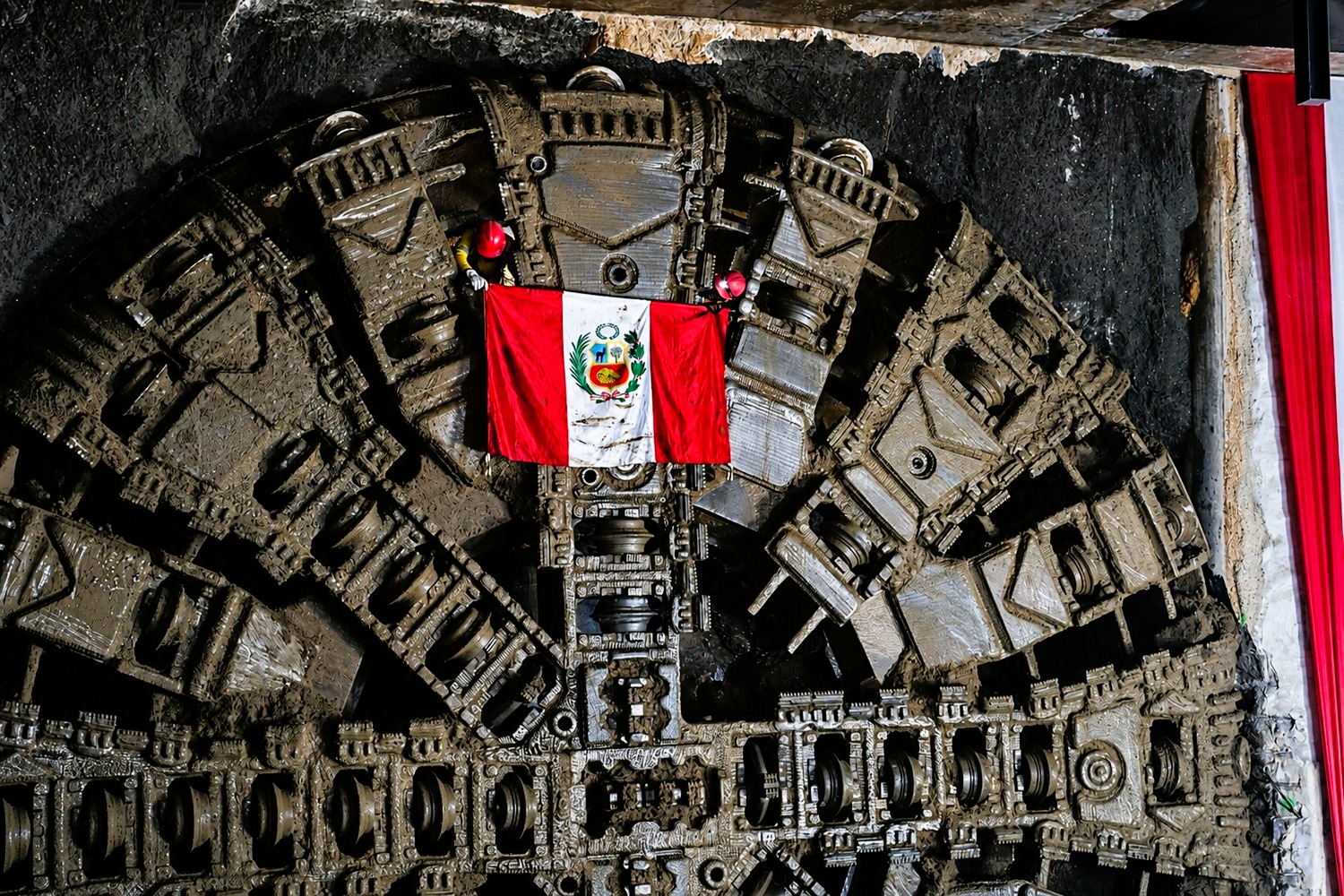
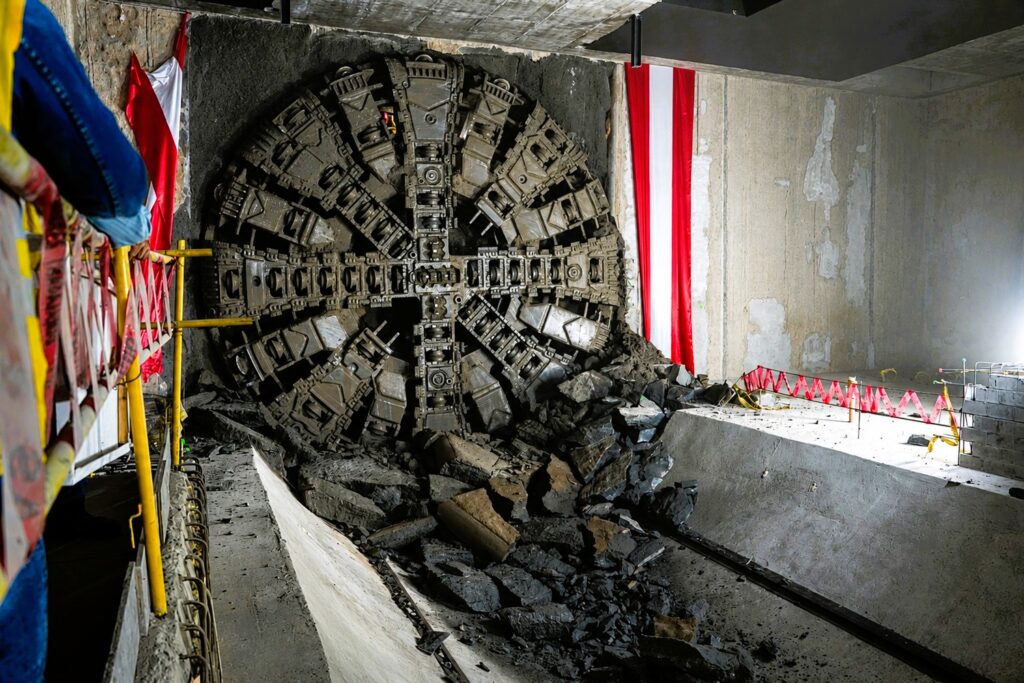
Agencia Peruana de Noticias PRENSAPERU.PE https://www.prensaperu.pe Twitter: @prensaperupe Este viernes 15 de mayo, la tuneladora bautizada como “Delia” llegó a la estación Carmen de la Legua, ubicada en la provincia constitucional del Callao, un hecho que ha sido calificado como un nuevo hito histórico en la construcción de la Línea 2 del Metro de Lima y Callao. Así lo informó la Autoridad de Transporte Urbano para Lima y Callao (ATU), entidad que depende del Ministerio de Transportes y Comunicaciones (MTC), y que lidera el desarrollo de este proyecto transformador para el sistema de movilidad del país.
Con este avance significativo, la máquina de excavación se encuentra ya a un paso de concluir las labores de perforación del primer sistema de metro subterráneo que existirá en el Perú. Hasta el momento, “Delia” ha recorrido un total de 12.36 kilómetros de túnel, una distancia que representa gran parte del trazado total de la obra y que evidencia la magnitud de la ingeniería que se está llevando a cabo.
La estación Insurgentes, también situada en el territorio calaíno, será el último punto que atravesará esta tuneladora, un objetivo que consolidará uno de los logros técnicos más importantes de todo el proyecto ferroviario y que marcará el cierre de una etapa fundamental en la construcción de la infraestructura.
UN RECORRIDO DE MÁS DE TRES AÑOS DE TRABAJO
La historia de la tuneladora “Delia” comenzó en julio de 2021, cuando inició sus operaciones desde la estación San Juan de Dios, en el distrito de San Luis. Desde entonces, su recorrido subterráneo ha sido extenso y complejo, atravesando zonas de gran densidad poblacional y diferentes suelos geológicos, lo que ha requerido de un trabajo técnico especializado y constante.
Su trayectoria se dividió en dos grandes tramos:
En la primera etapa, avanzó por las estaciones Circunvalación, Nicolás Ayllón, 28 de Julio, Cangallo, Plaza Manco Cápac, Estación Central, Plaza Bolognesi y Parque Murillo, cubriendo zonas clave del centro y sur de la ciudad de Lima.
En el segundo tramo, su recorrido se dirigió hacia el norte y hacia el Callao, pasando por las estaciones Tingo María, La Alborada, Elio, San Marcos, Óscar R. Benavides y, finalmente, la estación Carmen de la Legua, antes de continuar hacia su destino final en la estación Insurgentes.
Cada uno de estos puntos representa un reto superado: la tuneladora ha tenido que adaptarse a las características del terreno, a la presencia de servicios públicos subterráneos y a la necesidad de no afectar la vida cotidiana de los vecinos, demostrando que es posible realizar obras de gran envergadura con responsabilidad técnica y social.
SOBRE LA ESTACIÓN CARMEN DE LA LEGUA
La estación Carmen de la Legua se ubica en el cruce de las avenidas Elmer Faucett y Óscar R. Benavides —también conocida como Avenida Colonial—, una zona estratégica por su ubicación y su importancia dentro de la red vial del Callao. Actualmente, esta infraestructura registra un avance físico total de obra del 66.07%, lo que significa que se ha completado más de dos tercios de su construcción.
Más allá de su avance técnico, esta estación tiene un papel fundamental para el futuro del transporte en la región: está diseñada para convertirse en un punto de interconexión entre la Línea 2 y el Ramal de la Línea 4 del Metro. Esta integración permitirá que los usuarios puedan pasar de un sistema a otro de manera rápida y sencilla, fortaleciendo la articulación de toda la red ferroviaria y facilitando los desplazamientos de miles de personas cada día.
¿QUÉ ES LA LÍNEA 2 Y POR QUÉ ES IMPORTANTE?
Para comprender la magnitud de este proyecto, es necesario definir sus características y sus beneficios:
Definición: Se trata de una línea de metro totalmente subterránea que recorrerá aproximadamente 35 kilómetros, conectando el distrito de Ate, en el sur este de Lima, con la provincia del Callao, en la costa.
Cobertura: A través de su recorrido, conectará de manera directa a diez distritos de la capital y la región, mientras que su diseño permitirá una conexión indirecta con otros tres, logrando llegar a un número mucho mayor de población.
Beneficios principales: Gracias a esta moderna infraestructura, se estima que los tiempos de viaje entre los extremos del trazado se reducirán drásticamente: pasarán de más de dos horas que se tardaba anteriormente, a tan solo unos 45 minutos. Esta mejora no solo facilitará la vida de los ciudadanos, sino que también impulsará la actividad económica, el comercio y el desarrollo de las zonas que atraviesa.
DATOS CLAVE
1.- La Línea 2 se consolida como la obra de infraestructura más transformadora de las últimas décadas: El avance de la tuneladora “Delia” hasta la estación Carmen de la Legua confirma que el proyecto va por buen camino y que se acerca el momento en que el país contará por primera vez con un sistema de metro subterráneo. Esta obra no es solo una mejora en el transporte, sino un paso histórico que cambiará la forma en que se mueven millones de personas y que contribuirá a reducir la congestión vial y mejorar la calidad de vida de la población.
2.- La ingeniería peruana demuestra su capacidad para asumir retos de gran complejidad: Recorrer más de 12 kilómetros de túnel bajo zonas urbanas densamente pobladas es un logro técnico que requiere planificación, tecnología especializada y experiencia. El éxito de la tuneladora “Delia” muestra que el país cuenta con las capacidades y los recursos necesarios para desarrollar proyectos de gran envergadura, superando obstáculos geológicos y logísticos para cumplir con los objetivos planteados.
3.- La integración del sistema ferroviario es el eje central del desarrollo futuro: La importancia de la estación Carmen de la Legua no se limita a su propia construcción, sino que radica en su capacidad para conectar diferentes líneas del metro. Esto demuestra que la visión de las autoridades no es solo construir una obra aislada, sino crear una red completa y funcional que permita una movilidad eficiente y sostenible a largo plazo, beneficiando a todas las personas que utilizan el transporte público.
Fuente: Agencia Peruana de Noticias PRENSAPERU.PE https://www.prensaperu.pe Twitter: @prensaperupe
Translate
HISTORIC MILESTONE: The tunnel boring machine “Delia” arrives in Carmen de la Legua and is nearing completion of Metro Line 2, with 12.36 kilometers of progress building the future of transport in Lima and Callao.
Peruvian News Agency PRENSAPERU.PE https://www.prensaperu.pe Twitter: @prensaperupe This Friday, May 15, the tunnel boring machine named “Delia” arrived at the Carmen de la Legua station, located in the Constitutional Province of Callao, an event that has been described as a new historic milestone in the construction of Line 2 of the Lima and Callao Metro system. This was announced by the Urban Transport Authority for Lima and Callao (ATU), an entity under the Ministry of Transport and Communications (MTC), which is leading the development of this transformative project for the country’s mobility system.
With this significant progress, the tunnelling machine is now one step away from completing the excavation works for the first underground metro system that will exist in Peru. To date, “Delia” has covered a total of 12.36 kilometres of tunnel, a distance that represents a large part of the total route of the project and highlights the scale of the engineering work being carried out.
The Insurgentes station, also located in the Callao territory, will be the final point reached by this tunnel boring machine, an achievement that will consolidate one of the most important technical successes of the entire railway project and mark the end of a fundamental phase in the construction of the infrastructure.
A JOURNEY OF MORE THAN THREE YEARS OF WORK
The story of the tunnel boring machine “Delia” began in July 2021, when it started operations from the San Juan de Dios station, in the district of San Luis. Since then, its underground route has been extensive and complex, passing through densely populated areas and different types of ground, which has required specialised and continuous technical work.
Its journey was divided into two main sections:
In the first stage, it advanced through the stations of Circunvalación, Nicolás Ayllón, 28 de Julio, Cangallo, Plaza Manco Cápac, Estación Central, Plaza Bolognesi and Parque Murillo, covering key areas in the centre and south of the city of Lima.
In the second section, its route headed north towards Callao, passing through the stations of Tingo María, La Alborada, Elio, San Marcos, Óscar R. Benavides and, finally, Carmen de la Legua station, before continuing towards its final destination at Insurgentes station.
Each of these points represents a challenge that has been overcome: the tunnel boring machine has had to adapt to the characteristics of the ground, the presence of underground public services and the need to avoid disrupting the daily lives of residents, demonstrating that large-scale works can be carried out with both technical and social responsibility.
ABOUT CARMEN DE LA LEGUA STATION
Carmen de la Legua station is located at the intersection of Elmer Faucett Avenue and Óscar R. Benavides Avenue — also known as Colonial Avenue — a strategic location due to its position and importance within the road network of Callao. Currently, the infrastructure records an overall physical progress of 66.07%, meaning that more than two-thirds of its construction has been completed.
Beyond its technical progress, this station plays a fundamental role for the future of transport in the region: it is designed to become an interconnection point between Line 2 and the Branch Line of Line 4 of the Metro. This integration will allow users to transfer between the two systems quickly and easily, strengthening the connection of the entire railway network and facilitating daily travel for thousands of people.
WHAT IS LINE 2 AND WHY IS IT IMPORTANT?
To understand the scale of this project, it is necessary to outline its main features and benefits:
Definition: It is a fully underground metro line that will cover approximately 35 kilometres, connecting the district of Ate, in the south-east of Lima, with the province of Callao, on the coast.
Coverage: Along its route, it will provide direct connections to ten districts of the capital and the region, while its design will allow indirect connections to another three districts, ensuring coverage for a much larger population.
Main benefits: Thanks to this modern infrastructure, travel times between the two ends of the route are expected to be drastically reduced: they will fall from more than two hours, the time required previously, to just 45 minutes. This improvement will not only make daily life easier for citizens, but will also boost economic activity, trade and development in the areas it serves.
KEY FACTS
1.- Line 2 is established as the most transformative infrastructure project of recent decades: The progress of the tunnel boring machine “Delia” up to Carmen de la Legua station confirms that the project is on track and that the moment is approaching when the country will have its first underground metro system. This work is not merely an improvement in transport services, but a historic step that will change the way millions of people move around, and will help to reduce traffic congestion and improve the quality of life of the population.
2.- Peruvian engineering demonstrates its ability to take on highly complex challenges: Excavating more than 12 kilometres of tunnel under densely populated urban areas is a technical achievement that requires planning, specialised technology and experience. The success of the tunnel boring machine “Delia” shows that the country has the capabilities and resources needed to develop large-scale projects, overcoming geological and logistical obstacles to achieve the goals set.
3.- The integration of the railway system is the core of future development: The importance of Carmen de la Legua station is not limited to its own construction, but lies in its ability to connect different lines of the metro. This shows that the authorities’ vision is not just to build isolated works, but to create a complete and functional network that enables efficient and sustainable mobility in the long term, benefiting all people who use public transport.
Source: Peruvian News Agency PRENSAPERU.PE https://www.prensaperu.pe Twitter: @prensaperupe