
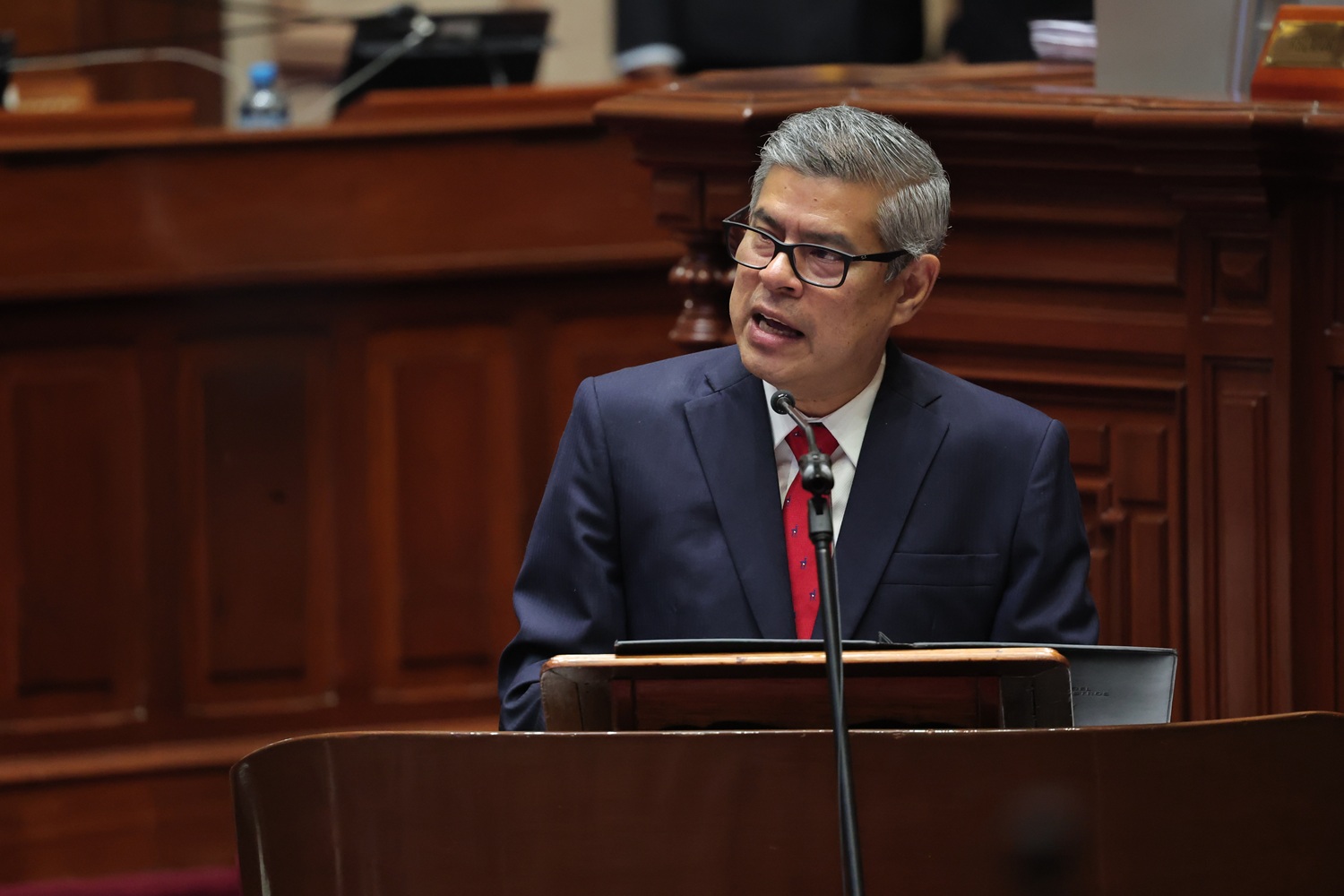
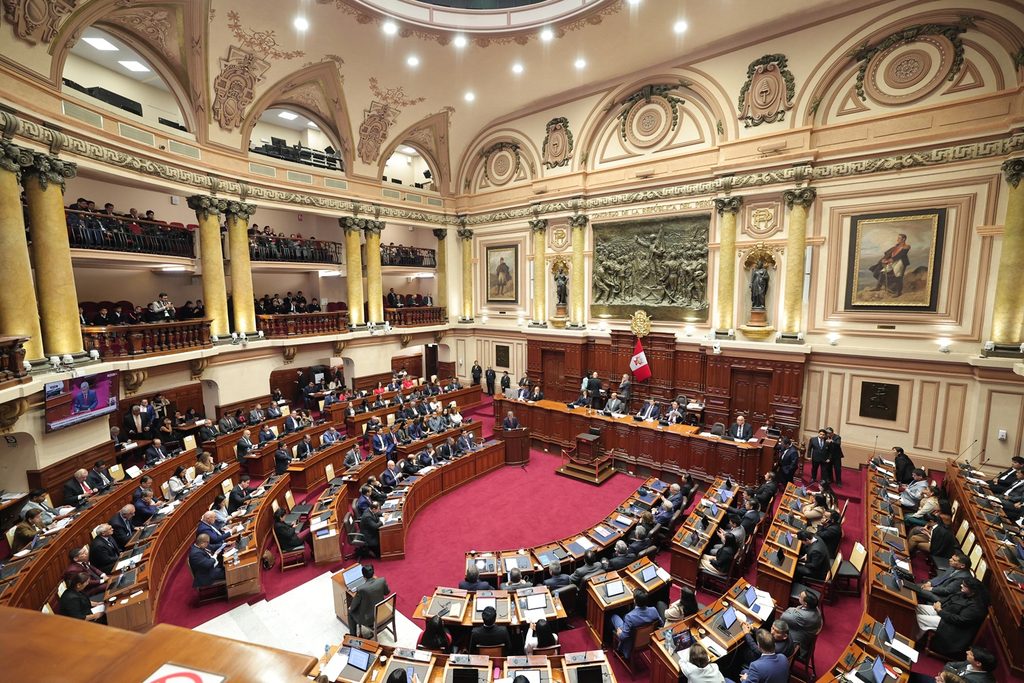
Agencia Peruana de Noticias PRENSAPERU.PE https://www.prensaperu.pe Twitter: @prensaperupe Este jueves último, el Presidente del Consejo de Ministros, Luis Galarreta Velarde, acompañado por el Gabinete en pleno, presentó ante la Cámara de Diputados la Política General de Gobierno para el periodo 2026–2031. Es la primera vez en 34 años que un Premier expone su plan de gobierno ante un Parlamento bicameral, recuperado tras la disolución del Senado en 1992. El mensaje central fue claro: el Estado tiene que volver a funcionar para la gente, y este gobierno no viene a administrar problemas, sino a resolverlos con acciones concretas y resultados medibles.
La propuesta del Ejecutivo se estructura en cinco grandes ejes, cada uno con lineamientos específicos, metas y acciones inmediatas. A continuación, el desarrollo detallado de cada uno:
I.- REDUCIR LA INSEGURIDAD CIUDADANA: Recuperar la libertad y la tranquilidad.
La inseguridad ciudadana fue presentada como la amenaza directa más urgente contra la libertad, la integridad y la economía de los peruanos. El Premier señaló que la respuesta del Estado será firme, sostenida y con mayor capacidad operativa, inteligencia tecnológica y presencia policial efectiva en el territorio. Se priorizarán los delitos que más afectan a la población: extorsión, sicariato, crimen organizado, tráfico ilícito de drogas y economías ilegales.
Galarreta denunció la llamada “puerta giratoria”: el fenómeno por el cual la policía captura a delincuentes y estos son liberados de inmediato por disposición del Código Procesal Penal, generando una sensación generalizada de impunidad. Anunció que el Gobierno trabajará para modificar esta norma y fortalecer el Sistema de Flagrancia, ampliándolo progresivamente hasta cubrir 15 distritos judiciales de mayor incidencia delictiva. Asimismo, se recuperará la capacidad de realizar operaciones de inteligencia y se fortalecerá el sistema especializado contra la extorsión.
II.- REDUCIR LA VULNERABILIDAD ANTE DESASTRES Y CAMBIO CLIMÁTICO: Prevenir para no lamentar.
El segundo eje está dedicado a la gestión del riesgo de desastres, con énfasis en el Fenómeno El Niño. El Premier informó que ya se instaló la Comisión Nacional de Gestión del Riesgo del Fenómeno El Niño, la cual ha identificado 536 puntos críticos que requieren descolmatación y limpieza de cauces para evitar inundaciones. En el sector pesquero, se destinarán más de 62 millones de soles en créditos y asistencia técnica para proteger la actividad de pescadores artesanales y acuicultores.
Las Fuerzas Armadas fortalecerán sus capacidades de búsqueda, rescate, evacuación y distribución de ayuda humanitaria, con albergues, puentes aéreos y recuperación de vías. Se advirtió específicamente sobre el riesgo sísmico en Lima y Callao, donde existe un escenario de sismo de magnitud 8.8 asociado a un posible tsunami. La preparación del país será multipeligro, abarcando todos los escenarios de riesgo.
II.- FORTALECER EL DESARROLLO INTEGRAL DE LAS PERSONAS: Nadie se queda atrás.
Este eje coloca a la persona humana en el centro de la política pública, desde la gestación hasta la vejez. La prioridad absoluta es la primera infancia: garantizar atención oportuna a la gestante, nutrición, salud y agua segura para niñas y niños. Se creará un Fondo de Estímulo para reconocer y financiar a los gobiernos regionales que logren reducir la anemia, un mal que afecta hasta al 60% de menores en regiones como Puno y un promedio nacional del 44%. Para diciembre de 2026 se prevé transferir hasta 75 millones de soles en este rubro.
En materia de salud, el compromiso es reducir las brechas de atención: citas médicas, medicamentos y cirugías pendientes, tanto en el MINSA como en EsSalud. Se fortalecerá la infraestructura sanitaria, el equipamiento y el uso de tecnología para acercar los servicios a la población. La meta es que, para el 2031, más de la mitad de las redes de salud priorizadas estén plenamente fortalecidas.
IV.- ELEVAR LA PRODUCTIVIDAD Y EL EMPLEO FORMAL: Crecer con reglas claras.
El cuarto eje está dedicado al crecimiento económico con empleo formal. El Premier señaló que la inversión requiere confianza, estabilidad y reglas claras. Para ello, el Ministerio de Economía creará cuatro comisiones presidenciales de reformas estructurales:
1.- Para enfrentar la informalidad laboral.
2.- Para profundizar los mercados financieros.
3.- Para elevar la calidad y velocidad de la inversión pública.
4.- Para reducir la evasión tributaria.
Se propondrá al Congreso una agenda tributaria simplificada y estable, sin generar incertidumbre. En infraestructura energética, se proyecta la entrada en operación de seis nuevas plantas de generación para julio de 2027, sumando 1,096 megavatios de capacidad. En minería, el Gobierno autorizará 240 proyectos durante 2026, con una cartera de inversiones que podría superar los 33,000 millones de dólares al 2031, siempre garantizando predictibilidad, seguridad jurídica y cumplimiento ambiental y social.
V.- CONSOLIDAR LA GOBERNABILIDAD Y EL ESTADO DE DERECHO: Instituciones que sostienen la democracia.
El quinto eje reafirma los principios no negociables: democracia, Estado de derecho y separación de poderes. El Gobierno se compromete a respetar y fortalecer todas las instituciones del Estado, así como a garantizar la libertad de prensa y de expresión sin restricciones. Se gobernará con la Constitución y la ley como herramientas principales, con reglas claras y pleno respeto a la independencia de cada poder del Estado.
El Premier subrayó que la democracia también exige diálogo: con las fuerzas políticas, los gobiernos regionales y locales, los trabajadores, empresarios y organizaciones sociales. Las diferencias no deben paralizar al país; el diálogo busca acuerdos sin renunciar a los principios.
DATOS CONCEPTUALES
Política General de Gobierno: El conjunto de lineamientos, objetivos y prioridades que orientan la acción del Ejecutivo durante su mandato. No es un discurso ceremonial: es el compromiso formal del Gobierno ante el Congreso y la ciudadanía.
Puerta giratoria: Fenómeno por el cual personas detenidas por delitos son puestas en libertad casi de inmediato por disposición de normas procesales, generando sensación de impunidad e inseguridad. Es uno de los principales objetivos de reforma del Gobierno.
Fenómeno El Niño: Alteración climática cíclica que provoca lluvias intensas, sequías y otros desastres. Su gestión preventiva es prioridad nacional para proteger vidas, infraestructura y medios de vida.
Anemia infantil: Deficiencia de hierro que afecta el desarrollo físico y mental de niñas y niños. Es uno de los problemas de salud pública más graves del Perú, con tasas que superan el 40% a nivel nacional.
Reformas estructurales: Cambios profundos y duraderos en las normas y funcionamiento del Estado y la economía, orientados a mejorar la productividad, la competitividad y el bienestar de la población.
Estado de derecho: Principio según el cual todas las personas e instituciones, incluidas las autoridades, están sometidas a la ley. Es la base de la democracia y la garantía de seguridad jurídica.
CONCLUSIONES
1.- Seguridad con reformas reales: El Gobierno no se limita a diagnosticar la inseguridad, sino que propone atacar sus causas normativas —como la puerta giratoria— y fortalecer herramientas concretas como el sistema de flagrancia y las unidades especializadas contra la extorsión. La ciudadanía espera que estas modificaciones se traduzcan rápidamente en menor impunidad.
2.- Prevención ante desastres: una prioridad que no admite demoras: La activación de la Comisión Nacional de Gestión del Riesgo del Fenómeno El Niño y la identificación de puntos críticos son pasos en la dirección correcta. Sin embargo, su efectividad dependerá de la ejecución oportuna de obras de mitigación y de la preparación real ante el riesgo sísmico y climático.
3.- Invertir en las personas es invertir en el futuro: Colocar a la primera infancia y la salud en el centro de la política pública representa un cambio de enfoque fundamental. La reducción de la anemia y la mejora del acceso a la salud no son gastos, sino inversiones que definirán el desarrollo del país en las próximas décadas.
4.- Crecimiento con reglas claras y empleo formal: La apuesta por la estabilidad tributaria, la infraestructura energética y la promoción de inversiones públicas y privadas busca generar el entorno de confianza que el país necesita. El reto será que ese crecimiento se traduzca efectivamente en empleo formal y bienestar para todos los peruanos.
5.- Instituciones y diálogo: el cimiento de la gobernabilidad: El respeto a la separación de poderes, la libertad de prensa y el diálogo como herramienta de gestión son principios irrenunciables. La estabilidad democrática del Perú dependerá de que estos no se queden en el discurso, sino que se practiquen cotidianamente entre todos los poderes del Estado.
Fuente: Agencia Peruana de Noticias PRENSAPERU.PE https://www.prensaperu.pe Twitter: @prensaperupe
Translate
Five Pillars to Restore the Nation’s Course! Premier Galarreta presents Keiko Fujimori’s government plan before the Bicameral Congress. Ending the revolving door and strengthening the flagrancy system: these are the security measures announced to the country.
Peruvian News Agency PRENSAPERU.PE https://www.prensaperu.pe Twitter: @prensaperupe Last Thursday, the President of the Council of Ministers, Luis Galarreta Velarde, accompanied by the full Cabinet, presented the General Government Policy for the 2026–2031 period before the Chamber of Deputies. This marks the first time in 34 years that a Premier has presented his government plan before a Bicameral Parliament, restored following the dissolution of the Senate in 1992. The central message was clear: the State must begin working for the people again, and this government does not come to manage problems, but to resolve them through concrete actions and measurable results.
The Executive’s proposal is structured around five major pillars, each with specific guidelines, goals, and immediate actions. Below is a detailed development of each one:
I.- REDUCING CITIZEN INSECURITY: Recovering freedom and peace of mind.
Citizen insecurity was presented as the most urgent direct threat to the freedom, integrity, and economy of Peruvians. The Premier stated that the State’s response will be firm, sustained, and backed by greater operational capacity, technological intelligence, and effective police presence throughout the territory. Priority will be given to the crimes that most affect the population: extortion, contract killing, organized crime, illicit drug trafficking, and illegal economies.
Galarreta denounced the so‑called “revolving door”: the phenomenon whereby police apprehend offenders who are immediately released by order of the Criminal Procedure Code, generating a widespread sense of impunity. He announced that the Government will work to reform this regulation and strengthen the Flagrancy System, gradually expanding it to cover 15 judicial districts with the highest crime rates. Likewise, the capacity to conduct intelligence operations will be restored and the specialized system against extortion will be strengthened.
II.- REDUCING VULNERABILITY TO DISASTERS AND CLIMATE CHANGE: Preventing rather than lamenting.
The second pillar is dedicated to disaster risk management, with an emphasis on the El Niño Phenomenon. The Premier reported that the National Commission for the Risk Management of the El Niño Phenomenon has already been established and installed, and has identified 536 critical points requiring riverbed clearing and desilting to prevent flooding. In the fisheries sector, over 62 million soles will be allocated in loans and technical assistance to protect the activities of artisanal fishermen and aquaculture producers.
The Armed Forces will strengthen their search, rescue, evacuation, and humanitarian aid distribution capabilities, including shelters, air bridges, and road restoration. Specific warning was given regarding the seismic risk in Lima and Callao, where there exists a scenario of a magnitude 8.8 earthquake associated with a possible tsunami. The country’s preparedness will be multi‑hazard, covering all risk scenarios.
III.- STRENGTHENING COMPREHENSIVE HUMAN DEVELOPMENT: No one is left behind.
This pillar places the human person at the center of public policy, from conception to old age. Absolute priority is given to early childhood: ensuring timely care for pregnant women, nutrition, health, and safe water for girls and boys. An Incentive Fund will be created to recognize and finance regional governments that achieve measurable reductions in anemia, a condition that affects up to 60% of young children in regions such as Puno, with a national average of 44%. By December 2026, up to 75 million soles are projected to be transferred in this area.
In health matters, the commitment is to reduce care gaps: medical appointments, medications, and pending surgeries, both within the Ministry of Health (MINSA) and EsSalud. Health infrastructure, equipment, and the use of technology will be strengthened to bring services closer to the population. The goal is for more than half of the prioritized health networks to be fully strengthened by 2031.
IV.- RAISING PRODUCTIVITY AND FORMAL EMPLOYMENT: Growing under clear rules.
The fourth pillar is dedicated to economic growth with formal employment. The Premier stated that investment requires confidence, stability, and clear rules. To that end, the Ministry of Economy will create four presidential commissions for structural reform:
1.- To address labor informality.
2.- To deepen financial markets.
3.- To raise the quality and speed of public investment.
4.- To reduce tax evasion.
A simplified and stable tax agenda will be proposed to Congress, without generating uncertainty. In energy infrastructure, six new power plants are projected to come into operation by July 2027, adding 1,096 megawatts of capacity. In mining, the Government will authorize 240 projects during 2026, with an investment portfolio that could exceed 33 billion dollars by 2031, always guaranteeing predictability, legal certainty, and compliance with environmental and social standards.
V.- CONSOLIDATING GOVERNABILITY AND THE RULE OF LAW: Institutions that sustain democracy.
The fifth pillar reaffirms non‑negotiable principles: democracy, the rule of law, and separation of powers. The Government commits to respecting and strengthening all State institutions, as well as guaranteeing freedom of the press and freedom of expression without restriction. Governance will be conducted under the Constitution and the law as primary instruments, with clear rules and full respect for the independence of each branch of State.
The Premier emphasized that democracy also requires dialogue: with political forces, regional and local governments, workers, business owners, and social organizations. Differences must not paralyze the country; dialogue seeks agreements without renouncing principles.
CONCEPTUAL DATA
General Government Policy: The set of guidelines, objectives, and priorities that guide the Executive’s action during its term. It is not a ceremonial speech: it constitutes the Government’s formal commitment before Congress and the citizenry.
Revolving door: The phenomenon whereby persons detained for crimes are released almost immediately due to procedural rules, generating a sense of impunity and insecurity. It is one of the Government’s main reform objectives.
El Niño Phenomenon: A cyclical climatic alteration that causes heavy rains, droughts, and other disasters. Its preventive management is a national priority to protect lives, infrastructure, and livelihoods.
Childhood anemia: Iron deficiency affecting the physical and mental development of girls and boys. It is one of Peru’s most serious public health problems, with rates exceeding 40% nationwide.
Structural reforms: Deep and lasting changes to the rules and functioning of the State and the economy, aimed at improving productivity, competitiveness, and the well‑being of the population.
Rule of law: The principle according to which all persons and institutions, including authorities, are subject to the law. It is the foundation of democracy and the guarantee of legal certainty.
CONCLUSIONS
1.- Security through real reform: The Government does not merely diagnose insecurity but proposes addressing its normative causes —such as the revolving door— and strengthening concrete tools such as the flagrancy system and specialized units against extortion. Citizens expect these changes to translate rapidly into reduced impunity.
2.- Disaster prevention: a priority that admits no delay: The activation of the National Commission for the Risk Management of the El Niño Phenomenon and the identification of critical points are steps in the right direction. However, their effectiveness will depend on the timely execution of mitigation works and genuine preparedness for seismic and climate risk.
3.- Investing in people is investing in the future: Placing early childhood and health at the center of public policy represents a fundamental shift in approach. Reducing anemia and improving access to health services are not expenditures, but investments that will define the country’s development in the coming decades.
4.- Growth under clear rules and formal employment: The commitment to tax stability, energy infrastructure, and the promotion of public and private investment seeks to create the environment of confidence the country needs. The challenge will be for that growth to translate effectively into formal employment and well‑being for all Peruvians.
5.- Institutions and dialogue: the foundation of governance: Respect for the separation of powers, freedom of the press, and dialogue as a management tool are non‑negotiable principles. Peru’s democratic stability will depend not on these remaining mere rhetoric, but on their daily practice among all branches of State.
Source: Peruvian News Agency PRENSAPERU.PE https://www.prensaperu.pe Twitter: @prensaperupe