
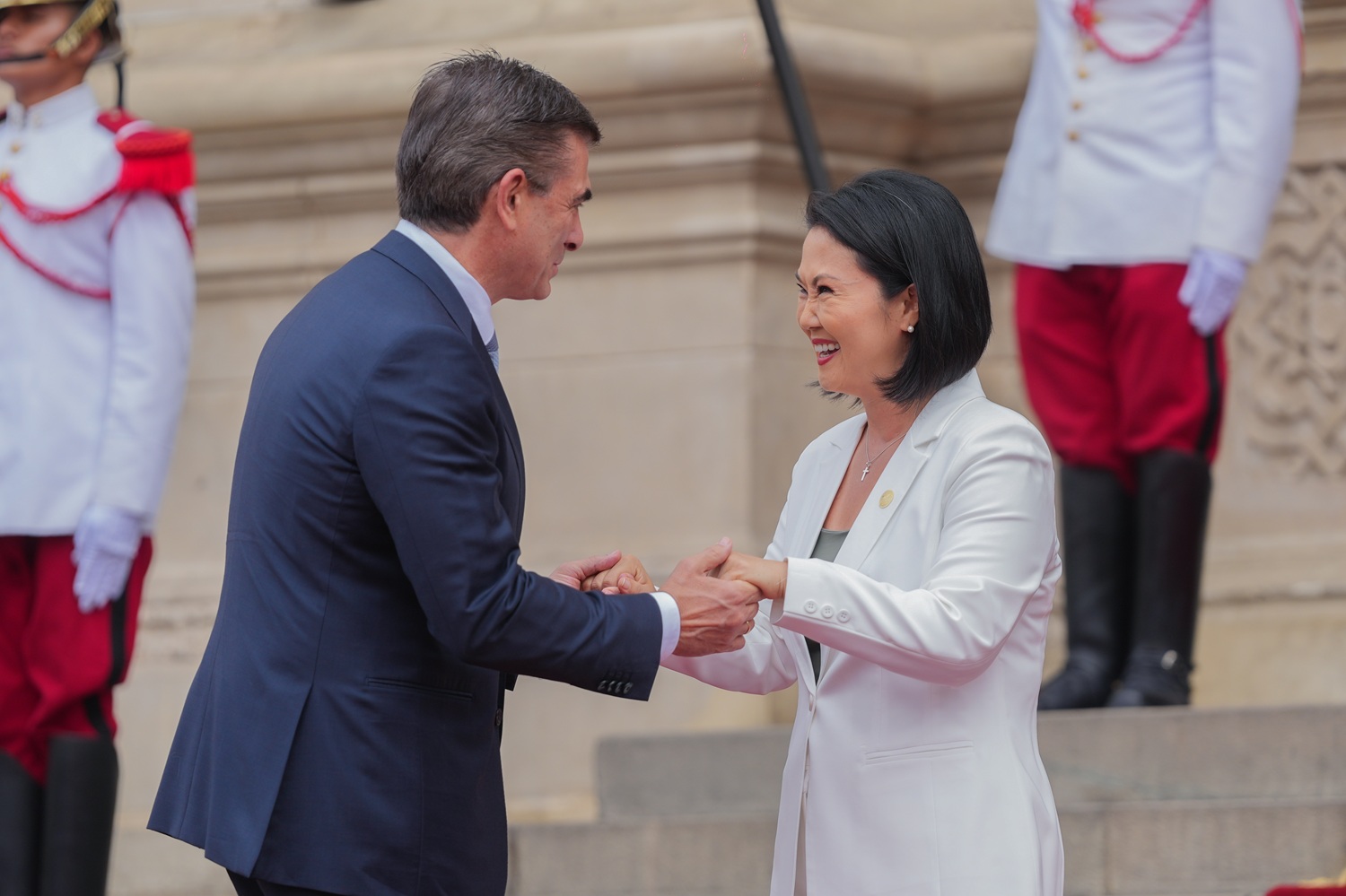
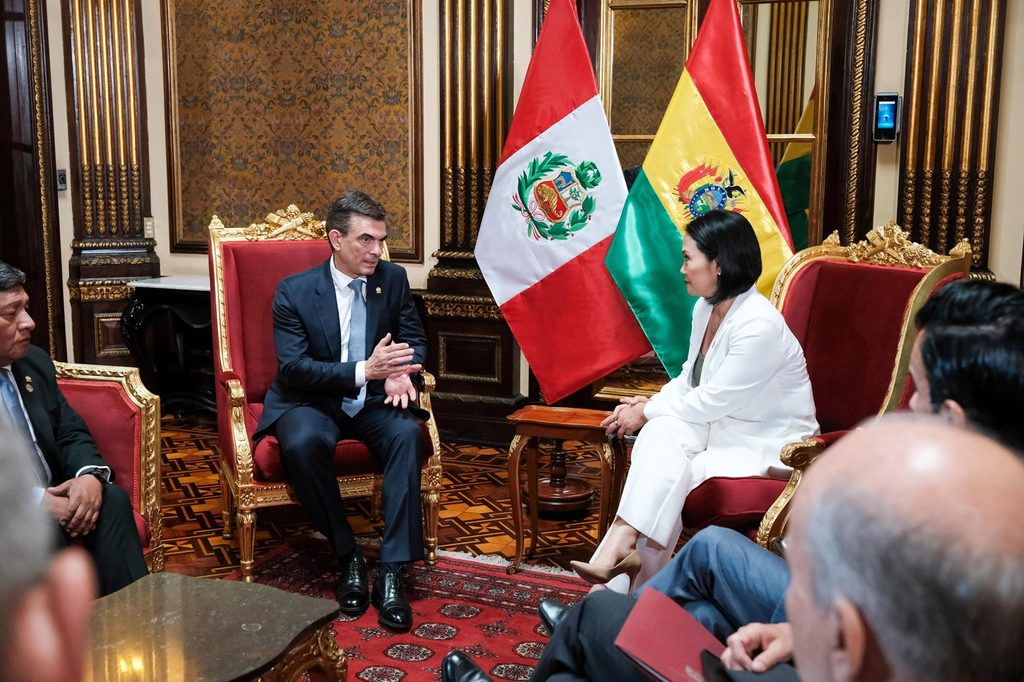
Agencia Peruana de Noticias PRENSAPERU.PE https://www.prensaperu.pe Twitter: @prensaperupe La presidenta de la República, Keiko Fujimori, y el presidente del Estado Plurinacional de Bolivia, Rodrigo Paz Pereira, lideraron el histórico Encuentro Presidencial y VII Gabinete Binacional Perú‑Bolivia en Palacio de Gobierno, reactivando el principal mecanismo de coordinación de alto nivel entre ambos países después de cinco años de espera. La jornada también quedó marcada por la presentación del sello postal conmemorativo por los 200 años de relaciones diplomáticas, símbolo de la hermandad que une a las dos naciones desde el reconocimiento peruano a la independencia de Bolivia el 18 de mayo de 1826.
La agenda de trabajo se estructuró en cinco grandes ejes prioritarios: comercio e inversiones; seguridad y defensa; integración fronteriza, física, energética y logística; recursos hídricos y desarrollo sostenible; y políticas migratorias y sociales.
Del mismo modo, el objetivo central de ambos gobiernos es consolidar el diálogo político, recuperar la confianza mutua y reactivar los compromisos que durante años quedaron paralizados, generando nuevas oportunidades para las poblaciones que viven en las regiones limítrofes de Tacna, Madre de Dios, Pando, Beni y La Paz.
La ceremonia inició con la llegada del mandatario boliviano a Palacio de Gobierno, donde recibió los honores militares en el Patio de Honor. Posteriormente se desarrolló la reunión privada entre los dos jefes de Estado, seguida de encuentros bilaterales entre ministros, reuniones con gobernadores regionales y diálogos directos con las cámaras empresariales de Perú y Bolivia.
En ese sentido, al finalizar la jornada, las autoridades suscribieron la Declaración Presidencial de Lima, el Plan de Acción Ejecutivo de Lima 2026 y diversos convenios que marcan la nueva hoja de ruta de la integración bilateral.
Uno de los momentos más emotivos fue la develación y el matasellado simbólico de la estampilla conmemorativa, que tiene como imagen principal el lago Titicaca, ese tesoro natural compartido que representa los lazos geográficos, históricos y culturales de ambos pueblos. El ministro de Transportes y Comunicaciones, Angello Tangherlini, destacó que la filatelia es una poderosa herramienta de diplomacia cultural, mucho más que un simple sello para enviar correspondencia, ya que difunde ante el mundo la historia, la identidad y la voluntad de cooperación entre Perú y Bolivia.
Es importante resaltar que la emisión peruana cuenta con cinco mil ejemplares que estarán disponibles desde el 27 de noviembre en todas las oficinas de Serpost, mientras que Bolivia ya lanzó su propia estampilla conmemorativa el pasado 27 de octubre.
De otro lado, los gobiernos de ambos países remarcaron que la celebración de los doscientos años de relaciones diplomáticas no es solamente para recordar la historia compartida, sino para renovar el compromiso de trabajar juntos en conectividad, comercio, seguridad fronteriza, manejo responsable del agua y desarrollo social.
Finalmente, las comunidades de la zona de frontera son las principales esperanzadas con los resultados de este gabinete binacional, ya que una mayor integración permitirá generar empleo, facilitar el intercambio comercial y mejorar la calidad de vida de miles de familias peruanas y bolivianas.
DATOS CONCEPTUALES
Gabinete Binacional: Mecanismo de reunión de alto nivel entre los presidentes y ministros de dos países vecinos para definir la agenda conjunta de cooperación.
Declaración Presidencial: Documento oficial firmado por los jefes de Estado que recoge los acuerdos alcanzados durante la cumbre.
Plan de Acción Ejecutivo: La hoja de ruta con metas, actividades y plazos para cumplir los compromisos bilaterales.
Diplomacia cultural: Estrategia de relaciones internacionales que utiliza la historia, el arte y los símbolos nacionales para fortalecer la amistad entre naciones.
Matasellado: Sello oficial que se estampa sobre la estampilla el primer día de emisión, dándole un valor especial para la colección filatélica.
Integración fronteriza: Conjunto de proyectos y acuerdos para mejorar la conectividad, el comercio y la seguridad en las regiones que comparten la frontera.
Relaciones diplomáticas: Vínculos oficiales establecidos entre dos Estados para el diálogo, la cooperación y la solución pacífica de diferencias.
Filatelia: La afición y el estudio de las estampillas postales, que sirven como testimonio histórico de los grandes acontecimientos de cada país.
DATOS CONTEXTUALES
1.- VII Gabinete Binacional Perú‑Bolivia representa un paso muy importante para recuperar la integración andina después de cinco años sin este espacio de diálogo presidencial.
2.- Los cinco ejes de la agenda tocan los temas más sensibles y necesarios para el desarrollo de las regiones fronterizas, desde el comercio hasta la seguridad y el cuidado de los recursos hídricos compartidos.
3.- La emisión del sello postal por los doscientos años de relaciones diplomáticas es un símbolo hermoso que recuerda que Perú y Bolivia son países hermanos con una historia común.
4.- Ahora el reto más grande será cumplir todos los acuerdos firmados, transformando las palabras de la cumbre en obras concretas que beneficien directamente a la población.
Fuente: Agencia Peruana de Noticias PRENSAPERU.PE https://www.prensaperu.pe Twitter: @prensaperupe
Translate
Peru and Bolivia have reactivated their binational cabinet after five years, aiming to boost Andean integration. The two nations share two centuries of friendship, a milestone marked by the unveiling of a commemorative postage stamp celebrating 200 years of diplomatic relations.
Peruvian News Agency PRENSAPERU.PE https://www.prensaperu.pe Twitter: @prensaperupe The President of the Republic of Peru, Keiko Fujimori, and the President of the Plurinational State of Bolivia, Rodrigo Paz Pereira, led the historic Presidential Meeting and VII Peru‑Bolivia Binational Cabinet at the Government Palace, reactivating the main high‑level coordination mechanism between both countries after five years of waiting. The day was also marked by the presentation of the commemorative postage stamp for the 200th anniversary of diplomatic relations, a symbol of the brotherhood that unites the two nations since Peru recognised Bolivia’s independence on May 18, 1826.
The work agenda was structured around five major priority axes: trade and investment; security and defence; border, physical, energy and logistical integration; water resources and sustainable development; and migration and social policies.
Likewise, the central goal of both governments is to consolidate political dialogue, restore mutual trust and reactivate commitments that had been paralysed for years, creating new opportunities for the populations living in the border regions of Tacna, Madre de Dios, Pando, Beni and La Paz.
The ceremony began with the arrival of the Bolivian president at the Government Palace, where he received military honours in the Honour Courtyard. Afterwards, the private meeting between the two heads of State took place, followed by bilateral meetings between ministers, meetings with regional governors and direct dialogues with the business chambers of Peru and Bolivia.
In that regard, at the end of the day, the authorities signed the Lima Presidential Declaration, the Lima 2026 Executive Action Plan and several agreements that set out the new roadmap for bilateral integration.
One of the most moving moments was the unveiling and symbolic postmarking of the commemorative stamp, whose main image features Lake Titicaca, that shared natural treasure representing the geographical, historical and cultural ties between both peoples. The Minister of Transport and Communications, Angello Tangherlini, stressed that philately is a powerful tool for cultural diplomacy, far more than a simple stamp for sending mail, as it shares with the world the history, identity and willingness to cooperate between Peru and Bolivia.
It is important to highlight that the Peruvian issue includes five thousand copies that will be available as of November 27 at all Serpost offices nationwide, while Bolivia had already launched its own commemorative stamp last October 27.
On the other hand, the governments of both countries emphasised that celebrating two hundred years of diplomatic relations is not only about remembering their shared history, but also about renewing the commitment to work together on connectivity, trade, border security, responsible water management and social development.
Finally, the communities in the border area are the most hopeful about the results of this binational cabinet, since greater integration will make it possible to generate jobs, facilitate trade exchange and improve the quality of life for thousands of Peruvian and Bolivian families.
CONCEPTUAL DATA
Binational Cabinet: High‑level meeting mechanism between the presidents and ministers of two neighbouring countries to define the joint cooperation agenda.
Presidential Declaration: Official document signed by the heads of State compiling the agreements reached during the summit.
Executive Action Plan: The roadmap containing goals, activities and deadlines to comply with bilateral commitments.
Cultural diplomacy: International relations strategy that uses history, art and national symbols to strengthen friendship between nations.
Postmarking: Official mark stamped on the stamp on the first day of issue, giving it special value for philatelic collections.
Border integration: Set of projects and agreements to improve connectivity, trade and security in the regions that share the border.
Diplomatic relations: Official ties established between two States for dialogue, cooperation and the peaceful settlement of differences.
Philately: The hobby and study of postage stamps, which serve as historical testimony to the major events of each country.
CONTEXTUAL DATA
1.- The VII Peru‑Bolivia Binational Cabinet represents a very important step to recover Andean integration after five years without this presidential dialogue space.
2.- The five agenda axes address the most sensitive and necessary issues for the development of border regions, from trade to security and the care of shared water resources.
3.- The issuance of the postage stamp for the two hundredth anniversary of diplomatic relations is a beautiful symbol reminding us that Peru and Bolivia are sister countries with a shared history.
4.- The greatest challenge now will be to comply with all the agreements signed, turning the summit’s words into concrete works that directly benefit the population.
Source: Peruvian News Agency PRENSAPERU.PE https://www.prensaperu.pe Twitter: @prensaperupe