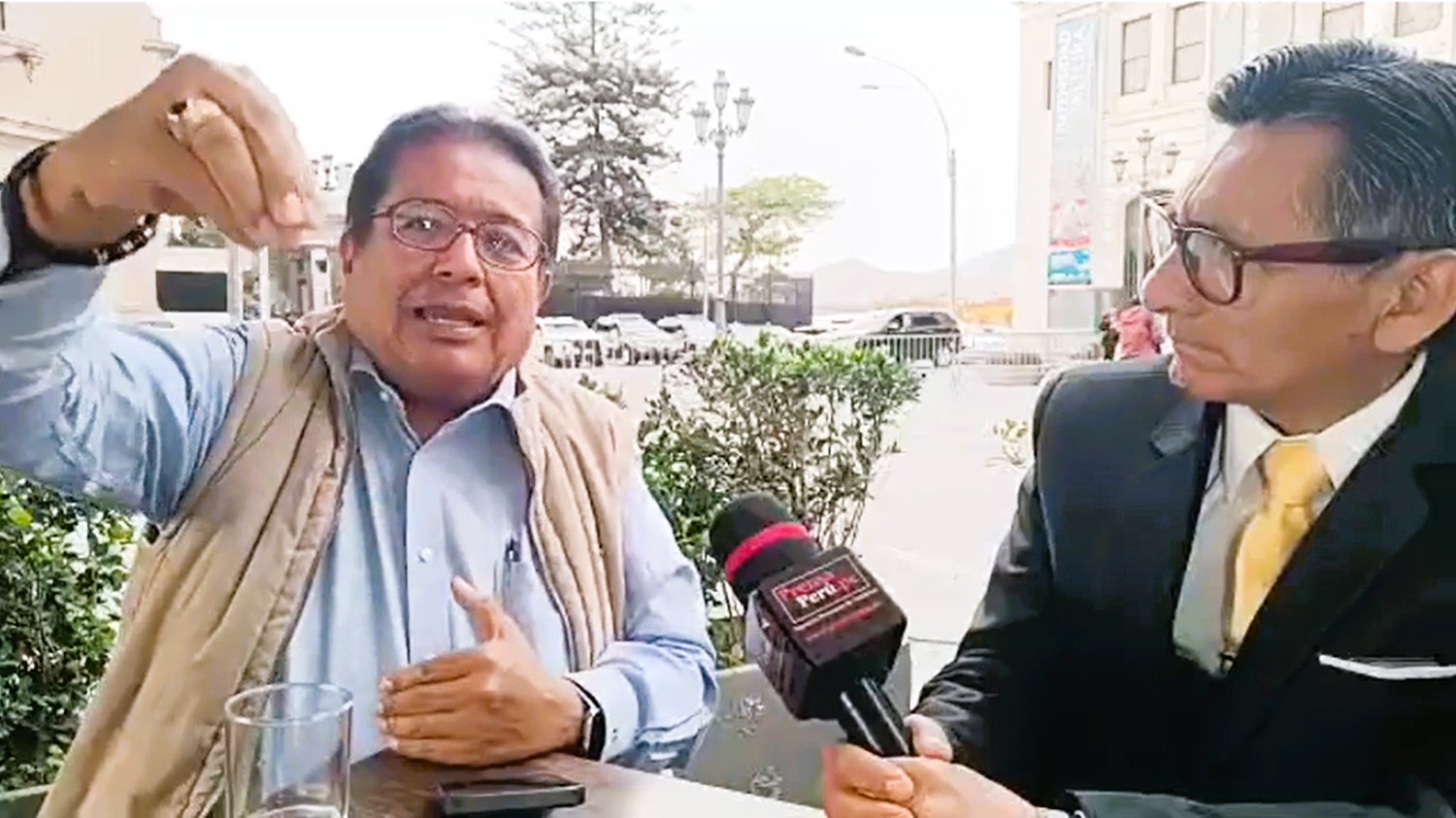
Agencia Peruana de Noticias PRENSAPERU.PE https://www.prensaperu.pe Twitter: @prensaperupe Dr. Jimmy Silva Mena, presidente del Movimiento Regional Político Renovación Tumbesina y vicepresidente de la Asociación de Movimientos Regionales del Perú, expone su visión sobre la realidad política del país durante su visita a Lima. Considera que la política debe ser el arte de gobernar para el bien común — garantizando servicios básicos y el desarrollo de proyectos personales — pero asegura que en los últimos años falta esta vocación: la política se ha convertido en herramienta de pequeños grupos de poder y económico, y hay una “dictadura parlamentaria” que domina el país sin ser parte del Ejecutivo.
En cuanto a los gobiernos recientes, señala que la ex presidenta Dina Boluarte fue un “híbrido” sostenido por partidos tradicionales con antecedentes de corrupción, como Fuerza Popular y su Plan Verde. Sobre el actual presidente Jerí Oré, reconoce que es joven y tiene gestos de cercanía (levantarse temprano, quitarse el saco), pero enfatiza que es parte del mismo Congreso que domina el país, por lo que ya no hay pugnas entre Ejecutivo y Legislativo — son “parte de lo mismo”.
También aborda los problemas en el Poder Judicial y el Tribunal Constitucional, que califica de partidarios con el adagio “para mis amigos todo, para mis enemigos la ley”. Respecto al presupuesto, indica que ha crecido un 20% en cuatro años, pero no se invierte en becas o reducción de pobreza, sino en gasto público; el Congreso aprueba leyes sin recursos y su propio gasto pasó de 600 a 1.800 millones de soles.
Sobre el próximo encuentro binacional Perú-Ecuador, cree que será un “saludo a la bandera” sin agenda clara. Criticó que Jerí Oré prometiera modificar el artículo 71 de la Constitución — que prohíbe la inversión extranjera en los 50 kilómetros fronterizos, lo que cubre el 100% de Tumbes — pero no lo hizo antes del fin de la legislatura. También cuestiona la falta de progreso en la descontaminación del río Tumbes, el proyecto Puyango-Tumbes (que lleva 54 años sin ejecución) y la ampliación de la zona de libre tránsito.
En materia de seguridad ciudadana, asegura que el crecimiento de la delincuencia continúa: de 2 muertos al día con Castillo a 6 o 7 en la actualidad. Los actos de Jerí Oré, como las requisas en penales, califica de más para la imagen que para soluciones concretas, ya que no cuestiona quién permite el ingreso de objetos prohibidos al INPE y habla de desaparecer la institución sin plan claro.
Respecto al proceso electoral de 2026, dice que el objetivo de Jerí Oré es que los partidos que lo llevaron al poder se mantengan en el próximo Congreso y Senado — donde probablemente estén figuras tradicionales. Recomienda a los ciudadanos votar, votar bien y no por los partidos que han generado la situación actual, y propone a los movimientos regionales como alternativa para generar un contrapeso desde las regiones.
Finalmente, menciona que Renovación Tumbesina ha luchado por ampliar el padrón de candidatos para procesos regionales y municipales y por garantizar que los movimientos regionales puedan postular, logrando algunos triunfos.
CONCLUSIONES
1.- Jimmy Silva considera que el Perú sufre una “dictadura parlamentaria” donde la política se ha convertido en herramienta de grupos de poder, y el gobierno de Jerí Oré, a pesar de sus gestos de cercanía, forma parte del mismo sistema que domina el país.
2.- Cree que el próximo encuentro binacional Perú-Ecuador será más simbólico que concreto, y cuestiona la falta de progreso en temas clave para Tumbes, como la modificación del artículo 71 de la Constitución y la ejecución de proyectos fronterizos.
3.- Advierte sobre el riesgo de que figuras tradicionales vuelvan al poder en las elecciones 2026 y propone a los movimientos regionales como alternativa para generar un contrapeso desde las regiones, animando a los ciudadanos a votar con criterio.
Fuente: Agencia Peruana de Noticias PRENSAPERU.PE https://www.prensaperu.pe Twitter: @prensaperupe

English Translation
Jimmy Silva: ‘Peru is living under a parliamentary dictatorship, and Jerí’s government is more of a gesture than a solution,’ skepticism exists regarding the Binational Cabinet with Ecuador.
Peruvian News Agency PRENSAPERU.PE https://www.prensaperu.pe Twitter: @prensaperupe Dr. Jimmy Silva Mena, president of the Tumbes Renewal Regional Political Movement and vice president of the Association of Regional Movements of Peru, shares his vision of the country’s political reality during his visit to Lima. He believes that politics should be the art of governing for the common good—guaranteeing basic services and the development of personal projects—but asserts that in recent years this vocation has been lacking: politics has become a tool of small groups with economic and political power, and there is a “parliamentary dictatorship” that dominates the country without being part of the Executive branch.
Regarding recent governments, he points out that former President Dina Boluarte was a “hybrid” sustained by traditional parties with a history of corruption, such as Fuerza Popular and its Green Plan. About the current president, Jerí Oré, he acknowledges that he is young and has gestures of approachability (getting up early, taking off his jacket), but emphasizes that he is part of the same Congress that dominates the country, so there are no longer any power struggles between the Executive and Legislative branches—they are “part of the same thing.”
He also addresses the problems in the Judiciary and the Constitutional Court, which he describes as partisan, adhering to the adage “everything for my friends, the law for my enemies.” Regarding the budget, he indicates that it has grown by 20% in four years, but it is not being invested in scholarships or poverty reduction, but rather in public spending; Congress approves laws without sufficient resources, and its own spending has increased from 600 million to 1.8 billion soles.
Regarding the upcoming Peru-Ecuador bilateral meeting, he believes it will be a mere symbolic gesture without a clear agenda. He criticized Jerí Oré for promising to amend Article 71 of the Constitution—which prohibits foreign investment within the 50-kilometer border zone, encompassing 100% of Tumbes—but failing to do so before the end of the legislative session. He also questions the lack of progress in cleaning up the Tumbes River, the Puyango-Tumbes project (which has been stalled for 54 years), and the expansion of the free transit zone.
On the issue of public safety, he asserts that crime continues to rise: from two deaths per day under Castillo to six or seven currently. He considers Jerí Oré’s actions, such as the prison raids, to be more for show than for concrete solutions, since he fails to question who allows prohibited items into the National Penitentiary Institute (INPE) and speaks of dissolving the institution without a clear plan.
Regarding the 2026 electoral process, he says that Geri’s objective is for the parties that brought him to power to remain in the next Congress and Senate—where traditional figures will likely be present. He recommends that citizens vote, vote wisely, and not for the parties that created the current situation, and proposes regional movements as an alternative to create a counterweight from the regions.
Finally, he mentions that Renovación Tumbesina has fought to expand the candidate registry for regional and municipal elections and to guarantee that regional movements can run, achieving some victories.
CONCLUSIONS
1.- Jimmy Silva believes that Peru suffers from a “parliamentary dictatorship” where politics has become a tool of powerful groups, and that the government of Jerí Oré, despite its gestures of closeness, is part of the same system that dominates the country.
2.- He believes that the upcoming Peru-Ecuador binational meeting will be more symbolic than concrete, and he questions the lack of progress on key issues for Tumbes, such as the amendment of Article 71 of the Constitution and the implementation of border projects.
3.- He warns about the risk of traditional figures returning to power in the 2026 elections and proposes regional movements as an alternative to create a counterweight from the regions, encouraging citizens to vote thoughtfully.
Source: Peruvian News Agency PRENSAPERU.PE https://www.prensaperu.pe Twitter: @prensaperupe