
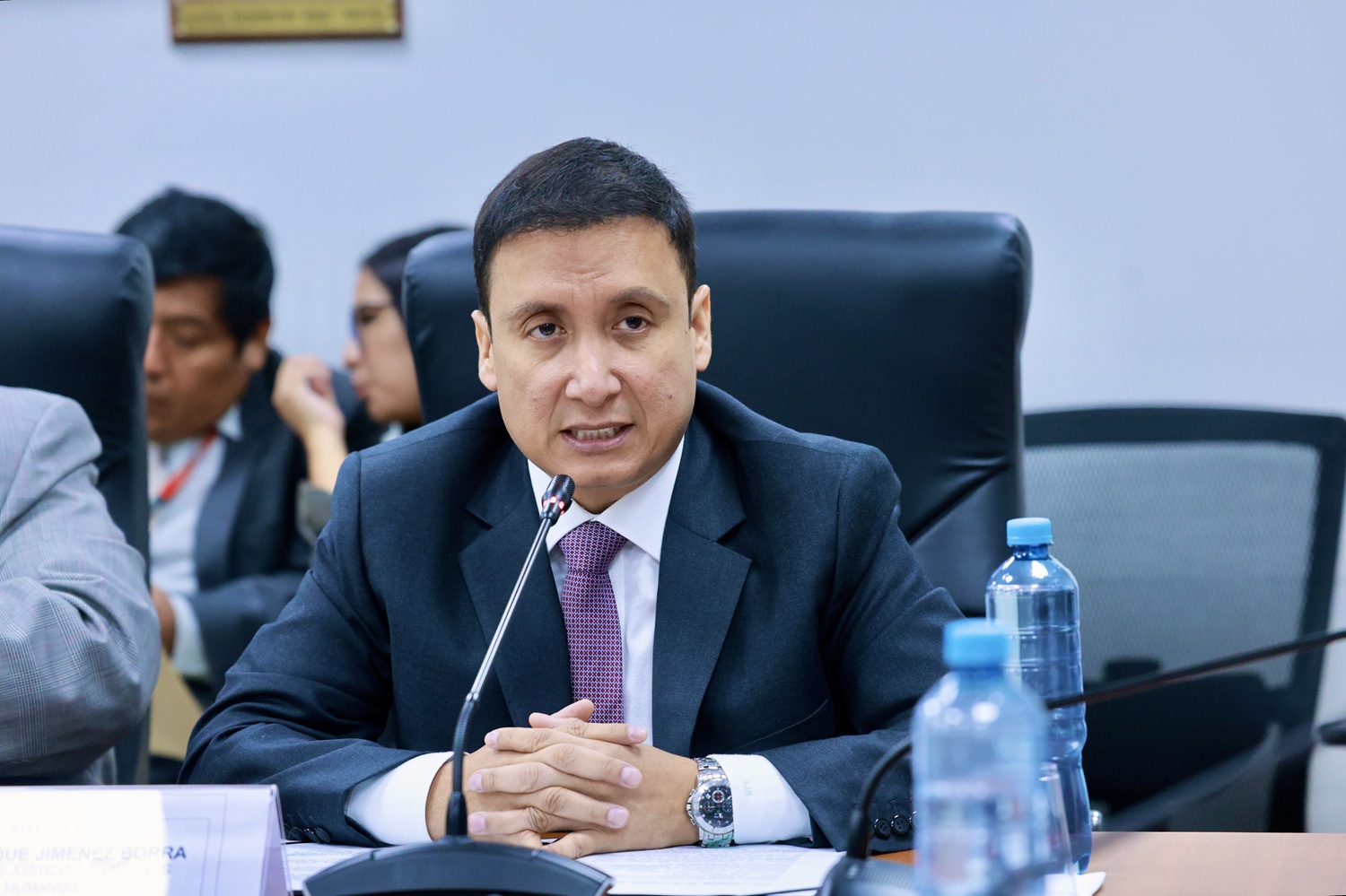
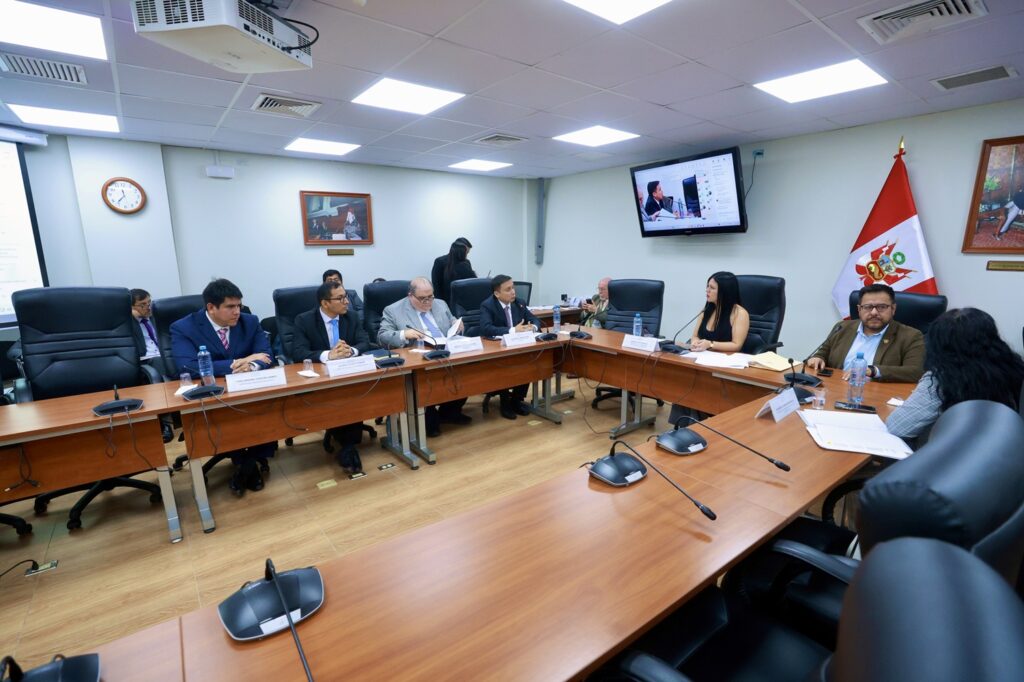
Agencia Peruana de Noticias PRENSAPERU.PE https://www.prensaperu.pe Twitter: @prensaperupe En el marco de la sesión ordinaria de la Comisión de Fiscalización y Contraloría del Congreso de la República, se llevó a cabo una exposición detallada sobre el funcionamiento, las competencias y los límites institucionales de la Comisión de Gracias Presidenciales, un organismo clave dentro del sistema de justicia peruano. El ministro de Justicia y Derechos Humanos, Luis Jiménez Borra, y el presidente de dicha comisión, Abraham García, expusieron ante los parlamentarios para despejar dudas, reforzar el marco legal vigente y enfatizar la autonomía técnica que caracteriza los procedimientos de evaluación de solicitudes de gracias presidenciales.
Esta presentación buscó reafirmar el respeto al Estado de derecho, definiendo claramente las funciones de cada entidad involucrada y deslindando responsabilidades, con el fin de brindar total transparencia sobre cómo se procesan las solicitudes y bajo qué criterios se emiten las recomendaciones correspondientes.
SEPARACIÓN DE FUNCIONES Y RESPETO A LA LEY
El titular del sector Justicia, Luis Jiménez Borra, inició su intervención estableciendo un principio fundamental de la administración pública: la no interferencia. Remarcó con énfasis que, como máxima autoridad del sector, su rol no es dirigir, influir ni intervenir en los procedimientos internos de la Comisión de Gracias Presidenciales.
“Mi responsabilidad como ministro es garantizar el respeto irrestricto de la ley y garantizar que las instituciones funcionen de acuerdo al Estado de derecho”, afirmó.
ESTADO DE DERECHO
Es el principio rector que establece que el poder del Estado está limitado por el ordenamiento jurídico vigente, y que todas las autoridades, instituciones y ciudadanos —sin excepción— están sometidos a la Constitución y a las leyes. Esto implica que ninguna decisión puede tomarse por voluntad arbitraria, sino bajo normas claras, preestablecidas y públicas.
SEPARACIÓN DE PODERES Y AUTONOMÍA INSTITUCIONAL
El ministro explicó que la Comisión de Gracias Presidenciales tiene la calidad de colegiado autónomo y técnico. Esto significa que funciona con independencia funcional, organizativa y de criterio, ajena a influencias políticas o administrativas externas. Su labor no responde a intereses sectoriales, sino a una evaluación rigurosa y objetiva de cada caso.
¿Qué hace exactamente esta Comisión?
Jiménez Borra fue muy preciso al aclarar un concepto que suele generar confusión: “No es una comisión a cargo de conceder gracias o de dar indultos”. Su función real es de evaluación, análisis y recomendación. Es decir, revisa exhaustivamente cada expediente presentado, verifica el cumplimiento de requisitos legales, analiza los antecedentes y emite un informe técnico que sirve de base para la decisión final que corresponde adoptar al Presidente de la República, dentro de sus facultades constitucionales.
Otro punto fundamental que resaltó es el mecanismo de toma de decisiones interna: el voto unánime. Las recomendaciones favorables al solicitante solo proceden si todos los miembros del colegiado están de acuerdo.
“No es una decisión de un sector o de una persona, sino de un colegiado que hace un trabajo de carácter técnico”, subrayó. Esto refuerza que no existe discrecionalidad individual, sino un consenso basado en criterios jurídicos objetivos.
STUACIÓN ACTUAL DE SOLICITUDES RELEVANTES
Ante la consulta directa de los congresistas sobre casos de alto interés público, el ministro detalló la situación procesal actual: a la fecha, no se encuentra pendiente de atención ninguna solicitud de gracia presentada por el expresidente Pedro Castillo. Esta aclaración permitió desmentir versiones que circulaban en la opinión pública y confirmar que no hay expedientes abiertos en relación con esta persona en la institución al día de la sesión.
MARCO NORMATIVO EXPLICADO POR EL PRESIDENTE DE LA COMISIÓN
Por su parte, Abraham García, en su calidad de presidente de la Comisión de Gracias Presidenciales, profundizó en el sustento legal que regula todo su accionar, demostrando que cada paso que se da está reglado y supervisado. Detalló que su funcionamiento se rige principalmente por:
1.- Decreto Supremo N.º 004-2007-JUS y sus modificatorias: Es la norma base que crea la Comisión, define su naturaleza, sus integrantes y sus atribuciones generales dentro del Ministerio de Justicia.
2.- Resolución Ministerial N.º 062-2026-JUS: Norma reciente que aprobó el Reglamento Interno de la institución. Este instrumento es vital porque establece reglas específicas de operación, plazos, requisitos y procedimientos detallados.
FILTRO DE SEGURIDAD JURÍDICA
García explicó que el nuevo reglamento incorpora y fortalece mecanismos de control, siendo el requisito de unanimidad para aprobar una recomendación el principal filtro de seguridad. Esta regla evita decisiones precipitadas o parcializadas, exigiendo que todo informe favorable sea producto de un análisis consensuado, riguroso y compartido por todos los integrantes técnicos de la comisión. De esta forma, se minimiza cualquier riesgo de arbitrariedad y se garantiza que solo los casos que cumplen estrictamente con todos los requisitos legales pasen a la siguiente etapa.
DATOS CONCLUYENTES
1.- Independencia institucional garantizada: Queda plenamente establecido que la Comisión de Gracias Presidenciales actúa con total autonomía técnica y funcional, sin intervención ni injerencia del Ministro de Justicia ni de cualquier otra autoridad política. Su labor es exclusivamente evaluativa y se ajusta estrictamente a lo que dictan las normas vigentes.
2.- Claridad en el rol y competencias: Se despeja la confusión sobre las funciones del organismo: no otorga beneficios ni toma decisiones finales, sino que realiza un trabajo especializado de análisis y emite recomendaciones fundamentadas. La decisión última corresponde al Poder Ejecutivo, siempre basada en el informe técnico previo.
3.- Rigurosidad y seguridad en los procedimientos: La exigencia del voto unánime como requisito para emitir informes favorables constituye una garantía jurídica fundamental. Esto asegura que cada solicitud sea analizada desde múltiples perspectivas y que solo los casos que cumplen cabalmente con la ley obtengan el respaldo del colegiado.
4.- Transparencia y situación actual de casos relevantes: La información oficial entregada al Congreso confirma que no existen solicitudes pendientes de atención vinculadas al expresidente Pedro Castillo. Esto refleja el compromiso de la institución por informar oportunamente y evitar especulaciones sobre procesos que no se han iniciado o que no se encuentran activos.
Fuente: Agencia Peruana de Noticias PRENSAPERU.PE https://www.prensaperu.pe Twitter: @prensaperupe
Translate
The Minister of Justice reaffirms: “I do not interfere in the decisions of the Presidential Pardons Commission” and “No favorable recommendation is approved without a unanimous vote.”
Peruvian News Agency PRENSAPERU.PE https://www.prensaperu.pe Twitter: @prensaperupe Within the framework of the ordinary session of the Oversight and Comptroller Commission of the Congress of the Republic, a detailed presentation was held regarding the operation, responsibilities and institutional limits of the Presidential Clemency Commission – a key body within Peru’s justice system. The Minister of Justice and Human Rights, Luis Jiménez Borra, and the President of this Commission, Abraham García, appeared before parliamentarians to address questions, reinforce the existing legal framework and emphasize the technical autonomy that defines the procedures for evaluating requests for presidential clemency.
This presentation sought to reaffirm respect for the rule of law, clearly define the responsibilities of all bodies involved and draw clear lines of accountability, with the aim of ensuring full transparency regarding how requests are processed and on what basis corresponding recommendations are issued.
SEPARATION OF FUNCTIONS AND RESPECT FOR THE LAW
The head of the Ministry of Justice, Luis Jiménez Borra, began his intervention by establishing a fundamental principle of public administration: non-interference. He emphasized strongly that, as the highest authority of the sector, his role does not involve directing, influencing or intervening in the internal procedures of the Presidential Clemency Commission.
“My responsibility as Minister is to guarantee full respect for the law and ensure that institutions function in accordance with the rule of law,” he stated.
THE RULE OF LAW
This is the guiding principle that establishes that the power of the State is limited by the existing legal system, and that all authorities, institutions and citizens – without exception – are subject to the Constitution and the laws. This means that no decision may be made through arbitrary will, but must be based on clear, established and publicly accessible rules.
SEPARATION OF POWERS AND INSTITUTIONAL AUTONOMY
The Minister explained that the Presidential Clemency Commission has the status of an autonomous and technical collegiate body. This means it operates with functional, organizational and decision-making independence, free from external political or administrative influences. Its work is not guided by sectoral interests, but rather by a rigorous and objective assessment of each individual case.
What exactly does this Commission do?
Jiménez Borra was very precise in clarifying a concept that often causes confusion: “This is not a body responsible for granting pardons or clemency.” Its actual function is evaluation, analysis and recommendation. In other words, it carries out a comprehensive review of every file submitted, verifies compliance with legal requirements, examines background information and produces a technical report that serves as the basis for the final decision to be taken by the President of the Republic, within the scope of his constitutional powers.
Another key point he highlighted is the internal decision-making process: the requirement for unanimous agreement. Favorable recommendations to applicants may only be issued if all members of the collegiate body are in agreement.
“This is not a decision made by one group or individual, but one reached by a collegiate body carrying out technical work,” he stressed. This confirms that there is no individual discretion, but rather a consensus based on objective legal criteria.
CURRENT STATUS OF RELEVANT REQUESTS
In response to direct questions from parliamentarians regarding cases of high public interest, the Minister provided details on the current procedural situation: as of today, there are no pending clemency requests submitted by former President Pedro Castillo. This clarification made it possible to refute information circulating in public discourse and confirmed that, at the time of the session, there were no active files concerning this individual within the institution.
LEGAL FRAMEWORK EXPLAINED BY THE PRESIDENT OF THE COMMISSION
For his part, Abraham García, in his capacity as President of the Presidential Clemency Commission, provided detailed information on the legal basis governing all its activities, demonstrating that every step taken is regulated and monitored. He explained that its operation is primarily based on:
1.- Supreme Decree No. 004-2007-JUS and its amendments: This is the basic legal instrument that establishes the Commission, defines its nature, its members and its general responsibilities within the Ministry of Justice.
2.- Ministerial Resolution No. 062-2026-JUS: A recent legal act that approved the Internal Regulations of the institution. This instrument is essential because it establishes specific rules for operation, timeframes, requirements and detailed procedures.
LEGAL SAFEGUARDS
García explained that the new regulations introduce and strengthen control mechanisms, with the requirement for unanimity to approve a recommendation representing the main safeguard. This rule prevents hasty or biased decisions, and ensures that all favorable reports result from an analysis that is agreed upon, thorough and shared by all technical members of the Commission. In this way, any risk of arbitrariness is minimized, and it is guaranteed that only cases that fully meet all legal requirements will proceed to the next stage.
CONCLUSIVE INFORMATION
1.- Institutional autonomy is guaranteed: It is fully established that the Presidential Clemency Commission operates with complete technical and functional independence, without interference or influence from the Minister of Justice or any other political authority. Its work is exclusively evaluative and is carried out in strict compliance with the provisions of current regulations.
2.- Clarity regarding roles and responsibilities: Confusion about the functions of the body has been resolved: it does not grant benefits or make final decisions, but rather carries out specialized analytical work and issues recommendations based on sound legal grounds. The final decision rests with the Executive Branch, and is always based on the prior technical report.
3.- Rigour and security in procedures: The requirement for unanimous agreement as a condition for issuing favorable reports constitutes a fundamental legal guarantee. This ensures that every request is examined from multiple perspectives, and that only cases that fully comply with legal standards receive the support of the collegiate body.
4.- Transparency and status of relevant cases: Official information provided to Congress confirms that there are no pending requests related to former President Pedro Castillo. This demonstrates the institution’s commitment to providing timely information and preventing speculation about processes that have not been initiated or are not currently active.
Source: Peruvian News Agency PRENSAPERU.PE https://www.prensaperu.pe Twitter: @prensaperupe