
Agencia Peruana de Noticias PRENSAPERU.PE https://www.prensaperu.pe Twitter: @prensaperupe La Superintendencia Nacional de Servicios de Saneamiento (Sunass), entidad encargada de regular y vigilar la calidad del servicio de agua y alcantarillado en todo el territorio nacional, reitera una obligación esencial que protege el patrimonio y la integridad de la ciudadanía: todas las Empresas Prestadoras de Servicios (EPS) tienen el deber inexcusable de mantener vigente una póliza de seguro de responsabilidad civil. Este instrumento jurídico y financiero tiene como finalidad cubrir, en su totalidad, los perjuicios, pérdidas o afectaciones que puedan sufrir las personas, sus viviendas, enseres o bienes materiales, como consecuencia directa de un aniego provocado por la rotura, fuga o colapso de tuberías pertenecientes a la red de agua potable o al sistema de desagüe.
PÓLIZA DE SEGURO DE RESPONSABILIDAD CIVIL
Es un contrato mediante el cual la empresa prestadora transfiere el riesgo económico de posibles daños a una aseguradora. Su propósito es garantizar que, ante cualquier falla operativa o incidente técnico que afecte a los usuarios, exista respaldo económico suficiente para reparar el daño causado, sin que la carga de la pérdida recaiga sobre el ciudadano ni dependa exclusivamente de la disponibilidad de recursos inmediata de la empresa.
DERECHOS DEL USUARIO ANTE EMERGENCIAS Y FALLAS DEL SERVICIO
Ante la emergencia registrada hoy en el distrito de Villa María del Triunfo, así como frente a cualquier situación similar que pueda presentarse en otras jurisdicciones, es fundamental que la población conozca que sus derechos van más allá de la simple reposición del servicio. Todo usuario tiene derecho a recibir atención inmediata para la solución del problema y, además, a ser totalmente resarcido por los daños y perjuicios sufridos en su persona, salud o propiedad.
En este contexto, corresponde a la EPS actuar con celeridad y eficiencia: su intervención debe estar orientada a controlar el incidente, detener la causa del daño y reducir al mínimo posible la extensión de la afectación en la zona. No obstante, la actuación oportuna del propio usuario es determinante para hacer valer estos derechos. Por ello, se recomienda seguir paso a paso estas pautas:
Comunicación inmediata: Dar aviso del suceso a la empresa prestadora, facilitando con precisión la dirección exacta del lugar, la extensión del área afectada y el número de suministro o contrato asociado al servicio. Esto permite una respuesta más rápida y localizada.
Recolección de pruebas: Conservar y reunir todo medio probatorio que demuestre la magnitud del daño: fotografías, videos, facturas, presupuestos de reparación, documentos personales afectados o incluso testimonios de vecinos. Estas evidencias son la base fundamental para sustentar cualquier reclamo.
Registro formal: Presentar un reclamo escrito o digital a través de los canales oficiales habilitados por la empresa (plataformas web, oficinas de atención, líneas telefónicas). Es indispensable dejar constancia formal del hecho para iniciar el procedimiento de evaluación.
Solicitud de evaluación: Pedir expresamente que personal técnico de la empresa se apersone para inspeccionar, medir y evaluar los daños ocasionados. Este informe técnico permitirá determinar la responsabilidad de la empresa y establecer el monto o la forma en que se realizará la correspondiente reparación o indemnización.
RESPONSABILIDAD DE LA EMPRESA Y ALCANCE DE LA COBERTURA
Son las propias empresas de saneamiento las obligadas a gestionar todos los trámites necesarios para activar la cobertura de la póliza contratada, siempre que se verifique que el daño es consecuencia de sus instalaciones o de la prestación del servicio. La única excepción se da cuando la empresa decide asumir directamente, con sus propios recursos, el costo total de las reparaciones e indemnizaciones.
Es importante resaltar que el marco normativo vigente ha ampliado el concepto de reparación: la cobertura no solo protege bienes materiales, sino que también incluye expresamente los daños que puedan afectar a las personas, ya sea por consecuencias en su salud, integridad física o perjuicios derivados de la imposibilidad de uso de su vivienda o servicios.
SUPERVISIÓN CONSTANTE DE SUNASS
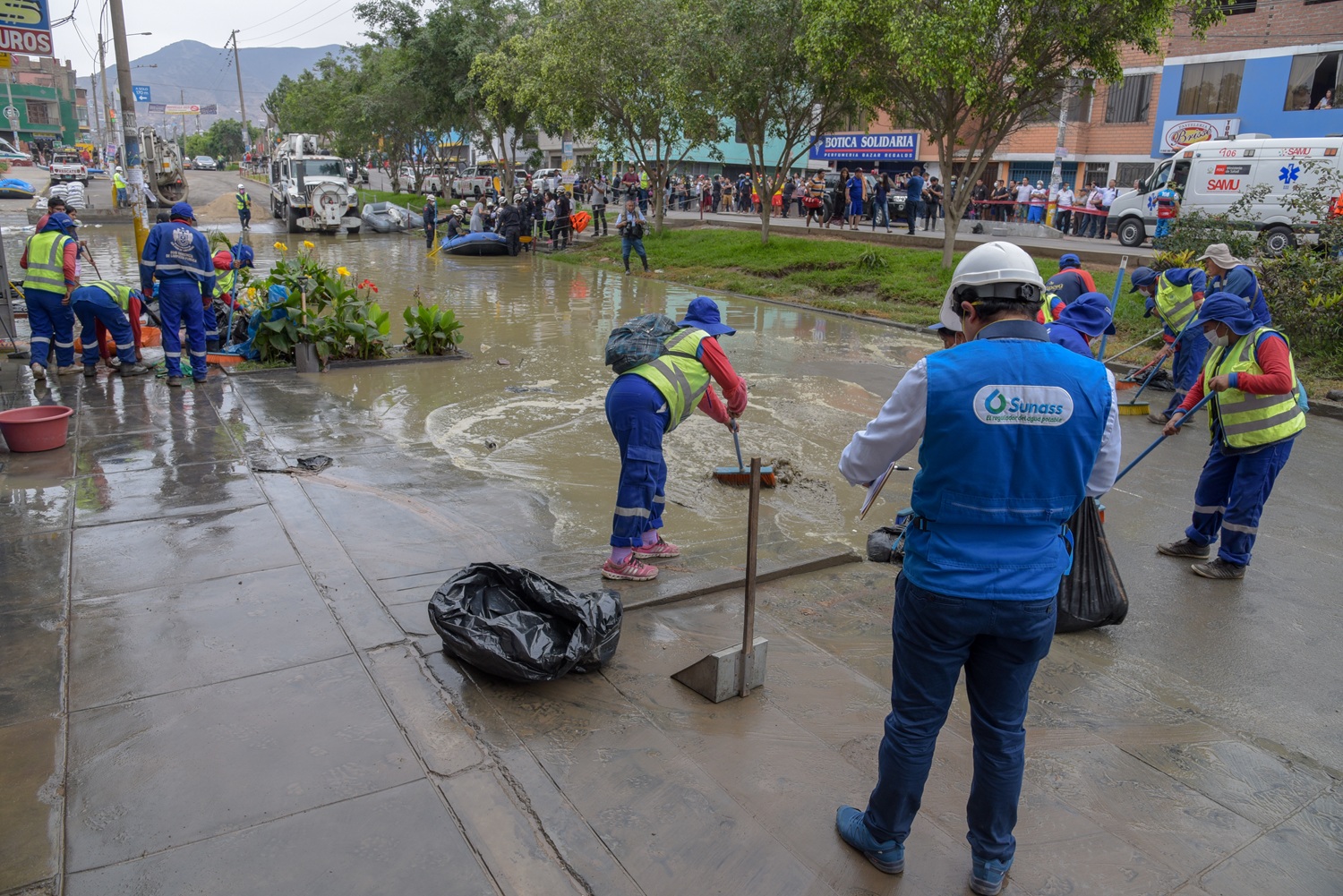
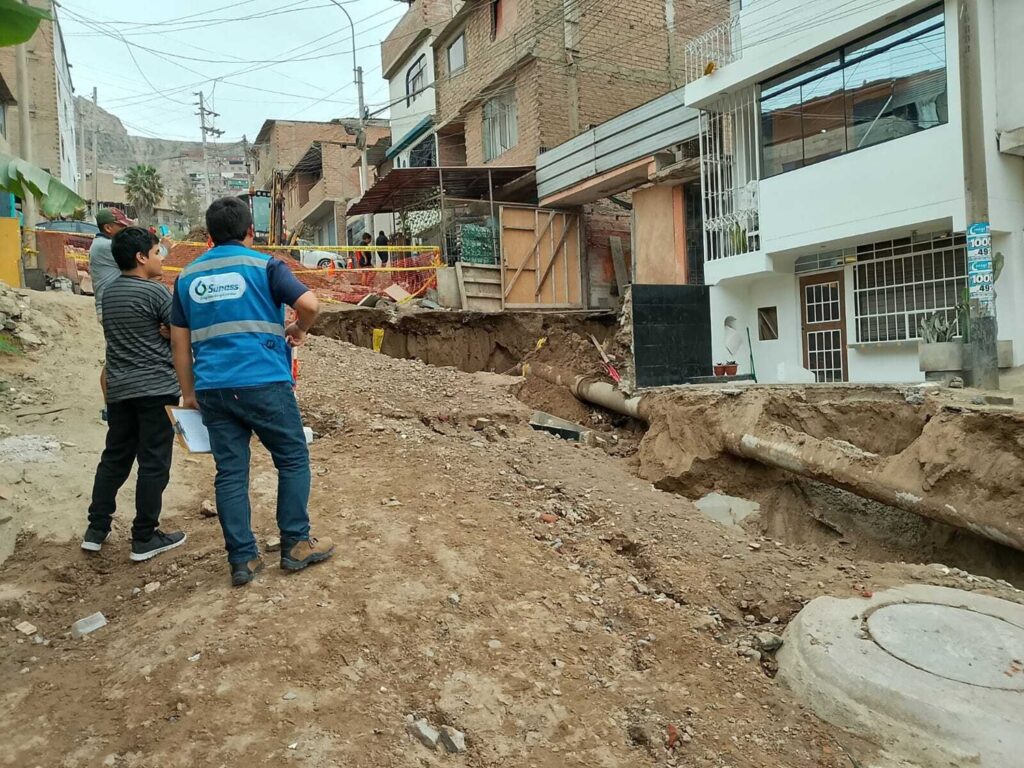
Durante todo este proceso, la Sunass ejerce una labor de vigilancia y control permanente. La institución verifica que la empresa no solo repare la tubería o restablezca el servicio, sino que también ejecute la limpieza completa de las zonas afectadas, realice la desinfección correspondiente y brinde acompañamiento continuo a los usuarios afectados. El objetivo es asegurar que se respete el marco legal y que ningún ciudadano quede desprotegido.
Para cualquier consulta, orientación o denuncia, la población puede contactarse con el Fono Sunass: 1899, una línea gratuita y especializada para atender sus inquietudes.
ACCIÓN INMEDIATA EN VILLA MARÍA DEL TRIUNFO
Con relación al aniego ocurrido hoy en el asentamiento humano Nueva Esperanza, en el distrito de Villa María del Triunfo, equipos técnicos y orientadores de la Sunass se desplazaron de inmediato hasta la zona del suceso. Allí, brindaron orientación personalizada a los vecinos, explicándoles detalladamente cómo proceder para hacer efectiva la cobertura del seguro y garantizar su derecho a indemnización.
Paralelamente, se estableció coordinación directa con la Dirección Regional de Salud (Diris) Lima Sur, entidad que acudió al lugar para evaluar y atender cualquier posible riesgo sanitario derivado del derrame de agua o desagüe. En este sentido, se tomó conocimiento de que un centro de salud cercano ha visto interrumpido su abastecimiento de agua potable a causa del incidente. Ante esta situación crítica, la Sunass ha requerido formalmente a la empresa prestadora que implemente de inmediato un sistema de abastecimiento alternativo, mediante camiones cisterna, para asegurar el funcionamiento ininterrumpido del centro asistencial y la atención a los pacientes.
CONCLUSIONES FUNDAMENTADAS
1.- Protección normativa garantizada: La existencia obligatoria de la póliza de responsabilidad civil no es un trámite administrativo, sino una medida de seguridad jurídica y económica que la ley ha puesto a favor del usuario. Esto asegura que, ante fallas en la infraestructura sanitaria, el costo de las consecuencias no recaiga sobre la ciudadanía, sino que sea asumido por la empresa o su aseguradora.
2.- El usuario es protagonista de su propia protección: Aunque la empresa tiene la carga de la responsabilidad, la rapidez y efectividad en la reparación de los daños dependen en gran medida de la actuación oportuna del afectado. Reportar, documentar y reclamar son acciones indispensables para activar los mecanismos de defensa de sus derechos.
3.- Articulación institucional para la seguridad integral: La intervención conjunta de Sunass y las autoridades de salud demuestra que una emergencia sanitaria requiere respuestas integrales: no basta con reparar la tubería, sino que es necesario garantizar la salubridad de la zona, la continuidad de servicios esenciales como la salud y el respaldo permanente a las familias afectadas.
Fuente: Agencia Peruana de Noticias PRENSAPERU.PE https://www.prensaperu.pe Twitter: @prensaperupe
Translate
In Peru, Sunass reminds you! “Your property is protected by law against pipe bursts and flooding; companies must compensate you. This is how mandatory insurance works.”
Peruvian News Agency PRENSAPERU.PE https://www.prensaperu.pe Twitter: @prensaperupe The National Superintendency of Sanitation Services (Sunass), the body responsible for regulating and monitoring the quality of water and sewerage services throughout the national territory, reiterates an essential obligation that safeguards the assets and well-being of the population: all Service Provider Companies (EPS) have the unavoidable duty to maintain a valid civil liability insurance policy. This legal and financial instrument is intended to provide full coverage for damages, losses or harm that may be suffered by individuals, their homes, household goods or material property, as a direct consequence of flooding caused by the rupture, leakage or collapse of pipes belonging to the drinking water network or the sewer system.
CIVIL LIABILITY INSURANCE POLICY
This is a contract through which the service provider company transfers the financial risk of potential damages to an insurer. Its purpose is to guarantee that, in the event of any operational failure or technical incident affecting users, there is sufficient financial backing to repair the harm caused, without the burden of loss falling upon the citizen or depending exclusively on the company’s immediate availability of resources.
USER RIGHTS IN THE EVENT OF EMERGENCIES AND SERVICE FAILURES
In light of the emergency recorded today in the district of Villa María del Triunfo, as well as any similar situation that may arise in other jurisdictions, it is essential that the public understands that their rights extend beyond the mere restoration of service. Every user has the right to receive immediate attention to resolve the problem and, furthermore, to be fully compensated for damages and losses incurred regarding their person, health or property.
In this context, it is the responsibility of the EPS to act swiftly and efficiently: its intervention must be aimed at controlling the incident, stopping the cause of the damage and minimizing the extent of impact in the area. Nevertheless, timely action by the user is crucial in asserting these rights. Therefore, it is recommended to follow these steps:
Immediate communication: Notify the service provider company of the event, providing precise details regarding the exact location, the extent of the affected area and the supply or contract number associated with the service. This enables a faster and more targeted response.
Gathering of evidence: Preserve and compile all forms of proof that demonstrate the extent of the damage: photographs, videos, invoices, repair estimates, affected personal documents or even testimony from neighbors. This evidence forms the essential basis for substantiating any claim.
Formal registration: Submit a written or digital claim through the official channels established by the company (online platforms, customer service offices, telephone hotlines). It is indispensable to formally document the event in order to initiate the assessment process.
Request for assessment: Explicitly request that technical personnel from the company attend the site to inspect, measure and evaluate the damages incurred. This technical report will serve to determine the company’s liability and establish the amount or method by which corresponding repairs or compensation will be provided.
COMPANY RESPONSIBILITY AND SCOPE OF COVERAGE
Sanitation service companies themselves are responsible for managing all necessary procedures to activate the coverage provided by the contracted policy, provided it is verified that the damage is a consequence of their facilities or the provision of service. The only exception is when the company decides to assume directly, using its own resources, the total cost of repairs and compensation.
It is important to highlight that the current regulatory framework has broadened the concept of reparation: coverage not only protects material assets but also expressly includes damages that may affect individuals, whether through consequences to their health, physical integrity or losses resulting from the inability to use their home or services.
PERMANENT SUPERVISION BY SUNASS
Throughout this entire process, Sunass carries out ongoing monitoring and oversight. The institution verifies that the company not only repairs the pipe or restores service but also carries out the complete cleaning of affected areas, performs corresponding disinfection and provides continuous support to affected users. The objective is to ensure compliance with the legal framework and that no citizen is left unprotected.
For any inquiries, guidance or reports, the public may contact the Sunass Hotline: 1899, a toll-free and specialized line established to address their concerns.
IMMEDIATE ACTION IN VILLA MARÍA DEL TRIUNFO
With regard to the flooding that occurred today in the Nueva Esperanza human settlement, in the district of Villa María del Triunfo, Sunass technical teams and advisors were deployed immediately to the area of the event. There, they provided personalized guidance to residents, explaining in detail how to proceed in order to enforce insurance coverage and guarantee their right to compensation.
In parallel, direct coordination was established with the Regional Directorate of Health (Diris) Lima Sur, an entity that attended the site to assess and address any potential health risks arising from the spillage of water or sewage. In this regard, it was reported that a nearby health center has experienced an interruption in its drinking water supply as a result of the incident. Faced with this critical situation, Sunass has formally requested that the service provider company immediately implement an alternative supply system, using water tankers, to ensure the uninterrupted operation of the health center and the provision of care to patients.
SUBSTANTIATED CONCLUSIONS
1.- Regulatory protection guaranteed: The mandatory existence of civil liability insurance is not an administrative formality, but rather a measure of legal and financial security established by law for the benefit of the user. This ensures that, in the event of failures in sanitation infrastructure, the costs of consequences do not fall upon the public but are instead assumed by the company or its insurer.
2.- The user plays a leading role in their own protection: Although the company bears the burden of responsibility, the speed and effectiveness of damage reparation depend to a great extent on timely action by the affected party. Reporting, documenting and filing claims are indispensable actions in activating the mechanisms that safeguard one’s rights.
3.- Institutional coordination for comprehensive security: The joint intervention of Sunass and health authorities demonstrates that a sanitation emergency requires comprehensive responses: it is not enough simply to repair the pipe; it is also necessary to guarantee the health safety of the area, the continuity of essential services such as healthcare, and ongoing support for affected families.
Source: Peruvian News Agency PRENSAPERU.PE https://www.prensaperu.pe Twitter: @prensaperupe