
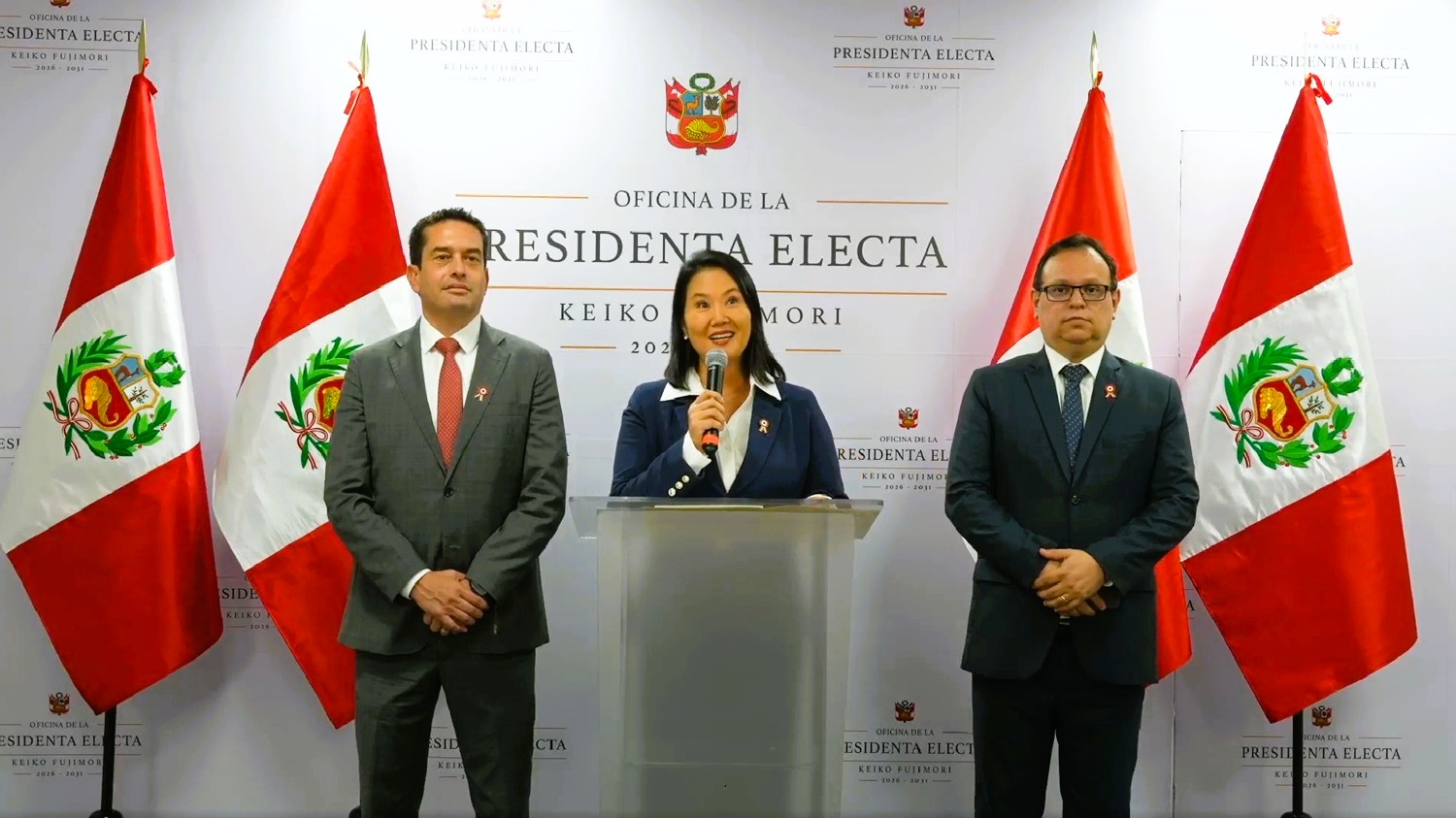
Agencia Peruana de Noticias PRENSAPERU.PE https://www.prensaperu.pe Twitter: @prensaperupe La presidenta electa del Perú presentó oficialmente el inicio de la etapa de transición y transferencia de gobierno, en su primer mensaje dirigido a los medios y a toda la población. Tras cerrarse formalmente el proceso electoral, indicó que, aunque la asunción del mando se realizará el 28 de julio, el trabajo no se demorará ni un solo día más: desde ya todo el equipo se encuentra abocado a preparar la entrega y recepción ordenada de la gestión pública.
Al iniciar su intervención, agradeció a Dios, a quienes confiaron en su propuesta y también a quienes no lo hicieron, reconociendo que todos esperan que el nuevo gobierno esté a la altura de los grandes retos nacionales.
Para conducir este periodo, anunció la puesta en marcha de la Oficina de la Presidenta Electa, bajo su dirección directa y acompañada por un equipo integrado por Miki Torres —en representación de la plancha presidencial— y Marco Vinelli, quien asume como jefe del Equipo de Transferencia. Su objetivo central es organizar el proceso para saber con claridad dónde intervenir primero, cuáles son las prioridades y cómo actuar con rapidez y responsabilidad.
Explicó que para atender los problemas de los ciudadanos es indispensable conocer primero la realidad exacta del Estado que se recibirá. Por ello se realizará un diagnóstico integral, en dos niveles:
Diagnóstico técnico: revisión ministerio por ministerio, de programas, proyectos, obras, recursos y urgencias pendientes.
Diagnóstico humano: a través del diálogo amplio y directo con autoridades regionales y locales, emprendedores, empresarios, trabajadores y todos los sectores dispuestos a aportar, más allá de banderas ni colores políticos.
Todo este recorrido se ejecutará bajo el principio de transparencia absoluta, informando paso a paso por canales oficiales y medios de comunicación.
En este sentido, destacó que el país no vuelve a empezar cada cinco años: se preservarán y fortalecerán todas aquellas prácticas e iniciativas que ya demostraron ser útiles y eficaces, sin importar quién las impulsó. Queda establecido así el criterio básico: construir sobre lo bueno y corregir lo que no funciona.
Eje central de este planteamiento es la idea de Orden: recuperar el orden en las calles, en las instituciones y en el funcionamiento del Estado. Un Estado que no solo actúe ante emergencias, sino que planifique, prevenga y llegue a tiempo.
Se definió también el perfil del gobierno que se prepara:
Abierto: para que la ciudadanía conozca cómo se deciden y administran los recursos públicos
Digital: para simplificar trámites, reducir burocracia y acercar servicios
Cercano: porque gobernar implica escuchar, dialogar y estar presente donde más se requiere
Asimismo, agradeció los saludos recibidos por parte de jefes de Estado y gobiernos del mundo y expresó voluntad de fortalecer lazos de amistad, cooperación y confianza recíproca.
Convocó finalmente a mirar hacia adelante y construir juntos un país más seguro, próspero y unido, recordando que el Perú es más grande que las diferencias y que el trabajo conjunto permite alcanzar cualquier meta.
DATOS CONCEPTUALES
Proceso de transición y transferencia: Etapa organizada que permite pasar de una administración a otra, garantizando continuidad, conocimiento cabal de la situación institucional y preparación adecuada para asumir funciones.
Diagnóstico integral: Análisis completo que combina datos técnicos, administrativos y también la visión y necesidades humanas y territoriales, para definir prioridades reales.
Transparencia: Principio por el cual la información sobre planes, decisiones y recursos es accesible y clara para toda la ciudadanía.
Estado planificador: Aquel que no solo responde ante hechos consumados, sino que anticipa problemas, organiza acciones y prevé resultados.
Gobierno abierto, digital y cercano: Modelo que acerca la administración a la población, reduce trabas burocráticas y facilita el control y la participación ciudadana.
CONCLUSIONES
1.- La nueva gestión inicia su labor inmediatamente, sin esperar la fecha de asunción oficial, bajo la premisa de que los problemas nacionales no pueden aguardar.
2.- Se realizará un diagnóstico detallado —técnico y humano— para conocer con exactitud la situación de cada sector y ministerio.
3.- Se adopta el criterio institucional de mantener y fortalecer lo que funciona, independientemente de su origen político, y corregir solo aquello que sea ineficaz.
4.- El concepto de orden constituye el eje vertebrador: para recuperar seguridad, funcionamiento institucional y previsión en lugar de reacción tardía.
5.- El modelo propuesto se basa en apertura, modernización digital y cercanía, con diálogo amplio y cooperación nacional e internacional.
Fuente: Agencia Peruana de Noticias PRENSAPERU.PE https://www.prensaperu.pe Twitter: @prensaperupe
Translate
President-elect Keiko Fujimori immediately kicks off the transition! “Problems won’t wait”—the transition office and team are getting to work to organize the new government.
Peruvian News Agency PRENSAPERU.PE https://www.prensaperu.pe Twitter: @prensaperupe The President‑elect of Peru has officially launched the transition and government hand‑over stage in her first message addressed to the media and the entire population. Following the formal conclusion of the electoral process, she stated that although the assumption of office will take place on 28 July, work will not be delayed a single day longer: the whole team is already fully engaged in preparing an orderly transfer and receipt of public administration.
At the opening of her address, she thanked God, those who placed their trust in her proposal and also those who did not, acknowledging that all expect the new government to rise to the great national challenges.
To conduct this period, she announced the launch of the Office of the President‑elect, under her direct leadership and supported by a team comprising Miki Torres — representing the presidential ticket — and Marco Vinelli, appointed as Head of the Transition Team. Its central purpose is to organise the process so that priorities and lines of action are clearly identified from the outset, enabling swift and responsible intervention.
She explained that, in order to respond to citizens’ problems, it is essential first to understand accurately the real situation of the State to be received. Therefore, a comprehensive diagnosis will be carried out at two levels:
Technical diagnosis: review ministry‑by‑ministry of programmes, projects, works, resources and pending urgent matters.
Human‑centred diagnosis: through broad and direct dialogue with regional and local authorities, entrepreneurs, business people, workers and all sectors willing to contribute, beyond political banners or colours.
This whole process will be guided by the principle of absolute transparency, with step‑by‑step reporting through official channels and the media.
In this regard, she stressed that the country does not restart every five years: all practices and initiatives that have proved useful and effective will be preserved and strengthened regardless of who initiated them. The basic criterion is thus established: build upon what works and correct what does not.
The core pillar of this approach is the idea of Order: restoring order in streets, institutions and State functioning. A State that does not merely react in emergencies but plans, prevents and acts in due time.
The profile of the incoming government has also been defined:
Open: so citizens understand how decisions are taken and public resources are managed
Digital: to simplify procedures, reduce bureaucracy and bring services closer to people
Close‑to‑people: because governing means listening, engaging in dialogue and being present where needs are greatest
Likewise, she acknowledged greetings received from heads of State and governments worldwide and expressed willingness to strengthen bonds of friendship, cooperation and mutual trust.
Finally, she called to look forward and jointly build a safer, more prosperous and united nation, recalling that Peru is greater than its differences and that shared effort allows any goal to be achieved.
CONCEPTUAL DATA
Transition and hand‑over process: Structured phase enabling the passage from one administration to another, ensuring continuity, thorough knowledge of the institutional situation and proper preparation to assume responsibilities.
Comprehensive diagnosis: Complete analysis combining technical and administrative data together with human and territorial perspectives and needs, so as to define actual priorities.
Transparency: Principle whereby information on plans, decisions and resources is accessible and clear to all citizens.
Planning‑oriented State: One that does not only react to accomplished facts but anticipates problems, organises actions and foresees results.
Open, digital and citizen‑centred government: Model bringing public administration closer to the population, reducing bureaucratic obstacles and facilitating citizen oversight and participation.
CONCLUSIONS
1.- The incoming administration begins work immediately, without waiting for the formal inauguration date, based on the premise that national problems cannot wait.
2.- A detailed diagnosis — technical and human‑centred — will be conducted to determine exactly the situation in each sector and ministry.
3.- The institutional guideline adopted is to maintain and strengthen what works regardless of political origin, correcting only what proves ineffective.
4.- The concept of order serves as the backbone: to restore security, institutional performance and foresight rather than late reaction.
5.- The proposed model rests on openness, digital modernisation and proximity, alongside broad dialogue and cooperation within the country and abroad.
Source: Peruvian News Agency PRENSAPERU.PE https://www.prensaperu.pe Twitter: @prensaperupe