

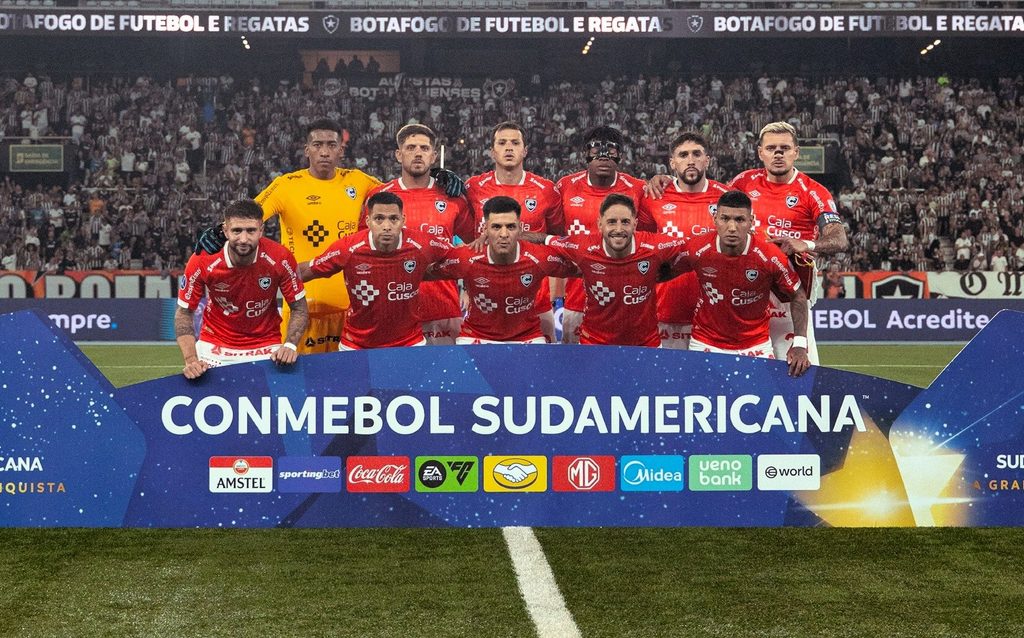
Agencia Peruana de Noticias PRENSAPERU.PE https://www.prensaperu.pe Twitter: @prensaperupe En la noche del miércoles 20 de agosto de 2026, en el estadio de Maracaná, Río de Janeiro, Cienciano del Cusco enfrentó al Botafogo de Brasil por el partido de vuelta de los octavos de final de la Copa Sudamericana. El equipo local se impuso 1-0 con un gol tempranero, pero ese resultado no fue suficiente para frenar al equipo peruano: gracias a la histórica goleada obtenida en el partido de ida en Cusco, donde Cienciano ganó 6-1, el marcador global quedó 6-2 a favor del conjunto inca, que de esta manera clasifica a los cuartos de final del torneo internacional.
El partido de vuelta fue intenso
Botafogo salió decidido a revertir la ventaja, consiguió adelantarse en el marcador y dominó gran parte del encuentro, pero la defensa de Cienciano se mantuvo firme y cerró espacios, evitando que los brasileños anotaran los goles que necesitaban para igualar la serie. Al final, el 1-0 a favor de los locales no bastó, y el equipo cusqueño celebró la clasificación en suelo brasileño.
Este logro trae a la memoria la época dorada del club
En 2003, Cienciano hizo historia al convertirse en el primer equipo peruano en ganar un título internacional oficial, al consagrarse campeón de la Copa Sudamericana, venciendo nada menos que al River Plate de Argentina en la final. Al año siguiente, en 2004, ratificó su grandeza al ganar la Recopa Sudamericana, derrotando al São Paulo de Brasil. Aquellos triunfos convirtieron al equipo del Cusco en uno de los símbolos más queridos del fútbol peruano, demostrando que desde las regiones también se puede llegar a la cima del continente.
Hoy, más de dos décadas después, ese espíritu vuelve a encenderse
La campaña de este año no es solo un buen momento: es la señal de que el fútbol peruano está resurgiendo, que los equipos del interior del país tienen fuerza, y que el trabajo, la identidad y el apoyo de su gente pueden competir con los mejores de Sudamérica. Cienciano representa también algo más grande: la fuerza de los Andes, el orgullo del Cusco y la esperanza de todo un país que ve en este equipo una oportunidad de volver a brillar en el escenario internacional.
Pantalla Gigante
En Cusco, la pasión no conoce clima: En la Plaza de Armas, una de las más grandes y hermosas del continente, se instaló una pantalla gigante para seguir el partido. Miles de personas —hombres, mujeres, niños y ancianos— se congregaron desde horas tempranas, bajo frío, lluvia y altura, abarrotando cada espacio de la plaza. Nadie se fue. Cuando se confirmó la clasificación, el grito de alegría se escuchó en todo el Cusco: Cienciano no solo juega en la cancha, juega en el corazón de un pueblo que lo lleva a cuestas.
DATOS CONCEPTUALES
Copa Sudamericana: Es el segundo torneo de clubes más importante organizado por la CONMEBOL, en el que participan equipos de todos los países de Sudamérica. Su campeón clasifica a la Recopa Sudamericana y a la Copa Libertadores.
Marcador global: En las eliminatorias de los torneos internacionales, cuando se juegan dos partidos (ida y vuelta), se suman los goles de ambos encuentros para definir al ganador. Si hay empate en puntos pero diferencia de goles, clasifica el que mejor suma tiene.
Cuartos de final: Es la ronda en la que quedan solamente ocho equipos en competencia. Los ganadores de estas llaves avanzan a las semifinales, y de ahí a la final del torneo.
Cienciano del Cusco: Club fundado en 1903 en la ciudad del Cusco. Es considerado uno de los equipos más importantes del interior del Perú y el primero en llevar un título internacional al país. Su apodo, “El Papá de América”, nació tras sus conquistas en 2003 y 2004.
CONCLUSIONES
1.- Una goleada que pesó hasta Río de Janeiro: El 6-1 conseguido en Cusco fue la base sólida de la clasificación. Esa ventaja demostró que Cienciano llegó a la serie con propósito y solidez, y aunque perdió el partido de vuelta, mantuvo el control de la llave desde el primer encuentro. El fútbol se juega en dos partidos, y el equipo peruano construyó su victoria en casa.
2.- El regreso de un gigante que nunca dejó de latir: La clasificación de Cienciano no es casualidad. Conecta con la herencia de 2003 y 2004, recordándole al continente que el fútbol peruano tiene historia, tiene jugadores y tiene hinchada para competir. Este renacimiento del equipo cusqueño inspira a todo el fútbol nacional y demuestra que los equipos del interior pueden protagonizar en la escena internacional.
3.- El resurgir del fútbol peruano empieza por creer: Que un equipo peruano avance en un torneo internacional frente a rivales tradicionales de Brasil confirma que el nivel del fútbol peruano va en ascenso. Cada victoria internacional abre puertas, genera confianza y atrae miradas: el camino de Cienciano puede ser el ejemplo para que más equipos peruanos sigan sus pasos y el país recupere su lugar entre los protagonistas del continente.
Fuente: Agencia Peruana de Noticias PRENSAPERU.PE https://www.prensaperu.pe Twitter: @prensaperupe
Translate
Cienciano advances to the quarterfinals! The 6-1 from Cusco weighed more than the 1-0 in Rio de Janeiro. From its 2003 feat to 2026, the Giant of Cusco, known as “Dad of America,” once again shakes South America.
Peruvian News Agency PRENSAPERU.PE https://www.prensaperu.pe Twitter: @prensaperupe On the night of Wednesday, August 20, 2026, at the Maracanã Stadium in Rio de Janeiro, Cienciano del Cusco faced Botafogo of Brazil in the second leg of the Copa Sudamericana Round of 16. The home side won 1-0 with an early goal, but that result was not enough to stop the Peruvian team: thanks to the historic rout achieved in the first leg in Cusco, where Cienciano won 6-1, the aggregate score stood at 6-2 in favor of the Inca squad, which thereby qualified for the quarterfinals of the international tournament.
The second leg was intense
Botafogo came out determined to overturn the advantage, took the lead on the scoreboard, and dominated much of the match, but Cienciano’s defense stood firm and closed down spaces, preventing the Brazilians from scoring the goals they needed to level the series. In the end, the 1-0 win for the home side was not enough, and the Cusco-based team celebrated qualification on Brazilian soil.
This achievement brings to mind the club’s golden era. In 2003
Cienciano made history by becoming the first Peruvian team to win an official international title, when it was crowned champion of the Copa Sudamericana, defeating none other than River Plate of Argentina in the final. The following year, in 2004, it confirmed its greatness by winning the Recopa Sudamericana, beating São Paulo of Brazil. Those triumphs turned the Cusco team into one of the most beloved symbols of Peruvian football, proving that from the regions one can also reach the summit of the continent.
Today, more than two decades later, that spirit is being rekindled once again.
This year’s campaign is not just a good run: it is a sign that Peruvian football is resurging, that teams from the interior of the country have strength, and that hard work, identity, and the support of their people can compete with the best in South America. Cienciano also represents something greater: the strength of the Andes, the pride of Cusco, and the hope of an entire nation that sees in this team an opportunity to shine once again on the international stage.
Giant screen
In Cusco, passion knows no weather: A giant screen was set up in the Plaza de Armas, one of the largest and most beautiful squares in South America, to watch the match. Thousands of people —men, women, children, and the elderly— gathered from early hours, enduring cold, rain, and high altitude, filling every corner of the square. No one left. When qualification was confirmed, the roar of joy echoed across Cusco: Cienciano does not only play on the pitch — it plays in the heart of a people who carry it forward.
CONCEPTUAL DATA
Copa Sudamericana: The second most important club tournament organized by CONMEBOL, contested by teams from all South American countries. Its winner qualifies for the Recopa Sudamericana and the Copa Libertadores.
Aggregate score: In international tournament knockout rounds played over two legs (home and away), the goals from both matches are added together to determine the winner. If teams are level on points but differ in goal count, the side with the higher total advances.
Quarterfinals: The round in which only eight teams remain in the competition. The winners of these ties advance to the semifinals, and from there to the tournament final.
Cienciano del Cusco: Club founded in 1903 in the city of Cusco. It is regarded as one of the most important teams from the interior of Peru and the first to bring an international title to the country. Its nickname, “Dad of America,” was born following its triumphs in 2003 and 2004.
CONCLUSIONS
1.- A rout that carried weight all the way to Rio de Janeiro: The 6-1 achieved in Cusco was the solid foundation of this qualification. That advantage demonstrated that Cienciano approached the tie with purpose and solidity, and even though it lost the second leg, it maintained control of the series from the very first match. Football is played over two games, and the Peruvian team built its victory at home.
2.- The return of a giant that never stopped beating: Cienciano’s qualification is no accident. It connects with the legacy of 2003 and 2004, reminding the continent that Peruvian football has history, has players, and has fan support to compete. This resurgence of the Cusco team inspires the entire national game and proves that teams from the interior can play leading roles on the international stage.
3.- The resurgence of Peruvian football begins with belief: For a Peruvian team to advance in an international tournament against traditional rivals from Brazil confirms that the level of Peruvian football is on the rise. Every international victory opens doors, builds confidence, and draws attention: Cienciano’s path can serve as an example for more Peruvian teams to follow in its footsteps and for the country to reclaim its place among the leading nations of the continent.
Source: Peruvian News Agency PRENSAPERU.PE https://www.prensaperu.pe Twitter: @prensaperupe