
Agencia Peruana de Noticias PRENSAPERU.PE https://www.prensaperu.peTwitter: @prensaperupe La Superintendencia Nacional de Salud – SUSALUD y la Universidad Peruana Cayetano Heredia – UPCH firmaron un convenio marco de cooperación interinstitucional que busca fortalecer y preservar la ciencia e innovación para proteger los derechos en salud
I.- DATOS CONCEPTUALES
Convenio marco: acuerdo general que establece principios, áreas y formas de trabajo conjunto; luego se detallan acciones específicas.
Cooperación interinstitucional: unión de capacidades, conocimientos y recursos entre entidades públicas y académicas para lograr metas que por separado serían más difíciles.
El propósito central es desarrollar actividades conjuntas en:
1.- Investigación
2.- Innovación
3.- Formación académica
Todo orientado a mejorar la calidad de atención y reforzar la protección de los derechos de las personas usuarias del sistema de salud.
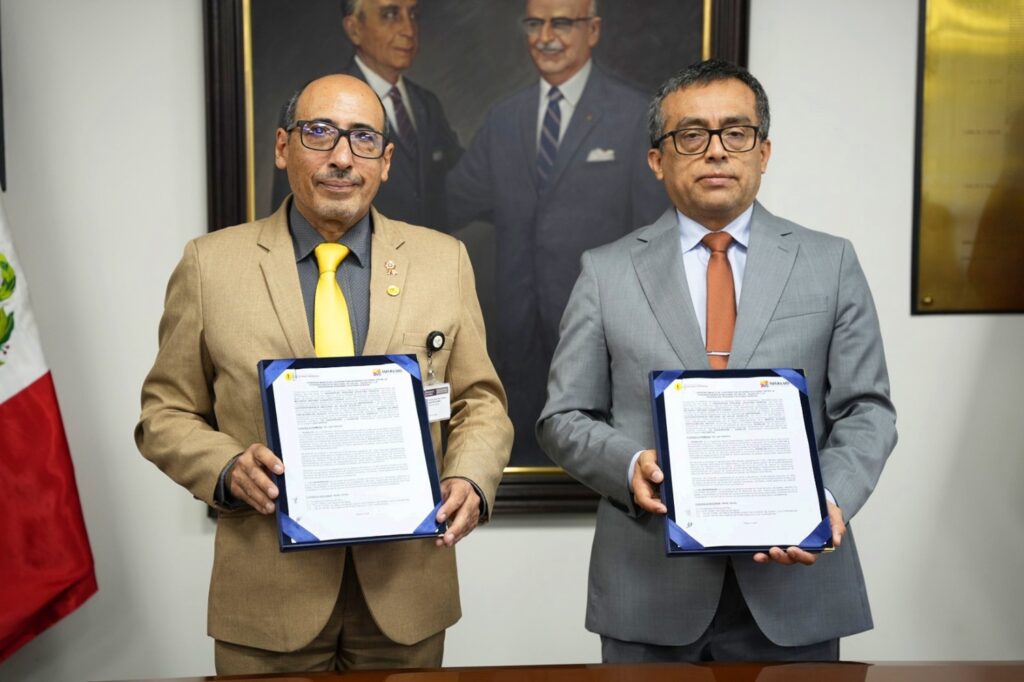
Este convenio marco de cooperación interinstitucional fue suscrito por el superintendente Martín A. Tantaleán del Águila y el rector Wilfredo A. Gonzáles Lozada. Representa una alianza estratégica entre el Estado y la academia para fortalecer todo el sistema sanitario nacional.
II.- PRIMERA ACCIÓN: LA INNOVATÓN.
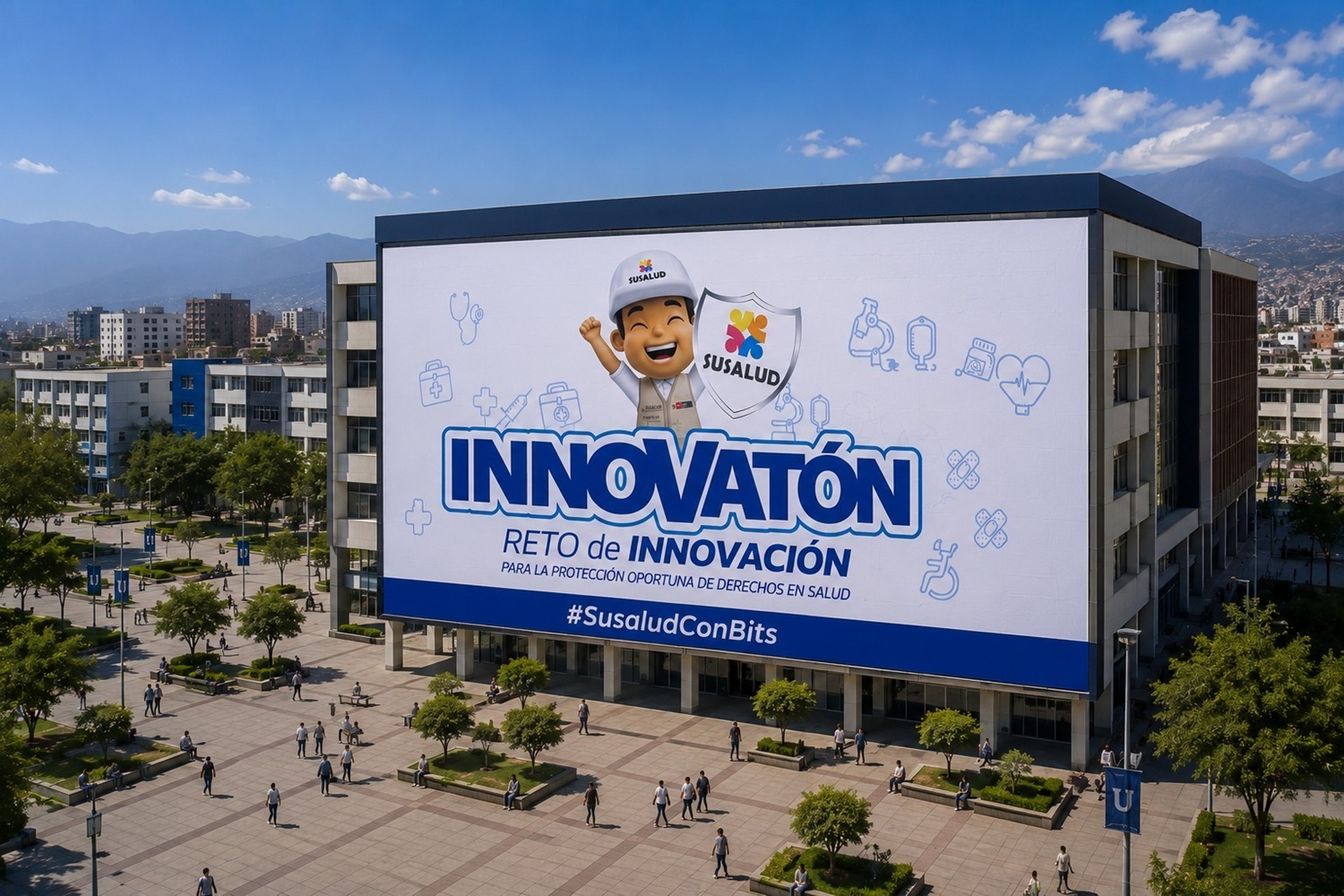
Como actividad inicial se lanzó la Innovatón “Reto de Innovación para la Protección Oportuna de los Derechos en Salud”.
¿Qué es una Innovatón?: Espacio de trabajo concentrado donde se reúnen equipos diversos para crear, diseñar y proponer soluciones prácticas e innovadoras en un tema determinado.
Convoca a:
1.- Estudiantes.
2.- Investigadores.
3.- Profesionales de salud.
4.- Especialistas en tecnología.
5.- Emprendedores.
Su meta: generar propuestas que mejoren los procedimientos para defender y hacer efectivos los derechos de los pacientes.
III.- INNOVACIÓN Y TECNOLOGÍA COMO HERRAMIENTAS CENTRALES.
Según el superintendente, la unión entre Estado y academia busca llevar la modernización a la protección sanitaria. Se aprovecharán recursos como:
Inteligencia artificial: sistemas que procesan información y aprenden para apoyar análisis y respuestas más rápidas.
Ciencia de datos: extracción de información útil y patrones a partir de grandes volúmenes de registros.
Transformación digital: cambio de procesos tradicionales a formatos electrónicos, más ágiles y accesibles.
Con ello se espera:
1.- Identificar riesgos con anticipación.
2.- Simplificar y agilizar trámites.
3.- Responder mejor a consultas, reclamos y denuncias
4.- Contar con evidencia técnica para decisiones más sólidas
IV.- SITUACIÓN ACTUAL Y NECESIDAD DE MEJORA
Hasta el momento del informe, SUSALUD ha recibido más de 78 000 solicitudes: consultas, reclamos y denuncias por presuntas afectaciones al derecho a la salud.
Esta cifra demuestra:
1.- Alta demanda de protección
2.- Necesidad de mayor agilidad
3.- Importancia de ser más transparente y eficaz
4.- Conveniencia de incorporar nuevas tecnologías para no saturar los procesos
V.- MÁS LÍNEAS DE TRABAJO CONJUNTO
El convenio abre también otras vías permanentes:
1.- Investigaciones aplicadas: estudios que resuelvan problemas reales
2.- Formación y capacitación para personal y usuarios
3.- Desafíos de innovación abierta — hackatones y competencias
4.- Proyectos tecnológicos y análisis especializados
Todo enfocado en elevar la calidad del servicio y la experiencia de quien acude al sistema de salud.
CONCLUSIONES
1.- La alianza entre SUSALUD y Cayetano Heredia une la experiencia institucional con el conocimiento científico, lo que multiplica las posibilidades de mejora del sistema sanitario.
2.- La innovación y la tecnología —como inteligencia artificial y análisis de datos— dejan de ser solo conceptos para convertirse en herramientas directas en defensa de los derechos sanitarios.
3.- El volumen de más de 78 mil atenciones muestra la urgencia de modernizar procesos y atender con mayor rapidez y transparencia a la ciudadanía.
4.- Este tipo de cooperación genera espacios permanentes para investigar, formar y crear soluciones, haciendo que el sistema sea más sólido y previsor.
Fuente: Agencia Peruana de Noticias PRENSAPERU.PE https://www.prensaperu.pe Twitter: @prensaperupe
Translate
Strategic Agreement: SUSALUD and Cayetano Heredia Peruvian University join forces to protect health rights and launch INNOVATÓN—an alliance of science, technology, and academia serving the user.
Peruvian News Agency PRENSAPERU.PE https://www.prensaperu.pe Twitter: @prensaperupe Superintendencia Nacional de Salud – SUSALUD and Universidad Peruana Cayetano Heredia – UPCH have signed a framework agreement for inter‑institutional cooperation aimed at strengthening and advancing science and innovation to protect health‑related rights
I.- CONCEPTUAL DATA
Framework agreement: general instrument setting out principles, areas and modalities for joint work; specific actions are detailed subsequently.
Inter‑institutional cooperation: combination of capacities, knowledge and resources between public and academic bodies to achieve goals that would otherwise be harder to attain separately.
The central purpose is to carry out joint activities in:
1.- Research
2.- Innovation
3.- Academic training
All oriented towards improving care quality and reinforcing protection of the rights of users within the health system.
This framework cooperation agreement was signed by Superintendent Martín A. Tantaleán del Águila and Rector Wilfredo A. Gonzáles Lozada. It represents a strategic alliance between the State and academia to strengthen the entire national health system.
II.- FIRST ACTION: THE INNOVATHON
The initial activity launched is the Innovathon “Innovation Challenge for Timely Protection of Health‑Related Rights”.
What is an Innovathon?: A focused work setting where diverse teams gather to create, design and propose practical and innovative solutions for a defined subject.
It calls upon:
1.- Students
2.- Researchers
3.- Health professionals
4.- Technology specialists
5.- Entrepreneurs
Its goal: to produce proposals that improve procedures for defending and enforcing patients’ rights.
III.- INNOVATION AND TECHNOLOGY AS CORE TOOLS
According to the Superintendent, the link between State and academia seeks to modernize rights protection in health. Resources such as the following will be applied:
Artificial intelligence: systems that process information and learn, to support faster analysis and response.
Data science: extraction of useful insights and patterns from large volumes of records.
Digital transformation: shift from traditional workflows to electronic formats that are more agile and accessible.
This is expected to enable:
1.- Identify risks in advance
2.- Simplify and speed up procedures
3.- Improve response to inquiries, claims and complaints
4.- Generate technical evidence to support sounder decision‑making
IV.- CURRENT SITUATION AND NEED FOR IMPROVEMENT
As of the reporting date, SUSALUD has received more than 78 000 submissions: inquiries, claims and complaints alleging violations of health‑related rights.
This figure shows:
1.- High demand for protection
2.- Need for greater agility
3.- Importance of operating more transparently and effectively
4.- Advantage of introducing new technologies to prevent process overload
V.- ADDITIONAL AREAS FOR JOINT WORK
The agreement also establishes permanent lines of action:
1.- Applied research: studies focused on solving real‑world problems
2.- Training and capacity‑building for staff and users
3.- Open innovation initiatives — hackathons and challenge programmes
4.- Technology‑driven projects and specialized analysis
All aimed at raising service standards and the experience of people accessing the health system.
CONCLUSIONS
1.- The alliance between SUSALUD and Cayetano Heredia combines institutional experience and scientific knowledge, multiplying opportunities to improve the health system.
2.- Innovation and technology — such as artificial intelligence and data analysis — move beyond theoretical concepts to serve as practical instruments for defending health‑related rights.
3.- The volume exceeding 78 000 cases highlights the urgency to modernize processes and serve citizens with greater speed and transparency.
4.- This form of cooperation creates ongoing spaces for research, training and solution development, making the health system more robust and forward‑looking.
Source: Peruvian News Agency PRENSAPERU.PE https://www.prensaperu.pe Twitter: @prensaperupe