
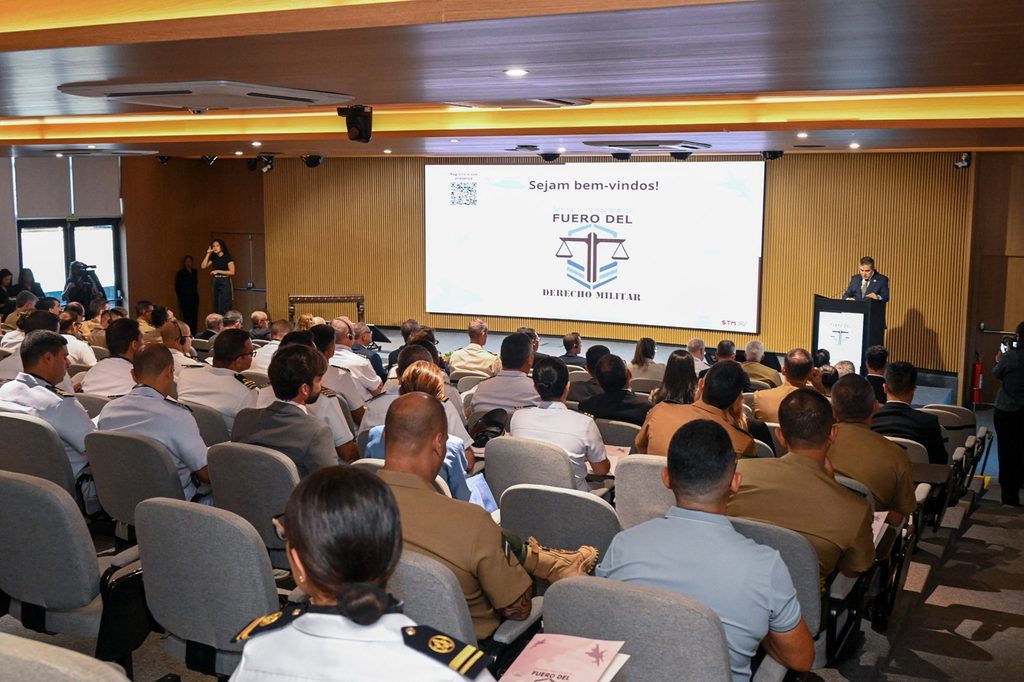
Agencia Peruana de Noticias PRENSAPERU.PE https://www.prensaperu.pe Twitter:@prensaperupe El Perú ha consolidado su presencia en el debate jurídico internacional especializado mediante la participación activa en el Seminario Internacional sobre Fuero del Derecho Militar, organizado por el Superior Tribunal Militar de Brasil, realizado los días 20 y 21 de octubre de 2026 en la ciudad de Brasilia. Este encuentro reúne a especialistas provenientes de nueve países con el propósito de examinar de manera conjunta los desafíos jurídicos, estratégicos y tecnológicos que definen el ejercicio de la función militar en el contexto contemporáneo, así como su estrecha vinculación con la seguridad nacional y el papel que cumple la justicia militar dentro del marco del Estado de derecho.
Desde una perspectiva metodológica, la relevancia de este evento radica en que la materia jurídico-militar ha dejado de ser un ámbito exclusivamente interno para convertirse en objeto de análisis comparado, en el que convergen realidades institucionales diversas pero con preocupaciones comunes. Los datos cualitativos indican que la discusión ha trascendido los aspectos puramente procesales para abarcar cuestiones sustantivas: la adecuación de los marcos normativos a los avances tecnológicos aplicados a la defensa, los principios que deben regir el uso de nuevas capacidades militares y la necesaria articulación entre la especialidad de la justicia militar y los derechos fundamentales que garantiza el ordenamiento constitucional de cada Estado. En términos cuantitativos, la participación de delegaciones de nueve naciones y la amplitud temática del programa demuestran que se trata de una agenda vigente y en expansión, que involucra a distintos actores del derecho militar en el ámbito hemisférico y global.
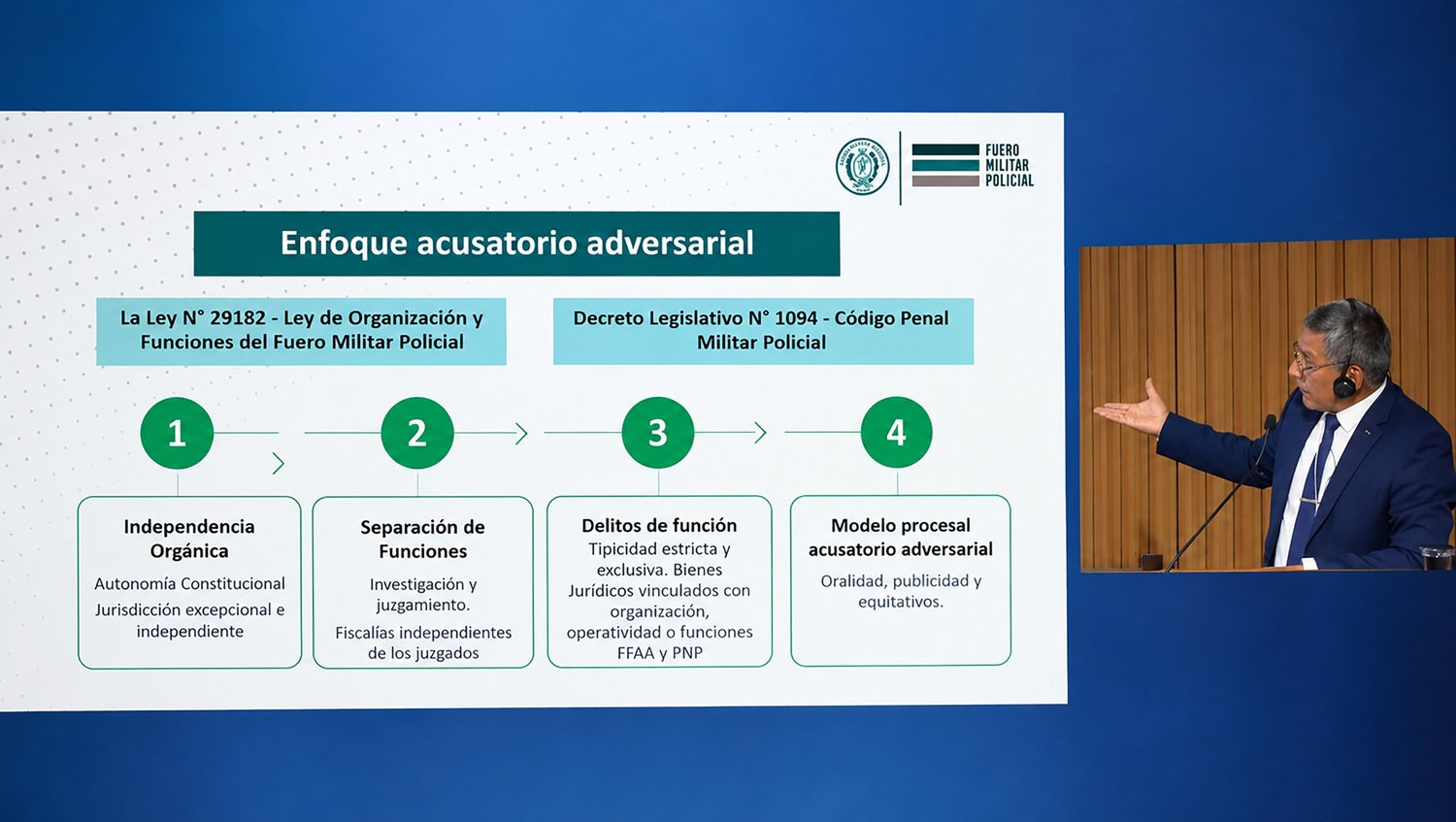
De otro lado, la delegación peruana, encabezada por el presidente del Fuero Militar Policial, contralmirante CJ (r) Darío Vásquez Rojas, expuso la experiencia nacional a través de la ponencia titulada «La justicia militar en el Perú. Situación actual y marco constitucional», presentada en el panel dedicado a la justicia militar estatal y la seguridad nacional. Esta participación permite establecer que el modelo peruano se inserta en una corriente internacional que reafirma la necesidad de mantener una jurisdicción especializada, siempre que se desenvuelva dentro de los límites que impone la Constitución y respete los estándares del debido proceso y los derechos fundamentales. La intervención complementa los aportes de especialistas de España, Chile y Colombia, permitiendo identificar convergencias en cuanto a los retos institucionales, así como particularidades propias de cada ordenamiento jurídico.
En ese sentido, el temario del seminario evidencia que el derecho militar debe evolucionar al ritmo de las transformaciones estratégicas y tecnológicas. Temas como la inteligencia artificial, los sistemas autónomos, la cibernética y la robótica militar plantean interrogantes jurídicas inéditas que exigen respuestas claras y consensuadas. Aspectos tradicionales como el derecho internacional de los conflictos armados y la responsabilidad del mando conviven con estas nuevas realidades, lo que obliga a una actualización permanente de los conocimientos y de los propios cuerpos normativos. En este sentido, el intercambio de experiencias entre naciones constituye una estrategia eficaz para anticipar problemas comunes y diseñar soluciones jurídicas coherentes con el Estado de derecho.
Del mismo modo, la participación del Perú en Brasilia no es un hecho aislado, sino que se inscribe en una política continua de proyección académica y jurídica internacional que se fortaleció recientemente con la realización, en la ciudad de Lima, del IX Encuentro Internacional de Justicia Militar Policial y Derecho Procesal, efectuado del 30 de septiembre al 2 de octubre de 2026, con presencia de delegaciones de seis países. Esta doble participación —como anfitriona y como invitada— refleja el interés del Perú por contribuir y beneficiarse de un espacio de cooperación técnica que enriquece la propia institución, mejora sus procedimientos y fortalece su legitimidad frente a la ciudadanía. Entre las acciones concretas del encuentro destaca la firma de un acuerdo de cooperación técnica entre el Superior Tribunal Militar y el Ministerio de Justicia de Brasil, lo que demuestra que estos encuentros generan también compromisos institucionales que fortalecen la integración jurídica regional.
Finalmente, como soluciones y perspectivas que emergen del análisis, es fundamental que los avances tecnológicos y los nuevos escenarios estratégicos vayan acompañados de un desarrollo normativo que preserve los principios del Estado de derecho. No puede haber innovación en defensa sin el correspondiente marco jurídico que la regule y la legitime. Asimismo, el intercambio internacional debe traducirse en reformas y buenas prácticas al interior de cada sistema de justicia militar, de modo que lo aprendido en estos espacios redunde en una mejor administración de justicia y en una mayor protección de los derechos de las personas que integran las instituciones armadas y policiales, así como de la ciudadanía en general.
DATOS CONCEPTUALES
Fuero Militar Policial: Es la jurisdicción especializada del Estado peruano encargada de conocer y resolver los delitos de función militar y policial establecidos en la ley. Forma parte del sistema judicial nacional y ejerce sus funciones con independencia técnica, dentro del marco de la Constitución Política y de los tratados internacionales de derechos humanos ratificados por el Perú. Su finalidad es garantizar la disciplina, el cumplimiento del deber y la seguridad jurídica al interior de las instituciones castrenses y policiales, respetando siempre los principios del Estado de derecho.
Estado de Derecho: Principio fundamental del ordenamiento jurídico según el cual todas las personas y los poderes públicos, incluidas las instituciones de defensa y seguridad, se encuentran sometidos a la ley y al imperio de la Constitución. Implica que el ejercicio de toda función pública debe ajustarse a un marco normativo previamente establecido, con respeto irrestricto a los derechos fundamentales y con acceso a mecanismos de control y tutela judicial efectiva.
Seguridad Nacional: Situación en la que el Estado puede garantizar la protección de su soberanía, su integridad territorial, sus intereses vitales y el bienestar de su población frente a amenazas y riesgos de diversa índole. Constituye uno de los fines esenciales del Estado y requiere la articulación de múltiples instrumentos, entre ellos un sistema de justicia especializada que asegure el correcto funcionamiento y la disciplina de las instituciones encargadas de la defensa y el orden interno.
Responsabilidad del mando: Principio jurídico y militar según el cual los comandantes y autoridades asumen la responsabilidad por las decisiones adoptadas en el ejercicio de sus funciones, así como por las consecuencias derivadas de las acciones u omisiones de las personas bajo su dirección y control. Es uno de los pilares del derecho militar y se ve especialmente desafiado por la introducción de tecnologías autónomas y sistemas complejos en el ámbito de la defensa.
Cooperación técnica internacional: Conjunto de acciones, mecanismos y acuerdos mediante los cuales los Estados y sus instituciones intercambian conocimientos, experiencias y buenas prácticas con el fin de fortalecer sus capacidades institucionales. En el ámbito de la justicia militar, permite armonizar criterios, actualizar normativas y enfrentar de manera conjunta desafíos jurídicos que no conocen fronteras.
DATOS CONTEXTUALES
1.- La participación internacional del Perú en materia de justicia militar policial constituye una estrategia valiosa que permite actualizar conocimientos, comparar modelos jurídicos y fortalecer la institución incorporando las mejores prácticas que se desarrollan en el derecho comparado, siempre con respeto a la identidad constitucional del sistema peruano.
2.- El derecho militar enfrenta hoy el reto de ofrecer respuestas jurídicas claras y oportunas a fenómenos nuevos como la inteligencia artificial, los sistemas autónomos y la cibernética militar, sin que ello signifique abandonar los principios clásicos del derecho internacional humanitario y la protección de los derechos fundamentales.
3.- La especialidad de la justicia militar no se contrapone al Estado de derecho, sino que lo complementa cuando actúa dentro de sus competencias constitucionales y con garantías de debido proceso; su fortalecimiento contribuye a mantener la disciplina institucional y, con ello, la eficacia de las fuerzas armadas y policiales al servicio de la seguridad nacional.
4.- La realización consecutiva de eventos de esta naturaleza en Lima y en Brasilia evidencia la consolidación de una red de cooperación jurídica internacional en materia militar, en la que el Perú ya participa como actor relevante que aporta su experiencia y recibe valiosos insumos para el perfeccionamiento de su propio sistema normativo.
5.- Los desafíos del derecho militar en el siglo XXI trascienden las fronteras nacionales, por lo que el aislamiento institucional no constituye una alternativa viable; por el contrario, el diálogo permanente entre especialistas y países resulta indispensable para construir respuestas jurídicas sólidas frente a las nuevas realidades estratégicas y tecnológicas de la defensa.
Fuente: Agencia Peruana de Noticias PRENSAPERU.PE https://www.prensaperu.pe Twitter: @prensaperupe
Translate
Peru presents its constitutional framework at an international seminar on military law in Brasília; Rear Admiral Darío Vásquez Rojas leads the Peruvian delegation, which is analyzing issues of defense, technology, and national security alongside other specialists.
Peruvian News Agency PRENSAPERU.PE https://www.prensaperu.pe Twitter: @prensaperupe
Peru has consolidated its presence in the specialized international legal debate through its active participation in the International Seminar on Military Jurisdiction, organized by the Superior Military Court of Brazil, held on 20 and 21 October 2026 in the city of Brasilia. This gathering brings together specialists from nine countries for the purpose of jointly examining the legal, strategic and technological challenges that define the exercise of military functions in the contemporary context, as well as its close link with national security and the role played by military justice within the framework of the rule of law.
From a methodological perspective, the relevance of this event lies in the fact that the military legal field is no longer an exclusively domestic sphere but has instead become an object of comparative analysis where diverse institutional realities converge along with shared concerns. Qualitative data indicate that the discussion has moved beyond purely procedural aspects to encompass substantive matters such as the adaptation of regulatory frameworks to technological advances applied to defence, the principles that should govern the use of new military capabilities and the necessary connection between the specialization of military justice and the fundamental rights guaranteed by the constitutional order of each State. In quantitative terms, the participation of delegations from nine nations and the broad scope of the programme demonstrate that this is an expanding and current agenda involving various actors in military law at both the hemispheric and global levels.
Furthermore, the Peruvian delegation led by the President of the Military Police Jurisdiction, Rear Admiral (r) Darío Vásquez Rojas, presented the country’s experience through the paper entitled Military Justice in Peru. Current Situation and Constitutional Framework, delivered during the panel on State Military Justice and National Security. This participation confirms that the Peruvian model forms part of an international trend that reaffirms the need to maintain a specialized jurisdiction, provided it operates within the limits established by the Constitution and upholds due process standards and fundamental rights. The presentation complements contributions from specialists in Spain, Chile and Colombia, making it possible to identify areas of convergence regarding institutional challenges as well as specific features of each legal system.
In this respect, the seminar agenda demonstrates that military law must evolve in step with strategic and technological transformations. Topics such as artificial intelligence, autonomous systems, cybernetics and military robotics raise unprecedented legal questions that demand clear and agreed responses. Traditional matters such as the international law of armed conflict and command responsibility exist alongside these new realities, which requires the continuous updating of knowledge and regulatory frameworks themselves. In this sense, the exchange of experiences among nations constitutes an effective strategy for anticipating common problems and designing legal solutions consistent with the rule of law.
Likewise, Peru’s participation in Brasilia is not an isolated event but forms part of a sustained policy of international academic and legal outreach that was recently strengthened with the holding in Lima of the IX International Meeting of Military Police Justice and Procedural Law from 30 September to 2 October 2026, with delegations from six countries in attendance. This dual participation both as host and guest reflects Peru’s interest in contributing to and benefiting from a space for technical cooperation that enriches the institution itself, improves its procedures and strengthens its legitimacy before citizens. One concrete outcome of the meeting is the signing of a technical cooperation agreement between the Superior Military Court and the Ministry of Justice of Brazil, which demonstrates that these gatherings also produce institutional commitments that strengthen regional legal integration.
Finally, the analysis leads to several solutions and perspectives. It is essential that technological advances and new strategic scenarios be accompanied by regulatory development that upholds the principles of the rule of law. Innovation in defence cannot exist without an accompanying legal framework to regulate and legitimize it. Furthermore, international exchange must translate into reforms and good practices within each military justice system, so that lessons learned in these spaces contribute to the better administration of justice and greater protection of the rights of personnel serving in the armed forces and the national police, as well as citizens in general.
CONCEPTUAL DATA
Military Police Jurisdiction: This is the specialized jurisdiction of the Peruvian State responsible for hearing and resolving military and police service offences established by law. It forms part of the national judicial system and performs its functions with technical independence within the framework of the Political Constitution and international human rights treaties ratified by Peru. Its purpose is to guarantee discipline, fulfilment of duty and legal certainty within the armed forces and police institutions, always respecting the principles of the rule of law.
Rule of Law: A fundamental principle of the legal order according to which all persons and public authorities including defence and security institutions are subject to the law and the authority of the Constitution. It means that the exercise of any public function must conform to a previously established legal framework, with full respect for fundamental rights and access to oversight mechanisms and effective judicial protection.
National Security: The condition in which the State can guarantee the protection of its sovereignty, territorial integrity, vital interests and the well-being of its population against threats and risks of various kinds. It constitutes one of the essential purposes of the State and requires the coordination of multiple instruments, including a specialized justice system that ensures the proper functioning and discipline of the institutions responsible for defence and internal order.
Command Responsibility: A legal and military principle whereby commanders and authorities assume responsibility for decisions made in the exercise of their functions as well as the consequences of actions or omissions by personnel under their direction and control. It is one of the pillars of military law and faces particular challenges due to the introduction of autonomous technologies and complex systems in the field of defence.
International Technical Cooperation: A set of actions, mechanisms and agreements through which States and their institutions exchange knowledge, experiences and good practices for the purpose of strengthening their institutional capacities. In the field of military justice, this enables the harmonization of criteria, regulatory updates and the joint addressing of legal challenges that transcend national borders.
CONTEXTUAL DATA
1.- Peru’s international participation in matters of military police justice constitutes a valuable strategy that enables the updating of knowledge, the comparison of legal models and the strengthening of the institution through the incorporation of best practices developed in comparative law, always with respect for the constitutional identity of the Peruvian system.
2.- Military law currently faces the challenge of providing clear and timely legal responses to emerging phenomena such as artificial intelligence, autonomous systems and military cybernetics, without abandoning the classic principles of international humanitarian law and the protection of fundamental rights.
3.- The specialization of military justice does not contradict the rule of law but rather complements it when acting within its constitutional competences and with guarantees of due process. Its strengthening contributes to maintaining institutional discipline and thereby the effectiveness of the armed forces and police in serving national security.
4.- The consecutive holding of similar events in Lima and Brasilia demonstrates the consolidation of an international legal cooperation network in military matters, in which Peru already participates as a relevant contributor that shares its experience while receiving valuable input for the improvement of its own regulatory system.
5.- The challenges facing military law in the twenty-first century transcend national borders. Institutional isolation is therefore not a viable alternative. On the contrary, ongoing dialogue among specialists and countries is essential to build sound legal responses to the new strategic and technological realities of defence.
Source: Peruvian News Agency PRENSAPERU.PE https://www.prensaperu.pe Twitter: @prensaperupe