
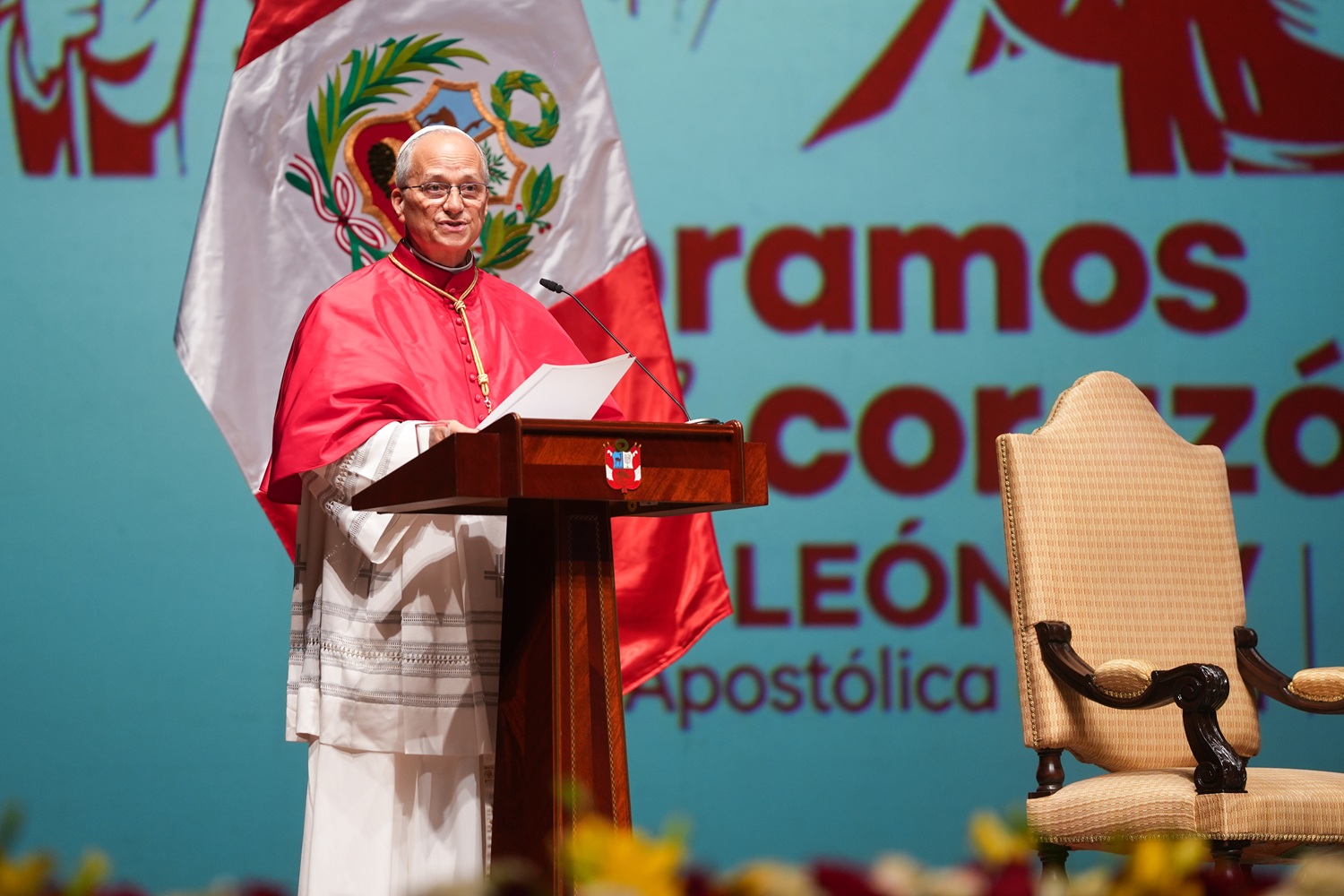
Agencia Peruana de Noticias PRENSAPERU.PE https://www.prensaperu.pe Twitter: @prensaperupe En su primera intervención pública tras arribar al Perú, Su Santidad el Papa León XIV pronunció un emotivo discurso en el Teatro Nacional de Lima, en el que no solo dio la bienvenida al país, sino que trazó una profunda reflexión sobre la identidad nacional, la función del Estado, la justicia social y la esperanza. Su apertura —”me alegra profundamente volver al Perú”— marcó el tono de toda la alocución: la de un pastor que regresa a una tierra que considera suya, donde vivió años de su ministerio pastoral en Chiclayo y recibió la nacionalidad peruana en 2015.
UN VÍNCULO QUE TRASCIENDE LO NSTITUCIONAL
El Pontífice comenzó recordando que su historia con el Perú comenzó mucho antes de su elección como Sumo Pontífice. Rememoró los años compartidos con la gente de Chiclayo, las puertas abiertas de los hogares peruanos, la hospitalidad y los sabores de la tierra. “Regreso también a mi patria”, afirmó con sentidas palabras, reconociendo que el Perú forma parte de su propia historia. Esta cercanía personal no es anecdótica: es el cimiento desde el que lanza su mirada sobre la realidad nacional.
LA RIQUEZA DE UNA IDENTIDAD DIVERSA
Destacó que el Perú es una nación construida sobre la base de múltiples pueblos, lenguas y tradiciones: quechua, aymara, lenguas amazónicas, herencia afroperuana y asiático-peruana. Subrayó que la unidad no significa uniformidad: “la unidad de un pueblo se fortalece cuando esas diferencias encuentran su lugar”. Citó a Santa Rosa de Lima como primera flor de santidad del continente, recordando que la fe en estas tierras ha sido siempre profundamente encarnada en la cultura de su gente.
EL SERVICIO ÚBLICO COMO VOCACIÓN Y CARIDAD
Dirigiéndose a las autoridades presentes, el Papa recordó las palabras del Papa Francisco en su visita de 2018: “la política es una altísima vocación, una de las formas más preciosas de la caridad, porque busca el bien común”. Destacó que la democracia exige escucha genuina, especialmente de quienes están lejos de los centros de decisión. “Detrás de expedientes, de trámites ordinarios o del abstracto número del Censo Nacional, hay rostros concretos”, enfatizó, advirtiendo que nadie debe sentirse invisible para las instituciones del Estado.
UNA MIRADA CRÍTICA: PAZ COTIDIANA Y DESARROLLO INTEGRAL
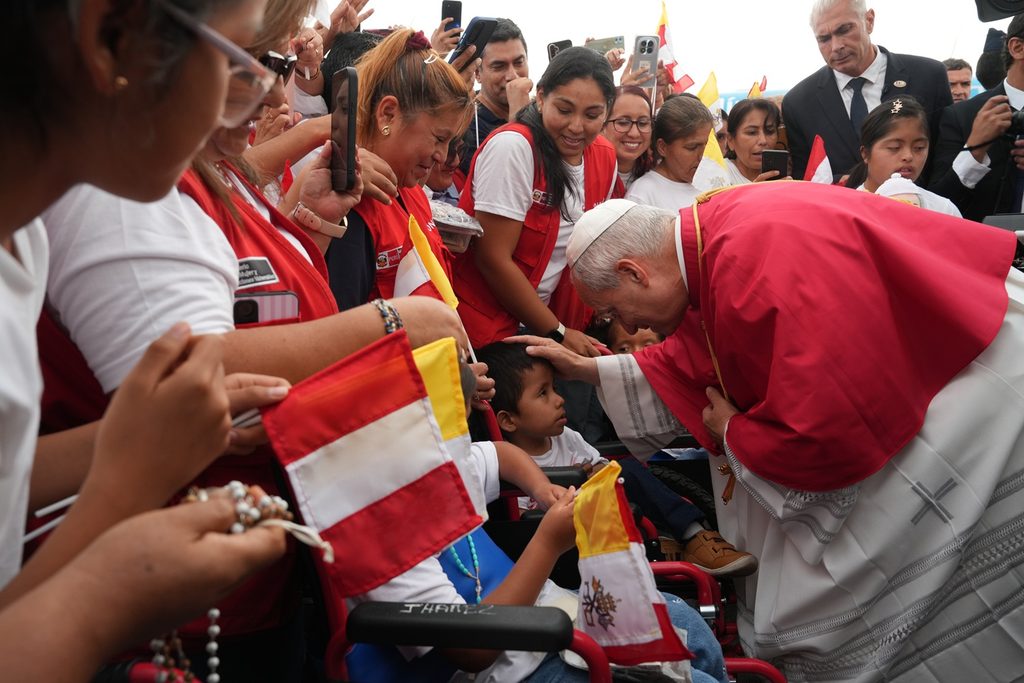
El Pontífice señaló que la paz verdadera se mide en lo cotidiano: “salir a trabajar sin temor, cuidar de los hijos y regresar a casa con serenidad”. Planteó que el desarrollo no puede reducirse a cifras económicas: debe comprender el bienestar material, pero también la dignidad del trabajo, el acceso a salud, educación de calidad y oportunidades para los jóvenes. Habló con especial énfasis de las familias, los pescadores, campesinos, pequeños comerciantes, personas mayores y con discapacidad, así como del papel fundamental de las mujeres peruanas y las organizaciones populares.
MEDIO AMBIENTE,TECNOLOGÍA Y DIÁLOGO ENTRE NACIONES
Abordó también la responsabilidad de cuidar la casa común, especialmente en un país con una inmensa riqueza natural y comunidades que dependen directamente de ella. Sobre la inteligencia artificial y el avance tecnológico, señaló que deben orientarse siempre al bien común y al servicio de la persona humana, con marcos legales que prevengan abusos. Finalmente, saludó a los peruanos en el exterior y llamó a la cooperación internacional, al diálogo entre naciones y a la construcción de paz, recordando que “ninguna nación puede considerar ajena la suerte de los demás”.
DATOS CONCEPTUALES
Caridad política: según la enseñanza de la Iglesia, es la forma más elevada de servicio público, porque no se reduce a administrar recursos, sino a buscar el bien común como fin último de toda acción de gobierno.
Desarrollo integral: concepto que va más allá del crecimiento económico; comprende el bienestar material, la educación, la salud, la libertad, la cultura y la dimensión espiritual de cada persona y de cada pueblo.
Identidad nacional diversa: reconocimiento de que la unidad de un país no supone la uniformidad de sus pueblos, lenguas y tradiciones, sino que se construye respetando e integrando cada aporte distinto en un proyecto común.
Solidaridad cotidiana: expresiones concretas de ayuda mutua entre vecinos y familias, como las faenas comunales y la hospitalidad, que constituyen la base moral sobre la que se sostiene la convivencia nacional.
Doctrina social de la Iglesia: conjunto de principios éticos y sociales que orientan la reflexión sobre la vida en sociedad, la economía, la política y el bien común, colocando siempre a la persona humana en el centro.
DATOS CONTEXTUALES
1.- La visita del Papa León XIV no es solo un evento religioso, sino una oportunidad para que el país repiense qué significa servir al Perú desde lo público y desde lo cotidiano. Su discurso nos recuerda que escuchar es el primer paso para gobernar bien, y que nadie debe quedar invisible ante las instituciones del Estado.
2.- La verdadera fortaleza nacional no está en borrar las diferencias, sino en darles un lugar legítimo dentro del proyecto común. Cuando cada comunidad se siente reconocida, la unidad se vuelve posible y duradera.
3.- El desarrollo que el país necesita debe empezar por garantizar aquello que todas las familias peruanas anhelan: dignidad en el trabajo, educación que abra horizontes, salud que acompañe en la enfermedad y paz para construir el futuro sin temor.
4.- La tecnología y el conocimiento son herramientas poderosas, pero su valor depende de para quién y con qué propósito se usan. Deben servir a todos, especialmente a quienes viven en zonas alejadas, y no convertirse en otra fuente de desigualdad.
5.- La esperanza del Perú también reside fuera de sus fronteras, en los millones de peruanos que llevan su tierra en el corazón y contribuyen al bienestar de sus familias y comunidades. Su voz merece ser escuchada y su aporte reconocido.
Fuente: Agencia Peruana de Noticias PRENSAPERU.PE https://www.prensaperu.pe Twitter: @prensaperupe
Translate
Pope Leo XIV begins his visit to Peru by stating that he is also returning to his homeland, in an address that combines gratitude, remembrance, and a call to serve everyone noting, too, that politics is a precious form of charity toward all people.
Peruvian News Agency PRENSAPERU.PE https://www.prensaperu.pe Twitter: @prensaperupe In his first public address upon arriving in Peru, His Holiness Pope Leo XIV delivered a heartfelt speech at the National Theatre of Lima. Beyond a warm welcome, he offered a profound reflection on national identity, the role of the State, social justice, and hope. His opening words I deeply rejoice in returning to Peru set the tone of the entire address that of a pastor returning to a land he calls his own, where he lived years of his pastoral ministry in Chiclayo and received Peruvian citizenship in 2015.
A Bond That Goes Beyond the Institutional
The Holy Father began by recalling that his story with Peru began long before his election as Supreme Pontiff. He spoke of the years spent alongside the people of Chiclayo, the open doors of Peruvian homes, their hospitality, and the flavours of the land. I return also to my homeland he said poignantly, acknowledging that Peru is part of his own history. This personal closeness is no mere detail it is the foundation from which he views the nation’s reality.
The Wealth of a Diverse Identity
He noted that Peru is a nation built upon many peoples, languages, and traditions Quechua, Aymara, Amazonian languages, Afro-Peruvian heritage, and Chinese-Peruvian heritage. He emphasised that unity does not mean uniformity the unity of a people is strengthened when those differences find their rightful place. He invoked Saint Rose of Lima as the first flower of sanctity on the continent, recalling that faith in these lands has always been deeply rooted in the culture of its people.
Public Service as Vocation and Charity
Addressing the authorities present, the Pope recalled the words of Pope Francis during his 2018 visit politics is a lofty vocation, one of the noblest forms of charity, for it seeks the common good. He stressed that democracy requires genuine listening, especially to those farthest from centres of decision-making. Behind paperwork, routine procedures, or the abstract figure of the National Census, there are real faces he urged, warning that no one should feel invisible to State institutions.
A Critical Gaze Daily Peace and Integral Development
The Holy Father noted that true peace is measured in everyday life leaving for work without fear, caring for one’s children, and returning home in peace. He argued that development cannot be reduced to economic figures it must include material well-being, dignified work, access to healthcare, quality education, and opportunities for young people. He spoke with special concern for families, fishermen, farmers, small business owners, the elderly, persons with disabilities, Peruvian women, and grassroots community organisations.
Environment, Technology, and Dialogue Among Nations
He also addressed our shared responsibility to care for our common home, especially in a country of extraordinary natural wealth and communities that depend directly upon it. Regarding artificial intelligence and technological progress, he stated that these must always be directed toward the common good and at the service of the human person, with legal frameworks in place to prevent abuse. Finally, he sent a greeting to Peruvians living abroad and called for international cooperation, dialogue among nations, and peacebuilding, reminding us that no nation can consider the fate of others to be someone else’s concern.
Conceptual Definitions
Political charity: According to Church teaching, it is the highest form of public service, because it goes beyond managing resources to seeking the common good as the ultimate purpose of all government action.
Integral development: A concept that goes beyond economic growth it includes material well-being, education, health care, freedom, culture, and the spiritual dimension of every person and every people.
Diverse national identity: The recognition that a country’s unity does not require uniformity among its peoples, languages, and traditions, but is built by respecting and integrating each distinct contribution into a shared national project.
Everyday solidarity Concrete: expressions of mutual help among neighbours and families, such as communal work projects and hospitality, which form the moral foundation of national coexistence.
The Church’s social doctrine: A body of ethical and social principles that guide reflection on society, economics, politics, and the common good, always placing the human person at the centre.
Contextual Points
1.- Pope Leo XIV’s visit is not merely a religious event it is an opportunity for Peru to reconsider what it means to serve the nation, both through public institutions and in daily life. His speech reminds us that listening is the first step toward good governance, and that no one should remain invisible to the State.
2.- True national strength does not lie in erasing differences, but in giving them a legitimate place within the common project. When every community feels acknowledged, unity becomes possible and lasting.
3.- The development Peru needs must begin by guaranteeing what every Peruvian family longs for dignified work, education that opens doors, healthcare that is there when needed, and the peace to build a future without fear.
4.- Technology and knowledge are powerful tools, but their value depends on who benefits and for what purpose. They must serve everyone, especially those living in remote areas, rather than becoming yet another source of inequality.
5.- Peru’s hope also lives beyond its borders, in the millions of Peruvians who carry their homeland in their hearts and contribute to the well-being of their families and communities. Their voices deserve to be heard and their contributions recognised.
Source: Peruvian News Agency PRENSAPERU.PE https://www.prensaperu.pe Twitter: @prensaperupe