
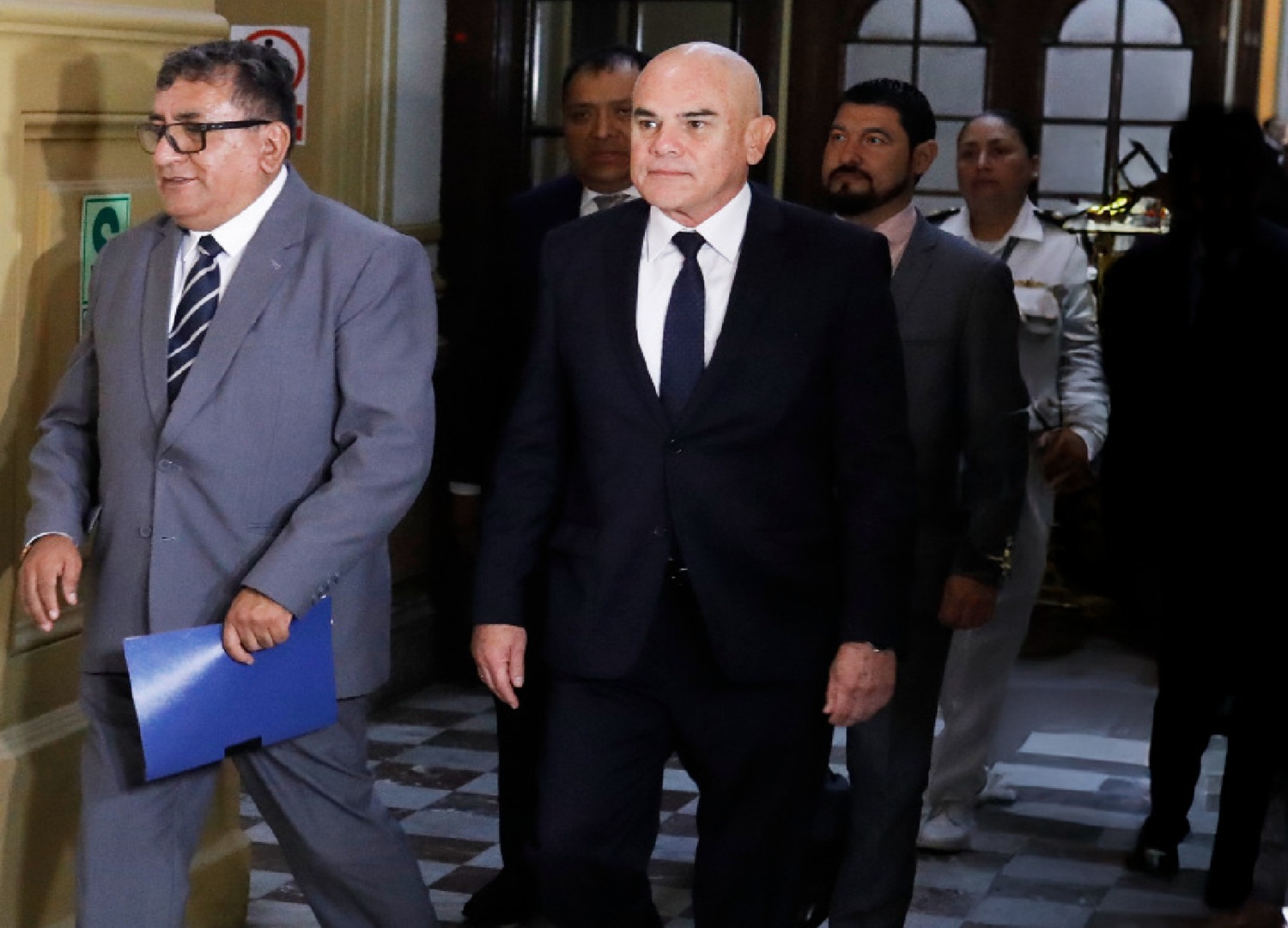
Agencia Peruana de Noticias PRENSAPERU.PE https://www.prensaperu.pe Twitter: @prensaperupe El Gobierno peruano, a través de la voz de su Presidente del Consejo de Ministros, Ernesto Álvarez, ha delineado con claridad y firmeza su posición innegociable frente a la propuesta legislativa que busca prorrogar el proceso de formalización minera. En un comunicado oficial dirigido al Congreso de la República, el Poder Ejecutivo ha establecido dos pilares fundamentales que considera esenciales para garantizar la integridad y la eficacia del Registro Integral de Formalización Minera (Reinfo), así como para combatir la minería ilegal de manera contundente.
PRINCIPIOS IRRENUNCIABLES PARA LA MINERÍA FORMAL
El premier Álvarez ha enfatizado que la postura del Ejecutivo se asienta sobre dos principios irrenunciables. En primer lugar, se propone la extensión de la vigencia del Reinfo por un periodo de hasta doce meses. Esta prórroga, sin embargo, no es un cheque en blanco, sino una medida estratégica diseñada para permitir que los mineros genuinamente interesados en la formalización completen sus trámites, impidiendo a su vez que el Reinfo sea desvirtuado y utilizado como una coartada por la minería ilegal, que carece de una voluntad real de adecuación a la normativa.
En segundo lugar, el Ejecutivo mantiene una posición categórica respecto al no reingreso de los cerca de 50 mil mineros que ya fueron excluidos del proceso. Esta decisión subraya la importancia de la seriedad y el cumplimiento de los requisitos establecidos. Permitir el retorno de aquellos que no han demostrado un compromiso con la formalización socavaría la credibilidad del sistema y enviaría un mensaje equivocado a quienes sí se esfuerzan por operar dentro del marco legal.
ARTICULACIÓN CON EL CONGRESO Y LA AMENAZA DE OBSERVACIÓN
El titular de la Presidencia del Consejo de Ministros recalcó la existencia de una articulación interinstitucional constante con el Congreso. No obstante, advirtió con contundencia que, si la propuesta legislativa final no se alinea con la visión y los principios planteados por el Gobierno nacional, se ejercerá el derecho constitucional de observación legislativa. Esta declaración refleja la determinación del Ejecutivo de asegurar que cualquier normativa aprobada fortalezca el proceso de formalización y no cree brechas que puedan ser explotadas por actividades ilícitas.
PROPUESTAS DETALLADAS PARA UN MARCO ROBUSTO
El documento entregado al parlamento no solo establece los puntos innegociables, sino que también presenta una serie de propuestas técnicas cruciales para perfeccionar el marco legal:
1.- Derogación de la Moratoria a la Exclusión del Reinfo: Se solicita eliminar la suspensión de los procedimientos de exclusión del Reinfo. Esta moratoria, al paralizar la depuración del padrón, impide sanear el listado de inscritos y compromete la facultad estatal para enfrentar eficazmente las actividades vinculadas a la minería ilegal.
2.- Clarificación de Competencias de Fiscalización Ambiental: Se precisa que la potestad de supervisión ambiental recae, por normativa vigente, en los Gobiernos Regionales. El Ejecutivo enfatiza que estas atribuciones no deben ser transferidas al Ministerio de Energía y Minas, respetando el principio de descentralización y la especialización de funciones.
3.- Desestimación del Censo Nacional de Pequeña Minería y Minería Artesanal: Se recomienda suprimir la cláusula concerniente a la ejecución de un censo nacional, dado que esta iniciativa ya está prevista y articulada dentro de la Política Nacional Multisectorial de la Pequeña Minería y Minería Artesanal, aprobada mediante Decreto Supremo 016-2022-EM.
4.- Ajuste en la Actualización de Coordenadas: Se propone modificar la tercera disposición complementaria del proyecto de ley para que la actualización de coordenadas se restrinja únicamente a concesiones mineras adyacentes, evitando así su aplicación indiscriminada a cualquier área del territorio nacional y previniendo posibles conflictos o invasiones de derechos.
5.- Creación de la Figura del “Titular de Licencia Temporal de Producción Minera”: Se plantea introducir esta categorización para las inscripciones vigentes en el Reinfo. El objetivo es distinguir claramente a los operadores en proceso de formalización de las operaciones ilícitas, dotando de mayor transparencia y seguridad jurídica al sector.
6.- Formalización Laboral Obligatoria: Se instituye la exigencia de la inclusión obligatoria de los trabajadores en el régimen de planilla como un requisito indispensable del proceso de formalización. Esta medida busca garantizar los derechos laborales, la seguridad social y promover prácticas de empleo responsables.
HACIA UN SECTOR MINERO RESPONSABLE Y COMPETITIVO
Mediante estas contribuciones, el Ejecutivo busca dotar al Congreso de un marco normativo técnicamente sólido y coherente. La finalidad última es impulsar una formalización minera genuina, que no solo disminuya el ámbito de acción de la ilegalidad, sino que también proporcione certidumbre legal a los inversionistas y operadores responsables, fomentando así un sector minero más justo, sostenible y competitivo en el país.
CONCLUSIONES
1.- Compromiso Inquebrantable con la Formalización Genuina: El Gobierno peruano demuestra una postura firme y sin concesiones, priorizando una formalización minera que erradique la ilegalidad y no se preste a subterfugios, asegurando la integridad del proceso del Reinfo.
2.- Defensa de la Exclusión de Mineros No Comprometidos: La decisión de mantener la exclusión de los 50 mil mineros subraya la importancia del cumplimiento de requisitos y la seriedad del proceso, evitando que el sistema sea desvirtuado por aquellos sin una voluntad real de adecuación.
3.- Coherencia Legislativa y Responsabilidad Ejecutiva: El Ejecutivo enfatiza la necesidad de una articulación efectiva con el Congreso, advirtiendo sobre la observación de normas que no se alineen con la visión de un sector minero responsable, reafirmando su rol de garante de la legalidad.
4.- Fortalecimiento del Marco Regulatorio y Lucha contra la Ilegalidad: Las propuestas detalladas, como la derogación de la moratoria de exclusión y la diferenciación de licencias temporales, buscan cerrar las brechas que permiten la proliferación de actividades ilícitas y fortalecer la capacidad del Estado para combatirlas.
5.- Visión Integral para un Desarrollo Sostenible: El conjunto de medidas propuestas, que abarca desde la delimitación de competencias de fiscalización hasta la formalización laboral obligatoria, refleja una visión holística para un sector minero que contribuya al desarrollo económico y social del país, respetando el medio ambiente y los derechos de los trabajadores.
Fuente: Agencia Peruana de Noticias PRENSAPERU.PE https://www.prensaperu.pe Twitter: @prensaperupe

English Translation
The Executive Branch Takes a Firm Stand: Mining Formalization Without Concessions to Illegality; Those Excluded Will Not Return, the Prime Minister of the Transitional Government Declared.
Peruvian News Agency PRENSAPERU.PE https://www.prensaperu.pe Twitter: @prensaperupe The Peruvian government, through its Prime Minister, Ernesto Álvarez, has clearly and firmly outlined its non-negotiable position regarding the proposed legislation that seeks to extend the mining formalization process. In an official statement addressed to the Congress of the Republic, the Executive Branch has established two fundamental pillars that it considers essential to guarantee the integrity and effectiveness of the Comprehensive Mining Formalization Registry (REINFO), as well as to combat illegal mining decisively.
NON-NEGOTIABLE PRINCIPLES FOR FORMAL MINING
Prime Minister Álvarez has emphasized that the Executive’s position rests on two non-negotiable principles. First, the proposal is to extend the validity of the REINFO (Registry of Informal Mining Operators) for up to twelve months. This extension, however, is not a blank check, but a strategic measure designed to allow miners genuinely interested in formalization to complete their paperwork, while also preventing the REINFO from being distorted and used as a pretext by illegal mining, which lacks a real commitment to complying with regulations.
Second, the Executive maintains a firm stance against the readmission of the approximately 50,000 miners who have already been excluded from the process. This decision underscores the importance of seriousness and compliance with the established requirements. Allowing the return of those who have not demonstrated a commitment to formalization would undermine the credibility of the system and send the wrong message to those who are striving to operate within the legal framework.
ARTICULATION WITH CONGRESS AND THE THREAT OF OBSERVATION
The head of the Council of Ministers emphasized the existence of constant inter-institutional coordination with Congress. However, he strongly warned that if the final legislative proposal does not align with the vision and principles put forward by the national government, the constitutional right of legislative oversight will be exercised. This statement reflects the Executive’s determination to ensure that any approved legislation strengthens the formalization process and does not create loopholes that could be exploited by illicit activities.
DETAILED PROPOSALS FOR A ROBUST FRAMEWORK
The document submitted to parliament not only establishes the non-negotiable points but also presents a series of crucial technical proposals to improve the legal framework:
1.- Repeal of the Moratorium on Exclusion from the REINFO (National Registry of Informal Mining Operators): The suspension of exclusion procedures from the REINFO is requested to be eliminated. This moratorium, by halting the purging of the registry, prevents the cleaning up of the list of registered individuals and compromises the state’s ability to effectively combat activities related to illegal mining.
2. Clarification of Environmental Oversight Responsibilities: It is clarified that, according to current regulations, the power of environmental oversight rests with the Regional Governments. The Executive Branch emphasizes that these powers should not be transferred to the Ministry of Energy and Mines, respecting the principle of decentralization and the specialization of functions.
3.- Dismissal of the National Census of Small-Scale and Artisanal Mining: It is recommended that the clause concerning the execution of a national census be eliminated, given that this initiative is already foreseen and integrated within the National Multisectoral Policy for Small-Scale and Artisanal Mining, approved by Supreme Decree 016-2022-EM.
4.- Adjustment to Coordinate Updates: It is proposed to modify the third supplementary provision of the bill so that coordinate updates are restricted solely to adjacent mining concessions, thus preventing their indiscriminate application to any area of the national territory and avoiding potential conflicts or infringements of rights.
5.- Creation of the “Temporary Mining Production License Holder” Category: This categorization is proposed for current registrations in the REINFO (National Registry of Mining Operators). The objective is to clearly distinguish operators in the formalization process from illicit operations, providing greater transparency and legal certainty to the sector.
6.- Mandatory Labor Formalization: The mandatory inclusion of workers on the payroll system is established as an essential requirement of the formalization process. This measure seeks to guarantee labor rights, social security, and promote responsible employment practices.
TOWARDS A RESPONSIBLE AND COMPETITIVE MINING SECTOR
Through these contributions, the Executive Branch seeks to provide Congress with a technically sound and coherent regulatory framework. The ultimate goal is to promote genuine mining formalization, which not only reduces the scope of illegal activity but also provides legal certainty to responsible investors and operators, thus fostering a fairer, more sustainable, and more competitive mining sector in the country.
CONCLUSIONS
1.- Unwavering Commitment to Genuine Formalization: The Peruvian government demonstrates a firm and uncompromising stance, prioritizing mining formalization that eradicates illegality and does not lend itself to subterfuge, ensuring the integrity of the REINFO process.
2.- Defense of the Exclusion of Uncommitted Miners: The decision to maintain the exclusion of 50,000 miners underscores the importance of compliance with requirements and the seriousness of the process, preventing the system from being undermined by those without a genuine willingness to adapt.
3.- Legislative Coherence and Executive Responsibility: The Executive emphasizes the need for effective coordination with Congress, warning against enacting regulations that do not align with the vision of a responsible mining sector, and reaffirming its role as guarantor of legality.
4.- Strengthening the Regulatory Framework and Combating Illegality: The detailed proposals, such as repealing the exclusion moratorium and differentiating temporary licenses, aim to close the loopholes that allow illicit activities to proliferate and strengthen the State’s capacity to combat them.
5.- Comprehensive Vision for Sustainable Development: The set of proposed measures, ranging from defining oversight responsibilities to mandatory formalization of labor, reflects a holistic vision for a mining sector that contributes to the country’s economic and social development, respecting the environment and workers’ rights.
Source: Peruvian News Agency PRENSAPERU.PE https://www.prensaperu.pe Twitter: @prensaperupe