
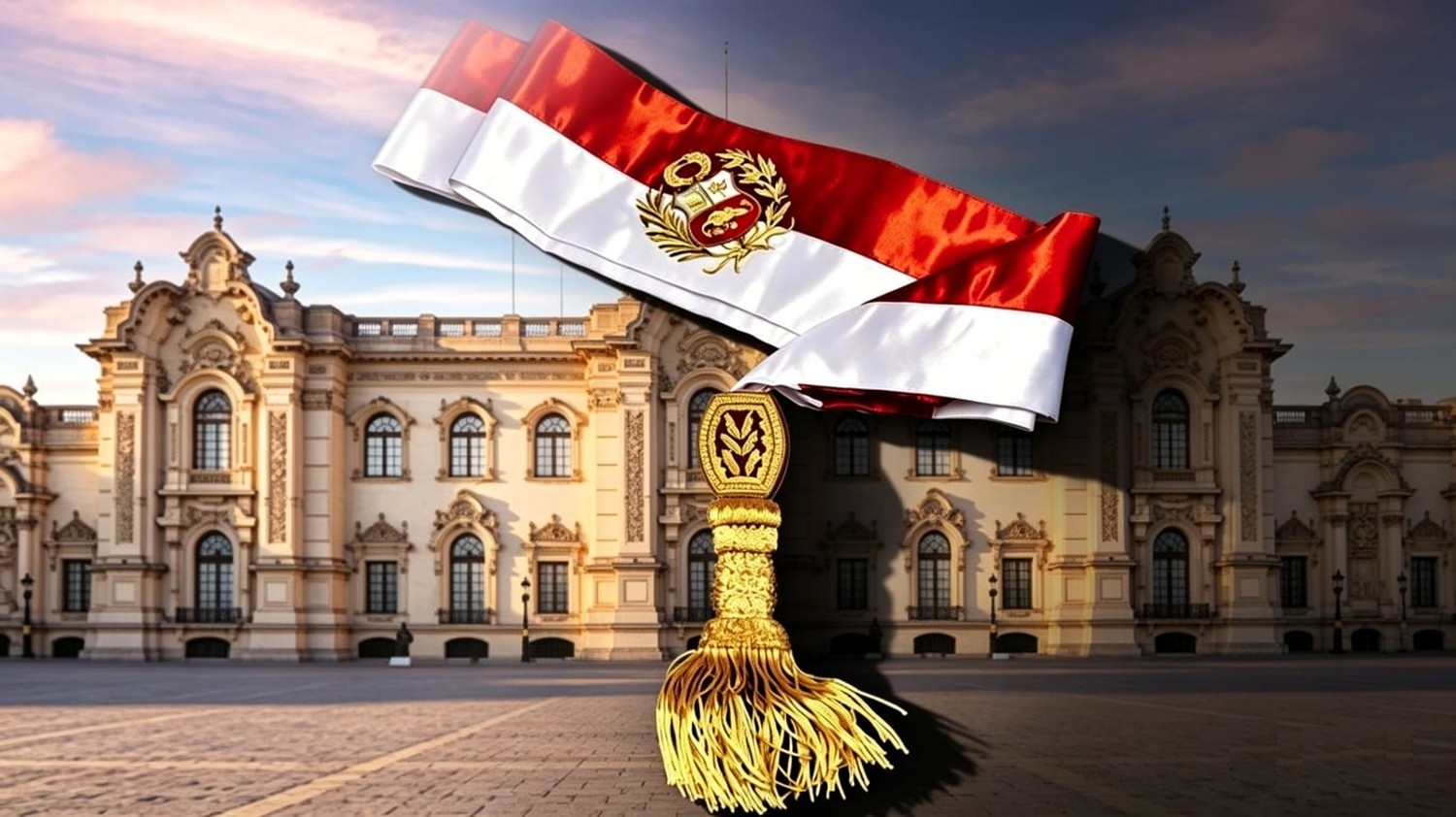
Agencia Peruana de Noticias PRENSAPERU.PE https://www.prensaperu.pe Twitter: @prensaperupe La banda o faja presidencial nace oficialmente con la organización misma de la República, tras la independencia. Se estableció desde 1826, apenas consolidado el país, inspirada en las franjas que usaban los jefes de Estado en las repúblicas nacientes de América Latina, como signo visible de autoridad suprema y continuidad institucional.
El primer diseño formal se aprobó durante el gobierno de Andrés de Santa Cruz, y se consolidó definitivamente en el Reglamento de Ceremonial del Estado de 1834. Desde entonces, es el único símbolo que pasa de un mandatario al siguiente en la ceremonia de transmisión del mando: representa que el poder no pertenece a la persona, sino al cargo y a la Nación.
SIMBOLISMO Y SIGNIFICADO: CADA DETALLE TIENE SENTIDO
Es mucho más que una simple franja: es una representación gráfica del Escudo Nacional y de los valores del Perú:
1.- Colores rojo y blanco: los mismos de nuestra bandera, ordenados en franjas o recubrimiento principal.
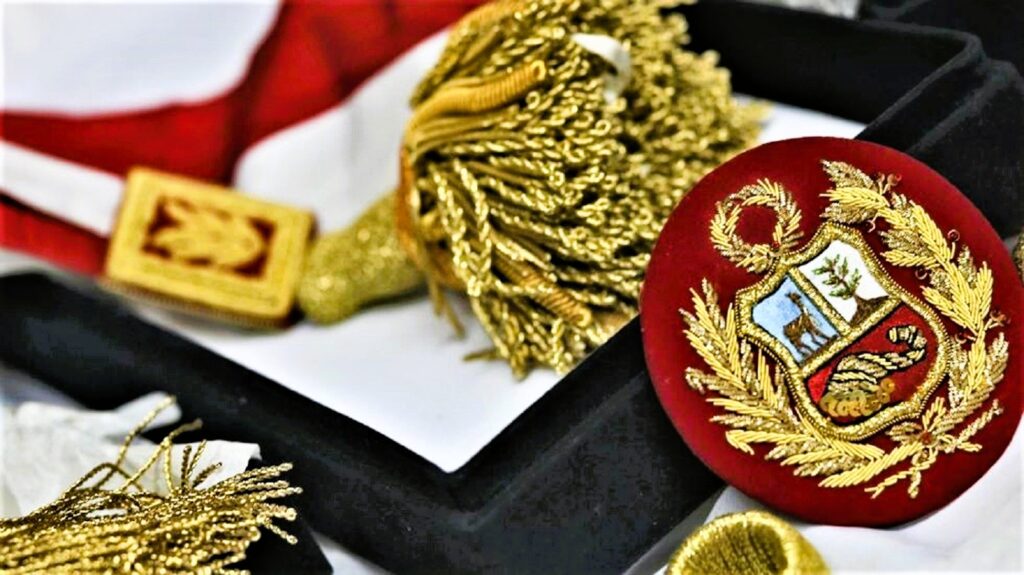
2.- Bordado y adornos: lleva hilos de oro y plata, perlas y piedras finas en versiones históricas, con motivos como ramas de roble y laurel (fuerza y victoria), estrellas y la figura del Escudo Nacional en el centro y extremos.
3.- Forma: cruza desde el hombro derecho hasta la cadera izquierda, tal como se estableció desde el principio, indicando que el poder recae sobre todo el cuerpo y territorio del país.
4.- Significado profundo: No es una joya personal, sino bien público y símbolo del mandato recibido del pueblo: quien la porta ejerce la autoridad en nombre de la Constitución y la ley.
¿QUIÉN LA CONFECCIONA? ¿DE QUÉ MATERIALES Y CUÁNTO CUESTA?
Quién la hace: Tradicionalmente es obra de maestros artesanos especializados, talleres oficiales o empresas reconocidas en bordados y tejidos nobles — durante décadas recayó en talleres de Lima con experiencia en vestimenta protocolar; hoy se coordina bajo supervisión del Ministerio de Relaciones Exteriores y el Ceremonial de la República.
Materiales:
1.- Base en seda, raso o terciopelo de alta calidad
2.- Hilos finos de oro y plata auténticos
3.- A veces incrustaciones de perlas y piedras semipreciosas
4.- Refuerzos internos para conservarla por años
Costo: No es económico, como supones. Las versiones oficiales rondan entre 15 000 y más de 40 000 soles, según materiales, detalles y si se trata de renovación o restauración — al ser piezas únicas, artesanales y de larga duración.
Propiedad: Pertenece al Estado, no al presidente. Al terminar el mandato, se entrega obligatoriamente para su guarda y conservación.
¿CUÁNTAS VECES HA CAMBIADO SU DISEÑO O CARACTERÍSTICAS?
Ha sufrido alrededor de 5 modificaciones principales a lo largo de casi 200 años:
1.- 1826‑1834: Diseño básico inicial, más sencillo
2.- 1850‑1860: Se añaden bordados finos y se fija el Escudo completo
3.- 1904: Cambio más importante: se adapta al modelo actual con hilos metálicos y medidas estandarizadas
4.- Década de 1950: Restauración y ajuste a normas protocolares modernas
5.- 1980‑1981: Nueva versión tras el retorno democrático, con diseño fiel pero mejorada en durabilidad
No cambia en cada gobierno, sino que se restaura o reemplaza solo cuando está muy desgastada. A veces la misma pieza sirve para varios mandatos seguidos.
¿CUÁNTOS PRESIDENTES LA HAN PORTADO?
Desde 1826 hasta hoy, más de 65 mandatarios — entre presidentes constitucionales, provisionales y transitorios — han recibido y usado la banda presidencial.
DATOS
En etapa republicana completa: todos los jefes de Estado elegidos o reconocidos institucionalmente la reciben en el acto de asunción.
Hubo épocas de interrupción breve, pero siempre se ha recuperado como símbolo indispensable para dar validez al nuevo gobierno.
CONCLUSIONES
1.- La banda es mucho más que vestimenta protocolar: es el símbolo más antiguo y continuo de la autoridad democrática y constitucional del Perú, vigente desde los primeros años de vida independiente.
2.- Su valor no es solo económico o artístico — es simbólico y legal: representa que el poder proviene del pueblo y es temporal; pasa de uno a otro sin quedarse en manos privadas.
3.- Ha evolucionado con pocos cambios, lo que demuestra su carácter estable y duradero, ligado a la continuidad del Estado, no a modas personales.
4.- Su elaboración, cuidado y transmisión son una lección de historia viva: cada bordado y cada entrega conectan el presente con todo el recorrido de la República.
Fuente: Agencia Peruana de Noticias PRENSAPERU.PE https://www.prensaperu.pe Twitter: @prensaperupe
Translate
“The Presidential Sash or Band: 200 years as the soul and symbol of the ‘Republic of Peru’. Did you know that it passes from hand to hand, but does not belong to the president?”
Peruvian News Agency PRENSAPERU.PE https://www.prensaperu.pe Twitter: @prensaperupe The presidential sash or band came into being officially together with the very organisation of the Republic, after independence. It was established as early as 1826, shortly after the country was consolidated, inspired by the sashes worn by heads of State in the newly‑formed republics of Latin America as a visible sign of supreme authority and institutional continuity.
The first formal design was approved during the government of Andrés de Santa Cruz, and it was definitively consolidated in the State Ceremonial Regulations of 1834. Since then, it is the only symbol passed from one ruler to the next during the handover‑of‑command ceremony: it signifies that power belongs not to the person, but to the office and to the Nation.
SYMBOLISM AND MEANING: EVERY DETAIL HAS ITS PURPOSE
It is far more than just a simple band: it is a graphic representation of the National Coat of Arms and of Peru’s values:
1.- Red and white colours: the same as on our flag, arranged in stripes or as the main covering.
2.- Embroidery and ornaments: worked in genuine gold and silver threads, historically also featuring pearls and fine gemstones; motifs include oak and laurel branches — representing strength and victory — stars, and the National Coat of Arms at the centre and ends.
3.- Shape: worn crossing from the right shoulder down to the left hip, as established from the beginning, signifying that authority extends over the whole body and the entire territory of the country.
4.- Deep meaning: it is not a personal jewel, but public property and a symbol of the mandate received from the people: whoever wears it exercises authority in the name of the Constitution and the law.
WHO MAKES IT? WHAT MATERIALS ARE USED AND WHAT IS ITS COST?
Maker: Traditionally it is the work of specialised master artisans, official workshops or recognised firms skilled in fine embroidery and noble textiles — for decades produced in Lima workshops with experience in ceremonial attire; today production is coordinated under the supervision of the Ministry of Foreign Affairs and the State Ceremonial Office.
Materials:
1.- Base of high‑quality silk, satin or velvet
2.- Fine threads of genuine gold and silver
3.- Sometimes inlaid pearls and semi‑precious stones
4.- Internal reinforcements to ensure preservation over many years
Cost: It is not inexpensive, as you rightly suppose. Official versions range roughly between 15 000 and over 40 000 soles, depending on materials, detail work and whether it is a renewal or restoration — each piece is unique, hand‑crafted and built to last.
Ownership: It belongs to the State, never to the President personally. At the end of the mandate, it must be formally handed over for safekeeping and conservation.
HOW MANY TIMES HAS ITS DESIGN OR FEATURES BEEN CHANGED?
It has undergone roughly five major modifications in nearly 200 years:
1.- 1826‑1834: Initial, simpler basic design
2.- 1850‑1860: Fine embroidery added and full Coat of Arms permanently fixed
3.- 1904: Most significant change: adapted to the current model with metallic threads and standardised dimensions
4.- 1950s: Restoration and adjustment to modern ceremonial regulations
5.- 1980‑1981: New version following the return to democracy; faithful to tradition but improved for greater durability
It does not change with every administration, but is only restored or replaced when heavily worn. Sometimes the very same piece serves several successive mandates.
HOW MANY PRESIDENTS HAVE WORN IT?
From 1826 to the present, more than 65 heads of State — including constitutional, provisional and transitional presidents — have received and used the presidential sash.
FACTS
Throughout the full republican period: every duly elected or institutionally recognised head of State receives it at the inauguration ceremony.
There were brief interruptions in history, but it has always been reinstated as an indispensable symbol to confer validity upon a new government.
CONCLUSIONS
1.- The sash is much more than ceremonial dress: it is the oldest and most continuously‑held symbol of Peru’s democratic and constitutional authority, in use since the very first years of independent life.
2.- Its value is not merely economic or artistic — it is symbolic and legal: it signifies that power originates from the people and is temporary; it passes from hand to hand but never remains in private possession.
3.- It has evolved with very few changes — demonstrating its stable and enduring character, linked to the continuity of the State rather than personal fashions.
4.- Its creation, care and transmission constitute a living lesson in history: every stitch and every hand‑over links the present with the whole journey of the Republic.
Source: Peruvian News Agency PRENSAPERU.PE https://www.prensaperu.pe Twitter: @prensaperupe