
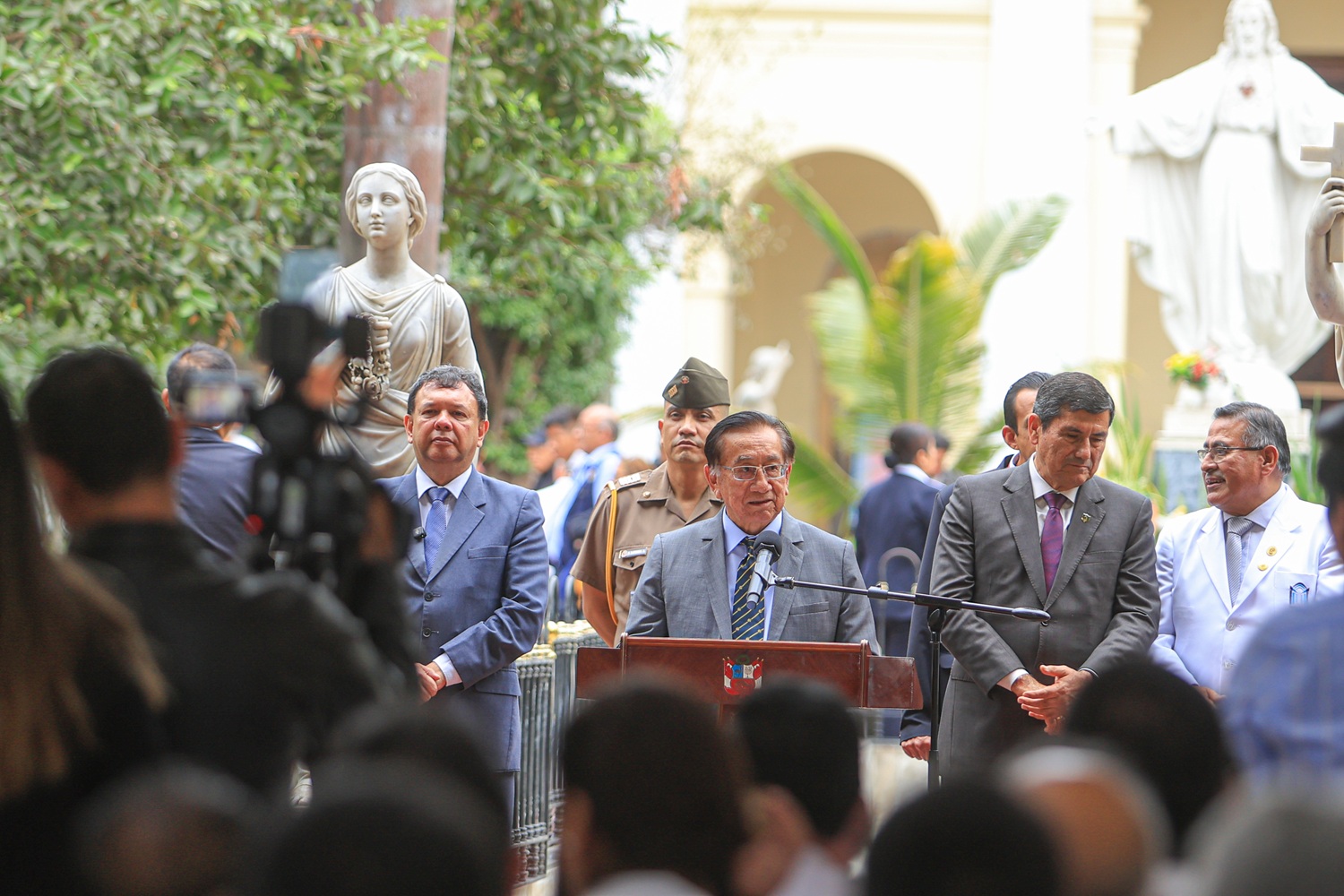
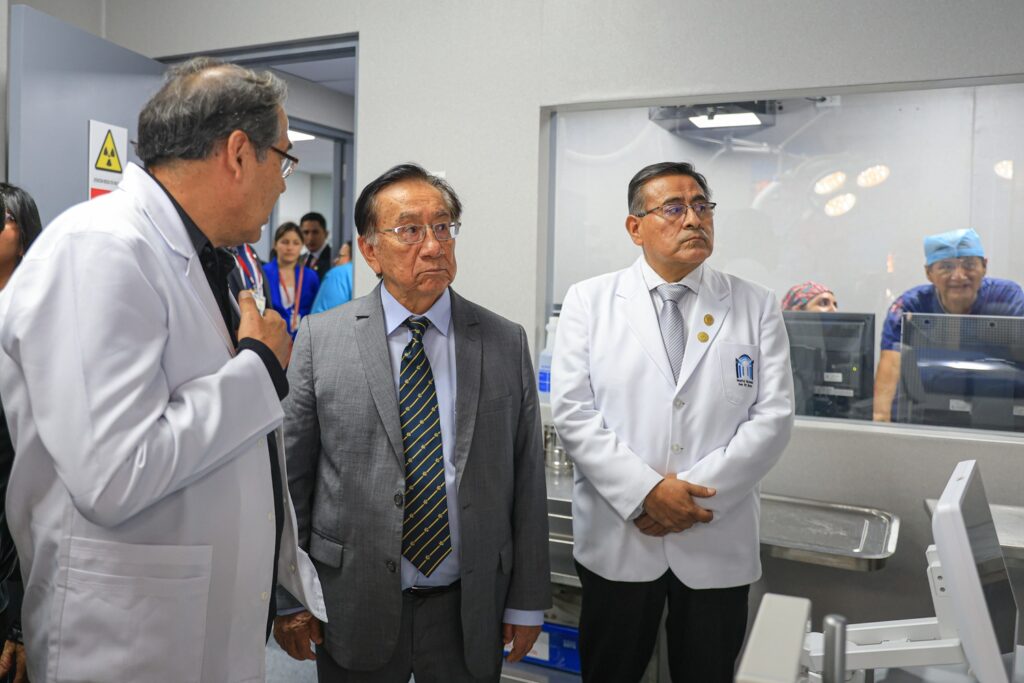
Agencia Peruana de Noticias PRENSAPERU.PE https://www.prensaperu.pe Twitter: @prensaperupe El presidente de la República, José María Balcázar, presentó oficialmente el proyecto de modernización del Hospital Nacional Dos de Mayo, obra emblemática que, según afirmó el mandatario, se convertirá en un verdadero modelo a seguir, tanto para los establecimientos de salud del sector público como para los privados, en todo el territorio nacional. Este anuncio marca un hito en la política sanitaria del país, al tratarse de una de las inversiones más grandes y ambiciosas destinadas a renovar la infraestructura, equipamiento y capacidad de respuesta del sistema de salud peruano.
Durante el acto de presentación de la viabilidad técnica, económica y social del proyecto, el jefe de Estado reafirmó los pilares centrales que guían su gestión de Gobierno: la educación y la salud como derechos fundamentales y prioridades absolutas. En ese sentido, explicó que la inversión en el histórico Hospital Dos de Mayo no es una obra aislada, sino parte de una estrategia integral para transformar la atención médica en el país, renovando una institución que ha servido al Perú por generaciones y elevándola al nivel de los mejores centros hospitalarios de la región, con instalaciones totalmente nuevas, diseño moderno y tecnología de última generación.
“Si no hay salud no hay libertad, sin salud no hay lo demás que el ser humano puede aspirar”, enfatizó el presidente Balcázar con firmeza, resaltando que el bienestar físico y mental de la población es la base sobre la cual se construye el desarrollo, la productividad y la dignidad de las personas. Recordó además su trayectoria y compromiso previo con este sector: cuando ejerció el cargo de congresista, fue uno de los impulsores decisivos para la creación de nuevas universidades públicas y para la implementación y fortalecimiento de facultades de medicina en todo el país. Su objetivo en aquella etapa fue claro: cerrar la gran brecha de recursos humanos en salud, es decir, reducir la falta de médicos, especialistas y personal sanitario que durante años ha limitado la cobertura y calidad del servicio.
En esa línea, el mandatario conectó ambos ejes de su gestión: educación y salud van de la mano. Subrayó que una formación universitaria de calidad, moderna y accesible es la única forma de garantizar que el país cuente con mejores profesionales, mejores médicos, enfermeros y técnicos, y por ende, con una atención sanitaria más humana, eficiente y resolutiva. La modernización del hospital, por tanto, no solo traerá nueva infraestructura, sino que también servirá como centro de formación y práctica para esos nuevos profesionales que el país necesita.
Una de las anuncios más simbólicos y relevantes hechos durante la ceremonia fue la intención del Gobierno de realizar una invitación oficial a su santidad el Papa León XIV, para que realice una visita pastoral al Perú. Dentro de la agenda y recorrido que se propondrá al Sumo Pontífice, se ha incluido de manera destacada al renovado Hospital Nacional Dos de Mayo, reconociendo su valor social, histórico y su labor humanitaria al servicio de los más necesitados. Esta visita, de concretarse, pondría a este centro de salud en la mirada del mundo y reafirmaría su rol como espacio de esperanza y solidaridad.
A esta importante actividad asistieron las principales autoridades del sector y del Gobierno, entre ellas el jefe del Gabinete Ministerial, Luis Arroyo Sánchez; el ministro de Salud, Juan Carlos Velasco; y el director general del Hospital Dos de Mayo, Víctor Gonzales Pérez, quienes acompañaron al presidente en la presentación de los detalles técnicos y financieros del proyecto.
La transformación de este centro médico representa un esfuerzo sin precedentes: la modernización contempla una inversión histórica que supera los 2,700 millones de soles, recursos destinados a la construcción de nuevas áreas, renovación total de las instalaciones, adquisición de equipos de diagnóstico y tratamiento de alta complejidad, sistemas digitales de gestión hospitalaria y mejora de todos los servicios asistenciales. Con esta obra, se beneficiará directamente a más de 2.6 millones de peruanos, población que acude o depende de este establecimiento, garantizando que reciban una atención digna, segura y con los estándares de calidad que merecen.
CONCEPTOS CONTEXTUALES
Viabilidad del proyecto: Es el estudio técnico, económico, financiero y social que se realiza antes de ejecutar cualquier obra grande. Significa que se ha verificado que el proyecto es técnicamente posible de construir, que los costos están bien calculados, que los recursos están asegurados y que la obra generará beneficios reales para la población. Al presentarse la viabilidad, se confirma que el proyecto ya es una realidad en camino y no solo una idea.
Brecha de recursos humanos en salud: Es la diferencia entre la cantidad de médicos, enfermeras, especialistas y personal técnico que el país necesita para cubrir la demanda de atención, y la cantidad que realmente existe y está disponible. En el Perú, esta brecha ha sido histórica, especialmente en provincias y zonas alejadas. La creación de facultades de medicina busca aumentar el número de profesionales para reducir esta diferencia.
Tecnología de punta en salud:: Se refiere a la incorporación de los equipos, sistemas y procedimientos médicos más avanzados que existen en el mundo. Esto incluye desde equipos de rayos X, resonancias o laboratorios automatizados, hasta sistemas digitales de historias clínicas y cirugías de alta complejidad. Su objetivo es lograr diagnósticos más rápidos y precisos, y tratamientos más efectivos y seguros.
Modelo a seguir: Significa que el nuevo diseño, la organización, la tecnología y la gestión que tendrá el Hospital Dos de Mayo servirán de ejemplo y guía para que otros hospitales, clínicas y centros de salud del país —tanto públicos como privados— puedan replicar estas buenas prácticas, elevando así el nivel de todo el sistema sanitario nacional.
DATOS
1.– Inversión histórica que transforma el sistema sanitario: La asignación de más de 2,700 millones de soles para este proyecto demuestra que la salud ha dejado de ser un tema secundario para convertirse en una prioridad nacional. Al convertir al Dos de Mayo en un modelo de referencia, el Estado no solo mejora un hospital, sino que establece un nuevo estándar de calidad que empujará a todo el sector salud —público y privado— a mejorar sus servicios, beneficiando a millones de personas.
2.- Salud y educación, la fórmula del progreso: La visión integradora del Gobierno queda clara: no se puede tener buena salud sin buena educación. Al impulsar facultades de medicina para formar mejores profesionales y al mismo tiempo construir la mejor infraestructura hospitalaria, se está atacando el problema desde la raíz. La visita del Papa León XIV, por su parte, agrega un valor humanístico y social que recuerda que la salud es, sobre todo, un servicio a la vida y a la dignidad humana.
Fuente: Agencia Peruana de Noticias PRENSAPERU.PE https://www.prensaperu.pe Twitter: @prensaperupe
Translate
Dos de Mayo Hospital!: “The health giant that is reborn, President Balzcázar announces 2.7 billion soles for a national model, which will benefit more than 2.6 million Peruvians.”
Peruvian News Agency PRENSAPERU.PE https://www.prensaperu.pe Twitter: @prensaperupe The President of the Republic, José María Balcázar, officially presented the modernization project for the Dos de Mayo National Hospital —an emblematic work that, according to the President, will become a true model to be followed by both public and private healthcare establishments throughout the entire national territory. This announcement marks a milestone in the country’s health policy, as it represents one of the largest and most ambitious investments aimed at renewing the infrastructure, equipment and response capacity of the Peruvian health system.
During the presentation ceremony for the project’s technical, economic and social feasibility, the Head of State reaffirmed the core pillars guiding his administration: education and health as fundamental rights and absolute priorities. In this regard, he explained that investment in the historic Dos de Mayo Hospital is not an isolated initiative, but rather part of a comprehensive strategy to transform medical care in the country, renewing an institution that has served Peru for generations and elevating it to the level of the best hospital centers in the region, with completely new facilities, modern design and state‑of‑the‑art technology.
“Without health there is no freedom; without health there is nothing else that a human being can aspire to,” President Balcázar emphasized firmly, highlighting that the population’s physical and mental well‑being is the foundation upon which development, productivity and human dignity are built. He also recalled his background and prior commitment to this sector: while serving as a congressman, he was a key driver behind the creation of new public universities and the establishment and strengthening of medical schools across the country. His objective at that time was clear: to close the significant human resources gap in health —that is, to reduce the shortage of doctors, specialists and healthcare personnel that for years has limited service coverage and quality.
In this sense, the President connected the two pillars of his administration: education and health go hand in hand. He stressed that high‑quality, modern and accessible university education is the only way to ensure that the country has better professionals —better doctors, nurses and technicians— and consequently, more humane, efficient and effective healthcare. Therefore, the hospital’s modernization will not only bring new infrastructure, but will also serve as a training and practice center for the new professionals the country needs.
One of the most symbolic and relevant announcements made during the ceremony was the Government’s intention to formally invite His Holiness Pope Leo XIV to make a pastoral visit to Peru. The renewed Dos de Mayo National Hospital has been prominently included in the agenda and itinerary proposed for the Pontiff, in recognition of its social and historical value and its humanitarian work serving those most in need. If this visit takes place, it will place this health center in the global spotlight and reaffirm its role as a space for hope and solidarity.
Key authorities from the sector and the Government attended this important event, including the Head of the Ministerial Cabinet, Luis Arroyo Sánchez; the Minister of Health, Juan Carlos Velasco; and the Director‑General of the Dos de Mayo Hospital, Víctor Gonzales Pérez, who joined the President in presenting the project’s technical and financial details.
The transformation of this medical center represents an unprecedented effort: the modernization includes a historic investment exceeding 2.7 billion soles, resources allocated to the construction of new areas, the complete renovation of facilities, the acquisition of high‑complexity diagnostic and treatment equipment, digital hospital management systems and the improvement of all healthcare services. This work will directly benefit more than 2.6 million Peruvians —the population that relies on or uses this facility— ensuring they receive dignified, safe care that meets the quality standards they deserve.
CONTEXTUAL CONCEPTS
Project Feasibility: The technical, economic, financial and social study carried out before any large‑scale work is executed. It confirms that the project is technically constructible, that costs have been properly calculated, that resources are secured, and that the work will generate real benefits for the population. Presenting feasibility confirms that the project is already a reality in progress, not just an idea.
Human Resources Gap in Health: The difference between the number of doctors, nurses, specialists and technical staff the country needs to meet healthcare demand, and the number that actually exists and is available. In Peru, this gap has been long‑standing, especially in provincial and remote areas. The creation of medical schools aims to increase the number of professionals in order to reduce this difference.
State‑of‑the‑Art Technology in Health: Refers to the incorporation of the most advanced medical equipment, systems and procedures in existence worldwide. This ranges from X‑ray machines, scanners and automated laboratories to digital medical record systems and high‑complexity surgery. Its purpose is to enable faster, more accurate diagnoses and more effective, safer treatments.
Model to be Followed: Means that the new design, organization, technology and management adopted by the Dos de Mayo Hospital will serve as an example and guide for other hospitals, clinics and health centers throughout the country —both public and private— enabling them to replicate these good practices and thereby raise the standard of the entire national health system.
DATA
1.- Historic investment transforming the health system: The allocation of more than 2.7 billion soles for this project demonstrates that health has ceased to be a secondary issue and has become a national priority. By turning Dos de Mayo into a benchmark model, the State is not only improving one hospital, but also establishing a new quality standard that will drive the entire health sector —public and private— to improve its services, benefiting millions of people.
2.- Health and education: the formula for progress: The Government’s integrated vision is clear: good health cannot exist without good education. By promoting medical schools to train better professionals while simultaneously building top‑tier hospital infrastructure, the problem is being addressed at its root. The visit by Pope Leo XIV, in turn, adds a humanistic and social value that reminds us that health is, above all, a service to life and human dignity.
Source: Peruvian News Agency PRENSAPERU.PE https://www.prensaperu.pe Twitter: @prensaperupe