
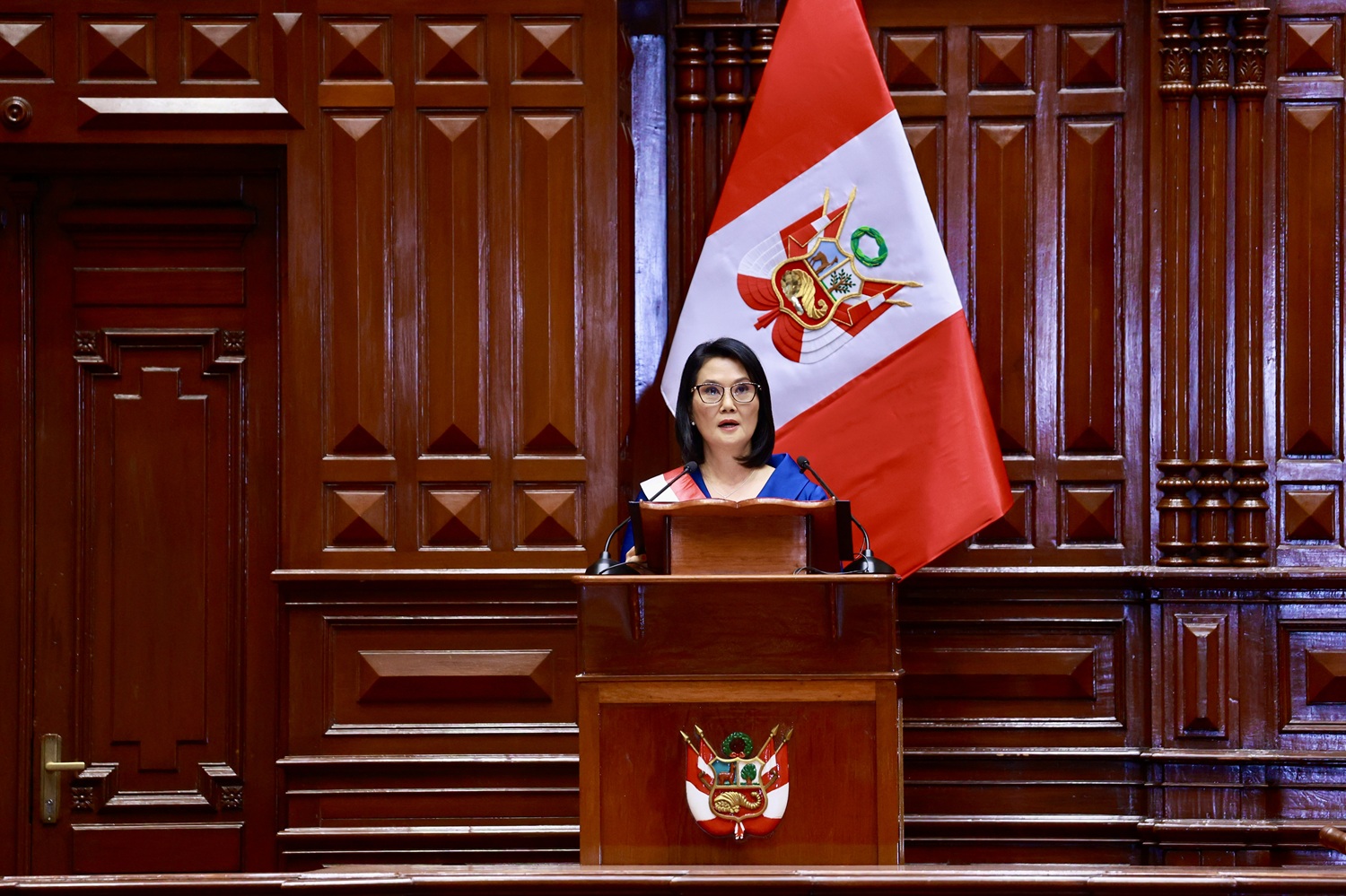
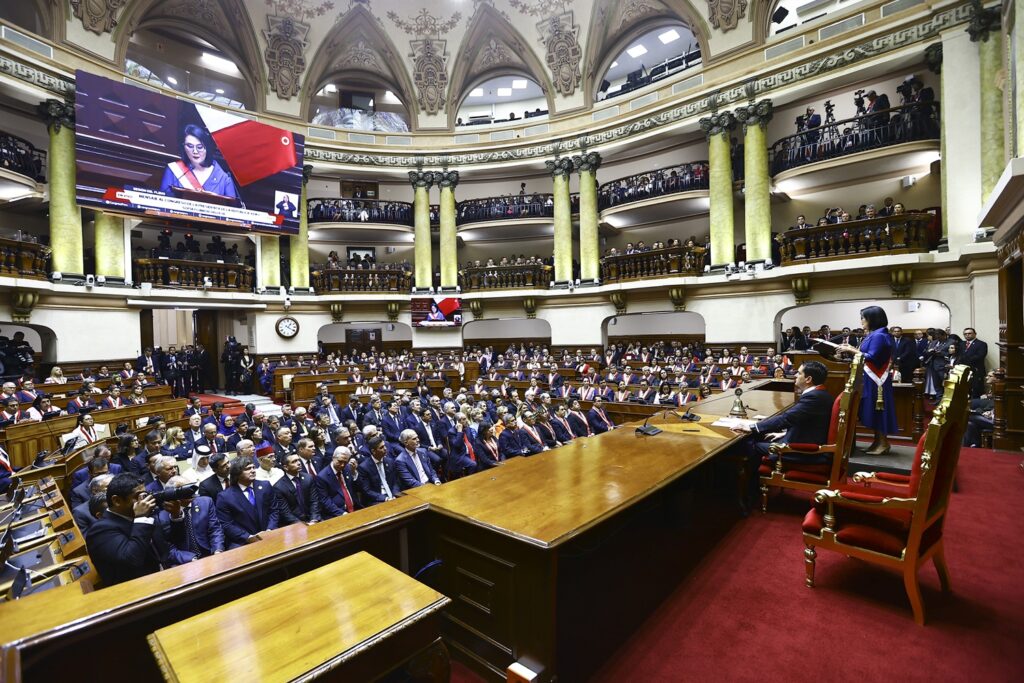
Agencia Peruana de Noticias PRENSAPERU.PE https://www.prensaperu.pe Twitter: @prensaperupe En una ceremonia solemne, cargada de historia y respaldo democrático, se llevó a cabo en el Hemiciclo del Congreso de la República el acto de juramentación de la nueva Jefa de Estado. Ante la presencia de los poderes del Estado, autoridades civiles, militares y una amplia representación diplomática, Keiko Sofía Fujimori Higuchi prestó el juramento constitucional que la acredita como Presidenta de la República del Perú para el periodo 2026-2031.
Al tomar el juramento, la mandataria se comprometió solemnemente a cumplir y hacer cumplir la Constitución Política y las leyes del país, a defender la soberanía nacional y a trabajar incansablemente por el bienestar de la nación. Este acto marca el inicio formal de una nueva etapa institucional, sellando la continuidad democrática y la renovación del liderazgo nacional en el marco de las celebraciones por el 255.º aniversario de la independencia.
MENSAJE AL PAÍS: LÍNEAMIENTOS DE UNA NUEVA GESTIÓN
Concluida la juramentación, la presidenta Keiko Fujimori brindó su primer mensaje ante el Pleno del Congreso, iniciado a las 1:18 p.m. y finalizado a las 2:03 p.m., con una duración de 45 minutos. En su discurso, trazó los ejes centrales de su gobierno, poniendo énfasis en la seguridad, la institucionalidad y la reactivación económica con justicia social.
DEFINICIONES CLAVE DEL MENSAJE
Delegación de Facultades: Atribución constitucional mediante la cual el Congreso autoriza al Poder Ejecutivo a legislar sobre materias específicas y por tiempo determinado, permitiendo agilizar la toma de decisiones ante crisis o emergencias.
Estado de Derecho: Principio fundamental que establece que todas las personas y autoridades, sin excepción, están sometidas a la ley y al ordenamiento jurídico, garantizando la igualdad y la justicia.
Fuerzas del Orden y Seguridad Ciudadana: Conjunto de instituciones (Policía Nacional, Fuerzas Armadas) encargadas de garantizar la tranquilidad pública, proteger a los ciudadanos y combatir las distintas formas de criminalidad.
Remuneración Mínima Vital: Monto mínimo legal que un empleador debe abonar al trabajador por la jornada ordinaria de trabajo, constituyendo el piso de protección económica para el sustento familiar.
Reconciliación Nacional: Proceso político y social orientado a restablecer la unidad y el diálogo entre los distintos sectores del país, superando polarizaciones para construir consensos en beneficio del bien común.
EL PROCESO DE LAS PROPUESTAS
1.- SEGURIDAD INTEGRAL: PRIMER OBJETIVO NACIONAL
La mandataria declaró la lucha contra la inseguridad como prioridad absoluta. Anunció una estrategia contundente para recuperar el control territorial frente al crimen organizado, narcotráfico, minería ilegal y delitos violentos. Las medidas incluyen:
Modernización Policial: Mayor equipamiento, tecnología y respaldo institucional a la Policía Nacional.
Tecnología contra el Delito: Implementación de videovigilancia nacional interconectada y uso de Inteligencia Artificial para el mapeo predictivo delictivo.
Reforma Penitenciaria: Transformación profunda de las cárceles para romper su vínculo con la organización criminal.
Inteligencia y Respuesta Rápida: Fortalecimiento de unidades de flagrancia y sistemas de inteligencia financiera para desarticular bandas desde su base económica.
2.- FORTALECIMIENTO INSTITUCIONAL Y COORDINACIÓN
La presidenta anunció que solicitará al Congreso la delegación de facultades para actuar con rapidez ante la inseguridad y el fenómeno El Niño. Asimismo, promete trabajar en coordinación con el Poder Judicial y el Ministerio Público en reformas procesales y operativas, siempre respetando la independencia entre poderes y garantizando la libertad de expresión y prensa.
3.-ECONOMÍA Y PROTECCIÓN SOCIAL
Para mejorar la calidad de vida, se reactivarán los motores del trabajo, la inversión y la empresa. Destacó medidas concretas:
Aumento Salarial: Elevación de la Remuneración Mínima Vital a S/ 1,300 soles.
Apoyo al Adulto Mayor: Duplicación del beneficio de Pensión 65, pasando de S/ 350 a S/ 700 bimestrales para quienes viven en pobreza extrema.
4.- LLAMADO A LA UNIDAD Y RECONCILIACIÓN
En su cierre, convocó a todas las fuerzas políticas, gobiernos subnacionales y sector privado a dejar de lado las diferencias y buscar coincidencias. Aseguró que orden y reconciliación son compatibles, exhortando a trabajar unidos para aliviar las cargas del ciudadano y acelerar el desarrollo nacional.
DATOS CONTEXTUALES
1. Seguridad como eje transversal: El gobierno inicia con una hoja de ruta clara y ambiciosa contra la criminalidad, apostando por tecnología, inteligencia y fortalecimiento policial para recuperar la paz ciudadana.
2. Agilidad legislativa y respeto institucional: La solicitud de delegación de facultades busca eficiencia en la gestión de crisis, sin renunciar al equilibrio y la independencia entre los poderes del Estado.
3. Justicia económica inmediata: El incremento del sueldo mínimo y la duplicación de la Pensión 65 representan señales concretas de atención a los sectores más vulnerables y a la dignificación del trabajo.
4. Diálogo para la estabilidad: La convocatoria a la reconciliación nacional y la búsqueda de consensos reflejan una intención de gobernabilidad democrática que intenta superar la polarización.
5. Mandato de esperanza: El discurso integra firmeza en el orden y sensibilidad social, planteando un proyecto que busca devolver al ciudadano la confianza en sus instituciones y en el futuro del país.
Fuente: Agencia Peruana de Noticias PRENSAPERU.PE https://www.prensaperu.pe Twitter: @prensaperu
Translate
Keiko Fujimori Sworn in as President: ‘Security, Unity and Progress’ for Peru’s New Cycle; President Requests Legislative Powers and States Support for Separation of Powers During Her Administration
Peruvian News Agency PRENSAPERU.PE https://www.prensaperu.pe Twitter: @prensaperupe In a solemn ceremony steeped in history and democratic backing, the swearing-in ceremony of the new Head of State was held in the Hemicycle of the Congress of the Republic. Before the presence of the branches of State, civil and military authorities, and a broad diplomatic representation, Keiko Sofía Fujimori Higuchi took the constitutional oath accrediting her as President of the Republic of Peru for the 2026–2031 term.
Upon taking the oath, the President solemnly committed to uphold and enforce the Political Constitution and the laws of the country, defend national sovereignty, and work tirelessly for the well-being of the nation. This act marks the formal beginning of a new institutional stage, sealing democratic continuity and the renewal of national leadership within the framework of the celebrations for the 255th anniversary of independence.
MESSAGE TO THE NATION: GUIDELINES FOR A NEW ADMINISTRATION
Once the swearing-in concluded, President Keiko Fujimori delivered her first message before the Plenary of Congress, beginning at 1:18 p.m. and ending at 2:03 p.m., lasting 45 minutes. In her speech, she outlined the central axes of her government, placing emphasis on security, institutionality, and economic reactivation with social justice.
KEY DEFINITIONS OF THE MESSAGE
Delegation of Legislative Powers: Constitutional attribution by which Congress authorizes the Executive Branch to legislate on specific matters and for a determined period, streamlining decision-making in the face of crises or emergencies.
Law and State: Fundamental principle establishing that all persons and authorities, without exception, are subject to the law and the legal system, guaranteeing equality and justice.
Law Enforcement and Citizen Security: Set of institutions (National Police, Armed Forces) in charge of guaranteeing public tranquility, protecting citizens, and combating the various forms of criminality.
Vital Minimum Remuneration: Minimum legal amount that an employer must pay the worker for the ordinary workday, constituting the floor of economic protection for family sustenance.
National Reconciliation: Political and social process aimed at restoring unity and dialogue among the different sectors of the country, overcoming polarizations to build consensus for the benefit of the common good.
THE PROPOSALS PROCESS
1.- COMPREHENSIVE SECURITY: FIRST NATIONAL OBJECTIVE
The President declared the fight against insecurity as an absolute priority. She announced a forceful strategy to recover territorial control against organized crime, drug trafficking, illegal mining, and violent crimes. Measures include:
Police Modernization: Greater equipment, technology, and institutional support for the National Police.
Technology Against Crime: Implementation of interconnected national video surveillance and use of Artificial Intelligence for predictive crime mapping.
Prison Reform: Profound transformation of prisons to break their link with criminal organizations.
Intelligence and Rapid Response: Strengthening of flagrancy units and financial intelligence systems to dismantle gangs from their economic base.
2.- INSTITUTIONAL STRENGTHENING AND COORDINATION
The President announced that she will request Congress to delegate legislative powers to act quickly regarding insecurity and the El Niño phenomenon. Likewise, she undertakes to work in coordination with the Judiciary and the Public Ministry on procedural and operational reforms, always respecting the separation of powers and guaranteeing freedom of expression and the press.
3.- ECONOMY AND SOCIAL PROTECTION
To improve the quality of life, the engines of work, investment, and business will be reactivated. She highlighted specific measures:
Wage Increase: Raising the Vital Minimum Remuneration to S/ 1,300 soles.
Support for Senior Citizens: Doubling the Pensión 65 benefit, increasing from S/ 350 to S/ 700 bimonthly for those living in extreme poverty.
4.- CALL FOR UNITY AND RECONCILIATION
In her closing, she summoned all political forces, regional and local governments, and the private sector to set aside differences and seek common ground. She affirmed that order and national reconciliation are fully compatible objectives and exhorted to work together to alleviate the citizens’ burdens and accelerate national development.
CONTEXTUAL DATA
1. Security as a cross-cutting axis: The government begins with a clear and ambitious roadmap against criminality, betting on technology, intelligence, and police strengthening to recover citizen peace.
2. Legislative agility and institutional respect: The request for delegation of powers seeks efficiency in crisis management, without renouncing the balance and independence among the branches of State.
3. Immediate economic justice: The increase in the minimum wage and the doubling of Pensión 65 represent concrete signs of attention to the most vulnerable sectors and the dignification of work.
4. Dialogue for stability: The call for national reconciliation and the search for consensus reflect an intention for democratic governance that attempts to overcome polarization.
5. Mandate of hope: The speech integrates firmness in order and social sensitivity, presenting a project that seeks to return citizens’ trust in their institutions and in the country’s future.
Source: Peruvian News Agency PRENSAPERU.PE https://www.prensaperu.pe Twitter: @prensaperupe