
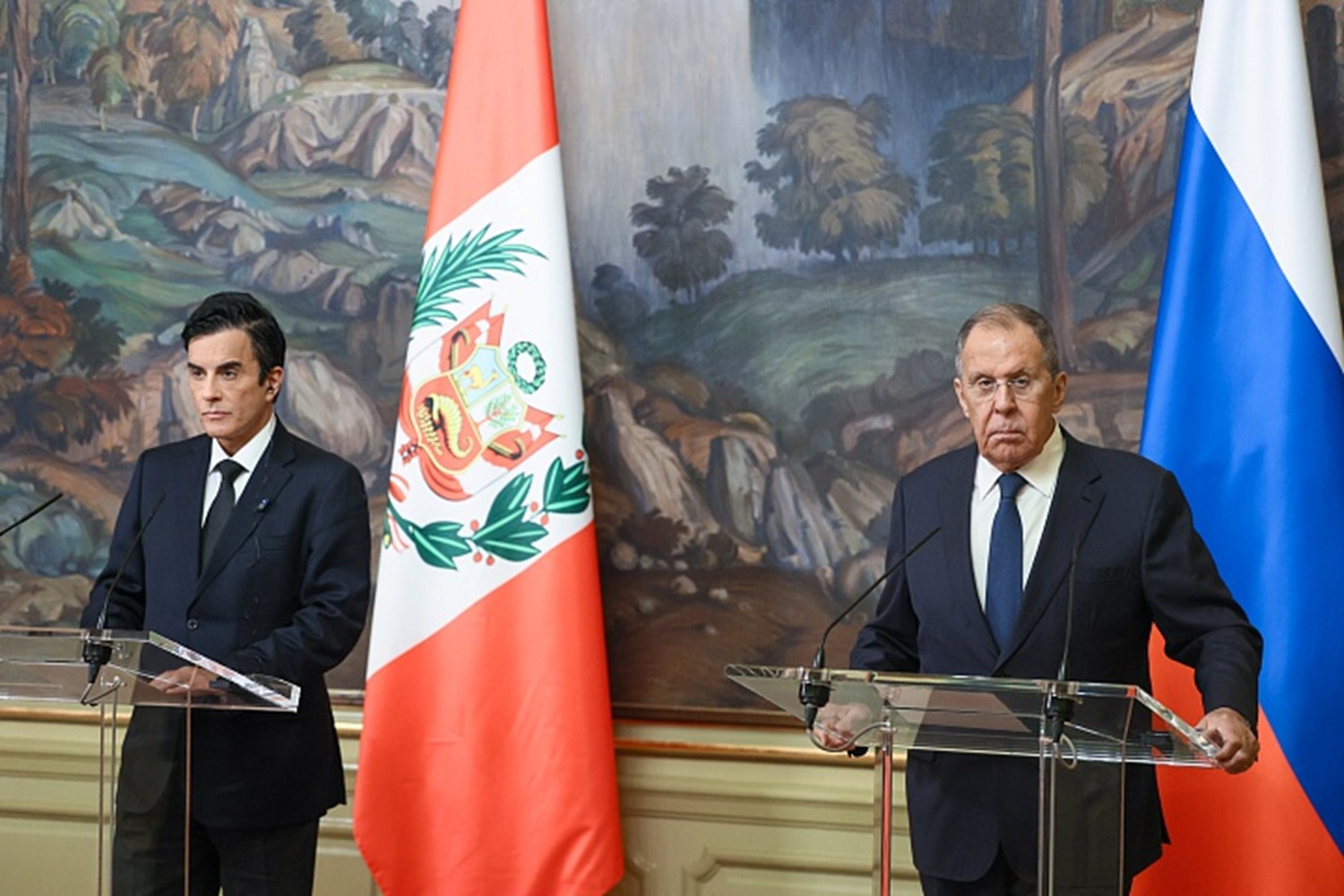
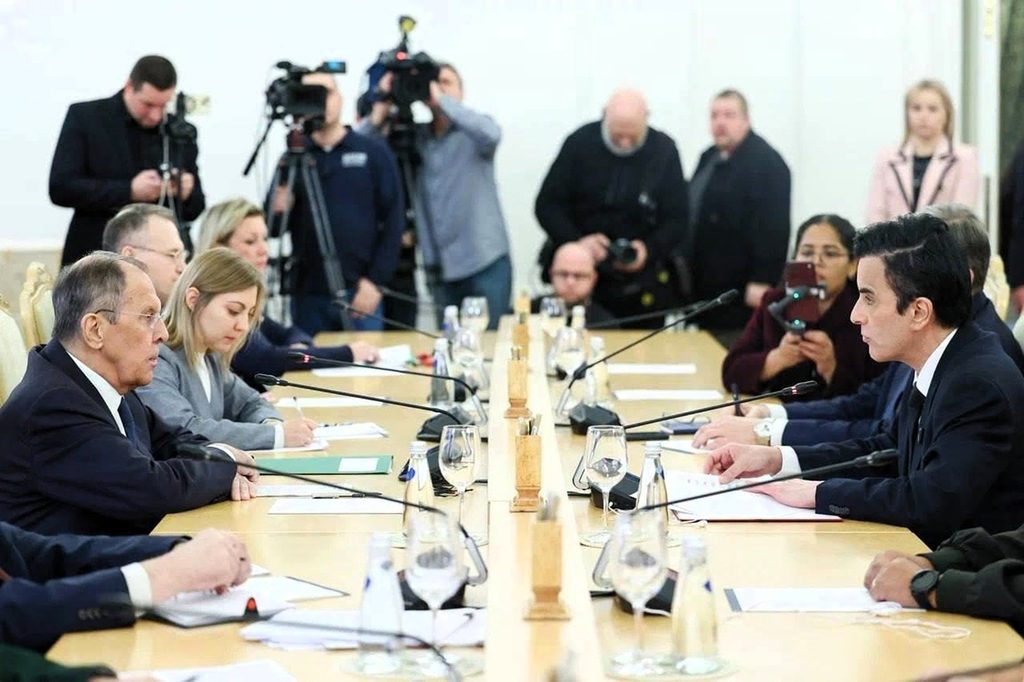
Agencia Peruana de Noticias PRENSAPERU.PE https://www.prensaperu.pe Twitter: @prensaperupe El ministro de Relaciones Exteriores de la Federación Rusa, Serguéi Lavrov, calificó como muy provechosas las conversaciones sostenidas con su homólogo peruano Carlos Espá durante la visita de trabajo realizada en Moscú. Este encuentro marca un hecho relevante pues se trata de la primera visita de un canciller peruano a Rusia en catorce años. El gobierno ruso expresó su reconocimiento al presidente Fujimori por la decisión de enviar al ministro en esta misión, considerada de gran importancia estratégica en el contexto internacional actual. Las relaciones diplomáticas entre ambos países datan de hace más de ciento sesenta años, un vínculo que según la parte rusa se ha caracterizado por ser profesional, pragmático y ajeno a consideraciones ideológicas, sustentado en los principios de igualdad y respeto mutuo. Este enfoque ha despertado interés en otras naciones de América Latina y el Caribe.
Desde mil novecientos sesenta y nueve, cuando ambos países establecieron embajadas permanentes, se ha construido una base de cooperación que abarca comercio, ciencia, tecnología, sector pesquero, tecnología militar, educación y humanidades. Para estructurar este trabajo se crearon instancias formales como la Comisión Intergubernamental de Cooperación Comercial Económica Científica y Técnica y de Pesca, la Comisión Intergubernamental de Cooperación Técnico Militar y el mecanismo conjunto de prevención y recuperación ante desastres naturales. Estas instancias no se reunieron durante varios años, por lo que el acuerdo central de esta visita ha sido reactivar su funcionamiento con mayor frecuencia y compromiso. La reanudación de estas comisiones tiene como propósito central traducir el potencial existente en resultados concretos que se reflejen en mayor intercambio comercial y bienestar para la población de ambos países.
Los indicadores económicos muestran una tendencia positiva pese a las dificultades del entorno internacional. El volumen del comercio bilateral registró un crecimiento superior al veinte por ciento durante el año dos mil veinticinco. En el primer semestre del año en curso, el incremento alcanzó el seis coma cinco por ciento, con una proyección de que esta dinámica se mantenga. Ante este escenario, ambos países han convenido diseñar nuevos mecanismos de intercambio que incluyan también a las instituciones bancarias para facilitar las transacciones. Los actores económicos rusos han manifestado su interés en desarrollar proyectos de inversión conjunta con contrapartes peruanas. El sector pesquero fue resaltado como uno de los ámbitos de cooperación más consolidado y beneficioso para ambas partes.
La cooperación en áreas sociales y técnicas también avanzó durante las conversaciones. Rusia expresó su disposición a ampliar el número de becas disponibles para que estudiantes peruanos cursen estudios en instituciones de educación superior de ese país. En materia de gestión de riesgos y respuesta ante emergencias, se acordó agilizar el mantenimiento de los helicópteros de fabricación rusa que operan en el sistema nacional de gestión de desastres del Perú, equipos esenciales para la atención rápida de poblaciones afectadas por fenómenos naturales. El Centro Ruso de Ciencia y Cultura con sede en Lima continuará sus actividades como espacio de intercambio cultural y académico. También se trabaja en la actualización de acuerdos jurídicos bilaterales que fortalezcan el marco legal de las relaciones entre ambos Estados.
En el plano político institucional, se destacó el papel del Grupo de Amistad con Rusia instalado en el Senado del Congreso del Perú desde septiembre de este año y su contraparte en el Consejo de la Federación de Rusia como puente para fortalecer los vínculos entre ambos poderes legislativos. Ambos países coincidieron en que sus posiciones sobre temas internacionales y regionales suelen ser similares o afines, por lo que mantendrán un intercambio regular de opiniones en espacios multilaterales como las Naciones Unidas y la próxima cumbre de APEC que se realizará en Shenzhen. Rusia manifestó su interés en profundizar los vínculos con la Comunidad de Estados Latinoamericanos y Caribeños y con la Alianza del Pacífico, instancia que el Perú presidirá durante el próximo año.
Un tema especialmente sensible abordado durante la visita fue la situación de los ciudadanos peruanos que prestan servicio bajo contrato en las Fuerzas Armadas rusas. La parte rusa informó que existe coordinación permanente entre el Ministerio de Defensa de Rusia, la Cancillería rusa y la Embajada del Perú en Moscú para atender estos casos. Incluso se realizaron visitas de trabajo a instalaciones en la ciudad de Rostov del Don. El canciller Lavrov señaló que para brindar información precisa y oportuna a los familiares es indispensable recibir consultas formales con datos específicos de cada persona, y reafirmó el compromiso de mantener los canales de comunicación abiertos y funcionando de manera continua.
DATOS CONCEPTUALES
Relaciones diplomáticas: Se refieren al vínculo oficial establecido entre dos Estados para gestionar sus intereses comunes mediante acuerdos mecanismos de coordinación y representación institucional.
Comisión Intergubernamental: Es el espacio formal de encuentro entre representantes de los gobiernos de dos o más países encargado de dar seguimiento a los acuerdos de cooperación y proponer iniciativas en áreas específicas de trabajo conjunto.
Cooperación internacional bilateral: Consiste en el intercambio de recursos conocimientos y experiencias entre dos naciones con el fin de alcanzar objetivos compartidos en ámbitos económicos sociales científicos o culturales.
Inversión extranjera directa: Implica la participación de agentes económicos de un país en proyectos productivos o comerciales desarrollados en otro territorio con el propósito de generar beneficios mutuos y fortalecer la capacidad económica de ambas partes.
Diálogo parlamentario bilateral: Corresponde al intercambio institucional entre los poderes legislativos de dos países con el objetivo de armonizar normativas compartir experiencias y respaldar desde el ámbito legislativo los acuerdos alcanzados por los gobiernos.
CONCLUSIONES
1.- La visita del canciller Espá a Moscú representa el reinicio de una relación que se mantuvo activa pero sin encuentros de alto nivel durante catorce años, abriendo una nueva etapa de interlocución directa entre ambos gobiernos.
2.- Los resultados comerciales registrados demuestran que el intercambio económico entre ambos países tiene un dinamismo propio que no ha sido detenido por las dificultades del contexto internacional, lo que sugiere que existe un potencial aún mayor por aprovechar.
3.- La reactivación de las comisiones mixtas de cooperación constituye el instrumento más relevante para asegurar que los acuerdos adoptados durante esta visita no queden solo en declaraciones sino que se transformen en acciones concretas y medibles.
4.- El tema de los ciudadanos peruanos que prestan servicio en las Fuerzas Armadas rusas requiere un protocolo claro de comunicación entre las familias y las instancias oficiales competentes para garantizar que la información llegue de manera oportuna y confiable.
5.- La coincidencia de posiciones en organismos internacionales brinda una plataforma sólida para que ambos países trabajen conjuntamente en temas de interés regional y global, aprovechando además la oportunidad que representa la presidencia peruana de la Alianza del Pacífico.
Fuente: Agencia Peruana de Noticias PRENSAPERU.PE https://www.prensaperu.pe Twitter: @prensaperupe
Translate
Peru and Russia are reviving their diplomatic dialogue after fourteen years without a ministerial visit. Trade growth between the two nations exceeded twenty percent in 2025. Positions will be coordinated within APEC, CELAC, and the Pacific Alliance.
Peruvian News Agency PRENSAPERU.PE https://www.prensaperu.pe Twitter: @prensaperupe The Minister of Foreign Affairs of the Russian Federation, Sergey Lavrov, described the talks held with his Peruvian counterpart Carlos Espá during the working visit to Moscow as very productive. This meeting marks a significant milestone as it is the first visit by a Peruvian Foreign Minister to Russia in fourteen years. The Russian Government expressed its appreciation to President Fujimori for the decision to send the Minister on this mission, which is considered of great strategic importance in the current international context. Diplomatic relations between the two countries date back more than one hundred and sixty years, a bond that according to the Russian side has been characterized as professional, pragmatic and free from ideological considerations, founded on the principles of equality and mutual respect. This approach has aroused interest in other nations of Latin America and the Caribbean.
Since nineteen sixty-nine, when both countries established permanent embassies, a foundation for cooperation has been built covering trade, science, technology, the fisheries sector, military technology, education and the humanities. To structure this work, formal bodies were established such as the Intergovernmental Commission for Trade, Economic, Scientific, Technical and Fisheries Cooperation, the Intergovernmental Commission for Military Technical Cooperation, and the joint mechanism for the prevention and recovery from natural disasters. These bodies had not convened for several years, so the central agreement of this visit has been to resume their operation with greater frequency and commitment. The main purpose of reactivating these commissions is to translate existing potential into tangible results that will be reflected in increased trade and well-being for the people of both countries.
Economic indicators show a positive trend despite the difficulties of the international environment. Bilateral trade volume recorded a growth of more than twenty percent during the year two thousand twenty-five. In the first half of the current year, the increase reached six point five percent, with projections that this trend will continue. Faced with this scenario, both countries have agreed to develop new cooperation mechanisms including banking institutions to facilitate transactions. Russian economic actors have expressed their interest in developing joint investment projects with Peruvian counterparts. The fisheries sector was highlighted as one of the most consolidated and mutually beneficial areas of cooperation.
Cooperation in social and technical areas also advanced during the talks. Russia expressed its willingness to expand the number of scholarships available for Peruvian students to study at higher education institutions in that country. In the area of risk management and emergency response, agreement was reached to expedite the maintenance of Russian-made helicopters operating within Peru’s national disaster management system, equipment essential for the rapid response of populations affected by natural hazards. The Russian Centre for Science and Culture in Lima will continue its activities as a space for cultural and academic exchange. Work is also underway to update bilateral legal agreements that strengthen the legal framework governing relations between both States.
In the political and institutional sphere, the role of the Russia Friendship Group established in the Senate of the Congress of Peru last September and its counterpart in the Federation Council of the Russian Federation was highlighted as a bridge to strengthen ties between both legislative bodies. Both countries agreed that their positions on international and regional issues are generally similar or aligned, and will therefore maintain regular exchanges of views within multilateral forums such as the United Nations and the upcoming APEC summit to be held in Shenzhen. Russia expressed its interest in deepening ties with the Community of Latin American and Caribbean States and with the Pacific Alliance, an organization that Peru will chair during the coming year.
A particularly sensitive issue addressed during the visit concerned the situation of Peruvian citizens serving under contract in the Russian Armed Forces. The Russian side reported that there is ongoing coordination between the Ministry of Defence of Russia, the Russian Ministry of Foreign Affairs, and the Embassy of Peru in Moscow to address these cases. Working visits were also conducted to facilities in the city of Rostov-on-Don. Minister Lavrov noted that in order to provide accurate and timely information to family members, it is essential to receive formal enquiries containing specific details about each individual, and reaffirmed the commitment to keep communication channels open and continuously operational.
CONCEPTS AND DEFINITIONS
Diplomatic relations: Refer to the official bond established between two States to manage their common interests through agreements, coordination mechanisms and institutional representation.
Intergovernmental Commission: Is the formal space for dialogue between government representatives from two or more countries, tasked with monitoring cooperation agreements and proposing initiatives in specific areas of joint work.
Bilateral international cooperation: Consists of the exchange of resources, knowledge and experiences between two nations with the aim of achieving shared objectives in economic, social, scientific or cultural fields.
Foreign direct investment: Implies the participation of economic actors from one country in productive or commercial projects developed within another territory, with the purpose of generating mutual benefits and strengthening the economic capacity of both parties.
Bilateral parliamentary dialogue: Corresponds to institutional exchanges between the legislative bodies of two countries, with the objective of harmonizing regulations, sharing experiences and supporting from the legislative standpoint the agreements reached by their respective governments.
CONCLUSIONS
1.- The visit by Minister Espá to Moscow represents the renewal of a relationship that remained active but without high-level encounters for fourteen years, opening a new stage of direct dialogue between both governments.
2.- The trade results recorded demonstrate that economic exchange between both countries possesses its own dynamism that has not been halted by international difficulties, suggesting that there remains even greater potential to be realized.
3.- The reactivation of the joint commissions for cooperation constitutes the most relevant instrument to ensure that agreements reached during this visit remain not merely declarations but are transformed into concrete and measurable actions.
4.- The issue of Peruvian citizens serving in the Russian Armed Forces requires a clear communication protocol between families and the competent official bodies to guarantee that information is delivered in a timely and reliable manner.
5.- The convergence of positions within international organizations provides a solid platform for both countries to work together on matters of regional and global interest, also taking advantage of the opportunity presented by Peru’s presidency of the Pacific Alliance.
Source: Peruvian News Agency PRENSAPERU.PE https://www.prensaperu.pe Twitter: @prensaperupe