
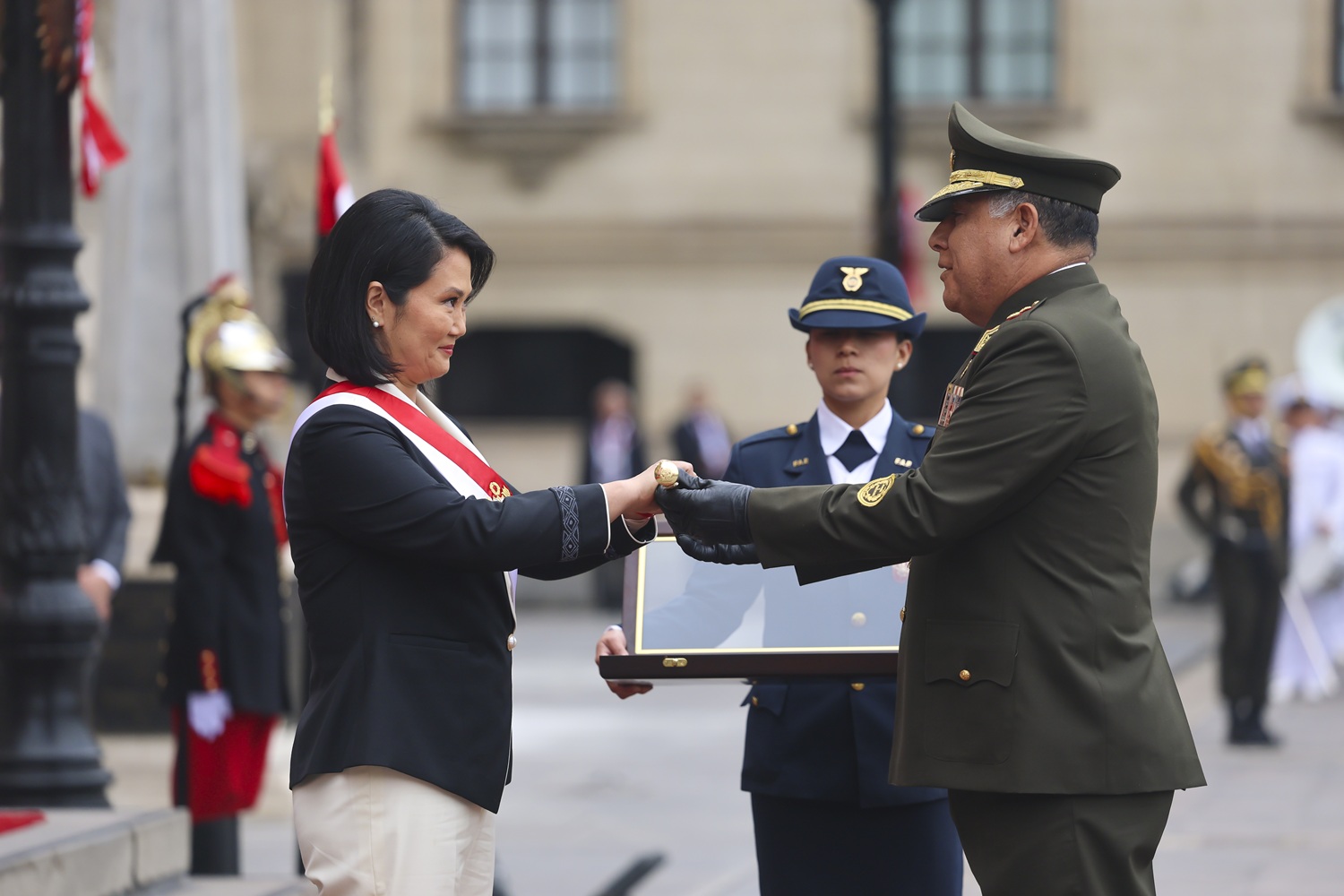
Agencia Peruana de Noticias PRENSAPERU.PE https://www.prensaperu.pe Twitter: @prensaperupe En una ceremonia solemne realizada en el Patio de Honor del Palacio de Gobierno, la presidenta constitucional de la República, Keiko Sofía Fujimori Higuchi, recibió el reconocimiento oficial como Jefa Suprema de las Fuerzas Armadas y de la Policía Nacional del Perú. Este acto protocolar, fundamento de la institucionalidad democrática, marca la renovación del vínculo de lealtad y subordinación de las instituciones de seguridad al poder civil legítimamente elegido.
DESARROLLO DEL ACTO
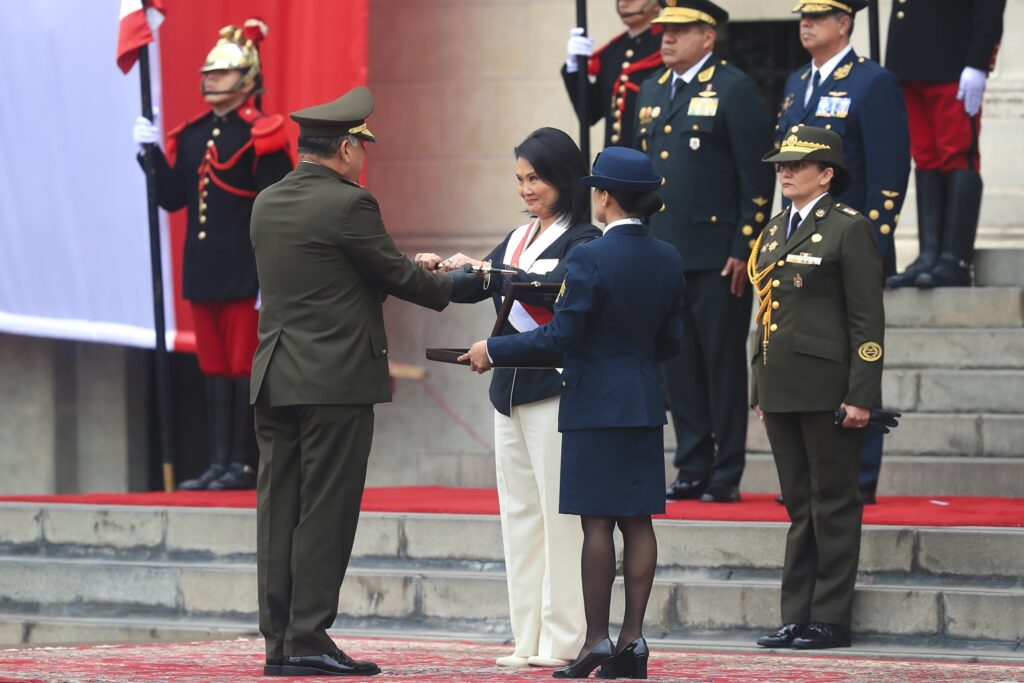
La ceremonia se inició con el paso de revista a las tropas por parte de la jefa de Estado, quien saludó el Pabellón Nacional como símbolo de respeto a la patria y a la historia. Seguidamente, el jefe del Comando Conjunto de las Fuerzas Armadas, César Augusto Briceño Valdivia, hizo entrega del bastón de mando a la presidenta, formalizando el ejercicio de su autoridad suprema.
En el transcurso del acto, las instituciones castrenses renovaron de manera solemne su compromiso inquebrantable con la Constitución Política, la democracia y el Estado de Derecho, reafirmando su lealtad a la autoridad legítimamente constituida. La presencia del ministro de Defensa, Rafael Belaúnde, y del ministro del Interior, César Astudillo, junto a los comandantes generales del Ejército, Marina de Guerra, Fuerza Aérea y la Policía Nacional, refleja la articulación institucional entre el gobierno y las entidades encargadas de la soberanía y el orden interno.
Este reconocimiento no es solo un rito protocolar: consolida la conducción política del sector Defensa y seguridad bajo la autoridad civil, y reafirma la naturaleza profesional, disciplinada y apartidaria de las Fuerzas Armadas y la Policía Nacional, comprometidas con el bienestar de todos los peruanos.
Keiko Fujimori recibió dos símbolos esenciales, el ‘Bastón de Mando y la Insignia de Jefa Suprema’; el bastón es el emblema tradicional que representa la autoridad y el liderazgo supremo sobre todas las fuerzas de defensa y seguridad, mientras que la insignia es un distintivo único que integra símbolos del Ejército, Marina, Fuerza Aérea y Policía Nacional, unidos bajo el Escudo Nacional.
Ambos elementos juntos materializan su investidura constitucional, sellando la subordinación de las instituciones al poder civil legítimamente elegido.
DATOS CONCEPTUALES
Jefatura Suprema de las Fuerzas Armadas y la Policía Nacional: Atribución constitucional irrenunciable que recae en el Presidente de la República, como máxima autoridad civil y representante del Estado, garantizando que la fuerza pública esté siempre al servicio de la nación y no de grupos particulares.
Bastón de Mando e Insignias de Jefatura Suprema: El bastón es el emblema histórico y protocolar que representa la autoridad legítima y el liderazgo máximo sobre las instituciones castrenses y policiales. Las insignias son distintivos oficiales que integran los símbolos del Ejército, Marina de Guerra, Fuerza Aérea y Policía Nacional, unidos bajo el Escudo Nacional; su entrega conjunta formaliza la transmisión del mando y la investidura constitucional de la autoridad civil.
Revista de Tropas: Acto ceremonial mediante el cual la autoridad suprema verifica la presencia, disposición y compromiso de las fuerzas, reafirmando el respeto a la jerarquía y al orden establecido.
Subordinación al Poder Civil: Principio esencial de la democracia peruana que establece que las Fuerzas Armadas y la Policía Nacional obedecen a la autoridad civil elegida por la ciudadanía, sin intervenir en política ni en el proceso electoral.
DATOS CONTEXTUALES
1.- Fundamento democrático: El acto reafirma el principio de subordinación de las fuerzas de seguridad al poder civil, garantía esencial de la estabilidad y la vigencia plena de la democracia en el país.
2.- Autoridad legítima: La entrega del bastón de mando y el reconocimiento institucional refuerzan la legitimidad del ejercicio presidencial sobre la defensa nacional y el orden interno.
3.- Institucionalidad y continuidad: Las Fuerzas Armadas y la Policía Nacional se confirman como pilares permanentes del Estado, más allá de los cambios de gobierno, manteniendo su vocación de servicio a la nación.
4.- Unidad para la seguridad: La presencia de las máximas autoridades del sector asegura una coordinación efectiva entre el Ejecutivo y las instituciones encargadas de proteger la vida, la integridad y el patrimonio de los peruanos.
Fuente: Agencia Peruana de Noticias PRENSAPERU.PE https://www.prensaperu.pe Twitter: @prensaperu
Translate
Keiko Fujimori, Supreme Head of the Armed Forces and the National Police: Ceremony of the Delivery of the Baton of Command and Insignia at the Government Palace Renews Commitment to the Constitution and Democracy
Peruvian News Agency PRENSAPERU.PE https://www.prensaperu.pe Twitter: @prensaperupe In a solemn ceremony held in the Courtyard of Honor of the Government Palace, the Constitutional President of the Republic, Keiko Sofía Fujimori Higuchi, received official recognition as Supreme Head of the Armed Forces and the National Police of Peru. This protocol act, a cornerstone of democratic institutionality, marks the renewal of the bond of loyalty and subordination of security institutions to the legitimately elected civilian power.
DEVELOPMENT OF THE ACT
The ceremony began with the Head of State reviewing the troops, who saluted the National Flag as a symbol of respect for the homeland and its history. Immediately afterwards, the Head of the Joint Command of the Armed Forces, César Augusto Briceño Valdivia, presented the baton of command to the President, formalizing the exercise of her supreme authority.
Throughout the ceremony, the military institutions solemnly renewed their unwavering commitment to the Political Constitution, democracy, and the Rule of Law, reaffirming their loyalty to the legitimately constituted authority. The presence of the Minister of Defense, Rafael Belaúnde, and the Minister of the Interior, César Astudillo, alongside the Commanding Generals of the Army, Navy, Air Force, and the National Police, reflects the institutional coordination between the government and the bodies responsible for sovereignty and internal order.
This recognition is not merely a protocol ritual: it consolidates the political leadership of the defense and security sector under civilian authority, and reaffirms the professional, disciplined, and non-partisan nature of the Armed Forces and the National Police, committed to the well-being of all Peruvians.
Keiko Fujimori received two essential symbols: the “Baton of Command and the Insignia of Supreme Head”; the baton is the traditional emblem representing authority and supreme leadership over all defense and security forces, while the insignia is a unique badge integrating symbols of the Army, Navy, Air Force, and National Police, united under the National Coat of Arms.
Together, both elements embody her constitutional investiture, sealing the subordination of institutions to the legitimately elected civilian power.
CONCEPTUAL DATA
Supreme Command of the Armed Forces and the National Police: An inalienable constitutional attribution vested in the President of the Republic, as the highest civilian authority and representative of the State, guaranteeing that public force is always at the service of the nation and not of particular groups.
Baton of Command: Historical and protocol symbol representing legitimate authority over military and police institutions; its presentation formalizes the transmission of institutional leadership.
Troop Review: Ceremonial act through which the supreme authority verifies the presence, readiness, and commitment of the forces, reaffirming respect for hierarchy and established order.
Subordination to Civilian Power: Essential principle of Peruvian democracy establishing that the Armed Forces and the National Police obey the civilian authority elected by the citizenry, without intervening in politics or electoral processes.
CONTEXTUAL DATA
1.- Democratic foundation: The act reaffirms the principle of subordination of security forces to civilian power, an essential guarantee of stability and the full validity of democracy in the country.
2.- Legitimate authority: The presentation of the baton of command and institutional recognition reinforce the legitimacy of presidential exercise over national defense and internal order.
3.- Institutionality and continuity: The Armed Forces and the National Police are confirmed as permanent pillars of the State, transcending government changes and maintaining their vocation of service to the nation.
4.- Unity for security: The presence of the highest sector authorities ensures effective coordination between the Executive Branch and the institutions tasked with protecting the lives, integrity, and property of Peruvians.
Source: Peruvian News Agency PRENSAPERU.PE https://www.prensaperu.pe Twitter: @prensaperupe