

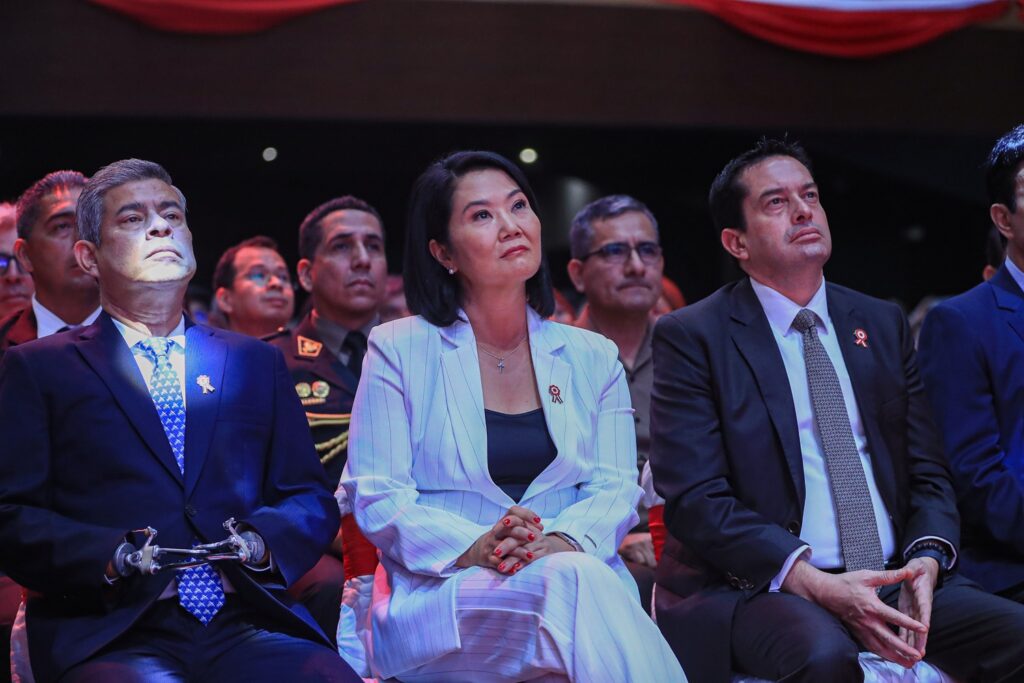
Agencia Peruana de Noticias PRENSAPERU.PE https://www.prensaperu.pe Twitter: @prensaperupe En el marco de la XXI Ceremonia de Acción de Gracias por el Perú, iniciativa que se realiza desde el año 2006, las iglesias evangélicas reunidas en el CONEP y la UNICEP entregaron un mensaje central a la nueva administración y a todo el país. Ante la presidenta Keiko Fujimori, el gabinete ministerial y autoridades del Congreso, el pastor Miguel Bardales Inga planteó una visión distinta del ejercicio del poder: no como un premio o trofeo, sino como una mayordomía delegada que exige justicia, humildad y transparencia para sanar las heridas de la nación.
Con 49 años de servicio pastoral y siendo uno de los impulsores de este encuentro anual, Bardales reflexionó sobre la realidad de un país que, tras elegir a sus autoridades, sigue dividido, desconfiado y afectado por la violencia y la corrupción. Frente a esto, sostuvo que la pregunta clave no es “quién gobierna”, sino “cómo se debe gobernar el Perú delante de Dios”.
Basado en las Sagradas Escrituras —especialmente en el pasaje de 2 Samuel 23:3-4 sobre el gobernante justo y en Romanos 13:1— explicó tres pilares fundamentales:
1.- El poder es una delegación divina: No pertenece a quien lo ejerce, sino que es una responsabilidad ante el Creador, de la cual se deberá rendir cuentas.
2.- La justicia como prioridad: Más allá del cumplimiento legal, significa proteger al débil, escuchar al que no tiene voz, castigar la corrupción y garantizar seguridad y obras reales para todos.
3.- Gobernar con temor de Dios: No como miedo, sino como una ética superior que disipa la soberbia, la mentira y la revancha.
El mensaje dirigido a la presidenta reconoció su trayectoria y sacrificios, pero le recordó que el verdadero reto empieza ahora: transformar el mandato popular en servicio responsable. Se le propuso liderar la reconciliación nacional mediante el diálogo respetuoso, renunciando a la soberbia y a la acusación permanente, y construir un gobierno “sin nubes”, es decir, transparente y sin abusos.
La exhortación también llegó al Congreso: senadores y diputados deben entender que el respaldo electoral se convierte en servicio; deben fiscalizar con integridad y legislar buscando el bien común, sin calumnias ni obstruccionismo. Finalmente, se recordó que el verdadero liderazgo se resume en servir, tal como lo enseñó Jesucristo, y que la entrega simbólica de la Biblia a la mandataria no es adorno, sino recordatorio de que la voluntad política debe estar sujeta a principios superiores.
La ceremonia contó con la oración del pastor Humberto Lay Sun, la interpretación a capela del Himno Nacional por el tenor Jhonatán Martínez y la participación del Coro Polifónico Bautista, cerrando con la esperanza de que, al ejercer el poder con integridad, el Perú pueda ver “la luz de una mañana sin nubes”.
DATOS CONCEPTUALES
Mayordomía: Ejercicio de la autoridad como administración de algo que no es propio, confiado por Dios y por el pueblo, con obligación de rendir cuentas.
Gobernar bajo el temor de Dios: Actuar con conciencia ética y responsabilidad moral, reconociendo que existe una autoridad superior a la humana.
Justicia integral: No solo cumplimiento de normas, sino acción concreta en favor de los más vulnerables, restauración de derechos y protección de la vida.
Reconciliación nacional: Proceso que requiere renunciar al odio y la soberbia para dialogar y reconstruir el tejido social fracturado.
Gobierno sin nubes: Gestión caracterizada por la transparencia total, alejada de sospechas, abusos o venganzas políticas.
CONCLUSIONES
1.- El poder no es un trofeo, es servicio: La autoridad política tiene un origen y un fin superior al interés personal o partidario: el bienestar de la nación.
2.- La clave está en la forma de gobernar: Más importante que quien asume el mando es el estilo de gestión: justo, humilde y transparente.
3.- Reconciliación requiere renuncia: Unir al país exige dejar atrás la soberbia y la crítica destructiva, abriendo espacio al diálogo respetuoso.
4.- Compromiso que incluye a todos los poderes: La ética pública no es solo tarea del Ejecutivo; el Legislativo también debe actuar con integridad y altura de miras.
5.- Esperanza en la integridad: Cuando el poder se ejerce con rectitud y respeto a Dios y al prójimo, se abren caminos de renovación y esperanza para todo el Perú.
Fuente: Agencia Peruana de Noticias PRENSAPERU.PE https://www.prensaperu.pe Twitter: @prensaperupe
Translate
“Power is Stewardship”: The Evangelical Churches’ Message to Keiko Fujimori at the “Thanksgiving Ceremony for Peru” — The Question Is Not Who Governs, But How One Governs Before God
Peruvian News Agency PRENSAPERU.PE https://www.prensaperu.pe Twitter: @prensaperupe Within the framework of the XXI Thanksgiving Ceremony for Peru, an initiative held annually since 2006, the evangelical churches gathered under CONEP and UNICEP delivered a central message to the new administration and the entire nation. Before President Keiko Fujimori, the Cabinet, and congressional authorities, Pastor Miguel Bardales Inga set forth a distinct vision of the exercise of power: not as a prize or trophy, but as delegated stewardship that demands justice, humility, and transparency to heal the nation’s wounds.
With 49 years of uninterrupted pastoral service and as one of the driving forces behind this annual gathering, Bardales reflected on the reality of a country that, after electing its authorities, remains divided, distrustful, and afflicted by violence and corruption. Against this backdrop, he affirmed that the key question is not “who governs,” but “how Peru ought to be governed before God.”
Drawing from the Holy Scriptures —especially 2 Samuel 23:3‑4 regarding the righteous ruler and Romans 13:1— he explained three fundamental pillars:
1.- Power is a divine delegation: It does not belong to those who exercise it, but is a responsibility before the Creator, to whom an account must be rendered.
2.- Justice as a priority: Beyond legal compliance, it means protecting the vulnerable, giving voice to the voiceless, punishing corruption, and ensuring security and tangible works for all.
3.- Governing in the fear of God: Not as paralyzing dread, but as a higher ethical standard that dispels pride, falsehood, and vengeance.
The message to the President acknowledged her journey and sacrifices, yet reminded her that the true challenge begins now: transforming popular mandate into responsible service. She was urged to lead national reconciliation through respectful dialogue, renouncing pride and constant accusation, and to build a government “without clouds”—that is, one that is transparent and free of abuse.
The exhortation was also directed to Congress: Senators and Representatives must understand that electoral support translates into service; they must exercise oversight with integrity and legislate for the common good, free from slander or obstructionism. Finally, it was recalled that true leadership is defined by service, as taught by Jesus Christ, and that the symbolic presentation of the Bible to the President is not mere ornament, but a reminder that political will must be subject to higher principles.
The ceremony included a prayer by Pastor Humberto Lay Sun, an a cappella rendition of the National Anthem by tenor Jhonatán Martínez, and the participation of the Baptist Polyphonic Choir, concluding with the hope that, when power is exercised with integrity, Peru may see “the light of a cloudless morning.”
CONCEPTUAL DATA
Stewardship: The exercise of authority as the administration of something that is not one’s own, entrusted by God and the people, with the obligation to render an account.
Governing in the fear of God: Acting with ethical awareness and moral responsibility, recognizing that an authority higher than humanity exists.
Integral justice: Not merely compliance with laws, but concrete action on behalf of the vulnerable, the restoration of rights, and the protection of life.
National reconciliation: A process that requires renouncing hatred and pride in order to dialogue and rebuild the fractured social fabric.
Government without clouds: Governance characterized by full transparency, free from suspicion, abuse, or political retaliation.
CONCLUSIONS
1.- Power is not a trophy, it is service: Political authority has an origin and purpose above personal or partisan interest: the well‑being of the nation.
2.- The key lies in the manner of governing: More important than who assumes office is the style of leadership: just, humble, and transparent.
3.- Reconciliation requires renunciation: Uniting the country demands leaving behind pride and destructive criticism, making way for respectful dialogue.
4.- A commitment that includes all branches of State: Public ethics is not the task of the Executive alone; the Legislative must also act with integrity and statesmanship.
5.- Hope through integrity: When power is exercised with rectitude and respect for God and one’s neighbor, paths of renewal and hope open for all Peru.
Source: Peruvian News Agency PRENSAPERU.PE https://www.prensaperu.pe Twitter: @prensaperupe