
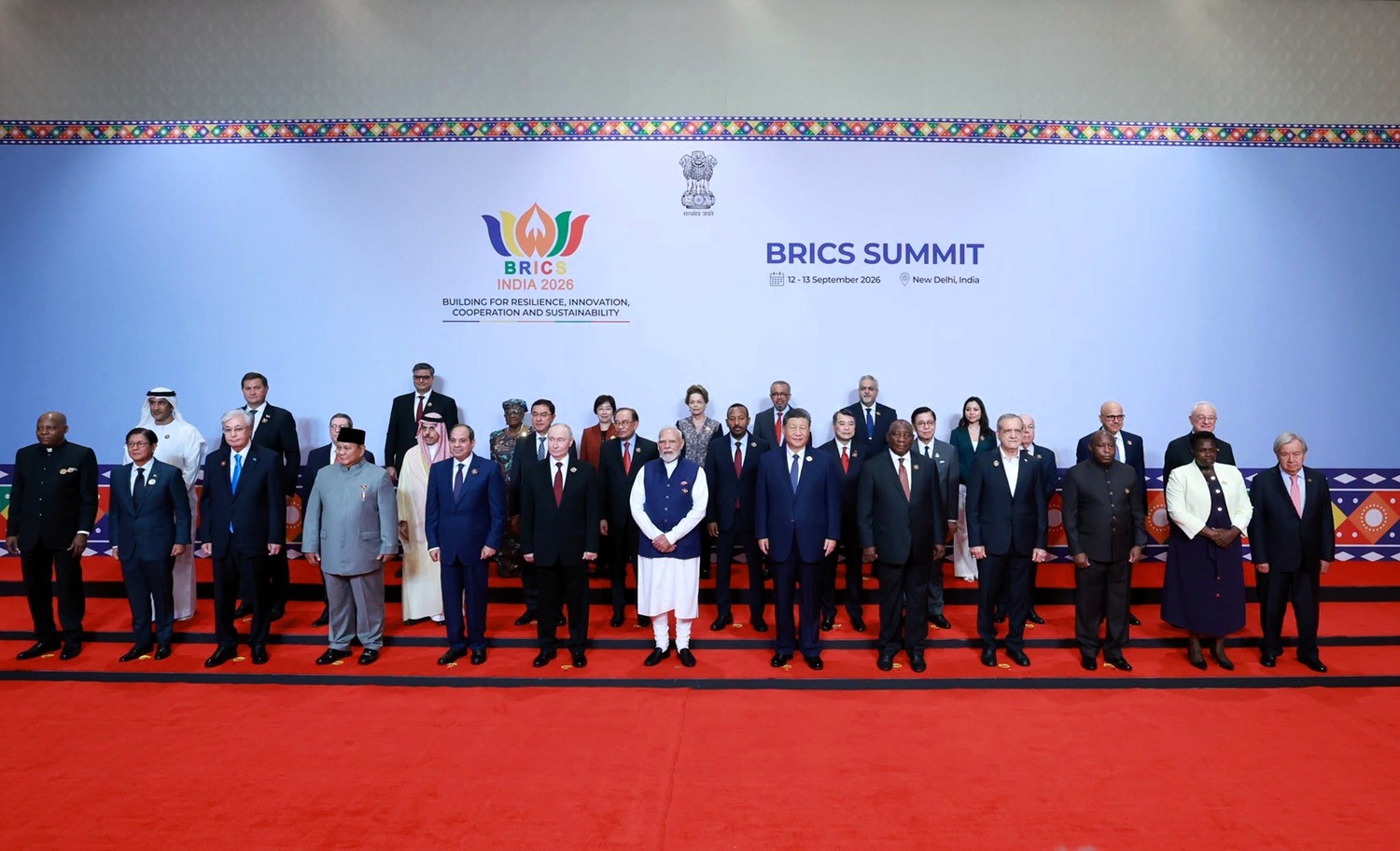
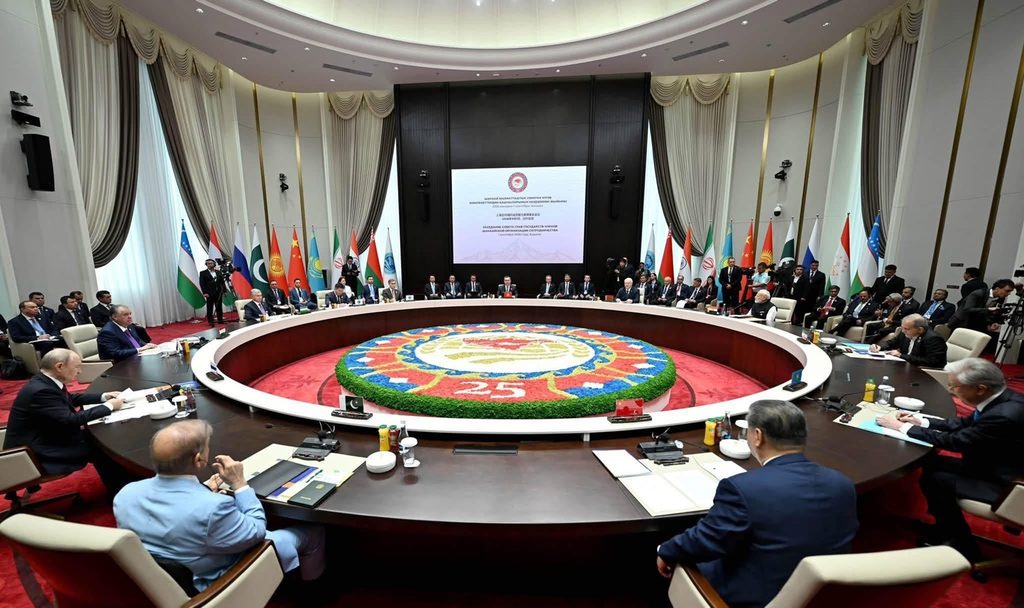
Agencia Peruana de Noticias PRENSAPERU.PE https://www.prensaperu.pe Twitter: @prensaperupe En menos de 14 días, entre el 1 de septiembre y mediados del mismo mes, los líderes de las mayores economías emergentes y en desarrollo del mundo se reunieron en dos cumbres sucesivas: primero, la Cumbre de la Organización de Cooperación de Shanghai (SCO) en Bishkek, Kirguistán, y luego la Cumbre del bloque BRICS en Nueva Delhi, India. Esta cercanía no es casualidad ni coincidencia: es la manifestación más clara hasta la fecha de que el Sur Global ha dejado de ser un concepto geográfico o económico para convertirse en una fuerza geopolítica articulada, coordinada y con voluntad de transformar el orden internacional que ha regido desde el fin de la Segunda Guerra Mundial.
I.- ¿POR QUÉ NACEN ESTOS DOS BLOQUES? ORIGINES Y NATURALEZA
SCO — Organización de Cooperación de Shanghai
Nace formalmente en 2001, pero tiene sus raíces en el llamado “Grupo de Shanghai” de 1996, creado por China, Rusia, Kazajistán, Kirguistán, Tayikistán y posteriormente Uzbekistán. Su origen fue práctico: estabilizar fronteras, reducir tensiones militares y combatir el terrorismo, el separatismo y el extremismo religioso que amenazaban la vasta región de Asia Central, zona históricamente volátil y escenario de competencia entre potencias.
Con los años, evolucionó de un acuerdo de seguridad fronteriza a una organización de cooperación integral: seguridad regional, comercio, energía, conectividad y desarrollo. Hoy reúne a países que cubren más del 25 % del PIB mundial, cerca del 40 % de la población del planeta y la mayor masa terrestre continua de cualquier bloque internacional. No es una alianza militar, sino un mecanismo de coordinación donde nadie manda solo: se decide por consenso .
BRICS
El concepto nació en 2001, cuando el economista Jim O’Neill, del banco Goldman Sachs, agrupó a Brasil, Rusia, India y China como las cuatro grandes economías emergentes que definirían el siglo XXI. Pero como bloque político nació más tarde: su primera cumbre fue en 2009, y en 2010 se sumó Sudáfrica, convirtiéndose en BRICS .
Nació de una frustración común: el sistema financiero y político mundial se diseñó en 1944 por potencias occidentales, y 60 años después seguía sin dar voz ni voto proporcional a quienes ya generaban gran parte del crecimiento global. El FMI, el Banco Mundial, el Consejo de Seguridad de la ONU y las instituciones de comercio internacional reflejaban un mundo que ya no existía. Su objetivo fundamental: reformar la gobernanza global, crear instituciones financieras alternativas, diversificar el comercio y reducir la dependencia del dólar estadounidense .
Desde 2024, con la incorporación de Egipto, Etiopía, Irán, Emiratos Árabes Unidos y otros, se ha convertido en el espacio de convergencia más amplio del Sur Global, reuniendo a economías de África, Asia, América Latina y Oriente Medio .
II.- ¿POR QUÉ SE REÚNEN ASÍ, TAN SEGUIDO Y TAN CERCA?
La respuesta está en la coordinación estratégica. Ambos bloques comparten miembros clave: China, Rusia, India, Kazajistán y otros están en los dos. Por eso, lo que se decide en uno se conecta con el otro:
La SCO trabaja desde la seguridad regional y la estabilidad continental: control de fronteras, lucha contra el crimen organizado, rutas de transporte y energía que atraviesan Eurasia.
BRICS opera desde la economía global y la arquitectura financiera: bancos de desarrollo, sistemas de pago alternativos, comercio en monedas locales, reforma de organismos internacionales .
Al reunirse en tan poco tiempo, demuestran que ya no funcionan por separado: lo que se acuerda en Bishkek se amplía en Nueva Delhi. Es una forma de decir: “Tenemos una agenda común, seguimos avanzando, y el ritmo lo ponemos nosotros”. Además, el contexto internacional lo exige: guerras en Europa y Oriente Medio, tensiones entre potencias, crisis alimentarias y energéticas, y un sistema mundial que muestra grietas profundas. Ningún país del Sur Global se siente seguro si no tiene voz propia .
III.- ¿QUÉ BUSCAN REALMENTE? OBJETIVOS CENTRALES
1.- Equidad en la gobernanza mundial: Que el peso económico y demográfico de los países emergentes se refleje en cuotas, votos y representación real en instituciones como el FMI, el Banco Mundial y la ONU. Actualmente el G7, con menos del 30 % del PIB mundial, sigue controlando decisiones que afectan al 100 % del planeta .
2.- Autonomía financiera y monetaria: Crear redes de pago, bancos de desarrollo y mecanismos de reserva que no dependan exclusivamente del dólar, del euro ni de sistemas controlados por Occidente. Avanzar en el comercio en monedas locales para evitar sanciones unilaterales y bloqueos financieros .
3.- Seguridad multidimensional: No solo armas, sino seguridad alimentaria, energética, tecnológica y digital. Garantizar que el desarrollo económico no dependa de decisiones ajenas .
4.- Un modelo alternativo: Mostrar que se puede cooperar sin alianzas militares cerradas, sin obligar a elegir bando, sin imponer modelos políticos. El principio rector es: “Cooperación, no confrontación; igualdad, no subordinación” .
IV.- ¿QUÉ SIGNIFICA ESTO PARA OCCIDENTE?
Para Estados Unidos, Europa, Japón y el grupo tradicionalmente llamado “Occidente”, el avance coordinado de SCO y BRICS representa el mayor desafío estructural al orden mundial establecido desde 1945.
Geopolíticamente: Se está formando un gran espacio de cooperación que va desde el Mar Báltico hasta el Océano Índico y el Pacífico, donde las reglas no las dictan Washington ni Bruselas. Es lo que algunos analistas llaman el fin del monopolio de la definición global .
Económicamente: Se abre competencia real en financiamiento, tecnología, infraestructura y mercados. El Banco de Desarrollo de los BRICS ya financia proyectos en todo el mundo, y la “desdolarización” avanza aunque aún es parcial.
Políticamente: Muchos países del Sur Global —incluido el Perú— hoy pueden elegir: tienen opciones, no están obligados a alinearse automáticamente. Esto reduce la capacidad de influencia exclusiva que Occidente mantuvo por décadas .
No se trata necesariamente de una guerra o una ruptura total: se trata de multipolaridad: el mundo pasa de tener un solo centro de poder a tener varios. Occidente deja de ser el único centro de gravedad.
V.- SEGURIDAD ESTRATÉGICA, CONFLICTOS Y EL NUEVO MAPA MUNDIAL
Vivimos tiempos donde las fronteras geopolíticas se están redefiniendo no solo con mapas, sino con acuerdos, rutas comerciales, alianzas y sistemas financieros. Varios acontecimientos han acelerado este cambio:
Conflicto en Ucrania: Dividió al mundo, pero también mostró que la mayoría de la población planetaria no se alineó con las sanciones occidentales, manteniendo relaciones con Rusia. Fue el momento en que el Sur Global se dio cuenta de que su voto tiene peso .
Guerra en Oriente Medio: Ha puesto en evidencia que los grandes centros energéticos y de transporte ya no se controlan solo desde fuera; países como Irán, Arabia Saudita o los del Golfo buscan posiciones independientes, y en esto la SCO y BRICS se han convertido en espacios de encuentro.
Competencia entre EE.UU. y China: Es el eje estructural de la actualidad. Y en medio de esta competencia, el Sur Global es el terreno donde se define quién tiene más influencia. La SCO y BRICS son las plataformas donde muchos países —incluidos los nuestros— negocian con ambos lados sin subordinarse totalmente a ninguno .
Seguridad energética y de recursos: Minerales críticos, tierras raras, cobre, litio, gas y petróleo: el control de los recursos es la nueva geopolítica. Los bloques emergentes se organizan para que los países que tienen los recursos también tengan la voz para decidir su destino .
El resultado: el mapa mundial ya no se dibuja solo en colores políticos o ideológicos, sino en redes de cooperación. El mundo de hoy tiene al menos tres grandes espacios en construcción: el bloque transatlántico liderado por Occidente, el espacio euroasiático coordinado por SCO, y el espacio de economías emergentes articulado por BRICS. Y muchos países —entre ellos el Perú— están en el cruce de todos ellos.
VI.- DEFINICIONES Y CONCEPTOS CLAVE
Sur Global: Concepto que agrupa a países con historias comunes de colonialismo, desarrollo desigual y baja representación en instituciones mundiales; no es solo geográfico, sino una posición: quienes exigen un orden más justo y equitativo .
SCO (Organización de Cooperación de Shanghai): Bloque regional de seguridad y desarrollo, fundado en 2001, que abarca Eurasia. Se basa en la no alineación, el respeto a la soberanía y la cooperación integral. No es una alianza militar .
BRICS: Mecanismo de cooperación entre las mayores economías emergentes del mundo, nacido en 2009. Busca reformar la gobernanza global, crear instituciones financieras alternativas y promover el comercio en monedas locales .
Multipolaridad: Orden internacional donde existe más de un centro de poder e influencia; opuesto al modelo unipolar que dominó después de la Guerra Fría .
Desdolarización: Proceso de reducir la dependencia del dólar estadounidense como moneda de reserva, comercio y pago internacional, avanzando hacia sistemas más diversificados .
Gobernanza global: Conjunto de instituciones, normas y acuerdos que rigen las relaciones internacionales; el debate central es si estas reflejan la realidad actual o la de hace 80 años .
VII.- CONCLUSIONES GENERALES
1.- Dos cumbres, un mismo proyecto: La cercanía entre la SCO en Bishkek y BRICS en Nueva Delhi no es casualidad: marca el nacimiento de una estrategia coordinada del Sur Global, que ya actúa como un bloque con agenda propia, no como actores aislados.
2.- No son lo mismo, se complementan: La SCO construye seguridad y conectividad regional; BRICS construye arquitectura económica y financiera mundial. Juntos cubren las dos dimensiones fundamentales del poder internacional.
3.- El cambio de orden ya está en marcha: El mundo que conocimos —donde Occidente decidía las reglas— ya no es el único. Se transita hacia un sistema multipolar, donde las decisiones se negocian, no se imponen.
4.- El reto para Occidente no es militar, es de legitimidad: La fuerza de estos bloques no viene de ejércitos, sino de representar a la mayoría de la población, del territorio y del crecimiento económico mundial. Occidente debe adaptarse o perder influencia.
5.- Para países como el Perú, la oportunidad y el riesgo: Estamos en el cruce de estas corrientes. Tenemos recursos, ubicación estratégica y necesidad de inversión. El desafío es saber posicionarnos: no ser botín de nadie, sino socio de todos, defendiendo siempre nuestros intereses y soberanía.
Fuente: Agencia Peruana de Noticias PRENSAPERU.PE https://www.prensaperu.pe Twitter: @prensaperupe
Translate
End of the 1945 World Order? From Bishkek to New Delhi, in 14 days the ‘Global South’ redraws the geography of global power. SCO and BRICS: two blocs, one voice — the world is no longer split in two, but into many more.
Peruvian News Agency PRENSAPERU.PE https://www.prensaperu.pe Twitter: @prensaperupe In less than 14 days, between September 1 and the middle of the same month, leaders of the world’s largest emerging and developing economies gathered for two successive summits: first, the Shanghai Cooperation Organization (SCO) Summit in Bishkek, Kyrgyzstan, and then the BRICS bloc Summit in New Delhi, India. This proximity is neither accidental nor coincidental: it is the clearest manifestation to date that the Global South has ceased to be merely a geographic or economic concept, and has evolved into a structured, coordinated geopolitical force with the stated will to transform the international order that has governed the world since the end of the Second World War.
I.- WHY WERE THESE TWO BLOCS FOUNDED? ORIGINS AND NATURE
SCO — Shanghai Cooperation Organization
Formally established in 2001, its roots go back to the so‑called “Shanghai Five” formed in 1996 by China, Russia, Kazakhstan, Kyrgyzstan and Tajikistan, with Uzbekistan joining later. Its original purpose was practical: to stabilize borders, reduce military tensions, and combat terrorism, separatism and religious extremism that threatened the vast region of Central Asia — a historically volatile area and long‑standing stage for competition between major powers.
Over the years, it evolved from a border security agreement into a comprehensive cooperation organization covering regional security, trade, energy, connectivity and development. Today its member countries account for over 25% of global GDP, nearly 40% of the world’s population, and represent the largest contiguous landmass of any international grouping. It is not a military alliance, but a coordination mechanism where no single member dictates decisions: all matters are agreed upon by consensus.
BRICS
The term was coined in 2001, when economist Jim O’Neill of Goldman Sachs grouped Brazil, Russia, India and China as the four major emerging economies that would define the 21st century. As a political bloc, however, it took shape later: its first summit was held in 2009, and South Africa joined in 2010, giving rise to the acronym BRICS.
It emerged from a shared frustration: the global financial and political system was designed in 1944 by Western powers, yet sixty years later it still failed to grant proportional voice or voting power to nations that already generated the bulk of global growth. Institutions such as the IMF, the World Bank, the UN Security Council and international trade bodies reflected a world that no longer existed. Its fundamental objectives are: to reform global governance, create alternative financial institutions, diversify trade, and reduce dependence on the United States dollar.
Since 2024, with the inclusion of Egypt, Ethiopia, Iran, the United Arab Emirates and other nations, it has become the broadest platform for convergence of the Global South, bringing together economies from Africa, Asia, Latin America and the Middle East.
II.- WHY DO THEY MEET SO FREQUENTLY AND SO CLOSELY TOGETHER?
The answer lies in strategic coordination. Both blocs share key member states: China, Russia, India, Kazakhstan and others participate in both forums. Consequently, agreements reached in one shape the agenda of the other:
The SCO operates primarily in the fields of regional security and continental stability: border management, countering transnational crime, and developing transport and energy corridors spanning Eurasia.
BRICS focuses on global economics and financial architecture: development banks, alternative payment systems, trade in local currencies, and reform of international institutions.
By holding summits within such a short timeframe, they demonstrate that they no longer operate in isolation: what is agreed in Bishkek is expanded upon in New Delhi. It sends a clear message: “We have a common agenda, we keep moving forward, and we set our own pace.” Furthermore, the international context demands it: armed conflicts in Europe and the Middle East, tensions between major powers, food and energy crises, and deepening fractures within the established world order. No country in the Global South feels secure without a voice of its own.
III.- WHAT ARE THEIR TRUE GOALS? CORE OBJECTIVES
1.- Equity in global governance: To ensure that the economic and demographic weight of emerging nations is reflected in fair quotas, voting rights and genuine representation within institutions such as the IMF, the World Bank and the United Nations. Currently, the G7 — which accounts for less than 30% of global GDP — still controls decisions that affect 100% of the world’s population.
2.- Financial and monetary autonomy: To establish payment networks, development banks and reserve mechanisms that do not depend exclusively on the US dollar, the euro, or systems controlled by Western powers. To advance trade in local currencies, thereby avoiding unilateral sanctions and financial blockades.
3.- Multidimensional security: Security is not limited to military defense; it includes food security, energy security, technological sovereignty and digital resilience. To ensure that economic development is not subject to decisions made by external actors.
4.- An alternative model: To demonstrate that cooperation is possible without closed military alliances, without being forced to choose sides, and without imposing political systems. Its guiding principle is: “Cooperation, not confrontation; equality, not subordination.”
IV.- WHAT DOES THIS MEAN FOR THE WEST?
For the United States, Europe, Japan and the group traditionally referred to as “the West”, the coordinated advance of the SCO and BRICS represents the most significant structural challenge to the world order established since 1945.
Geopolitically: A vast cooperative space is taking shape, stretching from the Baltic Sea to the Indian Ocean and the Pacific Ocean, where rules are no longer dictated by Washington or Brussels. Some analysts describe this as the end of the monopoly over the definition of global order.
Economically: Genuine competition has emerged in areas such as development financing, technology, infrastructure and market access. The BRICS Development Bank already funds projects across the globe, and the process of “de‑dollarization” continues to advance, even if it remains partial.
Politically: Many nations of the Global South — including Peru — now have choices and options, and are no longer obliged to align automatically. This has reduced the exclusive influence the West maintained for decades.
This does not necessarily mean conflict or total rupture: it means multipolarity. The world is moving from a system with a single center of power to one with multiple centers of influence. The West is no longer the only gravitational force in international relations.
V.- STRATEGIC SECURITY, CONFLICTS AND THE NEW WORLD MAP
We live in an era where geopolitical boundaries are being redefined not only through maps, but also through agreements, trade routes, alliances and financial systems. Several developments have accelerated this transformation:
Conflict in Ukraine: It divided the world, but also revealed that the majority of the global population did not align itself with Western sanctions, maintaining relations with Russia regardless. It marked the moment when the Global South realized that its collective voice carries weight.
Conflict in the Middle East: It has exposed that major energy and transport hubs are no longer controlled exclusively from outside. Nations such as Iran, Saudi Arabia and other Gulf states are pursuing independent positions, and in this context, the SCO and BRICS have emerged as key platforms for dialogue.
Competition between the United States and China: This is the defining structural dynamic of our time. And in the middle of this competition, the Global South is the arena where influence is contested and defined. The SCO and BRICS serve as platforms where many countries — including our own — negotiate with both sides without becoming fully subordinated to either.
Energy and resource security: Critical minerals, rare earth elements, copper, lithium, gas and oil — control over resources is the new geopolitics. Emerging blocs are organizing to ensure that the countries that possess these resources also have a voice in deciding their destiny.
The result is that the world map is no longer drawn only along political or ideological lines, but through networks of cooperation. Today’s world is being built around at least three major spheres: the transatlantic bloc led by the West, the Eurasian space coordinated by the SCO, and the emerging‑economy framework articulated by BRICS. Many nations — Peru among them — lie at the intersection of all three.
VI.- DEFINITIONS AND KEY CONCEPTS
Global South: A term grouping countries with shared histories of colonialism, uneven development and under‑representation in global institutions. It is not merely geographic; it describes a stance: the collective demand for a fairer and more equitable international order.
SCO (Shanghai Cooperation Organization): A regional bloc focused on security and development, founded in 2001 and covering the Eurasian landmass. Based on principles of non‑alignment, respect for sovereignty and comprehensive cooperation. It is not a military alliance.
BRICS: A cooperation framework bringing together the world’s largest emerging economies, established in 2009. Its aims are to reform global governance, create alternative financial institutions and promote trade in local currencies.
Multipolarity: An international system where more than one center of power and influence exists; the opposite of the unipolar model that dominated the period following the Cold War.
De‑dollarization: The process of reducing reliance on the US dollar as the primary reserve currency, trade currency and international payment standard, moving toward a more diversified system.
Global Governance: The set of institutions, norms and agreements that regulate international relations. The core debate today is whether these frameworks reflect current realities or the world as it existed eighty years ago.
VII.- GENERAL CONCLUSIONS
1.- Two summits, one shared project: The proximity between the SCO meeting in Bishkek and the BRICS meeting in New Delhi is no coincidence. It marks the birth of a coordinated strategy for the Global South, which now acts as a cohesive bloc with its own agenda, rather than as isolated actors.
2.- Distinct roles, complementary goals: The SCO builds regional security and connectivity; BRICS builds global economic and financial architecture. Together they cover the two fundamental dimensions of international power.
3.- A changing order is already taking shape: The world we have known — where the West set the rules — is no longer the only reality. We are transitioning toward a multipolar system where decisions are negotiated, not imposed.
4.- The challenge for the West is not military, but one of legitimacy: The strength of these blocs does not come from military might, but from the fact that they represent the majority of the world’s population, territory and economic growth. The West must adapt or lose influence.
5.- For countries like Peru, opportunity and risk go hand in hand: We stand at the crossroads of these major currents. We possess resources, strategic location and development needs. Our challenge is to position ourselves wisely: to be the prize of no one, but the partner of all, always defending our national interests and sovereignty.
Source: Peruvian News Agency PRENSAPERU.PE https://www.prensaperu.pe Twitter: @prensaperupe