
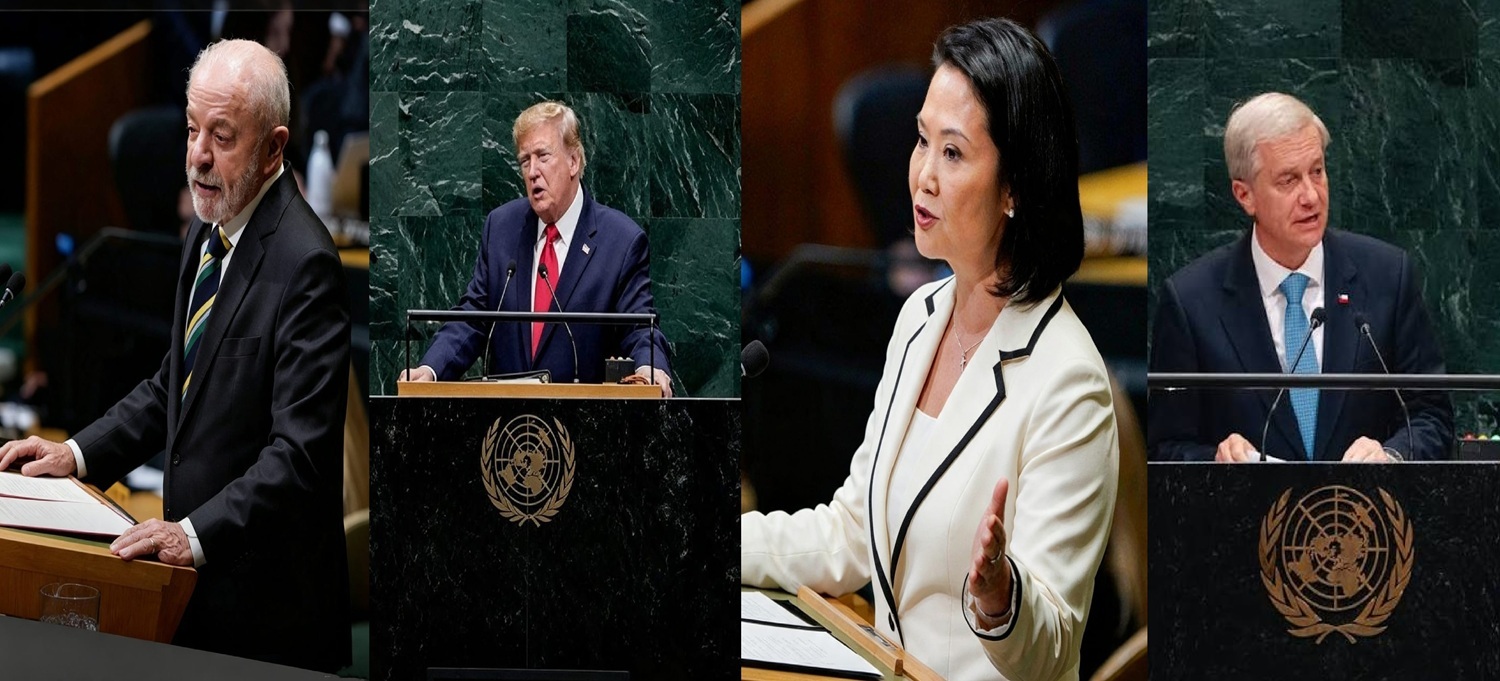
Agencia Peruana de Noticias PRENSAPERU.PE https://www.prensaperu.pe Twitter: @prensaperupe La 81.ª Asamblea General de las Naciones Unidas reunió en Nueva York a cuatro líderes que representan visiones profundamente distintas sobre el orden mundial, la seguridad, la soberanía y el desarrollo. Desde la primera tribuna internacional, cada mandatario expuso su diagnóstico, sus prioridades y el rumbo que su nación propone para un escenario global marcado por conflictos, desigualdades y nuevas amenazas que no conocen fronteras.
Luiz Inácio Lula da Silva — Presidente de Brasil
Lula abogó por un multilateralismo renovado y solidario. Advirtió que la credibilidad de la ONU atraviesa su momento más bajo y que el Consejo de Seguridad no responde a la realidad del siglo XXI. “Brasil no cabe en el patio trasero de nadie”, afirmó, reclamando socios que impulsen el desarrollo en lugar de imponer respuestas militares. Denunció el aumento del gasto bélico frente a las carencias sociales, pidió cortar el flujo de armas que alimenta al crimen organizado y defendió la soberanía de Venezuela, Nicaragua y Cuba, así como el fin de bloqueos económicos. Su enfoque coloca la cooperación, la justicia social y la integración regional como pilares de la paz .
Donald Trump — Presidente de los Estados Unidos
Con un discurso centrado en la soberanía y el poder nacional, Trump reivindicó la fortaleza económica y militar de su país. Presentó una postura de firmeza ante Irán —advirtiendo que no permitirá que tenga armas nucleares—, Ucrania y Cuba. Calificó a los cárteles del narcotráfico como “el Estado Islámico del hemisferio occidental” y abogó por su eliminación. Rechazó regulaciones internacionales sobre clima e inteligencia artificial, defendió el liderazgo estadounidense y anunció iniciativas de presencia militar. Su mensaje sostiene que la paz se garantiza con fuerza, acuerdos bilaterales y decisiones nacionales libres de control burocrático.
Keiko Fujimori — Presidenta del Perú
En su primera intervención ante la ONU, tras 57 días en el cargo, Keiko Fujimori planteó que América Latina enfrenta “otra clase de guerra”: la del crimen organizado transnacional que impone terror en las poblaciones. Calificó a estas redes como grupos terroristas que deben ser enfrentados como enemigos del Estado democrático. Anunció que el Perú perseguirá el delito “desde quien ejecuta hasta la estructura que lo sostiene” y se incorporó al mecanismo de cooperación regional “Escudo de las Américas”. Complementó la seguridad con la educación como herramienta de prevención: oportunidades reales para la juventud alejan a las personas de la violencia. Rescató el espíritu integrador del Qhapaq Ñan como símbolo de unión entre pueblos .
José Antonio Kast — Presidente de Chile
Kast planteó una crítica profunda al funcionamiento de la ONU, señalando que su burocracia excede su capacidad de acción y que el Consejo de Seguridad refleja el mundo de 1945, no el de hoy. Propuso tres reformas: reducir la burocracia, reorientar el presupuesto a lo esencial y reformar el Consejo de Seguridad para que sus decisiones sean respetadas. Abordó el crimen organizado transnacional y la inteligencia artificial como desafíos éticos y geopolíticos. Invitó a invertir en Chile, proclamó que su país “está de vuelta” y proyectó a América Latina como el continente del futuro, bajo principios de responsabilidad, regulación que habilita y no prohíbe, y apertura económica .
DATOS CONCEPTUALES
Multilateralismo: Sistema de cooperación entre naciones mediante organismos y acuerdos comunes, donde ningún país decide por sí solo. Busca que las decisiones se tomen de manera colectiva, equilibrando intereses nacionales con el bienestar internacional.
Crimen organizado transnacional: Conjunto de redes delictivas que operan atravesando fronteras —narcotráfico, minería ilegal, trata de personas, extorsión— con gran poder económico y de violencia. No respeta límites políticos, por lo que requiere respuesta coordinada entre Estados.
Soberanía nacional: Derecho de cada pueblo a decidir su destino, sus políticas y su organización sin injerencia externa. Es un principio fundacional de la ONU, aunque su ejercicio entra en tensión cuando los problemas —como el crimen o el cambio climático— no se detienen en fronteras.
Reforma del Consejo de Seguridad: Propuesta para modificar la composición y el poder de decisión del órgano principal de la ONU, que actualmente refleja la correlación de fuerzas tras la Segunda Guerra Mundial. Busca mayor representatividad, eficacia y legitimidad ante los retos del presente.
Cooperación hemisférica: Acción conjunta entre naciones de América para enfrentar amenazas comunes. Iniciativas como el “Escudo de las Américas” responden a la convicción de que la seguridad de uno depende de la acción de todos.
CONCLUSIONES
Sobre Luiz Inácio Lula da Silva
1.- El fortalecimiento del sistema multilateral y la reforma del Consejo de Seguridad no son gestos simbólicos, sino condiciones indispensables para que la ONU recupere credibilidad y capacidad de respuesta ante conflictos que afectan a toda la humanidad.
2.- La seguridad no se construye solo con armas o presencia militar externa: se cimenta en desarrollo, inclusión y respeto a la soberanía de cada nación, sin bloqueos ni intervenciones que profundicen la desigualdad entre regiones.
Sobre Donald Trump
3.- La defensa de la soberanía y el liderazgo nacional se presentan como la garantía de la paz: la fortaleza económica y militar de las grandes potencias se entiende como elemento disuasorio, aunque plantea tensiones con la toma de decisiones colectiva.
4.- La regulación internacional en temas como clima o tecnología se percibe como una amenaza a la libertad de acción de los Estados, lo que evidencia una brecha profunda entre quienes confían en normas compartidas y quienes prefieren acuerdos directos y bilaterales.
Sobre Keiko Fujimori
5.- El Perú identifica al crimen organizado transnacional como una amenaza existencial que debe ser nombrado y combatido con la misma firmeza que el terrorismo del pasado: no se trata de delincuencia común, sino de estructuras que buscan reemplazar al Estado.
6.- La seguridad es inseparable de la educación: la prevención mediante oportunidades reales para niños y jóvenes es el complemento indispensable de la acción policial y militar, pues sin desarrollo la violencia rebrota.
Sobre José Antonio Kast
7.- La eficiencia de las instituciones internacionales es tan importante como su existencia: una ONU que burocratiza más de lo que resuelve pierde legitimidad, por lo que la reforma debe ser profunda, no cosmética, y priorizar lo esencial.
8.- América Latina puede ser protagonista del progreso mundial si se une en torno a reglas claras, apertura responsable y preparación ética para el avance tecnológico: la próxima década puede ser la de la región si se actúa con unidad y visión.
Fuente: Agencia Peruana de Noticias PRENSAPERU.PE https://www.prensaperu.pe Twitter: @prensaperupe
Translate
Four voices, one stage: the world as presented by Lula, Trump, Keiko, and Kast at the UN. From historic integration to modern cooperation: Peru brings its fight against 21st-century terrorism to the global stage.
Peruvian News Agency PRENSAPERU.PE https://www.prensaperu.pe Twitter: @prensaperupe The 81st Session of the United Nations General Assembly brought together in New York four leaders representing profoundly different visions of world order, security, sovereignty, and development. From the foremost international platform, each head of state laid out their diagnosis, their priorities, and the course their nation proposes for a global landscape marked by conflict, inequality, and new threats that know no borders.
Luiz Inácio Lula da Silva — President of Brazil
Lula advocated for a renewed and inclusive multilateralism. He warned that the credibility of the United Nations is at its lowest point and that the Security Council no longer reflects the realities of the 21st century. “Brazil does not fit in anyone’s backyard,” he stated, calling for partners who foster development rather than imposing military solutions. He denounced rising military spending amid widespread social need, urged cutting the flow of arms that fuels organized crime, and defended the sovereignty of Venezuela, Nicaragua, and Cuba, as well as an end to economic blockades. His approach places cooperation, social justice, and regional integration as the foundations of peace.
Donald Trump — President of the United States
In an address centered on sovereignty and national power, Trump reaffirmed his country’s economic and military strength. He took a firm stance toward Iran —warning that it would not be allowed to acquire nuclear weapons—, Ukraine, and Cuba. He described drug cartels as “the Islamic State of the Western Hemisphere” and called for their elimination. He rejected international regulations on climate and artificial intelligence, upheld American leadership, and announced military deployment initiatives. His message holds that peace is secured through strength, bilateral agreements, and national decisions free from bureaucratic control.
Keiko Fujimori — President of Peru
In her first address to the UN, just 57 days after taking office, Keiko Fujimori argued that Latin America is facing “another kind of war”: that of transnational organized crime, which spreads terror among populations. She branded these networks as terrorist groups that must be confronted as enemies of democratic states. She announced that Peru would pursue crime “from those who carry it out to the structures that sustain it” and joined the regional cooperation mechanism “Shield of the Americas.” She paired security with education as a preventive tool: genuine opportunities for young people draw them away from violence. She invoked the unifying spirit of the Qhapaq Ñan as a symbol of solidarity among peoples.
José Antonio Kast — President of Chile
Kast offered a far-reaching critique of the UN’s functioning, stating that its bureaucracy outweighs its capacity to act and that the Security Council reflects the world of 1945, not the present. He proposed three reforms: streamlining bureaucracy, redirecting the budget toward core priorities, and restructuring the Security Council so its decisions carry authority. He addressed transnational organized crime and artificial intelligence as ethical and geopolitical challenges. He invited investment in Chile, declaring his country “is back,” and presented Latin America as the continent of the future, grounded in responsibility, regulation that enables rather than restricts, and open trade.
CONCEPTUAL DATA
Multilateralism: A system of cooperation among nations through shared institutions and agreements, where no single country acts alone. It seeks collective decision-making that balances national interests with the common good.
Transnational organized crime: Networks of criminal groups operating across borders —involving drug trafficking, illegal mining, human smuggling, and extortion— with vast financial resources and coercive power. They respect no political boundaries, requiring coordinated responses across nations.
National sovereignty: The right of every people to determine its own destiny, policies, and governance without external interference. It is a founding principle of the UN, yet it faces strain when challenges —such as crime or climate change— do not respect borders.
Security Council reform: Proposals to restructure the composition and decision-making authority of the UN’s primary enforcement body, which still reflects the balance of power following World War II. Reform aims to increase representation, effectiveness, and legitimacy in addressing modern challenges.
Hemispheric cooperation: Collective action by nations of the Americas to address shared threats. Initiatives such as “Shield of the Americas” rest on the principle that no nation can achieve security alone.
CONCLUSIONS
On Luiz Inácio Lula da Silva
1.- Strengthening the multilateral system and reforming the Security Council are not symbolic gestures; they are essential if the UN is to restore its credibility and capacity to resolve conflicts affecting all of humanity.
2.- Security is built not only through arms or foreign military presence, but through development, inclusion, and respect for every nation’s sovereignty —without blockades or interventions that deepen regional inequality.
On Donald Trump
3.- The defense of sovereignty and national leadership is presented as the foundation of peace: the economic and military strength of major powers acts as a deterrent, though it creates tensions with collective decision-making frameworks.
4.- International regulation in areas such as climate and technology is viewed as limiting national freedom of action, revealing a deep divide between those who trust shared standards and those who prefer direct bilateral agreements.
On Keiko Fujimori
5.- Peru identifies transnational organized crime as an existential threat that must be named and fought with the same resolve as past terrorism: it is not ordinary crime, but a force seeking to replace the state itself.
6.- Security and education are inseparable: prevention through real opportunities for children and young people is essential alongside law enforcement, for without development, violence returns.
On José Antonio Kast
7.- The effectiveness of international institutions matters as much as their existence: a UN that prioritizes process over purpose loses legitimacy, so reform must be thorough rather than superficial, focused on core missions.
8.- Latin America can lead global progress if united by clear rules, responsible openness, and ethical stewardship of technology: the coming decade can belong to the region if it acts with purpose and common vision.
Source: Peruvian News Agency PRENSAPERU.PE https://www.prensaperu.pe Twitter: @prensaperupe