
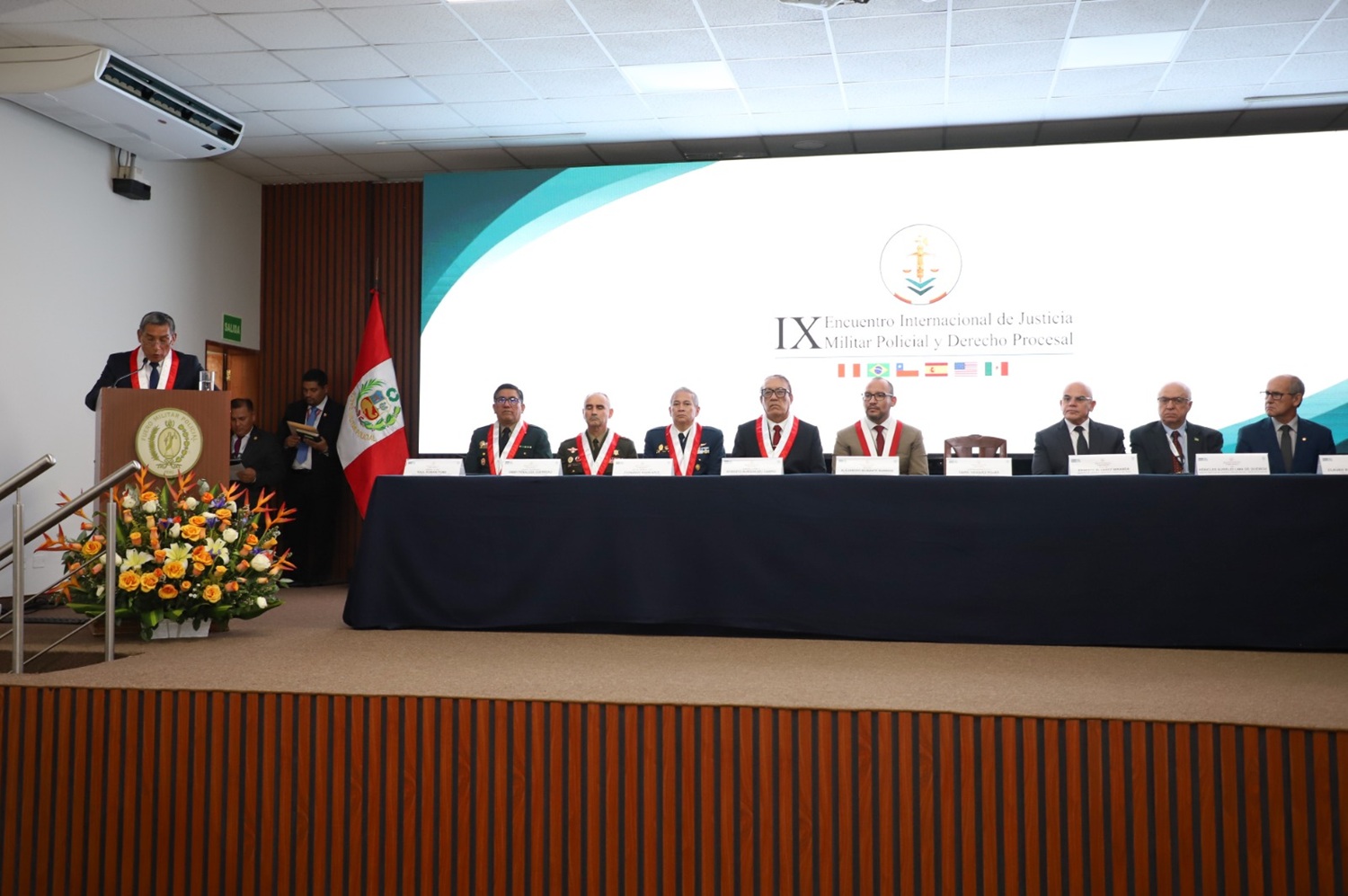
Agencia Peruana de Noticias PRENSAPERU.PE https://www.prensaperu.pe Twitter: @prensaperupe Con el firme compromiso de seguir fortaleciendo la institucionalidad y la seguridad jurídica de las fuerzas del orden, concluyeron las actividades del IX Encuentro Internacional de Justicia Militar Policial y Derecho Procesal. Durante tres días, el Perú se convirtió en el epicentro del debate especializado sobre derecho procesal y delitos de función, congregando a destacados magistrados, oficiales y especialistas provenientes de Brasil, Chile, España, Estados Unidos, México y el Perú como país anfitrión.
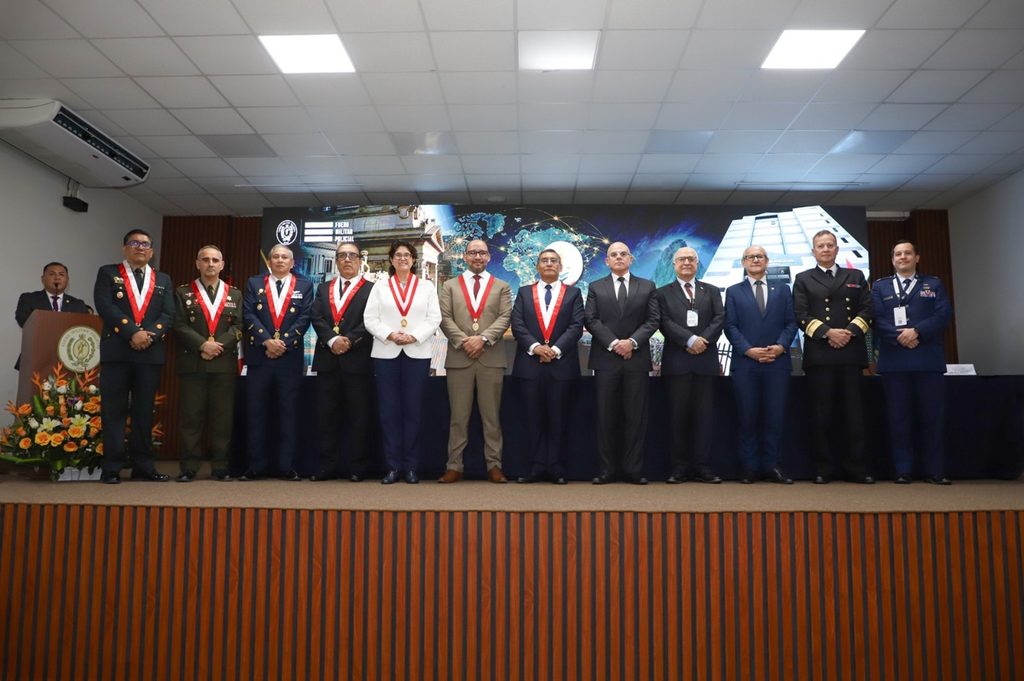
La ceremonia de clausura reunió a altas autoridades del Estado e invitados de honor: el Primer Vicepresidente del Senado, Dr. Alejandro Muñante Barrios; la Jefa Nacional del RENIEC, Dra. Carmen Velarde Koechlin; y el Ministro de Justicia y Derechos Humanos, Dr. Ernesto Álvarez Miranda. Estuvieron presentes, además, delegaciones de altos mandos y representantes de tribunales militares extranjeros, magistrados supremos, mandos de las Fuerzas Armadas y de la Policía Nacional, así como exponentes del ámbito académico.
En su intervención, el senador Muñante Barrios enfatizó la responsabilidad superior que asume quien sirve a la nación, estableciendo la distinción fundamental entre tener un cargo y cumplir un deber. Reafirmó el respaldo del Poder Legislativo a la especialización de la justicia militar policial y a la construcción de marcos normativos sólidos que aseguren el debido proceso y otorguen seguridad jurídica a quienes actúan con rectitud en ejercicio de su mandato constitucional.
El ministro Álvarez Miranda destacó que la existencia de una justicia especializada robustece la democracia y el orden institucional, expresando que «la justicia militar fortalece la institución y la implantación del orden en nuestros países». Ratificó el apoyo del sector a la modernización continua del fuero, orientada a contar con cuerpos normativos actualizados, transparentes y rigurosos.
El Presidente del Fuero Militar Policial, Contralmirante Darío Vásquez Rojas, agradeció el aporte de las delegaciones internacionales y resaltó los consensos alcanzados: el papel central de las fiscalías en los procesos penales militares y la prioridad impostergable de la transformación digital, con la implementación plena del expediente judicial electrónico como eje de modernización.
DATOS CONCEPTUALES
Justicia Militar Policial / Fuero Militar Policial: Es el sistema jurisdiccional especializado encargado de juzgar y procesar, conforme a su propia normativa, las conductas que constituyen delitos o faltas funcionales cometidas por personal de las Fuerzas Armadas y la Policía Nacional en el ejercicio de sus funciones. No sustituye a la justicia ordinaria, sino que la complementa atendiendo a la naturaleza específica de la función militar y policial, basada en la disciplina, la jerarquía y la protección de la soberanía y el orden interno.
Debido proceso: Conjunto de garantías y reglas esenciales que deben respetarse en todo procedimiento judicial para asegurar que toda persona sea juzgada de manera imparcial, con pleno acceso a la defensa, en un plazo razonable y conforme a normas preexistentes. Constituye un principio constitucional y un derecho humano reconocido internacionalmente.
Seguridad jurídica: Es la certeza que tienen las personas sobre cuál es el derecho aplicable en cada momento y sobre el alcance de las resoluciones de las autoridades. En el ámbito castrense, significa que el personal sabe con claridad qué conductas se esperan de él, qué normativa lo rige y bajo qué criterios será evaluado, protegido o sancionado.
Delitos de función: Son aquellas infracciones legales que se cometen con ocasión o como consecuencia directa del ejercicio del cargo, atribuciones o servicio encomendado. Requieren que la conducta tenga relación con las obligaciones inherentes a la condición de miembro de la institución.
Expediente judicial electrónico: Es la versión digital del conjunto de actuaciones, documentos y pruebas de un proceso judicial, almacenada y gestionada por medios informáticos. Permite agilizar la tramitación, garantizar la trazabilidad de las actuaciones y facilitar el acceso a la justicia, reduciendo tiempos y costos.
CONCLUSIONES
1.- La justicia militar policial deja de concebirse como un ámbito aislado y se consolida como pilar esencial del Estado democrático, donde la especialización jurisdiccional refuerza —no debilita— el respeto a los derechos fundamentales y la estabilidad institucional del país.
2.- Existe un consenso político e institucional creciente en torno a que la confianza de los efectivos en la justicia que los rige es directamente proporcional a la solidez de la normativa que los protege; por ello, legislar con claridad y anticipación es la mejor forma de prevenir arbitrariedades.
3.- La transformación digital no es un complemento opcional, sino una exigencia de justicia: la implementación del expediente electrónico en el fuero militar policial modernizará la gestión procesal y garantizará mayor transparencia, celeridad y acceso igualitario a la justicia.
4.- La cooperación internacional en materia de justicia militar policial trasciende lo académico: al compartir criterios y buenas prácticas, los países participantes construyen un espacio común de seguridad jurídica que fortalece la confianza mutua y la defensa del orden democrático en la región.
5.- La distinción entre ocupar un cargo y asumir un deber redefine el compromiso del funcionario público: la institucionalidad se sostiene no solo con leyes, sino con servidores que entienden que su labor responde a la nación y no a intereses particulares.
Fuente: Agencia Peruana de Noticias PRENSAPERU.PE https://www.prensaperu.pe Twitter: @prensaperupe
Translate
The 9th International Meeting on Military and Police Justice has concluded! Peru hosted a global discussion on procedural law and the legal certainty of law enforcement agencies as a democratic pillar in our region.
Peruvian News Agency PRENSAPERU.PE https://www.prensaperu.pe Twitter: @prensaperupe With the firm commitment to continue strengthening the institutional framework and legal certainty of the law enforcement bodies, the activities of the IX International Meeting on Military-Police Justice and Procedural Law concluded. Over three days, Peru became the epicenter of specialized debate on procedural law and official misconduct offenses, bringing together distinguished magistrates, officers, and specialists from Brazil, Chile, Spain, the United States, Mexico, and Peru as the host country.
The closing ceremony was attended by high-ranking State authorities and distinguished guests: the First Vice President of the Senate, Dr. Alejandro Muñante Barrios; the National Head of the National Registry of Identification and Civil Status (RENIEC), Dr. Carmen Velarde Koechlin; and the Minister of Justice and Human Rights, Dr. Ernesto Álvarez Miranda. Also present were delegations of high command and representatives of foreign military courts, supreme magistrates, commanders of the Armed Forces and the National Police of Peru, as well as academic representatives.
In his address, Senator Muñante Barrios emphasized the higher responsibility assumed by those who serve the nation, establishing the fundamental distinction between holding an office and fulfilling a duty. He reaffirmed the Legislative Branch’s support for the specialization of military-police justice and for building solid regulatory frameworks that ensure due process and grant legal certainty to those who act with integrity in the exercise of their constitutional mandate.
Minister Álvarez Miranda highlighted that the existence of specialized justice strengthens democracy and institutional order, stating that “military justice strengthens the institution and the establishment of order in our countries”. He ratified the sector’s support for the ongoing modernization of the jurisdiction, aimed at having updated, transparent, and rigorous regulatory frameworks.
The President of the Military-Police Jurisdiction, Rear Admiral Darío Vásquez Rojas, thanked the international delegations for their valuable contribution and highlighted the consensus reached: the central role of prosecution offices in military criminal proceedings and the urgent priority of digital transformation, with the full implementation of the electronic judicial case file as the core of modernization.
CONCEPTUAL DATA
Military-Police Justice / Military-Police Jurisdiction: The specialized jurisdictional body responsible for judging and prosecuting, in accordance with its own regulations, conduct constituting crimes or functional infractions committed by personnel of the Armed Forces and the National Police in the exercise of their duties. It does not replace ordinary justice, but complements it, addressing the specific nature of military and police service — based on discipline, hierarchy, and the protection of sovereignty and internal order.
Due process: The set of essential guarantees and rules that must be observed in all judicial proceedings to ensure that every person is judged impartially, with full access to defense, within a reasonable timeframe, and under pre-existing laws. It is a constitutional principle and an internationally recognized human right.
Legal certainty: The assurance that individuals have regarding the applicable law at any given time and the scope of authorities’ decisions. In the military context, it means personnel clearly understand the conduct expected of them, the laws governing them, and the criteria under which they will be evaluated, protected, or sanctioned.
Official misconduct offenses: Violations of law committed in connection with or as a direct consequence of the exercise of an office, powers, or assigned service. The conduct must relate to the duties inherent to the status of a member of the institution.
Electronic judicial case file: The digital version of all proceedings, documents, and evidence in a legal case, stored and managed electronically. It streamlines case processing, ensures traceability of actions, and facilitates access to justice while reducing delays and costs.
CONCLUSIONS
1.- Military-police justice is no longer seen as an isolated sphere, but is consolidated as an essential pillar of the democratic State — where jurisdictional specialization reinforces, rather than weakens, respect for fundamental rights and institutional stability.
2.- There is growing political and institutional consensus that the confidence of service members in the justice system governing them is directly proportional to the soundness of the laws protecting them; therefore, legislation that is clear and forward-looking is the best safeguard against arbitrariness.
3.- Digital transformation is not an optional addition, but a requirement of justice: implementing the electronic case file within the military-police jurisdiction will modernize procedural management and ensure greater transparency, efficiency, and equal access to justice.
4.- International cooperation in military-police justice extends beyond academic discussion: by sharing standards and best practices, participating countries build a shared framework of legal certainty that strengthens mutual trust and the defense of democratic order across the region.
5.- The distinction between occupying an office and assuming a duty redefines public service commitment: institutions are sustained not only by laws, but by public servants who understand that their work serves the nation — not private interests.
Source: Peruvian News Agency PRENSAPERU.PE https://www.prensaperu.pe Twitter: @prensaperupe