
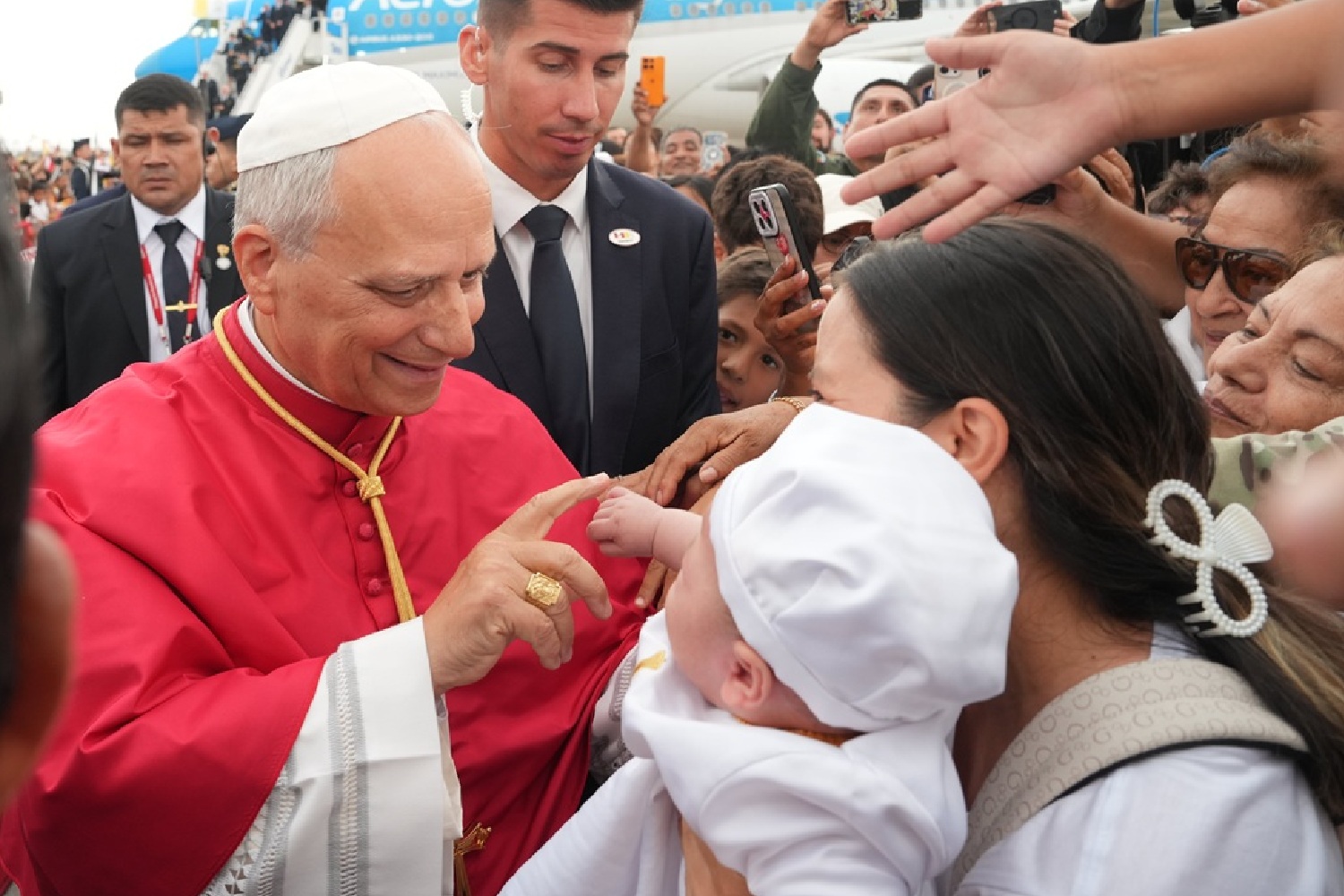
Agencia Peruana de Noticias PRENSAPERU.PE https://www.prensaperu.pe Twitter: @prensaperupe La visita apostólica del Papa León XIV al Perú representó uno de los acontecimientos religiosos más importantes para la nación, ya que el Pontífice regresó a una tierra donde ejerció pastoralmente como obispo de Chiclayo, generando un fuerte vínculo emocional y espiritual con los fieles peruanos. Su recorrido recorrió distintas regiones del país, combinando ceremonias litúrgicas, encuentros con autoridades, diálogos con creyentes y mensajes centrados en la fe, la solidaridad, la esperanza y el compromiso de evangelizar.
El inicio de su estadía en Perú estuvo marcado por la bienvenida oficial en la pista de aterrizaje, donde fue recibido por la presidenta y las autoridades nacionales, simbolizando el reconocimiento del Estado a la misión apostólica del Santo Padre. Posteriormente, la ceremonia en Palacio de Gobierno y la Santa Misa en la Plaza de Armas de Lima reunieron a miles de fieles, quienes acudieron para escuchar su mensaje y recibir su bendición, reflejando la fuerte devoción religiosa que caracteriza al pueblo peruano.
RECORRIDO POR LIMA Y ENCUENTRO CON LOS FIELES EN EL PRIMER DÍA DE LA VISITA APOSTÓLICA
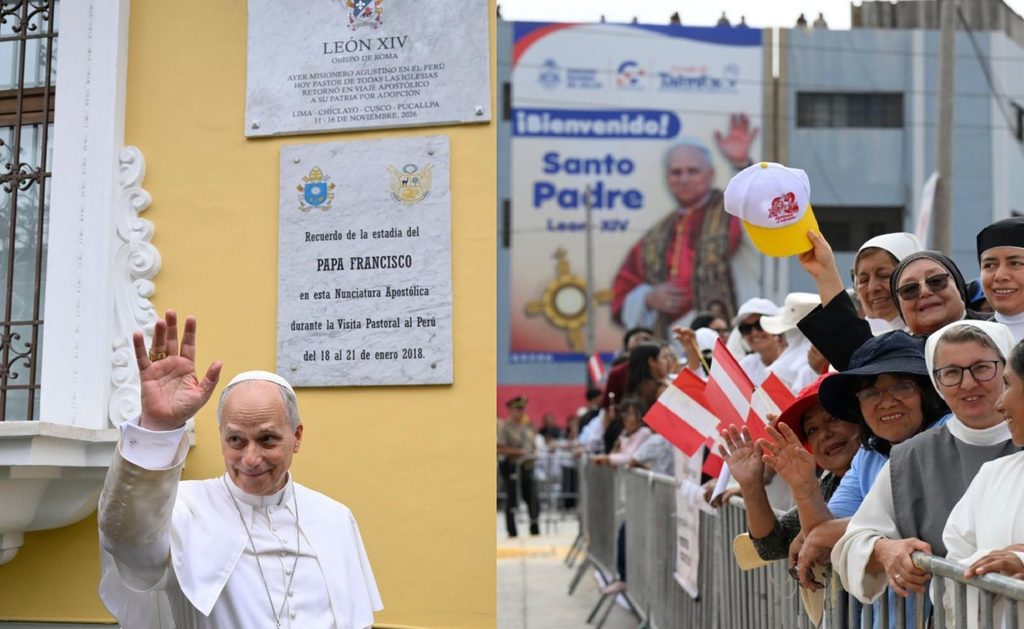
La llegada del Papa León XIV a la capital peruana dio inicio a una jornada cargada de fervor popular y compromiso diplomático‑pastoral, marcada por el contacto directo con miles de fieles limeños y el diálogo con las autoridades nacionales. Tras salir de la terminal aérea, el Santo Padre realizó un recorrido de casi diez kilómetros en vehículo cerrado, transitando por las avenidas Elmer Faucett, La Marina y Brasil; desde el Callao hasta la ciudad, cientos de ciudadanos salieron a las calles para recibirlo, saludarle a su paso y expresar la fe y la esperanza que despertaba su arribo al Perú.
Al arribar a la Basílica María Auxiliadora, en el distrito de Breña, el Pontífice abordó el papamóvil para continuar su trayecto hacia el centro histórico de Lima, acercándose aún más a la multitud que se congregaba en las vías de la capital para acompañar su recorrido. Este baño de multitudes en las calles simbolizó el primer gran encuentro entre el pueblo peruano y el Santo Padre, reflejando la expectativa social que generó su visita apostólica desde el mismo instante de su llegada al país.
Dentro de la agenda oficial de Estado, el Papa León XIV sostuvo una reunión privada en Palacio de Gobierno con la mandataria peruana, un encuentro destinado a reafirmar los vínculos entre la Santa Sede y el Estado peruano, además de dialogar sobre las realidades sociales, humanas y espirituales de la nación. Este acto protocolario dio paso al cierre de la primera jornada en el Gran Teatro Nacional de Lima, donde el Pontífice se dirigió a las autoridades y representantes de la sociedad civil peruana.
En su discurso en el Gran Teatro Nacional, el Santo Padre trazó el eje internacional de su gira apostólica, al abogar por una diplomacia paciente, centrada en el diálogo, el respeto irrenunciable al derecho internacional y la protección de la vida humana frente a las guerras y las tensiones que sacuden el escenario mundial. Con este mensaje, el Papa León XIV dejó claro que su visita al Perú no solo buscaba fortalecer la fe de los creyentes, sino también llamar a la sociedad peruana a ser un faro de paz, diálogo y solidaridad en medio de un mundo marcado por el conflicto.
VIGILIA CON LOS JÓVENES
Un hecho histórico significó en el segundo día de la visita apostólica de Papa León XIV durante la vigilia de oración del Papa León XIV con miles de jóvenes en el Estadio Nacional de Lima fue uno de los hitos emocionales de su visita apostólica. El Santo Padre señaló que la juventud peruana representa el gran signo de esperanza para el Perú, preguntándoles “¿Qué buscas en la vida?”, reconociendo su soledad, incertidumbre y dolor ante un futuro incierto.
Llamó a los jóvenes a acudir a Jesús, descubrir su propia vocación, poner sus talentos al servicio del país y transformar las dificultades en esperanza, reafirmando que el sufrimiento no tiene la última palabra. Este encuentro reforzó el mensaje central de toda su estadía: invitar a los peruanos, especialmente a las nuevas generaciones, a ser protagonistas de la fe y construir una nación más fraterna y solidaria.
CHICLAYO LA TIERRA DONDE EJERCIÓ SU LABOR PASTORAL DE OBISPO
La jornada del Papa León XIV en Chiclayo, tierra donde ejerció su labor pastoral como obispo, siendo la Base Aérea “Teniente Coronel Pedro Ruiz Gallo” el escenario de su arribo matutino. A su llegada, fue recibido por autoridades regionales, representantes de la sociedad civil y miles de fieles, quienes lo saludaron con expresiones culturales del norte peruano, destacando la marinera norteña, símbolo de la identidad lambayecana, dando inicio a una jornada cargada de fe, recuerdos y compromiso evangelizador.
El acto central de la mañana fue la multitudinaria Santa Misa celebrada en las Pampas de Pimentel. Durante la homilía, el Santo Padre expresó su alegría por el reencuentro con el pueblo chiclayano al afirmar: “¡Qué alegría volver a Chiclayo! Es una bendición para mí estar de nuevo con ustedes”. Agradeció las oraciones de todos los fieles por su reciente recuperación de salud y lanzó un llamado central para que cada creyente llene su existencia de Evangelio, fe y caridad, transformando la vida cotidiana con los valores cristianos.
Por la tarde, el Pontífice sostuvo un encuentro con obispos, sacerdotes, religiosas y seminaristas en el Santuario de Nuestra Señora de la Paz. En esta ceremonia entregó la Rosa de Oro a la imagen mariana, reliquia que guarda el recuerdo de la visita apostólica de Juan Pablo II en el año 1985; además, recibió el tradicional pie de limón, obsequio de las hermanas carmelitas. En su mensaje, recordó que la identidad fundamental de todo católico, antes de cualquier ministerio eclesiástico, es ser hijo de Dios, reafirmando la centralidad de la fe en la vida pastoral.
Cerró la jornada con un emotivo encuentro en la Universidad Católica Santo Toribio de Mogrovejo (USAT), institución de la cual fue Gran Canciller. Allí escuchó los testimonios de profesores y estudiantes universitarios, reflexionando sobre el papel de la juventud, el conocimiento y la innovación tecnológica. Su llamado fue claro: todo avance tecnológico debe ponerse al servicio de la dignidad humana, guiando a la comunidad universitaria a construir una sociedad más justa, solidaria y respetuosa de la persona.
Esta jornada en Chiclayo y Pimentel se convirtió en uno de los hitos más emotivos de la visita apostólica, ya que permitió al Papa León XIV reencontrarse con la comunidad que acompañó durante años, renovando el compromiso de evangelización en el norte del Perú.
MISA EN SANTA CRUZ DE SUCCHABAMBA – CAJAMARCA (PERTENECIENTE A LA DIÓCESIS DE CHICLAYO)
Este encuentro eucarístico representó uno de los hitos de mayor carga espiritual dentro del recorrido apostólico por el Perú. El Papa León XIV se acercó a la fe profunda de las comunidades andinas del norte del país, una zona con la que mantiene una gran cercanía humana y pastoral, forjada durante su etapa de servicio en la diócesis de Chiclayo. La ceremonia reunió a miles de fieles, quienes acudieron para vivir un momento de oración, esperanza y renovación del compromiso evangelizador, reflejando la fuerza de la fe popular en el interior peruano.
CUSCO Y PUCALLPA EN EL CORAZÓN DEL PAPA SIEMPRE
La llegada del Papa León XIV a Cusco representó un encuentro profundo con la fe popular andina, una región donde la espiritualidad católica se ha entrelazado durante siglos con la cosmovisión ancestral de las comunidades quechua. El recorrido por la ciudad imperial permitió al Santo Padre acercarse a miles de fieles cusqueños, quienes recibieron su visita con fervor, tradiciones culturales y una gran esperanza. En este espacio, su mensaje puso en valor la riqueza espiritual del Perú andino, llamando a proteger la fe, la unidad comunitaria y el respeto por la identidad de los pueblos originarios, reafirmando que la evangelización debe caminar junto a la historia y la dignidad de cada comunidad.
Del mismo modo, los actos litúrgicos y encuentros en Cusco se convirtieron en un llamado a la solidaridad social, especialmente para las comunidades andinas que enfrentan dificultades económicas y climáticas. El Pontífice centró su reflexión en la capacidad de resistencia de los pueblos andinos, invitando a las autoridades y a la sociedad peruana a acompañar a estas poblaciones, garantizando oportunidades de desarrollo, justicia y protección de su territorio. Este momento de la visita apostólica fortaleció el vínculo entre el Santo Padre y el sur del país, demostrando que su recorrido por el Perú no solo buscaba celebrar la fe, sino también escuchar la voz de las regiones más alejadas de la capital.
De otro lado, la visita a Pucallpa marcó el ingreso del Papa León XIV al corazón de la Amazonía peruana, un territorio caracterizado por su biodiversidad, riqueza cultural y la lucha constante de sus comunidades por la defensa de la selva y sus derechos. El encuentro con los fieles amazónicos simbolizó la extensión de su mensaje evangelizador hacia el oriente peruano, reconociendo el valor espiritual de la selva y la misión de sus pueblos. Miles de creyentes de diferentes poblaciones de Ucayali acudieron para recibirlo, reafirmando que la fe católica también tiene un rostro amazónico, ligado a la protección de la naturaleza, la familia y la vida comunitaria de la selva.
Así mismo, en Pucallpa, el mensaje del Santo Padre integró la evangelización con la defensa de la creación, la paz social y la dignidad de las comunidades amazónicas. Su llamado invitó a la sociedad peruana a proteger la Amazonía, combatir la violencia, la pobreza y la explotación que afecta a los pueblos de la selva, reafirmando que cuidar la naturaleza es también cuidar la vida y la fe de quienes habitan estos territorios. Este cierre regional de su recorrido por el interior del país completó el mapa espiritual de la visita apostólica, abrazando tanto el norte, los Andes y la Amazonía, consolidando un mensaje de fe, esperanza y compromiso con todo el Perú.
MENSAJE A LA FRATERNIDAD LA UNIDAD NACIONAL Y LA ESPERANZA
De otro lado, a lo largo y ancho de su recorrido, el Pontífice León XIV también hizo un llamado a la fraternidad, la unidad nacional y la esperanza, reconociendo las realidades sociales del país y exhortando a las autoridades y a la sociedad civil a trabajar por el bien común. En cada uno de sus discursos y homilías Su Santidad buscó fortalecer la fe de los peruanos, alentándolos a mantener la esperanza ante las dificultades y a transformar esa fe en acciones firmes y sólidas de solidaridad con los más vulnerables.
SANTA MISA EN LA BASE AÉREA LA PALMAS
En la Santa Misa de despedida en la Base Aérea Las Palmas, el recuerdo de Santo Toribio de Mogrovejo cobró especial fuerza, ya que su figura simboliza la evangelización arraigada en todo el territorio peruano, desde los Andes, la selva hasta el norte del país. Al evocar al apóstol de los Andes, el Papa León XIV invitó a los fieles a continuar la misión evangelizadora, defender la dignidad de los pueblos y mantener viva la fe popular, siguiendo el ejemplo del gran patrono de la Iglesia peruana.
En ese sentido, el cierre oficial de la visita apostólica, con la Santa Misa en la Base Aérea Las Palmas en Surco‑Lima, representó el adiós físico del Papa León XIV al Perú, pero a la vez el inicio de la misión para todos los fieles. Su mensaje final quedó grabado en el corazón de los peruanos: “En cada misa, se hace presente Jesús Resucitado para acompañar a sus hijos y guiarles en su peregrinar terreno, pero también se manifiesta a través de su Palabra para educar a los fieles en «un nuevo tipo de fortaleza», ese que, precisamente, impulsa al pueblo de Dios a «llevar adelante la obra de Jesucristo» y a continuar su mandato misionero”.
¿QUIÉN FUE SAN TORIBIO DE MOGROVEJO?
San Toribio de Mogrovejo, arzobispo de Lima y apóstol de los Andes, dedicó toda su vida a recorrer el territorio peruano para llevar la evangelización a cada rincón del país. Su labor pastoral tuvo como eje principal la defensa de los pueblos originarios, protegiéndolos frente a la injusticia y los abusos de la época colonial. Promovió la formación de sacerdotes y corrigió las fallas al interior de la Iglesia, buscando que la fe se tradujera en verdad y justicia social. Viajó largas distancias para celebrar los sacramentos, escuchar a las comunidades andinas y fortalecer la fe popular en las zonas más alejadas. Se convirtió en el símbolo de una evangelización profundamente arraigada en la realidad peruana, uniendo la fe católica con la identidad y los sufrimientos de la nación. Su ejemplo misionero invita a cada creyente a salir al encuentro de los hermanos más vulnerables y a poner la fe al servicio del prójimo. Por ello, su figura acompaña el mensaje central del Papa León XIV, quien llama a todos los peruanos a convertirse en misioneros en cada rincón del Perú. Recordar la labor de Santo Toribio permite entender el legado apostólico que la visita papal busca renovar en el corazón de la nación.
También recordó Su Santidad León XIV que San Toribio de Mogrovejo fue un artífice de la civilización del amor contrastando a los constructores de Babel presentes en sus tiempos, también son protagonistas de esa civilización los santos contemporáneos Rosa de Lima, Martín de Porres, Francisco Solano entre otros.
Al final de su homilía León XIV expresó: “Mi viaje termina, pero ¡el tiempo de la misión continúa! Recordemos que al final de cada Misa somos enviados a evangelizar. Por eso, vayan y anuncien al Dios verdadero! ¡Den testimonio de lo que han visto y oído! ¡Que nadie se quede sin conocer esta Buena Noticia!”.
DURANTE SU VUELO DE REGRESO A ROMA EL PAPA LEÓN XIV AGRADECIÓ AL GOBIERNO PERUANO
Su Santidad hizo durante su vuelo de regreso a Roma diversas reflexiones sobre la experiencia vivida y reconoció que este recorrido también le permitió profundizar en su servicio como Sucesor de Pedro: «Ahora aprendí, un poquito más, a servir como Sucesor de Pedro», puntualizó.
“En primer lugar, el Papa León XIV dirigió un mensaje a la presidenta del Perú, Keiko Fujimori, para expresar su profundo agradecimiento por la cálida acogida y la generosa hospitalidad recibidas durante su visita, asegurando también sus oraciones por el país. Posteriormente, envió saludos a los presidentes de Brasil, Luiz Inácio Lula da Silva, y de Francia, Emmanuel Macron, este último con motivo del sobrevuelo de la Guayana Francesa. En ambos mensajes invocó las bendiciones de Dios, deseando especialmente al pueblo francés paz, prosperidad y concordia”, concluyó.
La visita papal dejó una huella profunda en el Perú, uniendo a miles de fieles en torno a la fe, renovando el compromiso evangelizador y fortaleciendo el sentido de esperanza y fraternidad en todo el territorio nacional.
DATOS CONCEPTUALES
Visita apostólica: Viaje oficial realizado por el Papa con finalidad pastoral, para celebrar liturgias, encontrarse con fieles, autoridades y transmitir mensajes de fe, esperanza y evangelización.
Evangelización: Acción de dar testimonio y difundir el mensaje cristiano, invitando a vivir la fe en la vida cotidiana, la familia y la comunidad.
Homilía: Reflexión o enseñanza pronunciada durante la Santa Misa, mediante la cual se explica el Evangelio y se transmite el mensaje central de la celebración litúrgica.
Fe popular andina: Expresión de la fe cristiana vivida por las comunidades andinas, integrando tradiciones ancestrales, el territorio y la vida comunitaria del interior peruano.
Vocación: Llamado interior que recibe cada persona para descubrir su misión en la vida, ya sea en el servicio, la familia, el trabajo o la vida consagrada.
Diócesis: Circunscripción territorial de la Iglesia católica, bajo la dirección de un obispo, donde se organiza la labor pastoral y la atención espiritual de los fieles.
Apóstol: Persona llamada a difundir el mensaje cristiano; en el caso de San Toribio de Mogrovejo, se le denomina apóstol de los Andes por su labor misionera en todo el territorio peruano.
Santa Misa: Celebración litúrgica central de la fe católica, en la cual se celebra la Eucaristía, se escucha la palabra de Dios y se fortalece la comunión espiritual de los creyentes.
CONCLUSIONES
1.- La visita apostólica del Papa León XIV al Perú fue un recorrido espiritual por la identidad católica de la nación, uniendo Lima, el norte peruano, los Andes y la Amazonía, reafirmando que la fe católica tiene rostro propio en cada región del país.
2.- El eje transversal de todos sus mensajes fue el llamado a la evangelización, invitando a cada peruano a convertirse en misionero, llevar la Buena Noticia a su entorno y transformar la sociedad desde la esperanza y la solidaridad.
3.- La figura de San Toribio de Mogrovejo sirvió como hilo conductor de toda la gira, al representar el legado histórico‑misionero de la Iglesia peruana: recorrer comunidades alejadas, defender a los pueblos vulnerables y poner la fe al servicio de la justicia social.
4.- La jornada combinó encuentros populares con fieles, ceremonias litúrgicas, diálogo con autoridades y reflexión sobre la paz, la dignidad humana y la protección de los pueblos originarios, logrando equilibrar la dimensión pastoral, social e institucional de la visita.
5.- La despedida en la Base Aérea Las Palmas cerró la gira física del Santo Padre, pero abrió una misión continua para los creyentes peruanos, recordando que el tiempo de la evangelización no termina con la partida del Papa, sino que debe continuar en la vida cotidiana de cada comunidad.
6.- La recepción masiva en las calles, plazas y comunidades demostró la profunda fe popular del pueblo peruano, confirmando que la visita apostólica se convirtió en un acontecimiento nacional de esperanza, fraternidad y renovación espiritual.
Fuente: Agencia Peruana de Noticias PRENSAPERU.PE https://www.prensaperu.pe Twitter: @prensaperupe
Translate
“Apostolic visit of Pope Leo XIV to Peru: faith, evangelization, and hope traverse the entire national territory; the mission continues Saint Toribio de Mogrovejo, the missionary legacy that left its mark on the Pope’s entire journey through Peru.”
Peruvian News Agency PRENSAPERU.PE https://www.prensaperu.pe Twitter: @prensaperupe
The apostolic visit of Pope Leo XIV to Peru represented one of the most significant religious events for the nation, as the Pontiff returned to a land where he exercised pastoral ministry as Bishop of Chiclayo, creating a strong emotional‑spiritual bond with Peruvian faithful. His journey crossed different regions of the country, combining liturgical ceremonies, meetings with authorities, dialogues with believers, and messages centered on faith, solidarity, hope, and the commitment to evangelize.
The start of his stay in Peru was marked by the official welcome on the landing runway, where he was received by the President and national authorities, symbolizing the State’s recognition of the Holy Father’s apostolic mission. Subsequently, the ceremony at the Government Palace and the Holy Mass at the Plaza de Armas of Lima gathered thousands of faithful, who came to hear his message and receive his blessing, reflecting the deep religious devotion that characterizes the Peruvian people.
JOURNEY THROUGH LIMA AND ENCOUNTER WITH THE FAITHFUL – FIRST DAY OF THE APOSTOLIC VISIT
The arrival of Pope Leo XIV in the Peruvian capital began a day filled with popular fervor and diplomatic‑pastoral commitment, marked by direct contact with thousands of Lima faithful and dialogue with national authorities. After leaving the airport terminal, the Holy Father traveled nearly ten kilometers in a closed vehicle, passing along Elmer Faucett, La Marina, and Brasil avenues; from Callao into the city, hundreds of citizens took to the streets to welcome him, greet him as he passed, and express the faith and hope awakened by his arrival in Peru.
Upon arriving at the Basilica of Mary Help of Christians in Breña, the Pontiff boarded the popemobile to continue his journey toward Lima’s historic center, drawing even closer to the crowds gathered along the capital’s avenues to accompany his passage. This outpouring of crowds in the streets symbolized the first great encounter between the Peruvian people and the Holy Father, reflecting the social expectation generated by his apostolic visit from the very moment he landed in the country.
Within the official State agenda, Pope Leo XIV held a private meeting at the Government Palace with the Peruvian President, an encounter intended to reaffirm the ties between the Holy See and the Peruvian State, as well as to discuss the social, human, and spiritual realities of the nation. This protocolary act paved the way for the closing of the first day at the Gran Teatro Nacional of Lima, where the Pontiff addressed authorities and representatives of Peruvian civil society.
In his speech at the Gran Teatro Nacional, the Holy Father outlined the international axis of his apostolic tour, advocating for patient diplomacy centered on dialogue, the unrenounceable respect for international law, and the protection of human life amid wars and tensions shaking the global stage. With this message, Pope Leo XIV made clear that his visit to Peru sought not only to strengthen the faith of believers, but also to call Peruvian society to become a beacon of peace, dialogue, and solidarity within a world marked by conflict.
YOUTH VIGIL
On the second day of the apostolic visit, the prayer vigil of Pope Leo XIV with thousands of young people at the National Stadium of Lima became one of the most emotional milestones of his apostolic visit. The Holy Father stated that Peruvian youth represent the great sign of hope for Peru, asking them: “What are you seeking in life?”, recognizing their loneliness, uncertainty, and pain before an uncertain future.
He called young people to turn toward Jesus, discover their own vocation, place their talents at the service of the country, and transform difficulties into hope, reaffirming that suffering does not have the final word. This encounter reinforced the central message of his entire stay: inviting Peruvians, especially the new generations, to become protagonists of faith and build a more fraternal and solidary nation.
CHICLAYO THE LAND WHERE HE EXERCISED HIS PASTORAL MINISTRY AS BISHOP
Pope Leo XIV’s day in Chiclayo, the land where he exercised pastoral ministry as bishop, began with his morning arrival at the “Teniente Coronel Pedro Ruiz Gallo” Air Base. Upon his arrival, he was welcomed by regional authorities, civil‑society representatives, and thousands of faithful, who greeted him with the cultural expressions of northern Peru, highlighting the northern marinera dance, a symbol of Lambayeque identity, launching a day filled with faith, memories, and evangelizing commitment.
The central act of the morning was the massive Holy Mass celebrated at Pampas de Pimentel. During the homily, the Holy Father expressed his joy at reuniting with the people of Chiclayo, stating: “What joy to return to Chiclayo! It is a blessing for me to be with you once again.” He thanked all the faithful for their prayers following his recent health recovery and issued a central call for every believer to fill their lives with the Gospel, faith, and charity, transforming daily life through Christian values.
In the afternoon, the Pontiff met with bishops, priests, religious sisters, and seminarians at the Sanctuary of Our Lady of Peace. During this ceremony, he presented the Golden Rose to the Marian image, a relic preserving the memory of Saint John Paul II’s 1985 apostolic visit; he also received the traditional lemon pie, a gift from the Carmelite sisters. In his message, he recalled that the fundamental identity of every Catholic, before any ecclesiastical ministry, is to be a child of God, reaffirming the centrality of faith in pastoral life.
He closed the day with an emotional meeting at the Catholic University Santo Toribio de Mogrovejo (USAT), an institution where he served as Grand Chancellor. There he listened to testimonies from professors and university students, reflecting on the role of youth, knowledge, and technological innovation. His call was clear: all technological progress must be placed at the service of human dignity, guiding the university community to build a more just, solidary, and person‑respecting society.
This day in Chiclayo and Pimentel became one of the most emotional milestones of the apostolic visit, allowing Pope Leo XIV to reunite with the community he accompanied for years, renewing the commitment to evangelization in northern Peru.
HOLY MASS IN SANTA CRUZ DE SUCCHABAMBA CAJAMARCA (BELONGING TO THE CHICLAYO DIOCESE)
This eucharistic encounter represented one of the milestones of greatest spiritual weight within the apostolic journey across Peru. Pope Leo XIV drew near to the deep faith of the Andean communities of northern Peru, a zone with which he maintains a strong human and pastoral closeness forged during his years of service in the Diocese of Chiclayo. The ceremony gathered thousands of faithful, who came to live a moment of prayer, hope, and renewal of evangelizing commitment, reflecting the strength of popular faith within rural Peru.
CUSCO AND PUCALLPA IN THE HEART OF THE POPE
Pope Leo XIV’s arrival in Cusco represented a profound encounter with Andean popular faith, a region where Catholic spirituality has intertwined for centuries with the ancestral worldview of Quechua communities. The journey through the imperial city allowed the Holy Father to draw near thousands of Cusco faithful, who received his visit with fervor, cultural traditions, and great hope. In this space, his message valued the spiritual richness of Andean Peru, calling to protect faith, communal unity, and respect for the identity of indigenous peoples, reaffirming that evangelization must walk alongside the history and dignity of every community.
Likewise, the liturgical acts and meetings in Cusco became a call for social solidarity, especially for Andean communities facing economic and climatic hardships. The Pontiff reflected on the resilience of Andean peoples, inviting authorities and Peruvian society to accompany these populations, guaranteeing development opportunities, justice, and protection of their territory. This moment of the apostolic visit strengthened the bond between the Holy Father and the southern region of the country, demonstrating that his journey through Peru sought not only to celebrate faith, but also to listen to the voice of the regions farthest from the capital.
On the other hand, the visit to Pucallpa marked Pope Leo XIV’s entry into the heart of the Peruvian Amazon, a territory defined by its biodiversity, cultural richness, and the constant struggle of its communities to defend the rainforest and their rights. The encounter with Amazonian faithful symbolized the extension of his evangelizing message toward eastern Peru, recognizing the spiritual value of the rainforest and the mission of its peoples. Thousands of believers from different Ucayali populations came to receive him, reaffirming that Catholic faith also has an Amazonian face, linked to the protection of nature, family, and communal life in the jungle.
Similarly, in Pucallpa, the Holy Father’s message integrated evangelization with the defense of creation, social peace, and the dignity of Amazonian communities. His call invited Peruvian society to protect the Amazon, combat violence, poverty, and exploitation affecting jungle peoples, reaffirming that caring for nature means caring for life and the faith of those who inhabit these territories. This regional closing of his journey through inland Peru completed the spiritual map of the apostolic visit, embracing the north, the Andes, and the Amazon, consolidating a message of faith, hope, and commitment to all of Peru.
MESSAGE OF FRATERNITY, NATIONAL UNITY, AND HOPE
Throughout his entire journey, Pontiff Leo XIV also issued a call for fraternity, national unity, and hope, recognizing the social realities of the country and exhorting authorities and civil society to work for the common good. In each of his speeches and homilies, His Holiness sought to strengthen the faith of Peruvians, encouraging them to maintain hope amid difficulties and transform that faith into firm, concrete acts of solidarity toward the most vulnerable.
HOLY MASS AT LAS PALMAS AIR BASE
During the farewell Holy Mass at Las Palmas Air Base, the memory of Saint Toribio de Mogrovejo gained special strength, as his figure symbolizes evangelization rooted throughout all Peruvian territory, from the Andes and the rainforest to northern Peru. By evoking the Apostle of the Andes, Pope Leo XIV invited the faithful to continue the evangelizing mission, defend human dignity for indigenous peoples, and keep popular faith alive, following the example of the great patron of the Peruvian Church.
In that sense, the official closing of the apostolic visit, with the Holy Mass at Las Palmas Air Base in Surco‑Lima, represented the physical farewell of Pope Leo XIV from Peru, yet simultaneously marked the beginning of the mission for all faithful. His final message remained engraved in the hearts of Peruvians: “In every Mass, the Risen Jesus is present to accompany his children and guide them on their earthly pilgrimage; he also manifests himself through his Word to educate the faithful in ‘a new kind of strength,’ precisely the strength that impels the People of God to ‘carry forward the work of Christ’ and continue his missionary mandate.”
WHO WAS SAINT TORIBIO DE MOGROVEJO?
Saint Toribio de Mogrovejo, Archbishop of Lima and Apostle of the Andes, dedicated his entire life to traveling across Peruvian territory to bring evangelization to every corner of the nation. The core of his pastoral labor was the defense of indigenous peoples, protecting them against injustice and abuses during the colonial era. He promoted priestly formation and corrected shortcomings within the Church, seeking to make faith translate into truth and social justice. He traveled long distances to celebrate sacraments, listen to Andean communities, and strengthen popular faith in remote zones. He became the symbol of evangelization deeply rooted in Peruvian reality, uniting Catholic faith with the identity and suffering of the nation. His missionary example invites every believer to go out to meet the most vulnerable and place faith at the service of others. For that reason, his figure accompanies the central message of Pope Leo XIV, who calls all Peruvians to become missionaries in every corner of Peru. Remembering the labor of Saint Toribio allows us to understand the apostolic legacy that the papal visit seeks to renew within the heart of the nation.
His Holiness Leo XIV also recalled that Saint Toribio de Mogrovejo was an architect of the civilization of love, contrasting the builders of Babel present in his times; saints such as Saint Rose of Lima, Saint Martin de Porres, and Saint Francis Solano, among others, were also protagonists of that civilization.
At the end of his homily, Leo XIV stated: “My journey ends, but the time for mission continues! Remember that at the conclusion of every Mass we are sent forth to evangelize. Therefore, go and proclaim the true God! Bear witness to what you have seen and heard! Let no one remain without knowing this Good News!”
DURING HIS RETURN FLIGHT TO ROME, POPE LEO XIV THANKED THE PERUVIAN GOVERNMENT
During his flight back to Rome, His Holiness Pope Leo XIV shared several reflections on the experience he had lived and recognized that this journey also allowed him to deepen his service as the Successor of Peter: “Now I have learned, a little more, how to serve as the Successor of Peter,” he stated.
“First, Pope Leo XIV sent a message to the President of Peru, Keiko Fujimori, to express his profound gratitude for the warm welcome and generous hospitality received during his visit, also assuring her of his prayers for the country. Subsequently, he sent greetings to the Presidents of Brazil, Luiz Inácio Lula da Silva, and France, Emmanuel Macron; the latter greeting was sent in connection with the overflight of French Guiana. In both messages, he invoked God’s blessings, wishing especially the French people peace, prosperity, and concord,” the statement concluded.
The papal visit left a profound mark on Peru, uniting thousands of faithful around faith, renewing evangelizing commitment, and strengthening the sense of hope and fraternity throughout the entire national territory.
CONCEPTUAL DATA
Apostolic Visit: Official journey undertaken by the Pope for pastoral purposes, to celebrate liturgies, meet faithful and authorities, and transmit messages of faith, hope and evangelization.
Evangelization: The act of bearing witness and spreading the Christian message, inviting people to live out faith within daily life, family and community.
Homily: A teaching or reflection delivered during Holy Mass, explaining the Gospel and conveying the core spiritual message of the liturgical celebration.
Andean Popular Faith: The expression of Christian faith lived by Andean communities, blending ancestral traditions, territory and communal life across rural Peru.
Vocation: An inner calling that leads each person to discover their mission in life, whether through service, family, work or consecrated life.
Diocese: A territorial jurisdiction of the Catholic Church, guided by a bishop, which organizes pastoral care and spiritual support for the faithful.
Apostle: A person called to spread the Christian message; Saint Toribio de Mogrovejo is known as the Apostle of the Andes for his missionary work across Peruvian territory.
Holy Mass: The central liturgical celebration of Catholic faith, where the Eucharist is celebrated, the Word of God is heard, and the spiritual communion of believers is strengthened.
CONCLUSIONS
1.- The apostolic visit of Pope Leo XIV to Peru was a spiritual journey across the nation’s Catholic identity, linking Lima, northern Peru, the Andes and the Amazon to reaffirm that Peruvian Catholic faith has a unique regional face.
2.- The transversal axis of every message was the call to evangelization, inviting every Peruvian to become a missionary, carry the Good News into their surroundings and transform society through hope and solidarity.
3.- Saint Toribio de Mogrovejo represented the historical missionary legacy of the Peruvian Church: traveling to isolated communities, defending vulnerable populations and putting faith at the service of social justice.
4.- The visit successfully combined popular encounters with the faithful, liturgical celebrations, institutional dialogue and reflection on peace, human dignity and indigenous peoples’ rights, balancing pastoral, social and institutional dimensions.
5.- The farewell ceremony at Las Palmas Air Base closed the Pontiff’s physical tour of Peru, yet opened a continuous mission for believers, emphasizing that evangelization must persist in the daily life of every community.
6.- The massive popular welcome confirmed the strength of Peruvian popular faith, making the apostolic visit a national moment of hope, fraternity and spiritual renewal.
Source: Peruvian News Agency PRENSAPERU.PE https://www.prensaperu.pe Twitter: @prensaperupe