
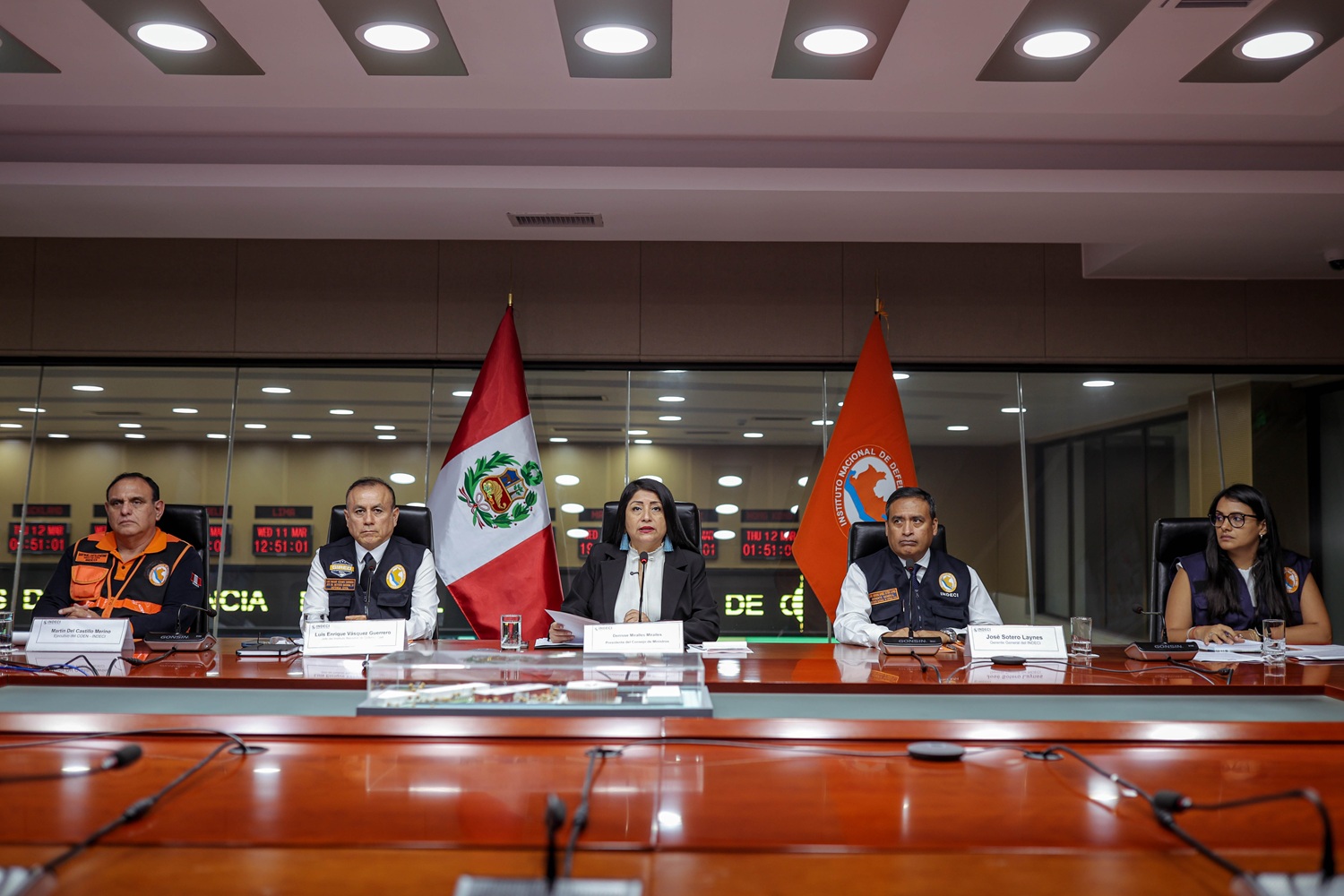
Agencia Peruana de Noticias PRENSAPERU.PE https://www.prensaperu.pe Twitter: @prensaperupe La presidenta del Consejo de Ministros (PCM), Denisse Miralles, se ha pronunciado en conferencia de prensa con medios locales para detallar las acciones del Gobierno de transición, enfatizando su compromiso con la responsabilidad estatal, el diálogo multisectorial y la preservación del orden nacional en un contexto de proximidad electoral y reciente contingencia energética. El Gobierno de transición se define como el órgano ejecutivo que ejerce funciones temporales entre dos períodos constitucionales, con el propósito de garantizar la continuidad del Estado y preparar las condiciones para la llegada de nuevas autoridades electas.
ACCIONES PARA LA ESTABILIDAD DEMOCRÁTICA Y EL PROCESO ELECTORAL
La jefa del Gabinete ha enfatizado que el Ejecutivo actúa con sentido de país —concepto que implica priorizar los intereses colectivos sobre los particulares o sectoriales—, promoviendo encuentros con todas las fuerzas políticas (partidos, movimientos y agrupaciones con representación o influencia en el ámbito público), así como con actores sociales (organizaciones de la sociedad civil, sindicatos, comunidades y grupos de interés) y actores económicos (empresarios, gremios, cámaras comerciales y representantes de diferentes sectores productivos).
El objetivo central de estas gestiones es preservar la estabilidad nacional, entendida como la continuidad de los servicios públicos, el orden social y el funcionamiento normal de las instituciones; proteger a la población de cualquier riesgo que pueda afectar su bienestar; y conducir al Perú hacia elecciones libres, seguras y ordenadas —características fundamentales de un proceso democrático que garantizan que la voluntad popular se exprese sin coacciones, con garantías de integridad y bajo el cumplimiento de la normativa electoral.
“Estamos dialogando con las fuerzas políticas y actores sociales para que el país no vuelva a paralizarse. Nuestro deber es asegurar un proceso democrático transparente y entregar un país en orden para que sean los peruanos quienes decidan en las urnas el rumbo del país. Este es el momento de poner al Perú por delante de cualquier cálculo político”, enfatizó la primera ministra.
Subrayó que el país requiere, hoy más que nunca, responsabilidad, serenidad y altura política —capacidad de los líderes para tomar decisiones en beneficio general, superando diferencias partidarias— por parte de sus representantes y actores relevantes. La prioridad del Ejecutivo es evitar escenarios de confrontación que puedan perjudicar el bienestar de las familias peruanas, afectar el desarrollo económico del país y poner en riesgo la normalidad del proceso electoral, que se realizará en 32 días, en los que los ciudadanos elegirán al próximo presidente de la República, así como a sus congresistas y senadores.
“Es momento de dejar atrás la política del enfrentamiento y apostar por el diálogo y las soluciones para la gente”, remarcó.
SUPERACIÓN DE LA PRIMERA FASE DE LA CRISIS ENERGÉTICA
De otro lado, la presidenta del PCM informó que el Perú ya ha superado la primera fase de la reciente crisis energética —situación que afectó el suministro de gas natural y GLP (Gas Licuado de Petróleo) debido a un incendio en una zona estratégica del sistema de distribución—. Este logro se alcanzó después de que las autoridades pudieran ingresar a la zona afectada para controlar el fuego, garantizar las condiciones de seguridad necesarias para el desarrollo de labores técnicas especializadas e implementar medidas orientadas a fortalecer la racionalización del consumo (uso eficiente de los recursos disponibles) y la continuidad de los servicios esenciales (salud, educación, agua potable y energía para viviendas).
“Haber superado oportunamente esta etapa crítica nos permitió anunciar ayer la liberación de algunas medidas como el retorno a clases presenciales para nuestros estudiantes”, destacó la primera ministra, en referencia a la reapertura de centros educativos que habían adoptado modalidad virtual por restricciones en el suministro energético.
Asimismo, detalló que las labores de atención y recuperación del sistema energético avanzan de manera sostenida, con un progreso superior al 64%. “Hoy los trabajos presentan un avance mayor al 64 %, y podemos asegurar, tal como lo anunció el presidente de la República, que el abastecimiento de gas natural y GLP estará completamente restablecido con normalidad el día domingo”, resaltó.
Miralles señaló que, frente a cualquier emergencia, la obligación constitucional del Gobierno es actuar con firmeza, rapidez y responsabilidad para proteger a la población, dar certidumbre a las familias y evitar la paralización del país. En esa línea, indicó que el Ejecutivo también viene dejando encaminadas decisiones de carácter estructural para fortalecer la seguridad energética nacional —capacidad del país para garantizar el suministro continuo, seguro y accesible de fuentes de energía— y prevenir futuras contingencias.
“Estamos dejando encaminadas decisiones estructurales como ampliar la capacidad de almacenamiento de combustibles, desarrollar una planta de regasificación en la costa para garantizar respaldo al sistema y avanzar en la masificación del gas para más hogares peruanos”, explicó, haciendo referencia a proyectos que buscan diversificar las fuentes de suministro y extender el acceso a energía limpia a sectores vulnerables.
POSICIÓN SOBRE PETROPERÚ
Finalmente, la titular de la PCM reiteró de manera categórica que Petroperú —empresa estatal encargada de la exploración, producción, refinación y comercialización de hidrocarburos en el país— no será privatizada. Reafirmó que el objetivo del Gobierno es ordenar su gestión interna y fortalecer sus capacidades operativas para hacerla eficiente y sostenible, de manera que pueda cumplir el rol estratégico que el país necesita en el sector energético.
CONCLUSIONES
1.- El Gobierno de transición prioriza la estabilidad y el diálogo para asegurar que el proceso electoral se desarrolle en condiciones óptimas, poniendo los intereses nacionales por encima de las diferencias políticas y buscando evitar cualquier escenario de confrontación que afecte a la población.
2.- La crisis energética ha superado su etapa crítica, con avances significativos en la recuperación del sistema que permitirán restablecer el suministro normal de gas natural y GLP en breve plazo, además de haber posibilitado el retorno a clases presenciales para estudiantes.
3.- Se están implementando medidas estructurales para la seguridad energética, que incluyen la ampliación de capacidades de almacenamiento, la construcción de una planta de regasificación y la masificación del gas, con el fin de prevenir futuras contingencias y mejorar el acceso a este recurso.
4.- Petroperú mantendrá su carácter estatal, con el compromiso del Gobierno de ordenar su gestión y fortalecer su eficiencia para que cumpla con su rol estratégico en el desarrollo energético del Perú.
Fuente: Agencia Peruana de Noticias PRENSAPERU.PE https://www.prensaperu.pe Twitter: @prensaperupe
Translate
The transitional government is in dialogue with all sectors to guarantee orderly elections, a return to classes, and a full restoration of the energy crisis by this Sunday.
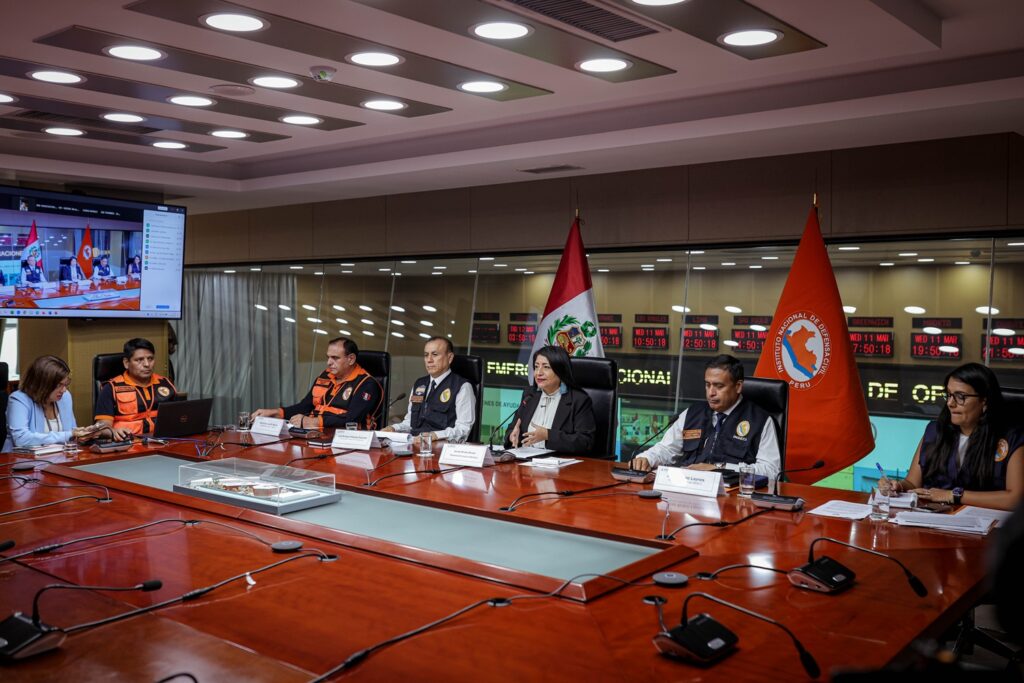
Agencia Peruana de Noticias PRENSAPERU.PE https://www.prensaperu.pe Twitter: @prensaperupe The President of the Council of Ministers (PCM), Denisse Miralles, has spoken at a press conference with local media to detail the actions of the transition government, emphasizing its commitment to state responsibility, multisectoral dialogue and the preservation of national order amid upcoming elections and a recent energy contingency. The transition government is defined as the executive body that exercises temporary functions between two constitutional terms, with the purpose of ensuring state continuity and preparing the conditions for the arrival of new elected authorities.
ACTIONS FOR DEMOCRATIC STABILITY AND THE ELECTORAL PROCESS
The Head of the Cabinet has emphasized that the Executive acts with a sense of national interest —a concept that implies prioritizing collective interests over individual or sectorial ones—, promoting meetings with all political forces (parties, movements and groups with representation or influence in the public sphere), as well as with social actors (civil society organizations, unions, communities and interest groups) and economic actors (business leaders, guilds, trade chambers and representatives of different productive sectors).
The central objective of these efforts is to preserve national stability, understood as the continuity of public services, social order and the normal functioning of institutions; protect the population from any risk that could affect their well-being; and guide Peru toward free, safe and orderly elections —fundamental characteristics of a democratic process that ensure that the people’s will is expressed without coercion, with guarantees of integrity and in compliance with electoral regulations.
“We are engaging in dialogue with political forces and social actors so that the country does not come to a standstill again. Our duty is to ensure a transparent democratic process and hand over an orderly country so that it is the Peruvians who decide the nation’s path at the polls. This is the time to put Peru ahead of any political calculations,” emphasized the Prime Minister.
She stressed that the country needs, now more than ever, responsibility, calmness and political foresight —the ability of leaders to make decisions for the general good, overcoming partisan differences— on the part of its representatives and relevant actors. The Executive’s priority is to avoid confrontation scenarios that could harm the well-being of Peruvian families, affect the country’s economic development and put the normalcy of the electoral process at risk. The elections will take place in 32 days, when citizens will elect the next President of the Republic, as well as their congressmen and senators.
“It is time to leave confrontational politics behind and bet on dialogue and solutions for the people,” she remarked.
FIRST PHASE OF ENERGY CRISIS OVERCOME
Additionally, the PCM President reported that Peru has already overcome the first phase of the recent energy crisis —a situation that affected the supply of natural gas and LPG (Liquefied Petroleum Gas) due to a fire in a strategic area of the distribution system—. This achievement was reached after authorities were able to access the affected area to control the fire, guarantee the necessary safety conditions for the development of specialized technical work and implement measures aimed at strengthening consumption rationalization (efficient use of available resources) and the continuity of essential services (health, education, drinking water and energy for homes).
“Having successfully overcome this critical stage in a timely manner allowed us to announce yesterday the lifting of some measures, such as the return to in-person classes for our students,” highlighted the Prime Minister, referring to the reopening of educational centers that had adopted virtual modality due to restrictions in the energy supply.
Likewise, she detailed that the energy system’s care and recovery work is advancing steadily, with progress exceeding 64%. “Today, the work shows progress of more than 64%, and we can assure, as announced by the President of the Republic, that the supply of natural gas and LPG will be completely restored to normal by Sunday,” she emphasized.
Miralles stated that, in the face of any emergency, the government’s constitutional obligation is to act firmly, quickly and responsibly to protect the population, provide certainty to families and prevent the country from coming to a halt. Along these lines, she indicated that the Executive is also setting in motion structural decisions to strengthen national energy security —the country’s ability to guarantee a continuous, safe and accessible supply of energy sources— and prevent future contingencies.
“We are setting in motion structural decisions such as expanding fuel storage capacity, developing a regasification plant on the coast to guarantee system backup and advancing the expansion of gas access to more Peruvian homes,” she explained, referring to projects that seek to diversify supply sources and extend access to clean energy to vulnerable sectors.
POSITION ON PETROPERÚ
Finally, the PCM Head categorically reiterated that Petroperú —the state-owned company responsible for the exploration, production, refining and commercialization of hydrocarbons in the country— will not be privatized. She reaffirmed that the government’s objective is to streamline its internal management and strengthen its operational capacities to make it efficient and sustainable, so that it can fulfill the strategic role the country needs in the energy sector.
CONCLUSIONS
1.- The transition government prioritizes stability and dialogue to ensure that the electoral process unfolds under optimal conditions, putting national interests above political differences and seeking to avoid any confrontation scenario that affects the population.
2.- The energy crisis has overcome its critical stage, with significant progress in system recovery that will allow the normal supply of natural gas and LPG to be restored shortly, in addition to enabling the return to in-person classes for students.
3.- Structural measures are being implemented for energy security, including expanding storage capacities, building a regasification plant and expanding gas access, with the aim of preventing future contingencies and improving access to this resource.
4.- Petroperú will maintain its state-owned nature, with the government’s commitment to streamlining its management and strengthening its efficiency to fulfill its strategic role in Peru’s energy development.
Source: Agencia Peruana de Noticias PRENSAPERU.PE https://www.prensaperu.pe Twitter: @prensaperupe