
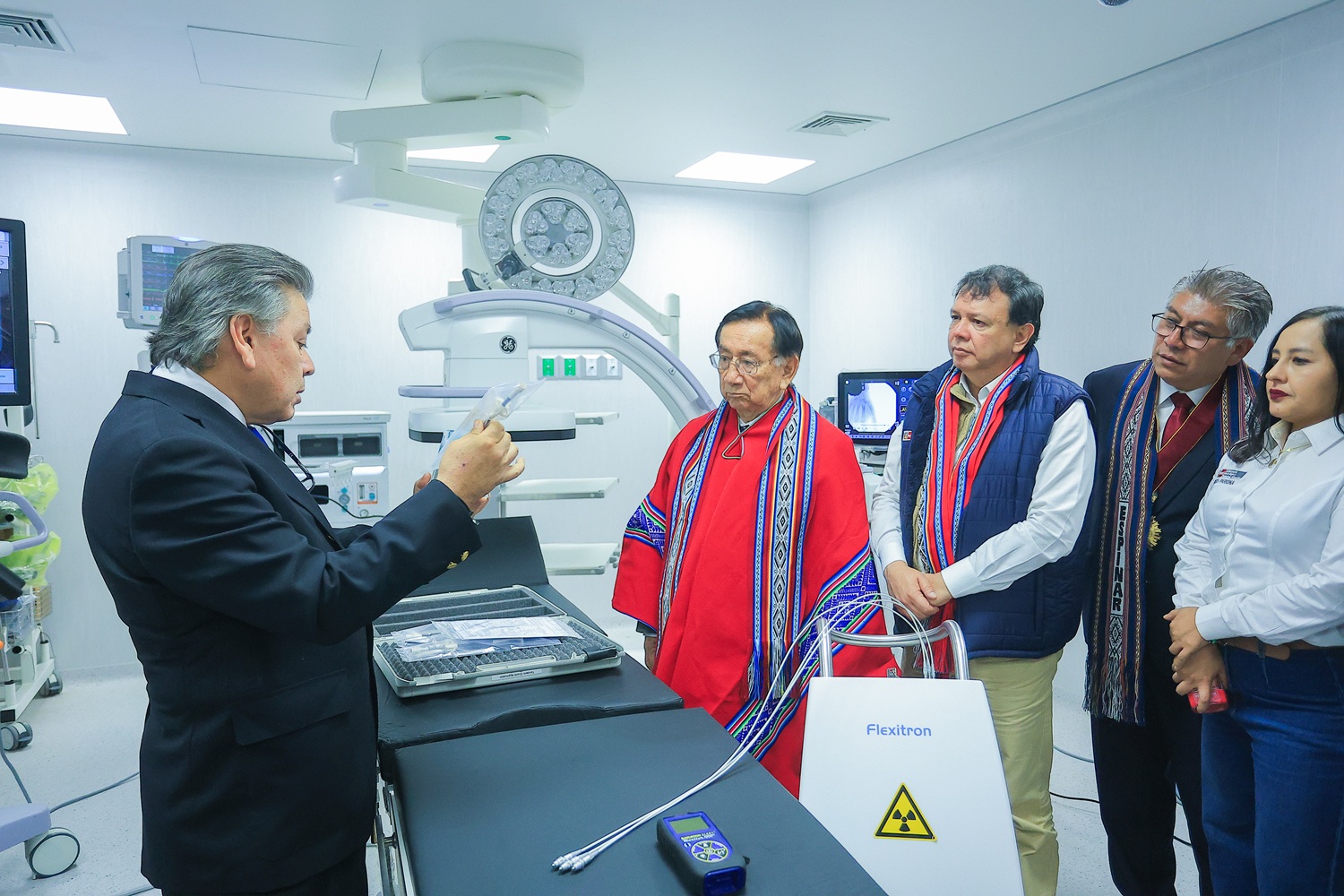
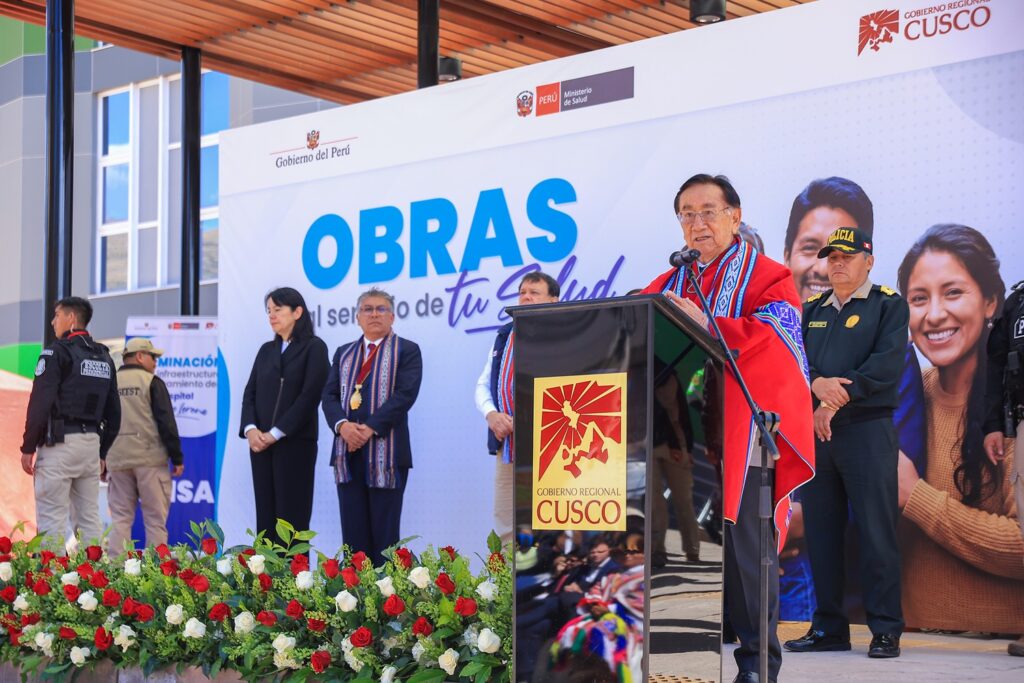
Agencia Peruana de Noticias PRENSAPERU.PE https://www.prensaperu.pe Twitter: @prensaperupe El presidente José María Balcázar afirmó hoy que su gestión mantendrá el ritmo de inversión en las obras prioritarias que requiere el país y entregará el mando el próximo 28 de julio, dejando como sello principal una administración marcada por la transparencia, la honradez y el manejo correcto de los recursos públicos.
TRANSPARENCIA EN LA GESTIÓN PÚBLICA
Transparencia en la gestión pública es la práctica de permitir que los ciudadanos conozcan cómo se planean, ejecutan y financian los proyectos del Estado, evitando desvíos y garantizando que el dinero de todos se use para el bien común.
En ese sentido, desde la ciudad de Cusco, donde supervisó la etapa final de la construcción y equipamiento del Hospital Antonio Lorena, el mandatario hizo un llamado firme a rechazar cualquier indicio de corrupción. Explicó que este problema no es solo un delito, sino un freno directo para el desarrollo, ya que desvía recursos que deberían destinarse a salud, educación y servicios básicos.
CORRUPCIÓN PÚBLICA
Corrupción pública consiste en el abuso del poder o de los recursos del Estado para obtener beneficios personales o de grupo, generando desigualdad, atraso y desconfianza en las instituciones.
De otro lado, “Entregaremos el poder con ejemplo de honradez y limpieza, mirando las grandes obras trascendentales que necesita el país”, señaló el presidente, resaltando que el objetivo es dejar una infraestructura que siga sirviendo a las futuras generaciones.
En lo que respecta al Hospital Antonio Lorena, lo calificó como una obra transformadora para la salud en la región, reafirmando que para su gobierno la salud no es un gasto, sino un derecho fundamental y una prioridad nacional. Destacó que esta forma de trabajo busca integrar y atender las necesidades de las poblaciones del sur del país, con intervenciones que no se habían visto con esa magnitud anteriormente.
El presidente agradeció también el trabajo conjunto entre las autoridades locales de Cusco, el sector privado y el Gobierno de Francia, una alianza que demuestra cómo la cooperación nacional e internacional permite hacer realidad proyectos de gran envergadura.
En otro punto de su intervención, recordó su reciente reunión en el Vaticano con el papa León XIV, y mencionó que Cusco fue uno de los temas abordados, ya que se prepara para recibir al Santo Padre durante su próxima visita oficial al Perú.
DATOS TÉCNICOS Y ALCANCE
Con una inversión total que supera los 1.059 millones de soles, el nuevo hospital permitirá responder a la creciente necesidad de atención médica especializada en Cusco, así como en las regiones vecinas de Apurímac, Madre de Dios y Puno. En total, beneficiará directamente a más de 500.000 habitantes.
Cuenta con una capacidad de 523 camas y áreas totalmente equipadas: servicio de emergencia, centro quirúrgico, área obstétrica, unidades de cuidados intensivos e intermedios, área de oncología, hemodiálisis y diagnóstico por imágenes. Destaca por su tecnología de alto nivel: resonador magnético de 3 teslas, tomógrafo de 320 cortes y el primer acelerador lineal para tratamiento de cáncer en la región, equipos que antes obligaban a los pacientes a viajar hasta Lima para recibir atención especializada.
CONCLUSIONES
1.- Compromiso con la ética pública: La gestión define su etapa final bajo los principios de honradez y transparencia, buscando dejar un precedente de responsabilidad en el manejo de los recursos del Estado.
2.- La salud como prioridad: Obras como el Hospital Antonio Lorena demuestran que la inversión en infraestructura sanitaria de calidad reduce desigualdades y garantiza el derecho a la salud para miles de personas.
3.- Desarrollo integral del sur: El proyecto integra a varias regiones del sur del país, rompiendo con la centralización de servicios y acercando tecnología médica de alta complejidad a zonas que antes no contaban con ella.
4.- Trabajo conjunto da resultados: La realización de esta obra confirma que la coordinación entre el gobierno nacional, autoridades locales, sector privado y cooperación internacional es clave para concretar proyectos de gran impacto en beneficio de la población.
Fuente: Agencia Peruana de Noticias PRENSAPERU.PE https://www.prensaperu.pe Twitter: @prensaperupe
Translate
“Honest Management!”Works and transparency until July 28 stated President Balcázar during the supervision of the ‘New Antonio Lorena Hospital’, a high-tech facility for southern Peru.”
Peruvian News Agency PRENSAPERU.PE https://www.prensaperu.pe Twitter: @prensaperupe President José María Balcázar stated today that his administration will maintain the pace of investment in the priority projects the country requires and will hand over power on July 28, leaving as its main hallmark a management defined by transparency, integrity, and proper handling of public resources.
TRANSPARENCY IN PUBLIC MANAGEMENT
Transparency in public management is the practice of allowing citizens to know how State projects are planned, implemented, and funded, preventing misuse and ensuring that public funds are used for the common good.
In this regard, from the city of Cusco, where he oversaw the final stage of construction and equipment installation at the Antonio Lorena Hospital, the President issued a firm call to reject any sign of corruption. He explained that this problem is not only a crime but also a direct barrier to development, as it diverts resources that should be allocated to health, education, and basic services.
PUBLIC CORRUPTION
Public corruption consists of the abuse of power or State resources to obtain personal or group benefits, resulting in inequality, stagnation, and a loss of trust in institutions.
Furthermore, “We will hand over power with an example of integrity and transparency, focused on the major, transformative works the country needs,” the President stated, emphasizing that the goal is to leave infrastructure that will continue to serve future generations.
Regarding the Antonio Lorena Hospital, he described it as a transformative project for healthcare in the region, reaffirming that for his government, health is not an expense but a fundamental right and a national priority. He highlighted that this approach seeks to integrate and address the needs of populations in the southern part of the country, through interventions of a scale not seen before.
The President also thanked the joint work carried out by local authorities in Cusco, the private sector, and the Government of France — a partnership that demonstrates how national and international cooperation can make large-scale projects a reality.
At another point in his address, he recalled his recent meeting in the Vatican with Pope Leo XIV, noting that Cusco was one of the topics discussed, as the city prepares to welcome the Holy Father during his upcoming official visit to Peru.
TECHNICAL DETAILS AND SCOPE
With a total investment exceeding 1,059 million soles, the new hospital will meet the growing demand for specialized medical care in Cusco, as well as in the neighboring regions of Apurímac, Madre de Dios, and Puno. In total, it will directly benefit more than 500,000 residents.
It has a capacity of 523 beds and fully equipped areas: emergency services, surgical center, obstetrics unit, intensive and intermediate care units, oncology department, hemodialysis, and diagnostic imaging services. It stands out for its high-level technology: a 3-tesla magnetic resonance scanner, a 320-slice computed tomography scanner, and the first linear accelerator for cancer treatment in the region — equipment that previously required patients to travel all the way to Lima to receive specialized care.
CONCLUSIONS
1.- Commitment to public ethics: The administration defines its final stage under the principles of integrity and transparency, seeking to set a precedent of responsibility in the management of State resources.
2.- Health as a priority: Projects such as the Antonio Lorena Hospital show that investing in quality healthcare infrastructure reduces inequalities and guarantees the right to health for thousands of people.
3.- Comprehensive development of the south: This project integrates several regions in the southern part of the country, breaking with the centralization of services and bringing highly complex medical technology to areas that previously lacked it.
4.- Collaboration delivers results: The completion of this work confirms that coordination between the national government, local authorities, the private sector, and international cooperation is key to carrying out high-impact projects for the benefit of the population.
Source: Peruvian News Agency PRENSAPERU.PE https://www.prensaperu.pe Twitter: @prensaperupe