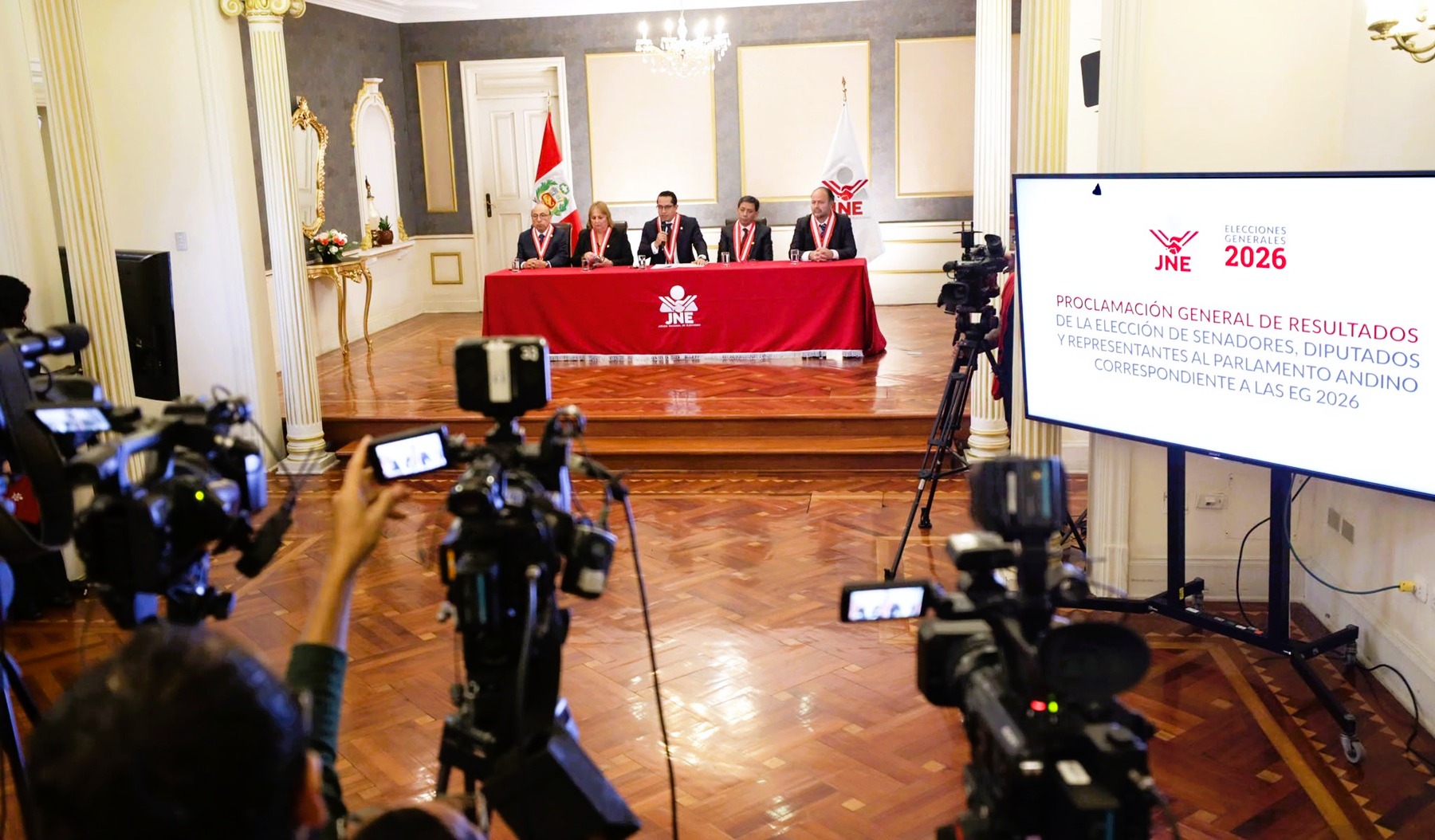
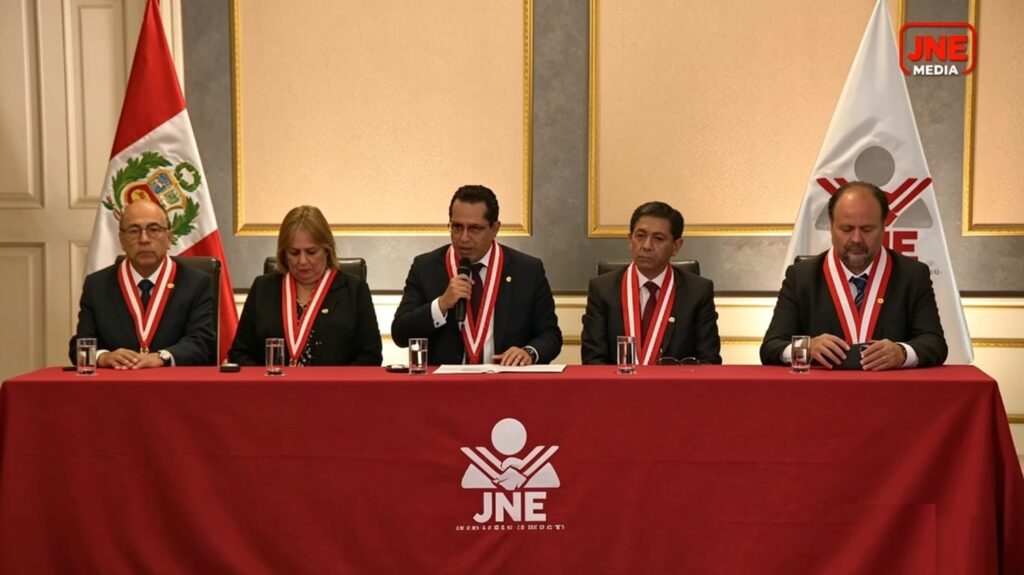
Agencia Peruana de Noticias PRENSAPERU.PE https://www.prensaperu.pe Twitter: @prensaperupe El Pleno del Jurado Nacional de Elecciones (JNE) proclamó oficialmente los resultados definitivos de la elección de los representantes para el Senado y la Cámara de Diputados del Congreso de la República, así como para los parlamentarios peruanos ante el Parlamento Andino, en el marco de las Elecciones Generales 2026.
Jurado Nacional de Elecciones (JNE)
Es el organismo constitucional autónomo encargado de velar por la legalidad de los procesos electorales, referendos y otras consultas populares. Tiene la facultad de resolver impugnaciones, realizar el cómputo final de los votos y proclamar los resultados oficiales, garantizando que se respete la voluntad de la ciudadanía.
La ceremonia se llevó a cabo en sesión pública, en la histórica sede institucional del JNE ubicada en el distrito de Jesús María, y fue presidida por el presidente del organismo, Roberto Burneo Bermejo, junto con los demás magistrados que integran su Pleno. Esta sesión es un acto de transparencia, ya que permite el acceso a medios de comunicación, observadores y representantes de los partidos para verificar que se cumplan las normas establecidas.
Acta de proclamación
Es el documento oficial donde se consignan los resultados finales del proceso electoral, una vez resueltas todas las observaciones, reclamos e impugnaciones presentadas. Tiene validez legal y sirve como base para la entrega de credenciales a las autoridades electas.
El acta general de proclamación, firmada por todos los miembros del Pleno, refleja el cómputo al 100 % de las actas electorales, elaboradas y validadas por los 60 Jurados Electorales Especiales (JEE) desplegados en todo el país. Previamente, se resolvieron todas las observaciones y reclamos presentados durante el proceso, asegurando que el resultado sea firme y ajustado a la ley.
Jurado Electoral Especial (JEE)
Es el órgano desconcentrado del JNE que funciona en cada circunscripción electoral, encargado de recibir, revisar y consolidar los resultados de las mesas de sufragio de su zona, antes de remitirlos al organismo nacional.
Según el documento oficial, seis organizaciones políticas lograron representación en el nuevo Congreso bicameral: Fuerza Popular, Juntos por el Perú, Partido del Buen Gobierno, Renovación Popular, Partido Cívico Obras y Ahora Nación – AN.
La composición del nuevo Parlamento es la siguiente:
Senado: 60 senadores en total: 30 elegidos por distrito único nacional y 30 por distrito electoral múltiple.
Cámara de Diputados: 130 diputados: 28 por distrito electoral múltiple y 102 asignados de forma proporcional al número de electores de cada región.
Parlamento Andino: 5 representantes titulares y 10 suplentes (dos por cada titular), encargados de participar en la integración regional andina.
Sistema proporcional
Es el mecanismo de asignación de escaños que busca que la representación en el Parlamento refleje la cantidad de votos obtenidos por cada partido, garantizando la pluralidad política y la equidad en la distribución de los cargos.
En detalle, la distribución de escaños en la Cámara de Diputados quedó así:
Fuerza Popular: 41 escaños
Juntos por el Perú: 32 escaños
Partido del Buen Gobierno: 18 escaños
Renovación Popular: 15 escaños
Partido Cívico Obras: 14 escaños
Ahora Nación – AN: 10 escaños
Al felicitar a las autoridades electas, el presidente del JNE resaltó que “este acto expresa el compromiso del sistema democrático con el respeto irrestricto a la decisión adoptada por la ciudadanía en las urnas, luego de haberse cumplido cada una de las etapas establecidas por nuestro ordenamiento electoral”.
Asimismo, agregó, “El JNE reafirma su compromiso con la defensa de la voluntad popular, la legalidad y el fortalecimiento permanente de nuestras instituciones democráticas, pilares esenciales de la República y del Estado de derecho”.
Estado de derecho
Es el principio que establece que todas las personas y autoridades, sin excepción, están sometidas a la Constitución y a las leyes, garantizando la estabilidad, la justicia y el funcionamiento ordenado de la democracia.
Finalmente, el magistrado informó que en los próximos días se realizará la entrega de las credenciales oficiales, documento que acredita a los legisladores y representantes andinos para asumir sus funciones durante el periodo constitucional 2026 – 2031.
DATO CONTEXTUALES
1.- Proceso concluido y transparente: La proclamación oficial confirma que se cumplieron todas las etapas del proceso electoral, resolviendo observaciones e impugnaciones, lo que otorga plena validez y seguridad jurídica a los resultados.
2.- Pluralidad representativa: La distribución de escaños refleja la diversidad de preferencias de la ciudadanía, permitiendo que distintas fuerzas políticas participen en la toma de decisiones para el país.
3.- Continuidad democrática: El acto reafirma el respeto a la voluntad popular y al marco legal, sentando las bases para el inicio de funciones de las nuevas autoridades y garantizando la estabilidad institucional.
Fuente: Agencia Peruana de Noticias PRENSAPERU.PE https://www.prensaperu.pe Twitter: @prensaperupe
Translate
The National Elections Board (JNE) announces the official results for the bicameral Congress and representatives to the Andean Parliament. How are the seats distributed in the Senate and the Chamber of Deputies?
Peruvian News Agency PRENSAPERU.PE https://www.prensaperu.pe Twitter: @prensaperupe The Plenary Session of the National Board of Elections (JNE) has officially proclaimed the final results of the election of representatives for the Senate and the Chamber of Deputies of the Congress of the Republic, as well as for Peruvian members of the Andean Parliament, within the framework of the 2026 General Elections.
NATIONAL BOARD OF ELECTIONS (JNE)
It is an autonomous constitutional body responsible for ensuring the legality of electoral processes, referendums, and other public consultations. It has the authority to resolve appeals, conduct the final vote count, and proclaim official results, guaranteeing respect for the will of the citizens.
The ceremony was held during a public session at the JNE’s historic headquarters in the district of Jesús María, and was presided over by the institution’s president, Roberto Burneo Bermejo, together with the other magistrates who make up its Plenary Session. This session constitutes an act of transparency, as it grants access to the media, observers, and party representatives to verify compliance with established regulations.
PROCLAMATION CERTIFICATE
It is the official document in which the final results of the electoral process are recorded, once all observations, claims, and appeals submitted have been resolved. It holds legal validity and serves as the basis for issuing credentials to elected authorities.
The general proclamation certificate, signed by all members of the Plenary Session, reflects the tally of 100% of the electoral records prepared and validated by the 60 Special Electoral Juries (JEE) deployed throughout the country. All observations and claims submitted during the process were previously resolved, ensuring that the results are final and in accordance with the law.
SPECIAL ELECTORAL JURY (JEE)
It is the decentralized body of the JNE that operates in each electoral constituency, responsible for receiving, reviewing, and consolidating results from polling stations in its area before forwarding them to the national body.
According to the official document, six political organizations secured representation in the new bicameral Congress: Fuerza Popular, Juntos por el Perú, Partido del Buen Gobierno, Renovación Popular, Partido Cívico Obras, and Ahora Nación – AN.
The composition of the new Parliament is as follows:
Senate: 60 senators in total: 30 elected by a single national constituency and 30 by a multi-member electoral constituency.
Chamber of Deputies: 130 deputies: 28 elected by a multi-member electoral constituency and 102 allocated in proportion to the number of voters in each region.
Andean Parliament: 5 full representatives and 10 alternate representatives (two for each full member), tasked with participating in Andean regional integration.
PROPORTIONAL REPRESENTATION SYSTEM
It is the mechanism for allocating seats designed to ensure that representation in Parliament reflects the number of votes obtained by each party, thereby guaranteeing political pluralism and fairness in the distribution of offices.
In detail, the distribution of seats in the Chamber of Deputies is as follows:
Fuerza Popular: 41 seats
Juntos por el Perú: 32 seats
Partido del Buen Gobierno: 18 seats
Renovación Popular: 15 seats
Partido Cívico Obras: 14 seats
Ahora Nación – AN: 10 seats
In congratulating the elected authorities, the President of the JNE emphasized that “this act expresses the democratic system’s commitment to unrestricted respect for the decision made by citizens at the polls, after every stage established by our electoral regulations has been completed.”
He further added, “The JNE reaffirms its commitment to defending the popular will, legality, and the ongoing strengthening of our democratic institutions, which are essential pillars of the Republic and the rule of law.”
RULE OF LAW
It is the principle establishing that all individuals and authorities, without exception, are subject to the Constitution and the laws, thereby guaranteeing stability, justice, and the orderly functioning of democracy.
Finally, the magistrate announced that the official credentials — the document certifying that legislators and Andean representatives are qualified to hold office — will be issued in the coming days, allowing them to assume their duties for the constitutional term 2026–2031.
CONTEXTUAL INFORMATION
1.- Completed and transparent process: The official proclamation confirms that all stages of the electoral process were carried out, with observations and appeals resolved, granting full validity and legal certainty to the results.
2.- Representative pluralism: The distribution of seats reflects the diversity of citizens’ preferences, allowing different political forces to participate in decision-making for the country.
3.- Democratic continuity: This act reaffirms respect for the popular will and the legal framework, laying the groundwork for the new authorities to begin their duties and ensuring institutional stability.
Source: Peruvian News Agency PRENSAPERU.PE https://www.prensaperu.pe Twitter: @prensaperupe