
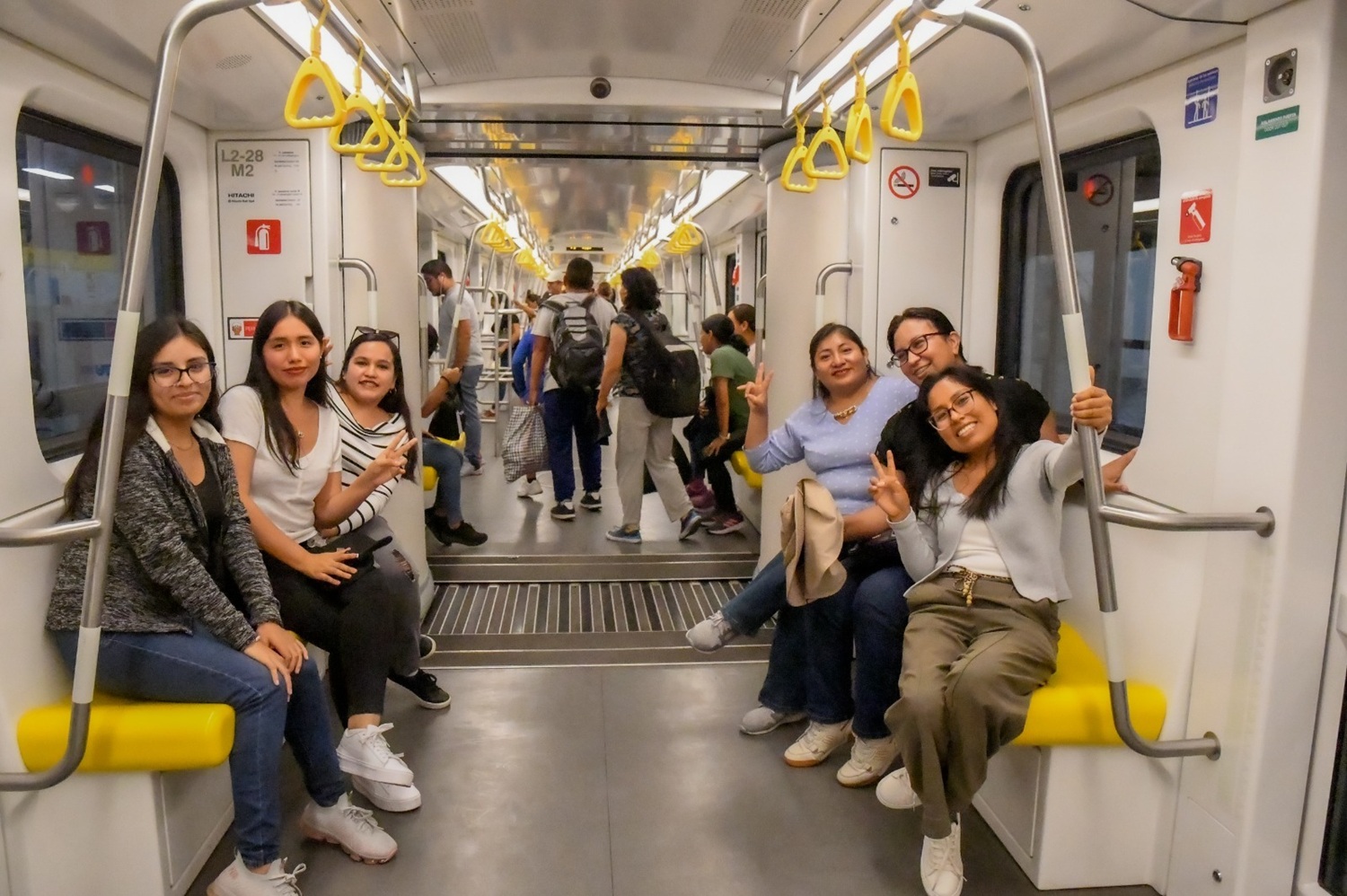
Agencia Peruana de Noticias PRENSAPERU.PE https://www.prensaperu.pe Twitter: @prensaperupe Como parte de las soluciones inmediatas para mejorar significativamente los desplazamientos entre distritos y extremos de la ciudad, la Autoridad de Transporte Urbano para Lima y Callao (ATU) considera que la implementación de las Líneas 3 y 4 del Metro constituye una prioridad impostergable. Estas obras responden a la necesidad de modernizar el sistema de transporte, reducir tiempos de viaje y brindar un servicio seguro, cómodo y accesible para más de 10 millones de habitantes de la capital y el Callao.
Sistema de transporte masivo
Es el conjunto de infraestructuras, vehículos y servicios diseñados para trasladar un gran volumen de personas de forma simultánea, ordenada y eficiente. A diferencia del transporte convencional, tiene mayor capacidad, rutas definidas y horarios estables, lo que ayuda a descongestionar las vías y reducir la contaminación.
Su diseño y planificación se enmarcan en el Plan de Movilidad Urbana, concebido como una hoja de ruta técnica para el desarrollo del sistema integral de transporte en la ciudad. Este instrumento busca reducir la congestión vehicular, mejorar la velocidad de desplazamiento del transporte público convencional y generar las interconexiones necesarias entre los distintos sistemas, para que el usuario pueda viajar de un punto a otro sin interrupciones innecesarias.
Interconexión
Es la articulación entre diferentes rutas, líneas o modalidades de transporte, que permite a los pasajeros cambiar de un servicio a otro en puntos estratégicos, sin recorrer distancias largas ni pagar pasajes adicionales. Es fundamental para que el sistema funcione como una red integrada.
INTERCONEXIONES DE LA LÍNEA 3
La implementación de la Línea 3 contempla un recorrido de 28 estaciones, que va desde la avenida Chillón Trapiche, en el distrito de Comas, hasta San Juan de Miraflores. Conecta de manera directa y eficiente el extremo norte con el sur de la ciudad, cruzando zonas densamente pobladas que hoy presentan los mayores tiempos de viaje.
Su diseño incorpora interconexiones estratégicas que multiplican su alcance:
1.- En la Estación Central, ubicada en la avenida Garcilaso de la Vega, se conectará con la Línea 2 del Metro y con el sistema del Metropolitano. Esta articulación permitirá optimizar los desplazamientos de millones de ciudadanos de Lima norte, principalmente de distritos como Comas, Los Olivos, Independencia, Rímac y San Martín de Porres.
2.- En la estación “Conde de San Isidro”, se proyecta el enlace con los corredores complementarios Rojo (en la avenida Javier Prado) y Azul (en la avenida Arequipa). Además, en este mismo punto se conectará con la Línea 4.
3.- En la estación “Cabitos”, en Santiago de Surco, se unirá con la Línea 1 del Metro, facilitando la continuidad de los viajes hacia el sur y sureste de la ciudad.
INTERCONEXIONES DE LA LÍNEA 4
La Línea 4 contará con un total de 28 estaciones, incluyendo las 8 correspondientes al ramal actualmente en construcción. Recorrerá el trayecto desde el Callao hasta Santa Anita, conectando el norte del Callao con el este de Lima y cubriendo zonas industriales, comerciales y residenciales de gran actividad.
Su diseño incluye interconexiones clave para integrar toda la red:
1.- En la estación “Carmen de la Legua”, se integrará con la Línea 2 del Metro, fortaleciendo el enlace entre el Callao y el centro de Lima.
2.- A lo largo de su recorrido, enlazará con el Corredor Complementario Rojo, que opera por las avenidas La Marina y Javier Prado, facilitando el acceso a zonas financieras y comerciales.
3.- En la estación “La Cultura”, en San Borja, se conectará con la Línea 1 del Metro, permitiendo viajes hacia el sur y el este.
4.- En la estación “Mercado Santa Anita”, sobre la avenida Separadora Industrial, se unirá nuevamente con la Línea 2, consolidando un nodo de intercambio fundamental para el transporte masivo.
Nodo de transporte
Punto estratégico donde convergen varias líneas o modalidades de transporte. Su función es organizar el flujo de pasajeros, reducir los tiempos de trasbordo y garantizar que el sistema funcione como una red continua y eficiente.
CONCLUSIONES
1.- Solución estructural y necesaria: Las Líneas 3 y 4 responden a la creciente demanda de movilidad en Lima y Callao, permitiendo trasladar a millones de personas en menos tiempo y con mayor seguridad.
2.- Red integrada y eficiente: Gracias a sus múltiples interconexiones, estas líneas no operan de forma aislada, sino que complementan y amplían la cobertura de todo el sistema de transporte masivo existente.
3.- Impacto positivo en la calidad de vida: Al reducir la congestión y los tiempos de viaje, se disminuye el estrés, se ahorra tiempo útil y se reduce la emisión de gases contaminantes en las vías de la ciudad.
4.- Impulso al desarrollo urbano: La llegada del metro transforma las zonas por donde pasa, fomenta el ordenamiento territorial, facilita el acceso a servicios de salud, educación y trabajo, y genera mayor dinamismo económico en los distritos conectados.
Fuente: Agencia Peruana de Noticias PRENSAPERU.PE https://www.prensaperu.pe Twitter: @prensaperupe
Translate
Metro Lines 3 and 4! “From north to south and from Callao to the east, the priority for improving mobility in Lima and Callao. Do you know how the new Metro lines will connect? The ATU explains everything.”
Peruvian News Agency PRENSAPERU.PE https://www.prensaperu.pe Twitter: @prensaperupe As part of the immediate solutions to significantly improve travel between districts and opposite ends of the city, the Urban Transport Authority for Lima and Callao (ATU) considers that the implementation of Lines 3 and 4 of the Metro constitutes an urgent priority. These projects respond to the need to modernize the transport system, reduce travel times, and provide a safe, comfortable, and accessible service for more than 10 million inhabitants of the capital and Callao.
MASS TRANSPORT SYSTEM
It is the set of infrastructure, vehicles, and services designed to move large numbers of people simultaneously, in an orderly and efficient manner. Unlike conventional transport, it has greater capacity, defined routes, and stable schedules, which helps decongest roads and reduce pollution.
Its design and planning are part of the Urban Mobility Plan, conceived as a technical roadmap for the development of the city’s integrated transport system. This instrument aims to reduce traffic congestion, improve the travel speed of conventional public transport, and establish the necessary connections between different systems, so that users can travel from one point to another without unnecessary interruptions.
INTERCONNECTION
It is the link between different routes, lines, or modes of transport, allowing passengers to transfer from one service to another at strategic points without traveling long distances or paying additional fares. It is essential for the system to function as an integrated network.
INTERCONNECTIONS OF LINE 3
The implementation of Line 3 includes a route with 28 stations, running from Chillón Trapiche Avenue in the district of Comas to San Juan de Miraflores. It directly and efficiently connects the northern end with the southern end of the city, crossing densely populated areas that currently have the longest travel times.
Its design incorporates strategic interconnections that extend its reach:
1.- At the Central Station, located on Garcilaso de la Vega Avenue, it will connect with Metro Line 2 and the Metropolitano system. This link will optimize travel for millions of residents in northern Lima, mainly from districts such as Comas, Los Olivos, Independencia, Rímac, and San Martín de Porres.
2.- At the “Conde de San Isidro” station, a connection is planned with the Red complementary corridor (on Javier Prado Avenue) and the Blue complementary corridor (on Arequipa Avenue). Furthermore, at this same point, it will connect with Line 4.
3.- At the “Cabitos” station in Santiago de Surco, it will link with Metro Line 1, facilitating continuous travel toward the south and southeast of the city.
INTERCONNECTIONS OF LINE 4
Line 4 will have a total of 28 stations, including the 8 corresponding to the branch currently under construction. It will run from Callao to Santa Anita, connecting northern Callao with eastern Lima and covering highly active industrial, commercial, and residential areas.
Its design includes key interconnections to integrate the entire network:
1.- At the “Carmen de la Legua” station, it will connect with Metro Line 2, strengthening the link between Callao and downtown Lima.
2.- Along its route, it will connect with the Red Complementary Corridor, which runs along La Marina and Javier Prado avenues, facilitating access to financial and commercial areas.
3.- At the “La Cultura” station in San Borja, it will connect with Metro Line 1, allowing travel toward the south and east.
4.- At the “Mercado Santa Anita” station, on Separadora Industrial Avenue, it will link again with Line 2, establishing a major interchange hub for mass transport.
TRANSPORT HUB
A strategic point where several transport lines or modes converge. Its purpose is to organize passenger flow, reduce transfer times, and ensure the system operates as a continuous and efficient network.
CONCLUSIONS
1.- Structural and necessary solution: Lines 3 and 4 address the growing demand for mobility in Lima and Callao, enabling millions of people to travel in less time and with greater safety.
2.- Integrated and efficient network: Thanks to their multiple interconnections, these lines do not operate in isolation but complement and expand the coverage of the entire existing mass transport system.
3.- Positive impact on quality of life: By reducing congestion and travel times, stress levels decrease, valuable time is saved, and the emission of polluting gases on city roads is reduced.
4.- Boost to urban development: The arrival of the metro transforms the areas it serves, promotes territorial planning, improves access to health, education, and employment services, and generates greater economic activity in the connected districts.
Source: Peruvian News Agency PRENSAPERU.PE https://www.prensaperu.pe Twitter: @prensaperupe