
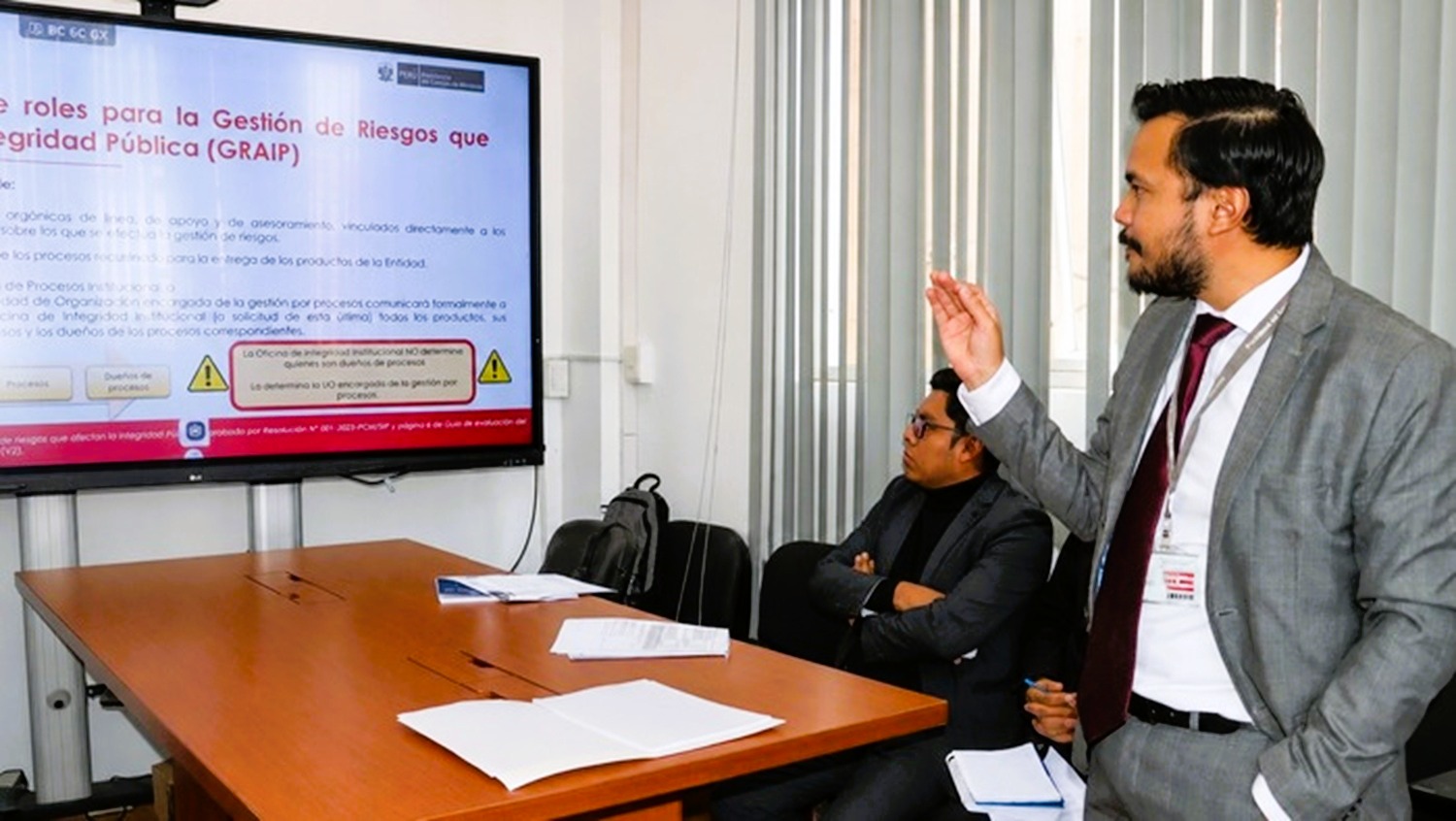
Agencia Peruana de Noticias PRENSAPERU.PE https://www.prensaperu.pe Twitter: @prensaperupe La Presidencia del Consejo de Ministros (PCM), a través de la Secretaría de Integridad Pública, brindó asistencia técnica en materia de prevención de la corrupción a más de 450 entidades públicas a nivel nacional en lo que va del año 2026. Esta cifra representa un avance del 69 % respecto de la meta anual establecida de 650 instituciones capacitadas, demostrando un ritmo sostenido en el fortalecimiento de la gestión estatal.
Esta intervención descentralizada forma parte de la estrategia de acompañamiento continuo que impulsa la secretaría, con el objetivo de promover una gestión pública más transparente, eficiente y totalmente orientada a responder a las necesidades de la ciudadanía.
Para definir dónde actuar con mayor prioridad, se toman como referencia los resultados del Índice de Capacidad Preventiva frente a la Corrupción (ICP) 2025, con el fin de atender primero aquellos territorios que presentan mayores desafíos y brechas en la adopción de mecanismos de control y ética.
INTEGRIDAD PÚBLICA
Conjunto de principios, normas y prácticas éticas que guían la actuación de los funcionarios y servidores del Estado. Busca garantizar que los recursos, facultades y servicios se usen solo para el bien común, evitando cualquier abuso o beneficio personal.
MODELO DE INTEGRIDAD
Herramienta de gestión que permite a cada entidad identificar sus riesgos de corrupción o mala práctica, diseñar medidas de control, establecer responsabilidades y monitorear el cumplimiento de reglas claras. Sirve para organizar el trabajo y reducir espacios de irregularidad.
ÍNDICE DE CAPACIDAD PREVENTIVA FRENTE A LA CORRUPCIÓN (ICP)
Instrumento de medición oficial que evalúa qué tan preparada está cada institución pública para prevenir actos de corrupción, según sus procesos, normativa, capacitación y mecanismos de supervisión.
IMPULSO A LA PREVENCIÓN EN CAJAMARCA, PASCO Y PUNO
Del 15 al 19 de junio, la Secretaría de Integridad Pública realizó jornadas presenciales en las sedes centrales y unidades ejecutoras de los gobiernos regionales de Cajamarca, Pasco y Puno. En estos encuentros se brindó orientación detallada sobre la implementación paso a paso del Modelo de Integridad, adaptado a la realidad de cada región.
Esta herramienta es fundamental porque permite a las entidades subnacionales mitigar riesgos, afianzar el correcto uso de los recursos públicos y, sobre todo, recuperar y afianzar la confianza de la población en sus instituciones.
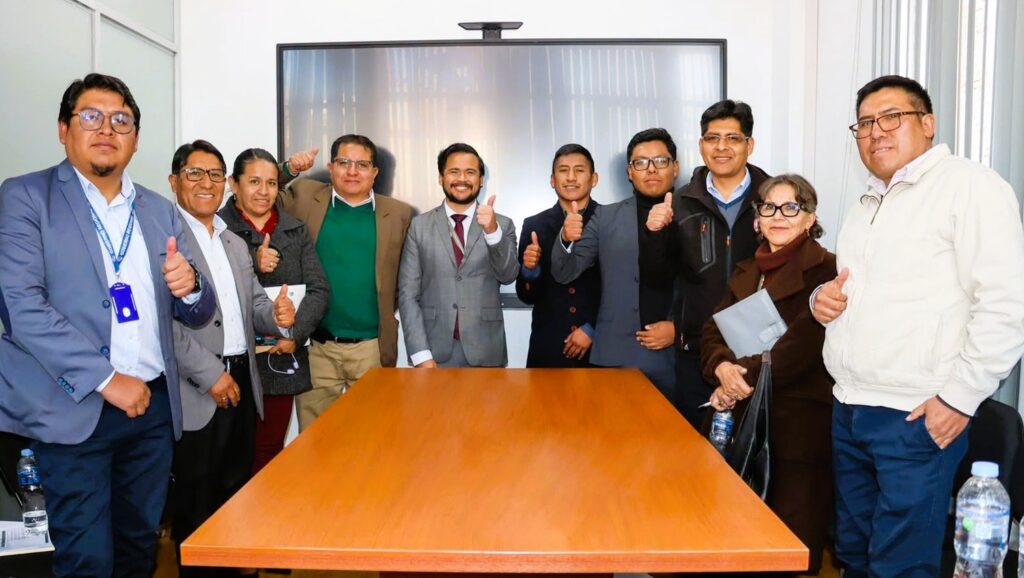
Durante las sesiones participaron autoridades directamente comprometidas: el gobernador regional de Cajamarca, Roger Guevara; la vicegobernadora regional de Pasco, Doris Guillermo; y el gerente general regional de Puno, Juan Macedo. Al finalizar las mesas de trabajo, todos coincidieron en reafirmar su decisión de aplicar las directivas correspondientes, suprimir cualquier tipo de irregularidad y garantizar una prestación de servicios más justa, equitativa y cercana a la gente.
La labor de asistencia continuará próximamente en las regiones de Huancavelica, Junín, Moquegua, Ayacucho, Tumbes y Loreto. Con esta cobertura progresiva, el Ejecutivo fortalece la capacidad de respuesta de toda la administración pública contra la corrupción y protege el derecho de todos los peruanos a recibir servicios eficientes y de calidad.
CONCLUSIONES
1.- Avance sólido y metas claras: El 69 % de cumplimiento de la meta anual en solo la primera parte del año confirma que la estrategia descentralizada funciona y permite llegar a más instituciones en menos tiempo.
2.- Enfoque técnico y priorizado: Usar el Índice de Capacidad Preventiva asegura que los esfuerzos se dirijan donde más se necesitan, optimizando recursos y generando cambios reales en zonas con mayores desafíos.
3.- Compromiso compartido: La participación activa de las autoridades regionales demuestra que la prevención no es solo una norma, sino un trabajo conjunto que genera instituciones más fuertes y recupera la confianza ciudadana.
Fuente: Agencia Peruana de Noticias PRENSAPERU.PE https://www.prensaperu.pe Twitter: @prensaperupe
Translate
PCM Public Integrity 2026! “Government trained 69% of the entities planned for this year with the ‘Integrity Model’, technical assistance reached the regions of Cajamarca, Pasco and Puno.”
Peruvian News Agency PRENSAPERU.PE https://www.prensaperu.pe Twitter: @prensaperupe The Presidency of the Council of Ministers (PCM), through the Secretariat for Public Integrity, has provided technical assistance in the area of corruption prevention to more than 450 public entities nationwide so far in 2026. This figure represents progress of 69 % toward the annual target of 650 institutions to be trained, demonstrating a steady pace in strengthening state management.
This decentralized intervention is part of the ongoing support strategy promoted by the Secretariat, with the aim of fostering public administration that is more transparent, efficient, and fully focused on responding to the needs of citizens.
To determine where action is most urgently required, the results of the 2025 Preventive Capacity Index against Corruption (ICP) are used as a reference, in order to prioritize those regions facing the greatest challenges and gaps in adopting control and ethical mechanisms.
PUBLIC INTEGRITY
A set of principles, rules, and ethical practices that guide the conduct of public officials and civil servants. It seeks to ensure that resources, powers, and services are used exclusively for the common good, preventing any abuse or personal gain.
INTEGRITY MODEL
A management tool that enables each entity to identify its risks of corruption or improper practices, design control measures, establish responsibilities, and monitor compliance with clear rules. It serves to organize operations and reduce opportunities for irregularities.
PREVENTIVE CAPACITY INDEX AGAINST CORRUPTION (ICP)
An official measurement instrument that evaluates how prepared each public institution is to prevent acts of corruption, based on its processes, regulations, training, and supervision mechanisms.
PROMOTING PREVENTION IN CAJAMARCA, PASCO, AND PUNO
From June 15 to 19, the Secretariat for Public Integrity held in‑person sessions at the central offices and executing units of the regional governments of Cajamarca, Pasco, and Puno. These meetings provided detailed guidance on the step‑by‑step implementation of the Integrity Model, adapted to the specific circumstances of each region.
This tool is essential because it allows subnational entities to mitigate risks, ensure the proper use of public funds, and, most importantly, restore and strengthen public trust in their institutions.
Authorities directly committed to these efforts participated in the sessions: the Regional Governor of Cajamarca, Roger Guevara; the Regional Vice‑Governor of Pasco, Doris Guillermo; and the Regional General Manager of Puno, Juan Macedo. At the close of the working meetings, all reaffirmed their decision to apply the corresponding guidelines, eliminate any type of irregularity, and guarantee fairer, more equitable, and people‑centered service delivery.
This assistance work will continue shortly in the regions of Huancavelica, Junín, Moquegua, Ayacucho, Tumbes, and Loreto. Through this progressive coverage, the Executive Branch strengthens the response capacity of the entire public administration against corruption and protects the right of all Peruvians to receive efficient, quality services.
CONCLUSIONS
1.- Solid progress and clear goals: Achieving 69 % of the annual target in just the first part of the year confirms that the decentralized strategy is effective and makes it possible to reach more institutions in less time.
2.- Technical and prioritized approach: Using the Preventive Capacity Index ensures that efforts are directed where they are most needed, optimizing resources and generating meaningful change in areas facing the greatest challenges.
3.- Shared commitment: The active participation of regional authorities shows that prevention is not merely a regulatory requirement, but a collaborative effort that builds stronger institutions and restores public trust.
Source: Peruvian News Agency PRENSAPERU.PE https://www.prensaperu.pe Twitter: @prensaperupe