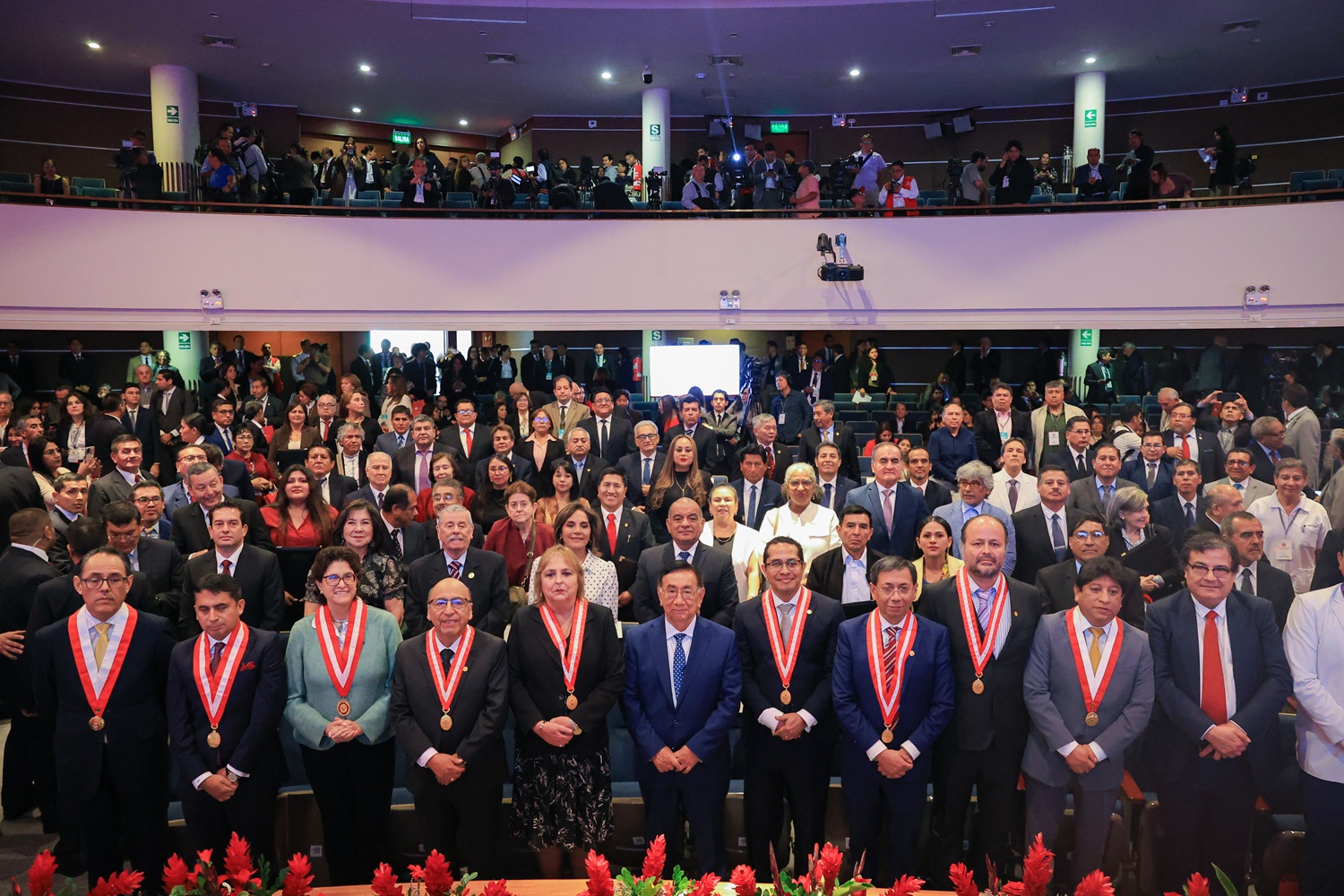
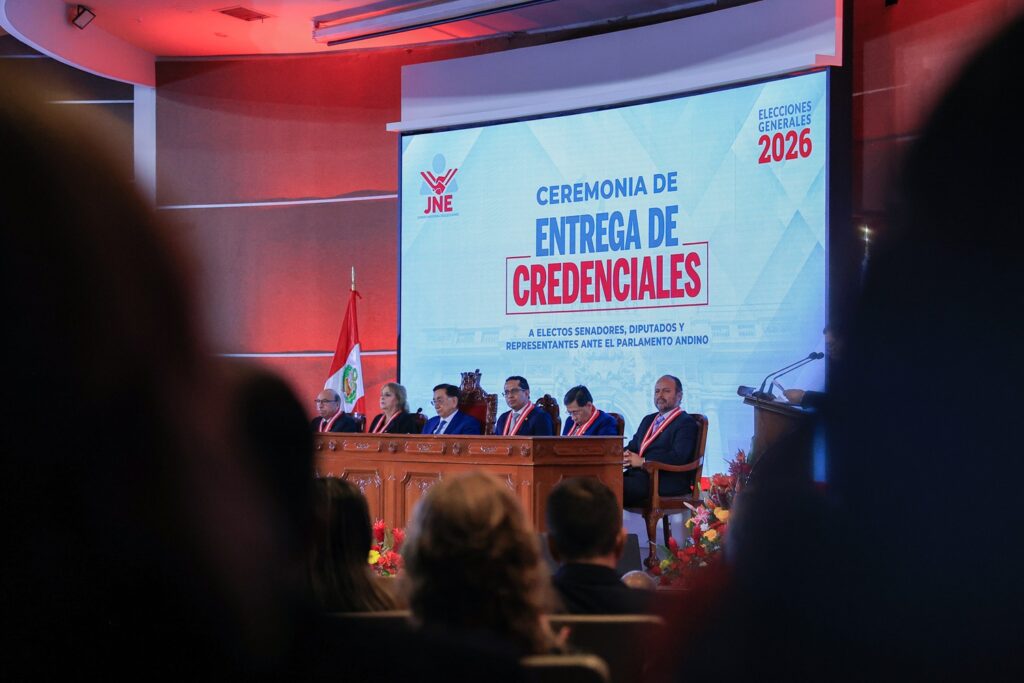
Agencia Peruana de Noticias PRENSAPERU.PE https://www.prensaperu.pe Twitter: @prensaperupe El Jurado Nacional de Elecciones (JNE) hizo entrega oficial de credenciales este jueves 25 de junio a los representantes elegidos para el Senado de la República y al Parlamento Andino, dentro del calendario de las Elecciones Generales 2026. El acto marca la culminación formal de la etapa de verificación y proclamación y abre el camino para el inicio del nuevo periodo legislativo 2026‑2031.
DESARROLLO Y AUTORIDADES PRESENTES
La ceremonia fue presidida por el pleno del JNE, bajo la dirección del magistrado Roberto Burneo Bermejo. Contó con la participación del presidente de la República, José María Balcázar, así como representantes de los tres organismos rectores del sistema electoral peruano: JNE, ONPE y RENIEC. Esta presencia refleja la coordinación institucional necesaria para dar solidez y legitimidad al proceso democrático.
Se basó estrictamente en el acta de proclamación aprobada el 19 de junio. Quedaron acreditados:
60 Senadores: 30 por distrito único nacional y 30 por distritos múltiples
Parlamentarios Andinos: 5 titulares y 10 suplentes ante el Parlamento Andino
Durante su intervención, el titular del JNE señaló que este documento constituye el reconocimiento legal de la voluntad popular expresada por millones de electores. Resaltó también que todo el trabajo se desarrolló bajo principios de independencia, imparcialidad y respeto al Estado de derecho. Dirigiéndose a los elegidos, les recordó que la credencial trae consigo el deber de ejercer la representación con integridad, vocación pública y apego estricto a las normas democráticas.
Para el viernes 26 está programada la entrega correspondiente a la Cámara de Diputados: 130 integrantes — 28 por distrito múltiple y 102 bajo criterio proporcional según población electoral. Ambas ceremonias se realizan en el auditorio del Colegio Médico del Perú, en Miraflores.
DEFINICIONES CONTEXTUALES
Credencial electoral: documento oficial que certifica el resultado y confiere legitimidad y derecho legal para ejercer el cargo obtenido por sufragio.
Sistema electoral tripartito: conformado por JNE (jurisdicción y fiscalización), ONPE (organización y desarrollo de la votación) y RENIEC (registro de ciudadanos). Actúan coordinados pero con funciones propias e independientes.
Distrito único nacional: toda la república funciona como una sola circunscripción para elegir parte de los escaños.
Distrito múltiple: división territorial donde se eligen varios representantes según la magnitud de cada circunscripción.
Parlamento Andino: órgano deliberante y representativo del sistema de integración regional, donde cada país miembro lleva su delegación elegida directamente por sus ciudadanos.
DATOS Y MAPEO CONCEPTUALES
1.- La entrega de credenciales cierra formalmente la etapa de verificación y da validez institucional a los resultados electorales.
2.- Contó con la presencia de todos los niveles y organismos competentes, lo que refuerza la institucionalidad y la cadena democrática.
3.- Se aplicaron reglas claras de distribución: combinación de distrito único, distritos múltiples y representación ante el organismo regional.
4.- El mensaje central pone énfasis en que el mandato deriva exclusivamente del voto libre y exige ejercicio responsable y transparente.
5.- El cronograma ordenado — Senado y Parlamento Andino primero, luego Diputados — asegura paso a paso para la instalación ordenada del nuevo legislativo.
Fuente: Agencia Peruana de Noticias PRENSAPERU.PE https://www.prensaperu.pe Twitter: @prensaperupe
Translate
“The Senate and the Andean Parliament receive legal backing prior to their inauguration; the presentation of credentials formalizes the start of the renewal of the Legislative Branch into a ‘bicameral parliament’ after 34 years.”
Peruvian News Agency PRENSAPERU.PE https://www.prensaperu.pe Twitter: @prensaperupe The National Jury of Elections (JNE) officially delivered credentials this Thursday, 25 June, to the representatives elected for the Senate of the Republic and the Andean Parliament, within the schedule of the 2026 General Elections. The ceremony marks the formal conclusion of the verification and proclamation stage and opens the way for the beginning of the new legislative period 2026‑2031.
DEVELOPMENT AND AUTHORITIES ATTENDING
The ceremony was chaired by the Plenary of the JNE, led by Magistrate Roberto Burneo Bermejo. It was attended by the President of the Republic, José María Balcázar, as well as representatives of the three governing bodies of the Peruvian electoral system: JNE, ONPE and RENIEC. Their presence reflects the institutional coordination required to lend solidity and legitimacy to the democratic process.
The event was strictly based on the proclamation act approved on 19 June. The following were accredited:
60 Senators: 30 elected from the single national constituency and 30 from multiple constituencies
Andean Parliament members: 5 full‑title members and 10 alternates
In his address, the head of the JNE stated that this document constitutes legal recognition of the will of the people expressed by millions of voters. He also highlighted that all work was carried out under the principles of independence, impartiality and respect for the rule of law. Speaking to those elected, he reminded them that the credential brings with it the duty to exercise representation with integrity, public service vocation and strict adherence to democratic standards.
The delivery corresponding to the Chamber of Deputies is scheduled for Friday 26 June: 130 members — 28 elected from multiple constituencies and 102 according to proportional criteria based on electoral population. Both ceremonies take place in the auditorium of the Medical College of Peru, located in Miraflores.
CONTEXTUAL DEFINITIONS
Electoral credential: official document certifying the result and granting legitimacy and legal right to hold office obtained through suffrage.
Tripartite electoral system: made up of JNE (jurisdiction and oversight), ONPE (organisation and running of voting operations) and RENIEC (citizen registry). They operate in coordination but with separate and independent functions.
Single national constituency: the whole country acts as one electoral district to elect a share of seats.
Multiple constituency: territorial division where several representatives are elected according to the size of each district.
Andean Parliament: deliberative and representative body within the regional integration system, where each member state sends its delegation directly elected by citizens.
KEY POINTS AND CONCEPTUAL FRAMEWORK
1.- Delivery of credentials formally closes the verification stage and confers institutional validity upon election results.
2.- The presence of all relevant bodies and authority levels strengthens institutions and reinforces the democratic chain.
3.- Clear allocation rules were applied: combining single‑national, multiple‑district and regional‑representation criteria.
4.- The core message emphasises that the mandate comes exclusively from free suffrage and demands responsible and transparent exercise of office.
5.- The orderly schedule — Senate and Andean Parliament first, followed by Deputies — ensures a step‑by‑step process toward proper installation of the new legislature.
Source: Peruvian News Agency PRENSAPERU.PE https://www.prensaperu.pe Twitter: @prensaperupe