
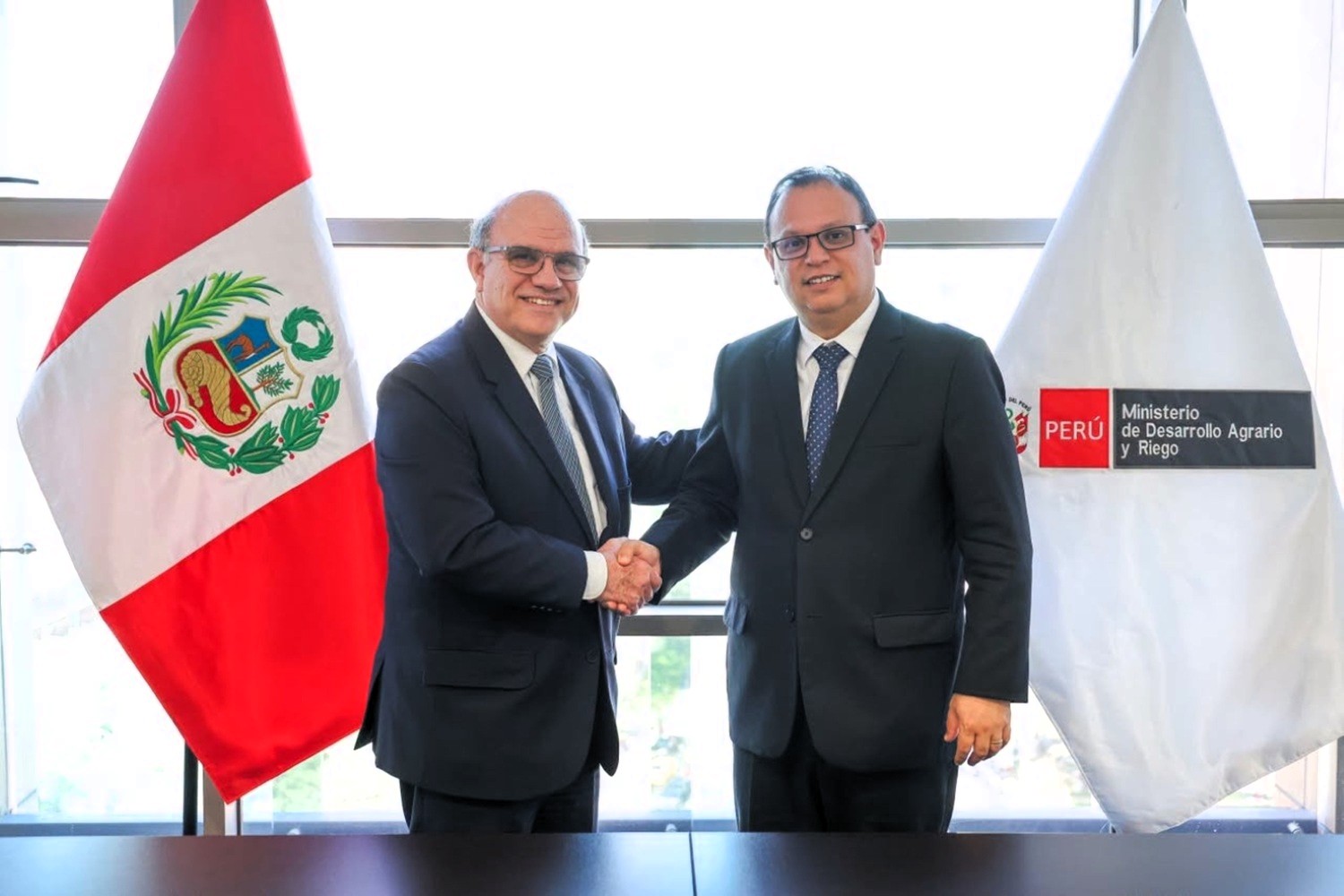
Agencia Peruana de Noticias PRENSAPERU.PE https://www.prensaperu.pe Twitter: @prensaperupe El jueves 24 de septiembre, representantes de La Iglesia de Jesucristo —César Hooker, gerente de Bienestar y Autosuficiencia; Guillermo Estrugo, director de Comunicación y Publicaciones; Ana Lorena Ostos, gerente de Relaciones Públicas; y Johel Valdivia, gerente de Servicios Humanitarios— sostuvieron una reunión de coordinación con el ministro de Desarrollo Agrario y Riego, Marco Vinelli Ruiz, para articular acciones conjuntas de preparación y atención ante el Fenómeno El Niño (FEN).
La alianza se estructura en dos ejes fundamentales. En primer lugar, la ayuda humanitaria: La Iglesia de Jesucristo canalizará sus recursos y apoyo a la población a través del Instituto Nacional de Defensa Civil (INDECI), alineándose con las necesidades oficialmente identificadas y los volúmenes requeridos en cada zona afectada, garantizando así que la asistencia llegue de manera ordenada, transparente y oportuna. En segundo lugar, se fortalecerá la transferencia de conocimientos y experiencias mediante la Universidad Brigham Young (BYU), aportando metodologías y buenas prácticas orientadas específicamente a las comunidades de la sierra peruana, regiones especialmente vulnerables a los cambios climáticos.
El encuentro refleja que la respuesta ante emergencias no es tarea exclusiva del Estado: la suma de capacidades institucionales, sociales y académicas multiplica la capacidad de protección del país. La Iglesia aporta además experiencia en organización comunitaria, logística y promoción de la autosuficiencia, complementando la labor técnica y rectora del Ministerio de Desarrollo Agrario y Riego, orientada a proteger la producción agroalimentaria, la infraestructura rural y el bienestar de las familias del campo.
DATOS CONCEPTUALES
Fenómeno El Niño (FEN): Evento climático de calentamiento anómalo del océano Pacífico que altera los patrones de lluvia y temperatura en el Perú, pudiendo generar lluvias intensas, sequías, inundaciones y daños a la agricultura, ganadería e infraestructura. Su anticipación y preparación reducen significativamente los impactos negativos.
Articulación interinstitucional: Coordinación entre entidades públicas y organizaciones de la sociedad civil para que sus acciones se complementen, eviten duplicidades y se orienten a las mismas metas. En situaciones de riesgo, permite que los recursos se usen con mayor eficacia y lleguen a quienes más lo necesitan.
Canalización a través de INDECI: Mecanismo por el cual la ayuda externa o de organizaciones sociales se entrega siguiendo la planificación oficial de defensa civil. Garantiza que el apoyo se distribuya según las prioridades técnicas y las zonas realmente afectadas, manteniendo el orden y la equidad en la respuesta.
Resiliencia comunitaria: Capacidad de las personas y comunidades de prepararse, resistir y recuperarse de los efectos de fenómenos adversos. No se limita a recibir ayuda, sino a fortalecer conocimientos, organización y recursos propios para enfrentar futuros eventos con menor vulnerabilidad.
DATOS CONTEXTUALES
1.- La prevención y atención del Fenómeno El Niño requiere el concurso de toda la sociedad: la alianza entre el Estado y organizaciones como La Iglesia de Jesucristo amplía la cobertura, la capacidad de movilización y el alcance de la ayuda, demostrando que la solidaridad organizada es un pilar esencial de la seguridad nacional.
2.- Canalizar la asistencia humanitaria a través del INDECI asegura que los recursos lleguen con orden y equidad: se evita la dispersión de esfuerzos y se respetan las prioridades técnicas definidas por las autoridades, lo que maximiza el impacto real en las poblaciones vulnerables.
3.- La cooperación con la Universidad Brigham Young trasciende la ayuda inmediata: aporta conocimientos técnicos y experiencia acumulada que fortalece la preparación a mediano y largo plazo, especialmente en la sierra, donde la agricultura familiar y la vida comunitaria son más sensibles a las variaciones climáticas.
4.- El trabajo conjunto reafirma que el desarrollo y la protección ante desastres se construyen con la participación de todos: el sector público, las organizaciones sociales y la academia tienen roles complementarios que, al articularse, hacen al país más fuerte, más preparado y más solidario.
Fuente: Agencia Peruana de Noticias PRENSAPERU.PE https://www.prensaperu.pe Twitter: @prensaperupe
Translate
The Church of Jesus Christ and MIDAGRI are joining forces to address the El Niño phenomenon. Support will be channeled through INDECI to reach those most in need. Brigham Young University will strengthen preparedness efforts in highland areas.
Peruvian News Agency PRENSAPERU.PE https://www.prensaperu.pe Twitter: @prensaperupe On Thursday, September 24th, representatives of The Church of Jesus Christ —César Hooker, Welfare and Self-Reliance Manager; Guillermo Estrugo, Director of Communications and Publications; Ana Lorena Ostos, Public Relations Manager; and Johel Valdivia, Humanitarian Services Manager— held a coordination meeting with Marco Vinelli Ruiz, Minister of Agrarian Development and Irrigation, to design joint actions for preparedness and response to the El Niño Phenomenon (ENF).
The alliance is built on two core pillars. First, humanitarian aid: The Church of Jesus Christ will channel its resources and support through the National Institute of Civil Defense (INDECI), aligning with officially identified needs and required volumes in each affected area, ensuring assistance arrives in an orderly, transparent, and timely manner. Second, knowledge and experience transfer will be strengthened through Brigham Young University (BYU), providing methodologies and proven practices specifically focused on communities in Peru’s highlands, regions especially vulnerable to climate variations.
This meeting confirms that emergency response is not the sole responsibility of the State: combining institutional, social, and academic capabilities multiplies the nation’s protection capacity. The Church also contributes vast experience in community organizing, logistics, and fostering self-reliance, complementing the technical and guiding role of the Ministry of Agrarian Development and Irrigation, which is dedicated to safeguarding agri-food production, rural infrastructure, and the well-being of farming families.
KEY CONCEPTS
El Niño Phenomenon (ENF): A climatic event driven by anomalous warming of the Pacific Ocean that disrupts rainfall and temperature patterns across Peru, potentially causing intense rains, droughts, floods, and damage to agriculture, livestock, and infrastructure. Early preparedness significantly reduces negative impacts.
Inter-institutional coordination: Collaboration between public bodies and civil society organizations to ensure actions complement one another, avoid duplication, and pursue shared goals. In times of risk, this approach ensures resources are deployed effectively and reach those who need them most.
Channeling through INDECI: The mechanism by which aid from external or social organizations is delivered in accordance with official civil defense planning. It ensures assistance is distributed based on technical priorities and actual affected areas, preserving fairness and order in the response.
Community resilience: The capacity of people and communities to prepare for, withstand, and recover from adverse events. It goes beyond receiving aid — it means strengthening local knowledge, organization, and resources to face future challenges with reduced vulnerability.
CONTEXTUAL DATA
1.- Preparedness and response to El Niño require the whole of society: the alliance between the State and organizations such as The Church of Jesus Christ expands coverage, mobilization capacity, and reach, proving that organized solidarity is a fundamental pillar of national security.
2.- Channeling humanitarian aid through INDECI ensures resources are delivered with order and fairness: duplication is avoided, and assistance follows officially defined priorities, maximizing real impact on vulnerable populations.
3.- Cooperation with Brigham Young University goes beyond immediate relief: it brings technical knowledge and accumulated experience that strengthen medium- and long-term preparedness, particularly in the highlands, where family agriculture and community life are most sensitive to climate shifts.
4.- Joint work reaffirms that development and disaster protection are built through collective effort: the public sector, civil society organizations, and academia play complementary roles that, when coordinated, make the country stronger, better prepared, and more united.
Source: Peruvian News Agency PRENSAPERU.PE https://www.prensaperu.pe Twitter: @prensaperupe