
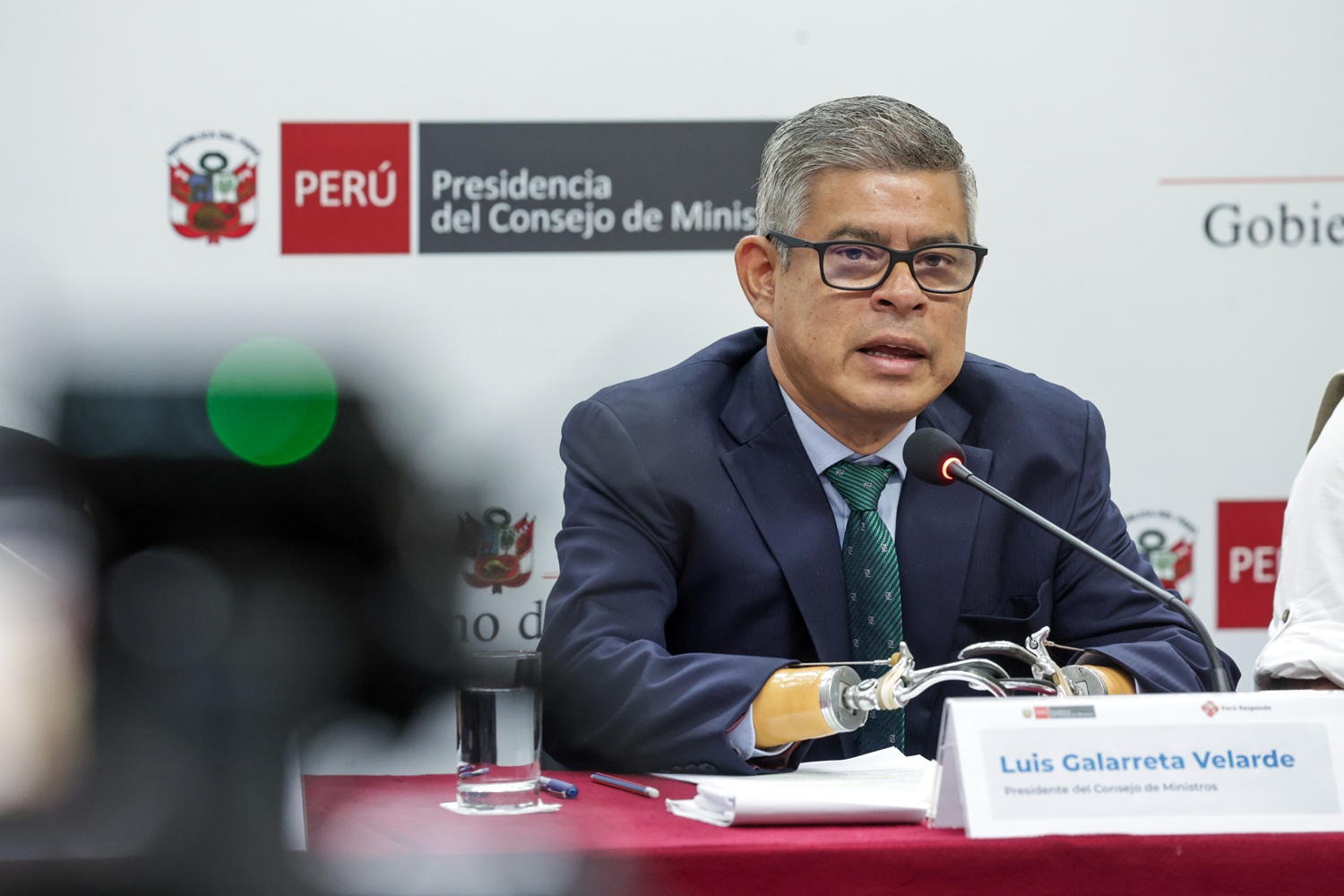
Agencia Peruana de Noticias PRENSAPERU.PE https://www.prensaperu.pe Twitter:@prensaperupe El presidente del Consejo de Ministros, Luis Galarreta Velarde, afirmó este miércoles que el Poder Ejecutivo trabajará con determinación sobre la base de las facultades legislativas otorgadas por el Congreso, al tiempo que valoró el respaldo recibido desde diversas bancadas y planteó que el objetivo de estas medidas no responde a intereses políticos sino a la necesidad de atender los requerimientos de la ciudadanía.
En declaraciones tras la firma de la autógrafa de la norma aprobada por el Parlamento, el titular del Gabinete Ministerial señaló que el Ejecutivo no ha permanecido inactivo a la espera de estas facultades, sino que ha venido avanzando de manera constante en la lucha contra la inseguridad ciudadana. “Encontraremos la forma de resolver los problemas de los peruanos, por encima de la mezquindad de cualquier sector”, expresó.
En ese sentido, el premier agradeció el apoyo recibido por parte de legisladores de distintas agrupaciones políticas, tanto en la Cámara de Diputados como en el Senado. Reconoció que el respaldo no fue unánime y que el alcance de las facultades finalmente concedidas no cubre la totalidad de lo solicitado, pero subrayó que las decisiones que se adopten en este marco responden al interés general. “Esto no se trata de ideología, ni de la presidenta Keiko Fujimori, ni del premier Galarreta. Se trata del país y de los ciudadanos”, enfatizó.
Del mismo modo, Galarreta Velarde fue enfático al señalar que el Ejecutivo aprovechará cada instrumento disponible. “Haremos un uso efectivo y contundente de las facultades que nos han sido entregadas. Aunque sean pocas, las utilizaremos con determinación para enfrentar los problemas que debemos resolver”, indicó. Asimismo, anunció que lo que no pueda regularse mediante decreto legislativo será abordado mediante decretos de urgencia dentro del marco legal vigente, y que el resto será remitido al Congreso como proyectos de ley.
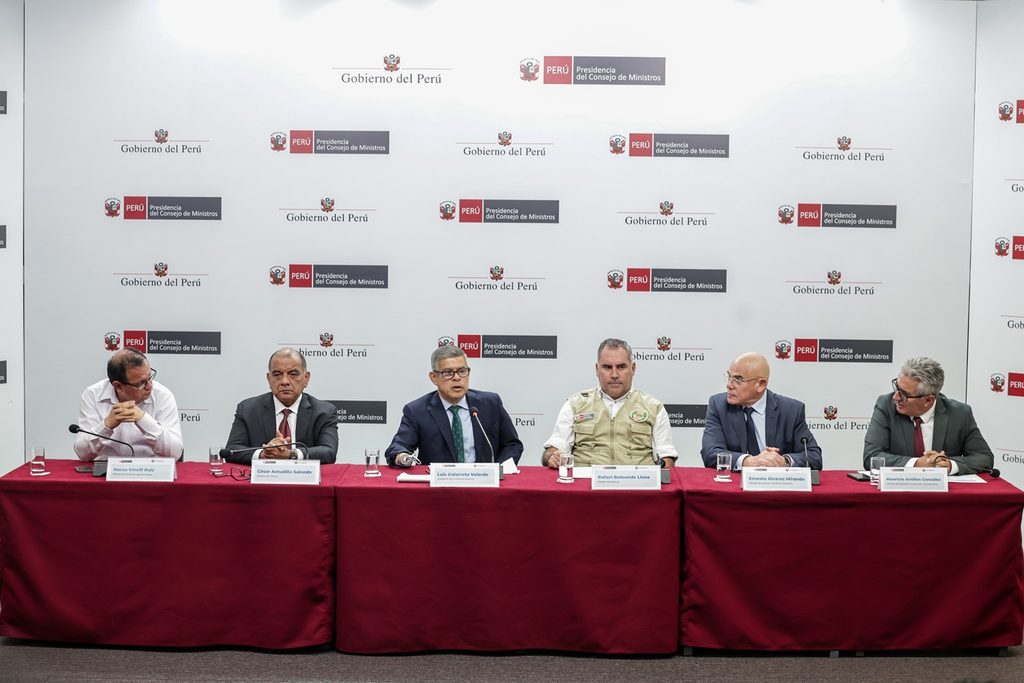
De otro lado, el jefe del Gabinete también informó sobre avances en la gestión interna de la administración pública. Destacó que se ha logrado reducir los tiempos de tramitación interna desde la Presidencia del Consejo de Ministros, pasando de más de veinte a aproximadamente diez o doce días. Agradeció a los viceministros por este esfuerzo de agilización de procesos. Finalmente, indicó que se espera contar con los primeros decretos legislativos en un plazo de entre diez y doce días tras la entrada en vigencia de la norma, y confió en que el Congreso dará celeridad al trámite de las iniciativas legislativas complementarias que el Ejecutivo presente en los próximos días.
DATOS CONCEPTUALES
Autógrafa de ley: Es el documento final del texto aprobado por ambas cámaras del Parlamento, firmado por sus presidentes, que se remite al Poder Ejecutivo para su promulgación y publicación en el diario oficial. Su firma certifica que el texto que se convierte en ley es aquel que fue debatido y aprobado por el Congreso.
Decreto legislativo: Es la norma que dicta el Poder Ejecutivo en ejercicio de las facultades legislativas que le han sido delegadas por el Congreso, dentro de los plazos y sobre las materias expresamente autorizadas. Tiene rango de ley, pero está sujeto a los límites y al control posterior establecidos en la Constitución.
Decreto de urgencia: Es una norma con rango de ley que el Presidente de la República puede dictar en caso de extraordinaria urgencia y que debe estar relacionada con el interés nacional. Se trata de un mecanismo distinto de las facultades delegadas, que tiene su propio régimen constitucional y debe ser remitido al Congreso para su examen en un plazo determinado.
Simplificación administrativa: Comprende el conjunto de acciones dirigidas a reducir tiempos, eliminar pasos innecesarios y agilizar los procesos internos de las entidades públicas, sin afectar la legalidad ni la calidad de las decisiones.
DATOS CONTEXTUALES
1.- Las declaraciones del jefe del Gabinete Ministerial marcan el inicio de una nueva etapa en la relación entre los poderes del Estado: el Ejecutivo recibe herramientas concretas aunque limitadas y se compromete a utilizarlas con efectividad, mientras el Parlamento conserva su función fiscalizadora y legislativa en aquellas materias que consideró no debían ser delegadas.
2.- El reconocimiento expreso de que las facultades concedidas son menores a lo solicitado no es percibido como un obstáculo, sino como un mandato claro: trabajar con lo disponible y demostrar resultados tangibles en beneficio de la población. Esa es la medida principal con la que la ciudadanía evaluará el éxito de esta medida.
3.- El llamado a trascender diferencias políticas sitúa el debate en su verdadera dimensión: no se trata de favorecer a un gobierno, sino de dotarlo de instrumentos temporales para atender emergencias concretas. Que ese espíritu se mantenga durante todo el ejercicio de estas facultades será clave para preservar la confianza pública.
4.- La reducción de tiempos internos en la PCM sugiere que la agilidad empieza desde dentro de la propia administración. Si ese ritmo se mantiene y se traduce en respuestas oportunas a la ciudadanía, se habrá demostrado que no siempre se necesita más facultades para lograr mejores resultados, sino a veces mejor organización y voluntad política.
5.- La complementariedad entre decretos legislativos, decretos de urgencia y proyectos de ley define una hoja de ruta clara. Cada instrumento tiene su propio ámbito y sus propios controles, y es responsabilidad del Ejecutivo respetar esos límites al mismo tiempo que del Congreso vigila su cumplimiento. Ese equilibrio es esencial para que las facultades sirvan al bien común.
Fuente: Agencia Peruana de Noticias PRENSAPERU.PE https://www.prensaperu.pe Twitter: @prensaperupe
Translate
Premier Luis Galarreta Velarde: “We will make effective and decisive use of the powers granted, even if they are not exhaustive, and the Executive branch will announce its first legislative decrees in 10 to 12 days, to be supplemented by emergency decrees.”
Peruvian News Agency PRENSAPERU.PE https://www.prensaperu.pe Twitter: @prensaperupe The President of the Council of Ministers, Luis Galarreta Velarde, stated this Wednesday that the Executive Branch will work with determination based on the legislative powers granted by Congress, while valuing the support received from various political groups and stating that the purpose of these measures does not respond to political interests but rather to the need to address the requirements of the citizenry.
In statements following the signing of the final signed text of the regulation approved by Parliament, the head of the Ministerial Cabinet noted that the Executive Branch has not remained idle while awaiting these powers, but has instead been moving forward steadily in the fight against citizen security. “We will find a way to solve the problems of Peruvians, rising above the pettiness of any sector,” he expressed.
Accordingly, the Prime Minister expressed his gratitude for the support received from legislators belonging to various political groups, in both the Chamber of Deputies and the Senate. He acknowledged that support was not unanimous and that the scope of the powers ultimately granted does not cover everything that was requested, but emphasized that decisions adopted within this framework serve the general interest. “This is not about ideology, nor about President Keiko Fujimori, nor about Prime Minister Galarreta. This is about the country and its citizens,” he stressed.
Likewise, Galarreta Velarde was emphatic in stating that the Executive Branch will make the most of every available instrument. “We will make effective and decisive use of the powers that have been entrusted to us. Limited though they may be, we will employ them with determination to address the problems we must solve,” he indicated. He also announced that matters which cannot be regulated through legislative decrees will be addressed through emergency decrees within the framework of current law, and that all remaining matters will be submitted to Congress as draft laws.
Furthermore, the head of the Cabinet also reported on progress in the internal management of public administration. He highlighted that processing times within the Presidency of the Council of Ministers have been reduced from more than twenty days to approximately ten to twelve days. He thanked the Deputy Ministers for this effort to streamline processes. Finally, he indicated that the first legislative decrees are expected to be issued within ten to twelve days following the entry into force of the regulation, and expressed confidence that Congress will give timely consideration to any complementary legislative initiatives submitted by the Executive Branch in the coming days.
CONCEPTUAL DATA
Final Signed Text of Law: The official document containing the final text approved by both chambers of Parliament, signed by their presiding officers, which is sent to the Executive Branch for enactment and publication in the official gazette. Its signature certifies that the text becoming law is precisely the one that was debated and approved by Congress.
Legislative Decree: A regulation issued by the Executive Branch exercising legislative powers delegated by Congress, within established timeframes and regarding expressly authorized subject matters. It carries the force of law but remains subject to constitutional limits and subsequent oversight.
Emergency Decree: A regulation having the force of law that the President of the Republic may issue in situations requiring extraordinary urgency and which must relate to the national interest. This mechanism is distinct from delegated legislative powers, operates under its own constitutional provisions, and must be transmitted to Congress for review within a specified timeframe.
Administrative Simplification: The set of actions aimed at reducing processing times, eliminating unnecessary steps, and streamlining internal procedures within public entities, without compromising legality or the quality of administrative decisions.
CONTEXTUAL FINDINGS
1.- The statements made by the head of the Ministerial Cabinet mark the beginning of a new phase in relations between the branches of State: the Executive Branch receives concrete yet limited tools and commits to using them effectively, while Parliament retains its oversight and legislative functions over matters it determined should not be delegated.
2.- The explicit acknowledgment that granted powers are narrower than those originally requested is not viewed as a setback, but rather as a clear mandate: to work with what is available and deliver tangible results for the population. That will be the primary measure by which citizens will evaluate the success of this initiative.
3.- The call to rise above political differences places the debate in its proper perspective: this is not about favouring a government, but about equipping it with temporary instruments to address genuine emergencies. Maintaining that spirit throughout the duration of these delegated powers will be essential in preserving public trust.
4.- The reduction in internal processing times within the PCM suggests that efficiency begins within public administration itself. If this pace is maintained and translates into timely responses for citizens, it will have demonstrated that broader powers are not always required to achieve better outcomes — sometimes improved organisation and political will are sufficient.
5.- The complementary relationship between legislative decrees, emergency decrees, and draft laws establishes a clear roadmap. Each instrument has its proper scope and oversight mechanisms. It is the responsibility of the Executive Branch to respect those boundaries, just as it is Congress’s responsibility to monitor compliance. That balance is essential to ensuring these powers truly serve the common good.
Source: Peruvian News Agency PRENSAPERU.PE https://www.prensaperu.pe Twitter: @prensaperupe